
Electric bikes have revolutionized personal transportation, offering a clean, efficient, and exhilarating way to commute, explore, or simply enjoy the outdoors. Among the various types of e-bikes available, throttle-only models stand out for their simplicity and instant power delivery. Unlike pedal-assist e-bikes that require you to pedal to activate the motor, throttle-only e-bikes let you control your speed with a simple twist of the handlebar or push of a button—just like a motorcycle or scooter. This makes them incredibly accessible, especially for riders who may have limited mobility, are recovering from injury, or simply prefer not to exert themselves physically during their ride.
As we move into 2026, the market for throttle-only electric bikes has matured significantly. Advances in battery technology, motor efficiency, and frame design have led to more reliable, longer-lasting, and better-performing models across all price ranges. Whether you’re looking for an affordable commuter bike for short city trips or a rugged off-road machine capable of handling trails, there’s now a throttle-only e-bike tailored to your needs. However, with so many options flooding the market—from budget-friendly Chinese imports to premium American and European brands—it can be overwhelming to choose the right one. That’s where this comprehensive guide comes in.
This buying guide is designed to help you navigate the crowded e-bike landscape with confidence. You’ll learn exactly what to look for when evaluating throttle-only electric bikes, including critical factors like motor power, battery life, build quality, and safety features. We’ll break down the different types of throttle e-bikes available, highlight common pitfalls to avoid, and provide expert-backed recommendations based on real-world testing and user feedback. By the end of this article, you’ll have a clear understanding of how to match your lifestyle, budget, and riding goals to the perfect throttle-only e-bike—so you can hit the road (or trail) with peace of mind and maximum enjoyment.
What to Look for When Buying a Throttle-Only Electric Bike
1. Motor Power and Performance
The motor is the heart of any electric bike, and for throttle-only models, it’s especially important because it must deliver consistent power without relying on pedal input. Most throttle e-bikes use hub motors—either front or rear—mounted directly in the wheel. These are generally simpler and more affordable than mid-drive motors but can still offer impressive performance.
When evaluating motor power, look for models rated between 250W and 750W. In the U.S., federal law limits e-bikes to 750W (1 horsepower) for street legality, though some states allow higher wattage for off-road use only. A 250W motor is sufficient for flat urban commutes and light recreational riding, while a 500W to 750W motor provides better hill-climbing ability and faster acceleration—ideal for hilly terrain or carrying heavy loads.
Pay attention not just to wattage, but also to torque (measured in Newton-meters or Nm). Higher torque means better responsiveness when starting from a stop or climbing inclines. For example, a 750W motor with 60+ Nm of torque will feel noticeably stronger than one with only 40 Nm, even if both have the same wattage rating.
Another key consideration is motor placement. Rear hub motors tend to provide a more natural riding feel and better traction, especially on loose or wet surfaces, because they push the bike forward rather than pull it. Front hub motors are often lighter and cheaper but can cause wheel slippage under heavy throttle, particularly on gravel or snow.
2. Battery Capacity and Range
Battery performance directly impacts how far you can ride on a single charge—a critical factor for commuters, delivery riders, or anyone planning longer trips. Battery capacity is measured in watt-hours (Wh), which combines voltage (V) and amp-hours (Ah): Wh = V × Ah. For instance, a 36V 10Ah battery delivers 360Wh of energy.
For most urban riders, a battery with 400–600Wh provides a realistic range of 20–40 miles on throttle-only mode, depending on terrain, rider weight, and speed. If you plan to use the bike primarily for short errands or leisurely rides, a 300–400Wh battery may suffice. However, if you need to cover longer distances or ride frequently without recharging, aim for 600Wh or more.
Lithium-ion (Li-ion) batteries are the standard in modern e-bikes due to their high energy density, long lifespan (typically 500–1,000 charge cycles), and low self-discharge rate. Avoid older or cheaper models that use lead-acid or nickel-based batteries—they’re heavier, less efficient, and degrade much faster.
Also consider battery placement. Integrated batteries (built into the downtube or rear rack) offer a cleaner look and better weight distribution, while removable batteries make charging more convenient—especially if you don’t have easy access to an outlet near your parking spot.
3. Build Quality and Frame Material
A well-built frame ensures durability, safety, and a comfortable ride. Most throttle-only e-bikes use either aluminum alloy or steel frames. Aluminum is lightweight, rust-resistant, and stiff, making it ideal for city commuting and frequent transport. Steel frames are heavier but offer superior shock absorption and can handle rougher conditions—great for off-road or cargo e-bikes.
Look for reinforced joints, quality welds, and corrosion-resistant coatings, especially if you live in a rainy or coastal area. Check the maximum load capacity (usually listed as “payload” or “weight limit”)—most consumer e-bikes support 220–300 lbs, but heavy-duty models can handle up to 400 lbs.
Suspension is another key element. Hardtail models (front suspension only) are common and effective for smoothing out bumps on city streets or light trails. Full-suspension bikes offer even greater comfort but add weight and cost. If you’re sticking to paved roads, a rigid fork may be sufficient—and will save you money and maintenance.
Pay attention to component quality too: brakes, gears (if applicable), and wheels should be from reputable manufacturers like Shimano, Tektro, or Kenda. Cheap components may save money upfront but lead to frequent repairs and safety risks down the line.
4. Throttle Type and Control Interface
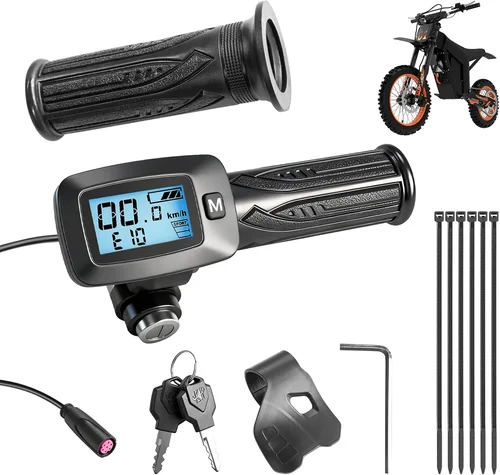
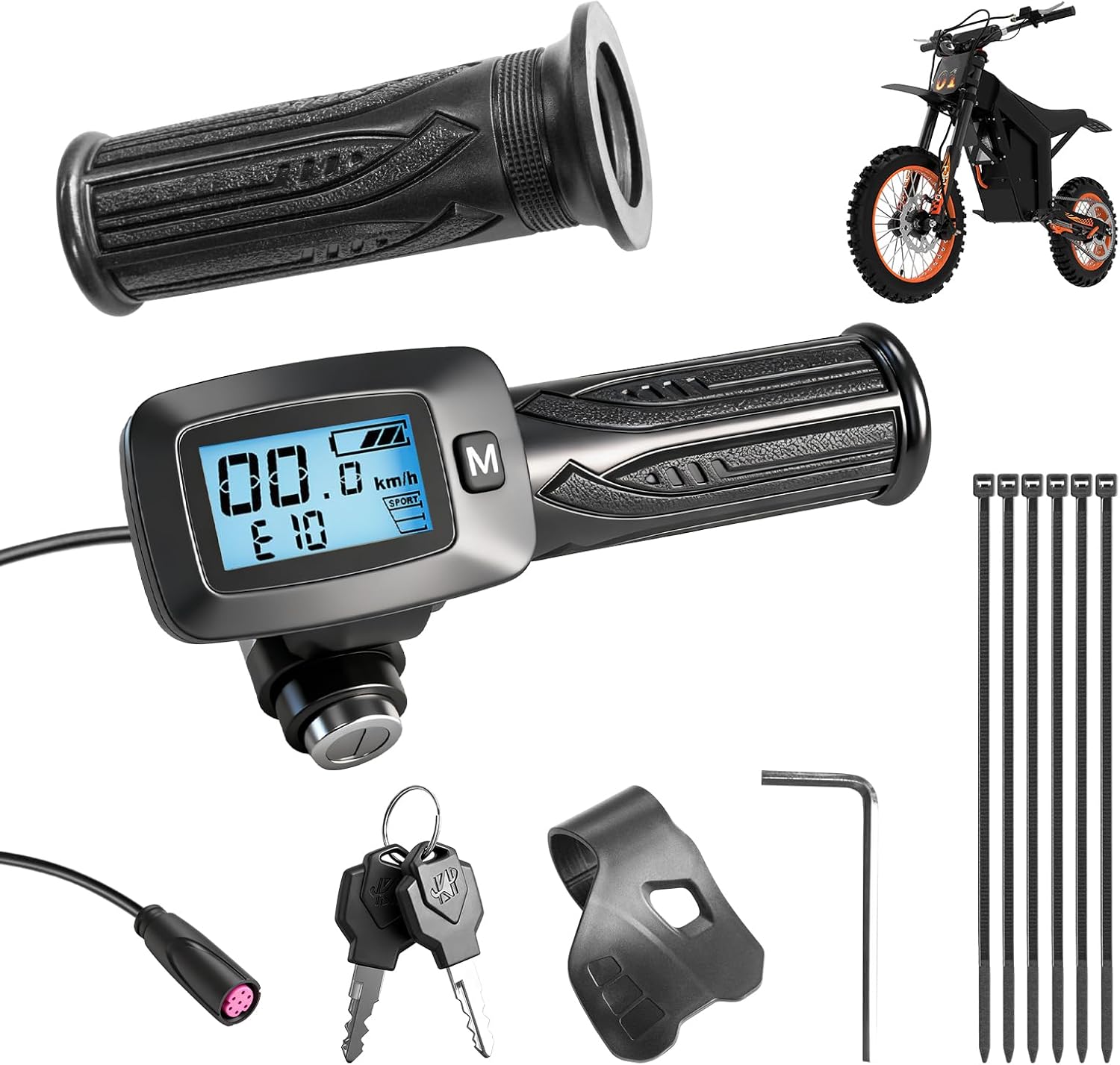
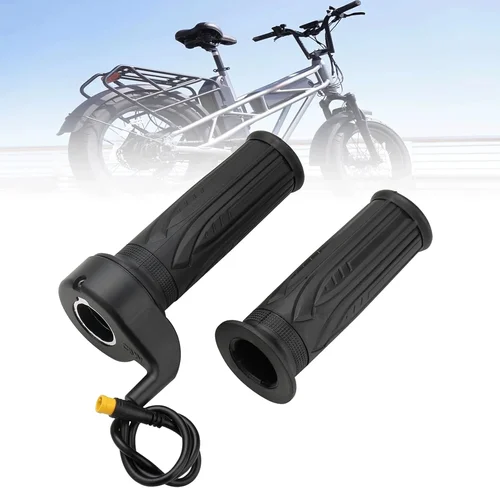
Not all throttles are created equal. The two main types are twist-grip (like a motorcycle) and thumb-press (a button or lever on the handlebar). Twist-grip throttles offer precise speed control and are intuitive for riders familiar with scooters or motorcycles. Thumb throttles are easier on the wrist during long rides and reduce hand fatigue, but some users find them less responsive.
Test both types if possible—your preference may depend on hand strength, dexterity, or prior experience. Some premium models even offer programmable throttle curves, allowing you to adjust acceleration sensitivity via a display or app.
The control interface—usually a small LCD or LED screen mounted on the handlebar—should clearly show speed, battery level, trip distance, and sometimes pedal-assist levels (even on throttle-only bikes, many include PAS as a backup). Backlit displays are helpful for night riding, and waterproof ratings (like IP65) ensure reliability in wet conditions.
Avoid bikes with overly complex menus or non-intuitive button layouts. Simplicity is key, especially when you’re focused on the road.
5. Braking System and Safety Features
With speeds often reaching 20 mph (32 km/h) or more, reliable braking is non-negotiable. Mechanical disc brakes are common on entry-level models and work adequately in dry conditions, but hydraulic disc brakes offer superior stopping power, modulation, and performance in rain or mud—making them the gold standard for safety-conscious riders.
Always check the brake brand and rotor size. Larger rotors (180mm vs. 160mm) provide better heat dissipation and stopping force. Some high-end models even feature regenerative braking, which recaptures a small amount of energy during deceleration to extend range—though this is rare on throttle-only bikes.
Additional safety features to look for include:
– Integrated front and rear lights (powered by the main battery)
– Reflectors and reflective sidewalls on tires
– Horn or bell
– Turn signals (on select premium models)
– Anti-theft alarms or GPS tracking (increasingly common in 2026 models)
Never compromise on brakes—even the most powerful motor is useless if you can’t stop safely.
6. Portability and Weight
If you plan to carry your e-bike upstairs, store it in a small apartment, or load it into a car, weight and foldability matter. Most throttle-only e-bikes weigh between 40 and 70 lbs. Lighter models (under 50 lbs) are easier to manage but may sacrifice battery capacity or build robustness.
Folding e-bikes are a popular subcategory, offering compact storage and transportability. Brands like Gotrax, Swagtron, and Lectric specialize in foldable designs that collapse in under 30 seconds. However, folding mechanisms can introduce weak points, so ensure hinges and latches are sturdy and well-lubricated.
Measure your storage space before buying—some folded e-bikes are surprisingly bulky. Also consider whether the bike includes a carrying handle or wheels for rolling when folded.
7. Legal Compliance and Local Regulations
E-bike laws vary widely by country, state, and even city. In the U.S., Class 2 e-bikes (which include throttle-only models) are limited to 20 mph top speed and 750W motor power. They’re allowed on bike lanes and multi-use paths in most states, but some municipalities ban throttles altogether—especially in urban centers like New York City or San Francisco.
Before purchasing, verify your local regulations. Some areas require helmets, registration, or restrict e-bike use on sidewalks or trails. In Europe, throttle-only e-bikes are heavily restricted or banned in many countries (e.g., Germany, France), where only pedal-assist models are legal.
Buying a non-compliant bike could result in fines, confiscation, or voided insurance. Stick to certified models (look for UL 2849 certification for electrical safety) and check with your local transportation authority.
8. Warranty, Customer Support, and Brand Reputation
A good warranty protects your investment and reflects the manufacturer’s confidence in their product. Most reputable brands offer at least a 1-year comprehensive warranty covering the motor, battery, and frame. Premium brands like Rad Power Bikes or Aventon often provide 2-year warranties, with optional extensions.
Read the fine print: some warranties exclude batteries (which degrade naturally) or require registration within 30 days of purchase. Also check if service is available locally or if you must ship the bike back for repairs—this can take weeks and cost hundreds in shipping.
Customer support matters too. Look for brands with responsive email/chat support, detailed FAQs, video tutorials, and active community forums. Avoid obscure brands with no online presence or reviews—they may disappear overnight, leaving you stranded with a broken bike.
Research user reviews on trusted platforms like Trustpilot, Reddit (r/ebikes), or YouTube. Pay attention to recurring complaints about battery failure, poor assembly, or unresponsive support.
Different Types of Throttle-Only Electric Bikes

Common Buying Mistakes to Avoid
❌ Mistake: Prioritizing Price Over Quality
Why it’s bad: Ultra-cheap e-bikes (under $400) often use substandard motors, weak batteries, and flimsy frames that can fail within months. They may lack essential safety features like proper brakes or lights, putting you at risk.
What to do instead: Set a realistic budget based on your usage. Even entry-level models from reputable brands like Gotrax or Ancheer offer far better reliability and support than no-name imports. Remember: you’re not just buying a bike—you’re investing in safety and peace of mind.
❌ Mistake: Ignoring Local E-Bike Laws
Why it’s bad: Riding an illegal e-bike can result in hefty fines, impoundment, or even liability in accidents. Some throttle models exceed speed or power limits and aren’t allowed on public roads or trails.
What to do instead: Research your local regulations before buying. Stick to Class 2-compliant models (20 mph max, 750W max) if you plan to ride in urban areas. When in doubt, consult your city’s transportation department or a local bike shop.
❌ Mistake: Overestimating Battery Range
Why it’s bad: Manufacturers often quote “ideal condition” range (flat terrain, light rider, minimal throttle use). In reality, constant throttle use, hills, wind, and cold weather can cut range by 30–50%.
What to do instead: Treat advertised range as a best-case scenario. If you need 25 miles, buy a bike rated for 40+. Use the bike’s display to monitor real-world consumption and plan charging stops accordingly.
❌ Mistake: Skipping the Test Ride
Why it’s bad: E-bikes handle differently than regular bikes—especially under throttle. A poorly balanced bike can feel twitchy or unstable, increasing accident risk.
What to do instead: Always test ride before purchasing, whether at a local dealer or during a trial period (many online retailers offer 14–30 day returns). Pay attention to acceleration smoothness, braking feel, and overall comfort.
❌ Mistake: Neglecting Maintenance Needs
Why it’s bad: E-bikes require regular upkeep: tire pressure checks, brake adjustments, chain lubrication, and battery care. Ignoring maintenance shortens component life and compromises safety.
What to do instead: Learn basic maintenance or find a local e-bike shop that offers service packages. Keep a maintenance log and follow the manufacturer’s guidelines for battery storage (e.g., don’t leave it fully discharged in winter).
❌ Mistake: Buying Without Checking Warranty Terms
Why it’s bad: Some warranties are voided by minor modifications (like aftermarket chargers) or require proof of purchase and registration. Others exclude batteries entirely.
What to do instead: Read the full warranty document before buying. Register your bike immediately and keep receipts. Consider extended warranty plans if available—especially for high-cost models.
❌ Mistake: Choosing Based Solely on Motor Wattage
Why it’s bad: A 750W motor doesn’t automatically mean better performance. Efficiency, torque, controller quality, and battery compatibility matter just as much.
What to do instead: Look at the complete power system—not just wattage. Read reviews that discuss real-world performance, hill-climbing ability, and throttle responsiveness.
Budget Guidelines: How Much Should You Spend?
– Entry-Level ($500–$900): Ideal for casual riders, students, or those on a tight budget. Expect basic components, 250–500W motors, 300–400Wh batteries, and limited features. Brands like Gotrax, Swagtron, and Ancheer dominate this space. Great for short commutes under 10 miles, but may lack durability for daily heavy use.
– Mid-Range ($900–$1,800): The sweet spot for most buyers. These bikes offer 500–750W motors, 500–700Wh batteries, hydraulic disc brakes, and better build quality. Models from Rad Power Bikes, Aventon, and Lectric provide excellent value with reliable performance, good warranties, and strong community support. Perfect for daily commuting, weekend adventures, and moderate cargo loads.
– Premium ($1,800–$3,500): Designed for enthusiasts and serious riders. Features include high-capacity batteries (700Wh+), full suspension, advanced displays, app connectivity, and premium components (Shimano, SRAM). Brands like Trek, Specialized, and Riese & Müller offer top-tier engineering and design. Ideal for long-distance touring, off-road exploration, or tech-savvy users who want the latest innovations.
– Luxury ($3,500+): For those who demand the absolute best. These bikes often include custom frames, integrated lighting, GPS tracking, regenerative braking, and ultra-long range (80+ miles). Examples include the Stromer ST5, Delfast Prime, and Super73 ZX. Best suited for collectors, professionals, or riders in hilly regions who need maximum reliability and performance.

Expert Tips for Getting the Best Deal
– Shop During Seasonal Sales: Major discounts occur during Black Friday, Cyber Monday, end-of-season clearances (August–September), and holiday promotions. Sign up for brand newsletters to get early access to deals.
– Buy Direct from Manufacturers: Many e-bike brands (like Rad Power Bikes or Lectric) sell directly online, cutting out retailer markups. They often offer exclusive colors, free shipping, and extended trial periods.
– Consider Refurbished or Open-Box Models: Certified pre-owned e-bikes from reputable sellers can save you 20–40% off retail. Ensure they come with a warranty and have been professionally inspected.
– Check Return and Trial Policies: Look for at least a 14-day return window and a 30-day satisfaction guarantee. Some brands (e.g., Juiced Bikes) offer 100-day trials—giving you ample time to test in real conditions.
– Negotiate with Local Dealers: Independent bike shops may price-match online retailers or throw in free accessories (locks, lights, tune-ups) to win your business.
– Join Owner Communities: Online forums and Facebook groups often share exclusive discount codes, group buys, or flash sales known only to members.
– Verify Certification: Always ensure the bike meets UL 2849 safety standards for electrical systems. This certification is increasingly required by insurers and municipalities.
– Plan for Charging Infrastructure: If you live in an apartment, check if your building allows e-bike charging. Some cities offer public charging stations or subsidized home charger installations.
Frequently Asked Questions
Q: Are throttle-only e-bikes legal everywhere?
A: No. While Class 2 throttle e-bikes are legal in most U.S. states, some cities (like NYC) ban them outright. In Europe, many countries prohibit throttle-only operation—only pedal-assist is allowed. Always verify local laws before purchasing.
Q: How long does the battery last on a single charge?
A: It depends on battery capacity, motor power, terrain, and riding style. On average, expect 20–40 miles on throttle-only mode. Cold weather, hills, and high speeds reduce range significantly.
Q: Can I convert a regular bike to a throttle e-bike?
A: Yes, using a conversion kit (e.g., Bafang, Voilamart). However, this voids most warranties and may not meet legal standards. For most riders, buying a purpose-built e-bike is safer and more reliable.
Q: Do I need a license or insurance for a throttle e-bike?
A: In most U.S. states, no license or insurance is required for Class 2 e-bikes. However, some states (like Alabama) treat them like mopeds and require registration. Check your local DMV.
Q: How often should I charge the battery?
A: Charge when the battery drops to 20–30%. Avoid letting it fully drain regularly, as this shortens lifespan. Store at 50–60% charge if not using for weeks.
Q: Are throttle e-bikes good for hills?
A: Yes—if equipped with a powerful motor (500W+) and sufficient torque. Look for models with hill-climb ratings or user reviews mentioning steep incline performance.
Q: Can I ride a throttle e-bike in the rain?
A: Most modern e-bikes are water-resistant (IP65 rated), but not fully waterproof. Avoid submerging the battery or motor. Dry the bike after wet rides and store indoors.
Q: What’s the difference between throttle-only and pedal-assist?
A: Throttle-only bikes let you ride without pedaling—great for rest or mobility issues. Pedal-assist requires pedaling to activate the motor, offering better range and exercise. Many bikes offer both modes.
Q: How heavy are throttle e-bikes?
A: Typically 40–70 lbs. Folding models are lighter (40–50 lbs), while cargo or fat-tire bikes can exceed 70 lbs. Always check weight limits if lifting or transporting.
Q: Can I upgrade the battery later?
A: Some brands offer higher-capacity batteries as upgrades, but compatibility varies. Check with the manufacturer before purchasing. Third-party batteries may void your warranty.
Our Final Recommendations
– Best for Budget-Conscious Buyers: Gotrax GXL V2 – At around $600, this commuter e-bike offers a 36V 7.8Ah battery, 300W motor, and foldable design. It’s reliable for short urban trips and includes front suspension and LED lights.
– Best Overall Value: Lectric XP 3.0 – Priced under $1,000, this fat-tire folding e-bike boasts a 500W motor, 48V 8.8Ah battery (432Wh), and hydraulic disc brakes. It handles trails, snow, and city streets with ease—and folds in seconds.
– Best Premium Option: Rad Power Bikes RadCity 5 Plus – With a 750W geared hub motor, 672Wh battery, and full suite of commuter features (fenders, rack, lights), this mid-range marvel delivers exceptional comfort and performance for $1,999.
– Best for Beginners: Aventon Pace 350.3 – Simple controls, intuitive display, and a relaxed riding position make this 350W step-through e-bike perfect for new riders. Includes turn signals and a smartphone app for added convenience.
– Best for Advanced Users: Super73-R Brooklyn – This stylish, high-performance e-bike features a 1,000W peak motor, 960Wh battery, and aggressive off-road capability. Ideal for tech enthusiasts who want speed, range, and street cred.
Conclusion: Making the Right Choice
Choosing the best throttle-only electric bike isn’t just about picking the shiniest model or the lowest price tag—it’s about aligning your purchase with your lifestyle, needs, and long-term goals. Whether you’re commuting to work, exploring local trails, or simply seeking a fun way to get around, the right e-bike can transform your daily routine.
Throughout this guide, we’ve covered the essential factors that separate a good e-bike from a great one: motor performance, battery life, build quality, safety, legal compliance, and customer support. We’ve compared different categories, warned against common pitfalls, and provided actionable tips to help you save money and avoid regret.
Remember, the “best” e-bike is the one that fits your budget, meets your riding demands, and makes you excited to hop on and ride. Don’t rush the decision—take advantage of test rides, read real user reviews, and prioritize reliability over flashy gimmicks.
As e-bike technology continues to evolve in 2026 and beyond, one thing remains constant: the joy of effortless motion, the freedom of the open road, and the satisfaction of choosing wisely. So gear up, charge up, and ride forward with confidence. Your perfect throttle-only e-bike is out there—and now you know exactly how to find it.