
Charging a Gotrax scooter typically takes 4 to 6 hours, depending on the model and battery capacity. Factors like battery age, temperature, and charger type can influence charging speed, but proper care ensures consistent performance and longer battery life.
If you’ve recently joined the electric scooter revolution with a Gotrax, you’re probably wondering: *How long does it take to charge a Gotrax scooter?* It’s a fair question—after all, your scooter is only as good as its battery. Whether you’re commuting to work, zipping around campus, or just enjoying a weekend ride, knowing your charging timeline helps you plan better and avoid being stranded with a dead battery.
Gotrax scooters are known for their reliability, affordability, and user-friendly design. But like any electric vehicle, they rely heavily on battery performance. The good news? Charging a Gotrax scooter is straightforward, and with a little know-how, you can keep your rides smooth and uninterrupted. In this guide, we’ll break down everything you need to know about charging times, what affects them, and how to get the most out of your scooter’s battery.
So, let’s dive in. Whether you’re a first-time owner or looking to optimize your current routine, this article will give you the practical insights you need to master the art of Gotrax charging.
Key Takeaways
- Standard charging time: Most Gotrax scooters take between 4 and 6 hours to fully charge from empty.
- Model differences: Higher-end models like the Gotrax G4 or GXL V2 may charge slightly faster due to improved battery tech.
- Battery type matters: Gotrax uses lithium-ion batteries, which charge efficiently but degrade over time.
- Environmental factors: Charging in extreme heat or cold can slow down the process and harm battery health.
- Use the right charger: Always use the manufacturer-provided charger to avoid damage or longer charging times.
- Avoid overcharging: Unplug once fully charged to prevent battery stress and extend lifespan.
- Maintenance tips: Regular cleaning, proper storage, and partial charging help maintain optimal charging performance.
📑 Table of Contents
Understanding Gotrax Scooter Battery Basics
Before we talk about charging times, it’s important to understand what’s under the hood—or rather, under the deck—of your Gotrax scooter. Most Gotrax models, including popular ones like the Gotrax XR, GXL V2, and G4, use lithium-ion (Li-ion) batteries. These are the same type of batteries found in smartphones, laptops, and electric cars, and for good reason: they’re lightweight, energy-dense, and rechargeable hundreds of times.
Lithium-ion batteries work by moving lithium ions between the anode and cathode during charging and discharging. This process is efficient and allows for quick energy transfer, which is why your scooter can go from 0 to full speed in seconds. But like all batteries, they have limits. Over time, their capacity decreases, meaning they hold less charge and take longer to recharge.
Gotrax scooters typically come with batteries ranging from 250Wh to 360Wh, depending on the model. For example, the Gotrax XR has a 36V 7.8Ah battery (about 280Wh), while the Gotrax G4 features a 36V 10Ah battery (360Wh). The higher the watt-hour (Wh) rating, the more energy the battery can store—and the longer it will take to charge.
But here’s the thing: battery capacity isn’t the only factor. The charger that comes with your scooter also plays a big role. Gotrax includes a standard 2A or 3A charger with most models, which is designed to safely deliver power without overheating the battery. Using a higher-amperage charger might seem like a shortcut, but it can damage the battery and void your warranty.
Battery Voltage and Amp-Hour Ratings
When you look at your scooter’s specs, you’ll see numbers like “36V 7.8Ah” or “36V 10Ah.” These refer to the battery’s voltage and amp-hour capacity. Voltage (V) determines the power output—higher voltage means more speed and torque. Amp-hours (Ah) measure how much current the battery can deliver over time. Multiply volts by amp-hours, and you get watt-hours (Wh), which tells you the total energy capacity.
For example:
– Gotrax XR: 36V × 7.8Ah = 280.8Wh
– Gotrax G4: 36V × 10Ah = 360Wh
The G4 has a larger battery, so it can go farther on a single charge—but it also takes longer to recharge. This is why understanding your model’s battery specs helps you estimate charging time more accurately.
Why Lithium-Ion Batteries Are Ideal for Scooters
Lithium-ion batteries are the gold standard for electric scooters because they offer a great balance of weight, capacity, and lifespan. Compared to older battery types like lead-acid or nickel-cadmium, Li-ion batteries are:
– Lighter: This keeps the scooter portable and easy to carry.
– More efficient: They lose less energy as heat during charging.
– Longer-lasting: They can handle 300–500 charge cycles before significant degradation.
However, they’re not perfect. Li-ion batteries are sensitive to temperature and can degrade faster if exposed to extreme heat or cold. They also require careful charging habits to maintain performance over time.
How Long Does It Take to Charge a Gotrax Scooter?
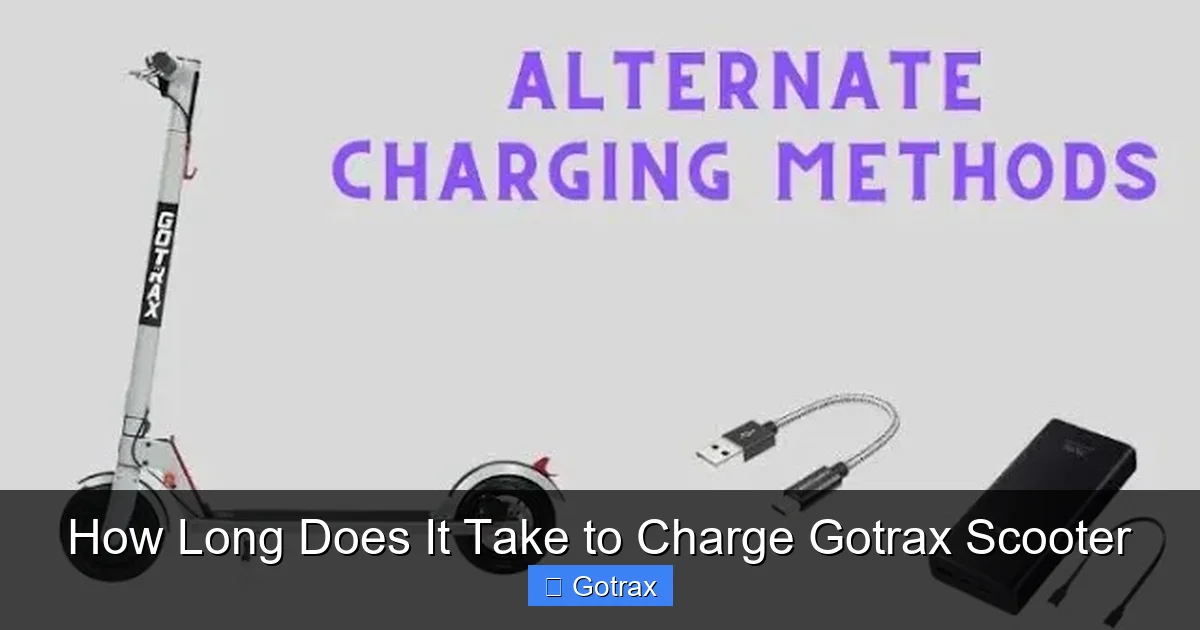
Visual guide about How Long Does It Take to Charge Gotrax Scooter
Image source: dhakabusroute.com
Now for the million-dollar question: *How long does it take to charge a Gotrax scooter?* The short answer is **4 to 6 hours** for a full charge from empty. But let’s break that down by model and scenario.
Most Gotrax scooters, including the XR, GXL V2, and G2, take about **4 to 5 hours** to charge completely. The Gotrax G4, with its larger 360Wh battery, may take closer to **5 to 6 hours**. These times assume you’re using the original charger and starting from a fully depleted battery.
But here’s a pro tip: you don’t always need to charge from 0% to 100%. In fact, partial charging is often better for battery health. For example, if you’ve used 50% of your battery, it might only take 2 to 3 hours to top it off. This is especially useful for daily commuters who ride short distances and recharge nightly.
Let’s look at a few real-world examples:
– **Gotrax XR (280Wh):** ~4.5 hours from 0% to 100%
– **Gotrax GXL V2 (36V 8.8Ah):** ~4.5 to 5 hours
– **Gotrax G4 (360Wh):** ~5.5 to 6 hours
Keep in mind that these are estimates. Actual charging time can vary based on several factors, which we’ll explore next.
Charging Time by Model
Not all Gotrax scooters are created equal when it comes to charging. Here’s a quick breakdown of charging times for popular models:
– **Gotrax G2:** 4–5 hours (250Wh battery)
– **Gotrax XR:** 4–5 hours (280Wh)
– **Gotrax GXL V2:** 4.5–5.5 hours (317Wh)
– **Gotrax G4:** 5–6 hours (360Wh)
The G4 takes the longest because it has the largest battery. But it also offers the longest range—up to 20 miles on a single charge. So while charging takes a bit more time, you get more riding time in return.
Partial vs. Full Charging
One of the biggest misconceptions about electric scooters is that you need to charge them from 0% to 100% every time. In reality, lithium-ion batteries prefer partial charges. Charging from 20% to 80%, for example, is easier on the battery and can extend its lifespan.
If you’re only using your scooter for short trips, you might only need to charge it every other day. In that case, a 2- to 3-hour top-up is usually enough. This not only saves time but also reduces wear on the battery.
Factors That Affect Charging Time
While 4 to 6 hours is the standard range, several factors can speed up or slow down the charging process. Understanding these can help you manage your expectations and optimize your charging routine.
Battery Age and Condition
Like any rechargeable battery, Gotrax scooter batteries degrade over time. After 300 to 500 charge cycles, you might notice that your scooter doesn’t hold a charge as well as it used to. This means it takes longer to charge and doesn’t last as long on a single ride.
Signs of battery aging include:
– Longer charging times
– Reduced range
– Frequent need to recharge
If your scooter is more than 2–3 years old and you’re experiencing these issues, it might be time to consider a battery replacement. Gotrax offers replacement batteries for most models, though they can be pricey—often costing nearly half the price of a new scooter.
Temperature and Environment
Temperature plays a huge role in battery performance. Charging in extreme heat or cold can slow down the process and even damage the battery.
– **Cold weather (below 50°F / 10°C):** Lithium-ion batteries become less efficient in the cold. Charging may take longer, and the battery may not reach full capacity. It’s best to bring your scooter indoors and let it warm up before charging.
– **Hot weather (above 95°F / 35°C):** High temperatures can cause the battery to overheat during charging, triggering safety mechanisms that slow or stop the process. Avoid charging in direct sunlight or inside a hot car.
Ideally, charge your scooter in a cool, dry place—around 68°F to 77°F (20°C to 25°C) is perfect.
Charger Quality and Compatibility
Always use the charger that came with your Gotrax scooter. Third-party chargers may seem like a bargain, but they can deliver too much or too little power, leading to:
– Slower charging
– Overheating
– Battery damage
– Voided warranty
Gotrax chargers are specifically designed for their batteries and include safety features like overcharge protection and temperature monitoring. Using the wrong charger is one of the fastest ways to ruin your battery.
Power Source and Outlet Quality
The outlet you use matters too. A weak or unstable power source—like an old extension cord or a overloaded circuit—can reduce charging speed. For best results, plug your charger directly into a wall outlet with a stable voltage.
Avoid using power strips or multi-plug adapters unless they’re high-quality and surge-protected. Cheap adapters can cause voltage drops, making charging take longer.
Battery Management System (BMS)
Gotrax scooters come with a built-in Battery Management System (BMS), which monitors voltage, current, and temperature during charging. The BMS ensures safe charging by preventing overcharging, over-discharging, and overheating.
If the BMS detects a problem—like a faulty cell or excessive heat—it may slow down or pause charging. This is a safety feature, not a defect. If your scooter suddenly stops charging or takes much longer than usual, the BMS might be doing its job.
Tips to Speed Up Charging and Extend Battery Life
While you can’t magically make your scooter charge in 30 minutes, there are several smart habits you can adopt to optimize charging time and keep your battery healthy for years.
Charge at Room Temperature
As mentioned earlier, temperature is critical. Always charge your scooter in a climate-controlled environment. If you’ve been riding in cold weather, let the scooter sit indoors for 30 minutes before plugging it in. This allows the battery to warm up and accept a charge more efficiently.
Avoid Full Discharges
Lithium-ion batteries don’t like being drained completely. Try to recharge your scooter when it hits 20–30% instead of waiting until it dies. This reduces stress on the battery and helps maintain its capacity over time.
Unplug When Fully Charged
Modern Gotrax scooters have overcharge protection, so they won’t explode if you leave them plugged in overnight. But keeping the battery at 100% for extended periods can still cause slight degradation. Aim to unplug once the light turns green (indicating a full charge).
Store with a Partial Charge
If you’re not using your scooter for a week or more, don’t store it with a full or empty battery. Instead, charge it to about 50–60% and store it in a cool, dry place. This helps preserve battery health during long periods of inactivity.
Clean the Charging Port
Dust and debris can build up in the charging port, causing poor connections and slower charging. Use a dry toothbrush or compressed air to gently clean the port every few weeks.
Update Firmware (If Available)
Some newer Gotrax models, like the G4, support firmware updates that can improve battery management and charging efficiency. Check the Gotrax app or website periodically for updates.
Common Charging Mistakes to Avoid
Even experienced riders can fall into bad habits that hurt battery performance. Here are some common mistakes and how to avoid them.
Using a Non-Gotrax Charger
We’ve said it before, but it’s worth repeating: only use the charger that came with your scooter. Third-party chargers may not match the voltage or current requirements, leading to slow charging or damage.
Charging in Extreme Weather
Leaving your scooter outside in the sun or snow and then plugging it in is a recipe for trouble. Always bring it indoors before charging.
Ignoring Warning Lights
Gotrax scooters have indicator lights that show charging status. A red light means charging, green means full. If the light flickers or stays red for too long, there may be an issue with the battery or charger.
Overloading the Circuit
Plugging too many devices into the same outlet can cause voltage drops. Charge your scooter on its own circuit whenever possible.
How to Monitor Charging Progress
Gotrax scooters make it easy to track charging progress. Most models have an LED indicator on the charger or near the charging port:
– **Red light:** Charging in progress
– **Green light:** Fully charged
Some newer models, like the G4, also display battery percentage on the handlebar screen. This lets you see exactly how much charge is left and estimate how long until full.
You can also use the Gotrax app (available for select models) to monitor battery health, track charging history, and receive maintenance reminders.
When to Replace Your Gotrax Battery
Even with the best care, batteries don’t last forever. Here are signs it’s time for a replacement:
– Charging takes significantly longer than usual
– Range has dropped by 30% or more
– The scooter shuts off unexpectedly
– The battery swells or feels hot to the touch
Gotrax offers replacement batteries for most models, but they can cost $150–$250. In some cases, it may be more cost-effective to buy a new scooter, especially if other components are also worn.
Conclusion
So, how long does it take to charge a Gotrax scooter? On average, **4 to 6 hours**—but that’s just the beginning of the story. Charging time depends on your model, battery condition, environment, and charging habits. By understanding these factors and following best practices, you can keep your scooter running smoothly and extend its lifespan.
Remember: use the right charger, avoid extreme temperatures, charge partially when possible, and unplug when full. These simple steps go a long way in maintaining battery health.
Gotrax scooters are designed for convenience and reliability. With proper care, your scooter will deliver countless miles of fun and efficient transportation. So plug in, power up, and enjoy the ride!
Frequently Asked Questions
How long does it take to charge a Gotrax scooter from empty?
Most Gotrax scooters take between 4 and 6 hours to charge fully from empty, depending on the model and battery size. The Gotrax G4, with its larger battery, may take up to 6 hours.
Can I charge my Gotrax scooter overnight?
Yes, you can charge your Gotrax scooter overnight. The built-in Battery Management System prevents overcharging, but it’s still best to unplug once the light turns green to preserve battery health.
Does cold weather affect charging time?
Yes, cold weather slows down charging. Lithium-ion batteries are less efficient below 50°F (10°C). Let your scooter warm up indoors before charging for best results.
Can I use a different charger for my Gotrax scooter?
No, always use the charger that came with your scooter. Third-party chargers may damage the battery or void your warranty.
Why is my Gotrax scooter taking longer to charge?
Longer charging times can be caused by battery aging, extreme temperatures, a faulty charger, or a weak power source. Check these factors and consider a battery replacement if the issue persists.
How often should I charge my Gotrax scooter?
Charge your scooter after each use or when the battery drops to 20–30%. Avoid letting it fully drain, and don’t leave it at 100% for long periods.