

Electric bikes have revolutionized personal transportation, offering a sustainable, efficient, and fun way to get around. Among the most versatile and exciting categories in the e-bike world are fat tire e-bikes. These rugged machines, with their oversized tires—typically 3.8 inches or wider—are built to conquer terrain that would leave standard e-bikes stranded: sand, snow, mud, gravel, and steep inclines. Whether you’re an adventure seeker looking to explore remote trails, a commuter navigating winter roads, or someone who simply wants a stable, confidence-inspiring ride, a fat tire e-bike might be your perfect match.
But with so many models flooding the market in 2026, choosing the right one can feel overwhelming. Prices range from under $1,000 to over $5,000, and features vary wildly. Some prioritize raw power and off-road capability, while others focus on comfort, range, or portability. This comprehensive buying guide cuts through the noise. We’ll walk you through every critical factor—from motor performance and battery life to build quality and warranty—so you can make a confident, informed decision. Whether you’re a first-time buyer or upgrading from a previous model, this guide will equip you with the knowledge to find the best fat tire e-bike for your lifestyle, budget, and riding goals.
The fat tire e-bike market has matured significantly in recent years. What began as a niche for off-road enthusiasts has expanded into a mainstream category with options for commuters, casual riders, and even cargo haulers. Brands like Rad Power Bikes, Aventon, Juiced Bikes, and Himiway have pushed innovation forward, while newer entrants bring fresh designs and competitive pricing. At the same time, quality control and customer support have become major differentiators. In this guide, we’ll not only help you understand what to look for but also how to avoid common pitfalls, compare different types, and get the best value for your investment. By the end, you’ll know exactly what kind of fat tire e-bike suits your needs—and how to buy it smartly.

What to Look for When Buying a Fat Tire E-Bike
1. Motor Power and Type
The motor is the heart of any e-bike, and on a fat tire model, it needs to be robust enough to handle the extra weight and rolling resistance of those wide tires. Most fat tire e-bikes come with either a hub motor (located in the front or rear wheel) or a mid-drive motor (mounted near the pedals). Hub motors are more common in budget and mid-range models because they’re simpler and cheaper to produce. Rear hub motors offer better traction and a more natural riding feel, especially on loose terrain. Mid-drive motors, found on higher-end models, provide superior weight distribution, better hill-climbing ability, and more efficient power delivery since they leverage the bike’s gears.
Motor power is measured in watts (W), and for fat tire e-bikes, you’ll typically see motors ranging from 500W to 1,000W or more. In the U.S., e-bikes are legally limited to 750W for Class 3 (pedal-assist up to 28 mph) models, though many manufacturers offer “off-road” or “peak power” modes that exceed this temporarily. A 750W motor is generally sufficient for most riders, even on challenging terrain, but if you plan to carry heavy loads, ride steep hills frequently, or want faster acceleration, consider a 1,000W+ model. Also pay attention to torque, measured in Newton-meters (Nm)—higher torque means better low-end power and hill-climbing ability. Look for at least 80 Nm for serious off-road use.
2. Battery Capacity and Range
Battery capacity is measured in watt-hours (Wh), which tells you how much energy the battery can store. A higher Wh rating generally means longer range, but real-world performance depends on factors like terrain, rider weight, assist level, and tire pressure. Most fat tire e-bikes come with batteries between 480Wh and 960Wh. For example, a 720Wh battery might give you 30–50 miles of range on flat terrain with moderate pedal assist, but that could drop to 20 miles or less on sand or steep hills.
Lithium-ion (Li-ion) batteries are standard and offer good energy density and longevity. Look for removable batteries—they make charging easier and allow you to carry a spare for extended trips. Also consider battery placement: downtube-mounted batteries (on the frame) improve balance and protect the cells, while rear rack batteries can affect handling. Charging time typically ranges from 4 to 8 hours, depending on capacity and charger output. Some premium models now include fast-charging options (2–3 hours), which is a game-changer for commuters or multi-day adventurers.
3. Frame Material and Build Quality
The frame is the foundation of your e-bike, and on a fat tire model, it needs to be strong enough to handle the stresses of rough terrain and added weight. Most fat tire e-bikes use aluminum alloy frames—lightweight, corrosion-resistant, and affordable. High-end models may use hydroformed aluminum for better strength-to-weight ratios or even carbon fiber for reduced weight (though this is rare and expensive). Avoid steel frames unless you’re buying a budget model; they’re durable but heavy, which defeats the purpose of an electric assist.
Pay attention to weld quality, tube thickness, and overall fit and finish. A well-built frame should feel solid when you lift it and show no flex under load. Look for internal cable routing (keeps wires protected and clean), reinforced dropouts (for the motor and rear wheel), and integrated mounts for racks, fenders, and water bottles. Suspension is another key factor: front suspension forks (typically 100–150mm travel) absorb bumps and improve control, while full-suspension models offer even better comfort but add weight and cost.
4. Tire Size and Tread Pattern
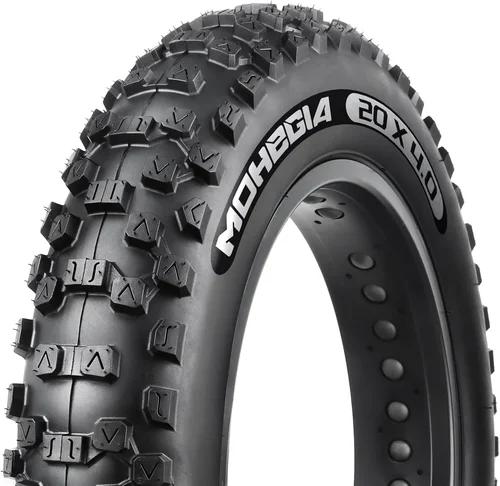
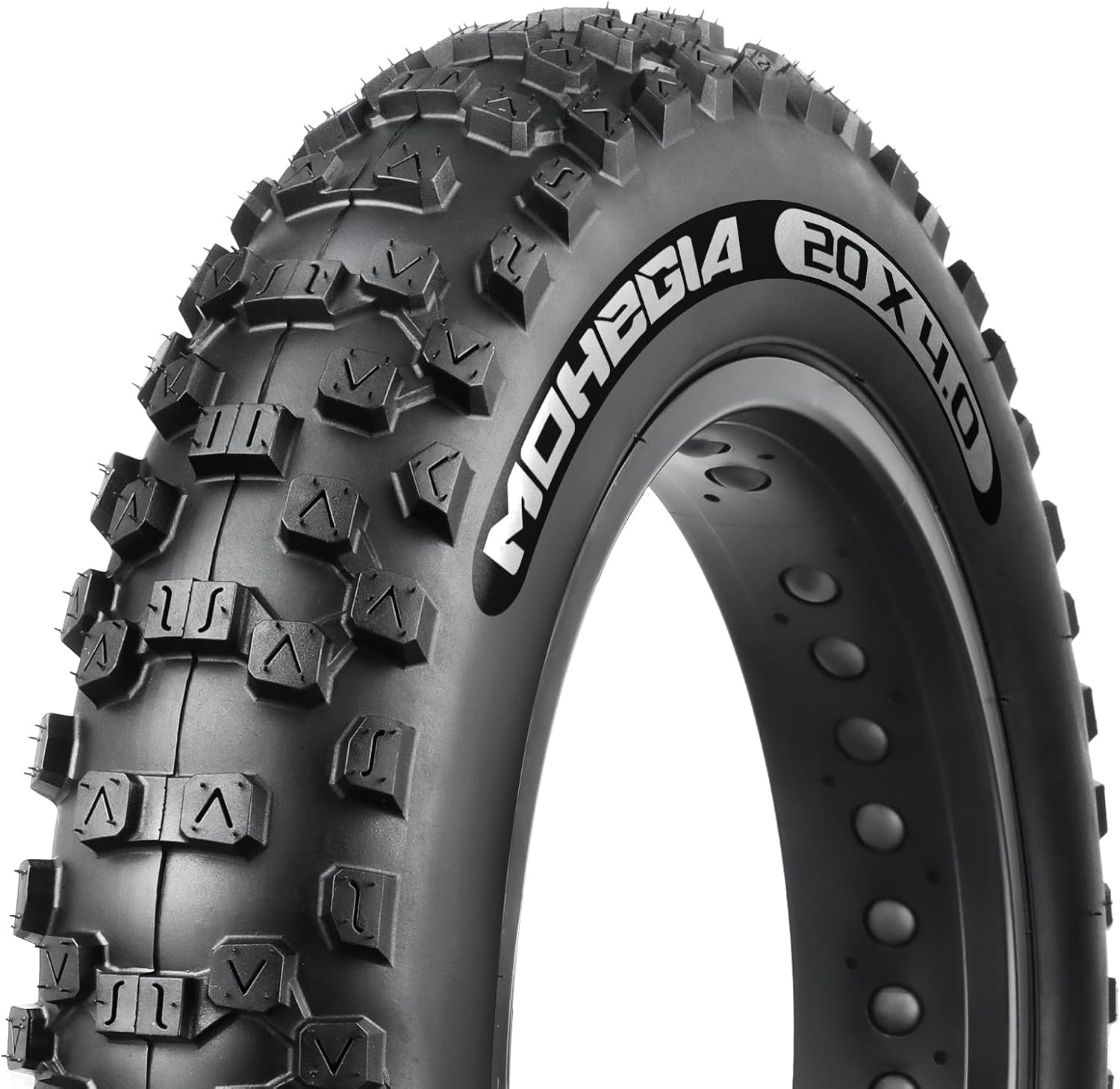
Fat tires are the defining feature of these bikes, but not all fat tires are created equal. Standard widths range from 3.8” to 5.0”, with 4.0” being the sweet spot for most riders—wide enough for stability and traction, but not so wide that they feel sluggish on pavement. Wider tires (4.5”+) excel in deep snow or sand but require more power and reduce range.
Tread pattern matters just as much as width. Knobby, aggressive treads are ideal for off-road conditions like mud, gravel, or loose dirt. Semi-slick or hybrid treads offer lower rolling resistance on pavement while still providing some off-road capability. Consider your primary riding environment: if you’re mostly on roads or packed trails, a less aggressive tread will save energy and reduce noise. Also check tire pressure recommendations—fat tires run at lower PSI (5–15 psi) for better grip, but underinflation can damage rims or cause pinch flats.
5. Braking System
With the added speed and weight of an e-bike, reliable brakes are non-negotiable. Mechanical disc brakes are common on entry-level models but require more hand force and wear faster. Hydraulic disc brakes, found on mid-range and premium bikes, offer superior stopping power, better modulation, and less maintenance. Look for 180mm or larger rotors—bigger rotors dissipate heat better and provide more braking force, which is crucial when riding downhill with a heavy load.
Some high-end models now feature regenerative braking, which recaptures a small amount of energy during braking to extend range. While not a major range booster, it’s a nice efficiency perk. Always test the brakes before buying: they should engage smoothly without squealing or grabbing, and the levers should feel firm and responsive.
6. Display and Control Interface
The display is your command center, showing speed, battery level, assist mode, distance, and sometimes navigation or ride stats. Basic models have simple LED indicators, while advanced systems feature full-color LCD or TFT screens with Bluetooth connectivity, smartphone integration, and app support. A good display should be readable in direct sunlight and easy to navigate while riding.
Look for intuitive controls—thumb shifters or buttons on the handlebar are better than twist grips, which can be awkward with gloves or in cold weather. Some displays allow customization of assist levels, pedal sensitivity, and even motor power output. If you plan to track fitness data or plan routes, choose a model with app compatibility (e.g., Strava, Google Maps integration).
7. Weight and Portability
Fat tire e-bikes are inherently heavy due to the motor, battery, and oversized components. Most weigh between 60 and 85 pounds—too heavy to lift easily, especially up stairs or onto a car rack. If you need to transport your bike frequently, consider a folding fat tire e-bike, though these are less common and often compromise on performance or range.
Check the bike’s dimensions when folded (if applicable) and whether it includes a carrying handle or wheels for rolling. Some models come with rear racks that can double as lifting points. Also consider step-through frames for easier mounting and dismounting, especially if you have mobility concerns.
8. Warranty and Customer Support
A fat tire e-bike is a significant investment, so protect it with a solid warranty. Most reputable brands offer at least a 1-year comprehensive warranty, with some extending to 2–3 years. Pay attention to what’s covered: motors and batteries often have separate warranties (e.g., 2 years for the battery, 1 year for the frame). Avoid brands with vague or limited coverage.
Customer support is just as important. Look for companies with responsive service teams, clear return policies, and accessible repair centers. Read user reviews about post-purchase experiences—delayed repairs, unhelpful support, or hard-to-find parts can turn a great bike into a headache. Brands like Rad Power Bikes and Aventon have strong reputations for support, while lesser-known brands may leave you stranded.
Different Types of Fat Tire E-Bikes

Common Buying Mistakes to Avoid

❌ Mistake: Prioritizing Price Over Quality
Why it’s bad: The cheapest fat tire e-bikes often cut corners on motors, batteries, and build quality. You might save $300 upfront but end up with a bike that overheats, has poor range, or breaks down within a year.
What to do instead: Set a realistic budget and focus on value, not just low cost. A $1,800 bike with a reliable motor, good warranty, and solid reviews is often a better long-term investment than a $1,200 model with hidden flaws.
❌ Mistake: Ignoring Real-World Range Claims
Why it’s bad: Manufacturers often advertise range based on ideal conditions—light rider, flat terrain, low assist. In reality, fat tires, hills, and cold weather can cut range by 30–50%.
What to do instead: Divide the advertised range by 1.5 to estimate real-world performance. If you need 40 miles, look for a bike rated for 60+ miles. Carry a spare battery if possible.
❌ Mistake: Overlooking Test Rides
Why it’s bad: E-bikes feel different from regular bikes. Handlebar position, pedal feel, and weight distribution affect comfort and control. Buying online without testing can lead to regret.
What to do instead: Visit local dealers or attend e-bike demo events. If buying online, choose retailers with generous return policies (30+ days) and free shipping both ways.
❌ Mistake: Neglecting Maintenance Needs
Why it’s bad: Fat tire e-bikes require more maintenance than standard bikes—wider tires wear faster, suspension needs servicing, and electronics can be sensitive to moisture.
What to do instead: Learn basic maintenance (tire pressure, chain lubrication, brake checks) and factor in annual service costs. Choose a brand with accessible parts and local repair support.
❌ Mistake: Choosing the Wrong Tire Width
Why it’s bad: A 5.0” tire might look cool, but it’s overkill for city riding and drains your battery faster. Conversely, a 3.8” tire may struggle in deep snow.
What to do instead: Match tire width to your primary terrain. 4.0” is the most versatile. Consider models with interchangeable tires if you ride in varied conditions.
❌ Mistake: Skipping the Warranty Check
Why it’s bad: A broken motor or dead battery can cost $500–$1,000 to replace. Without warranty coverage, you’re stuck paying out of pocket.
What to do instead: Read the fine print. Ensure the motor, battery, and frame are covered for at least 1–2 years. Avoid “as-is” or refurbished models unless explicitly warranted.
❌ Mistake: Buying Based on Looks Alone
Why it’s bad: A sleek design doesn’t guarantee performance. Some stylish bikes have weak motors or poor ergonomics.
What to do instead: Prioritize function over form. Check specs, read expert and user reviews, and focus on how the bike performs, not just how it looks.
Budget Guidelines: How Much Should You Spend?
Entry-Level ($800 – $1,500): These bikes are great for casual riders or those on a tight budget. Expect basic 500W–750W hub motors, 480–672Wh batteries, and aluminum frames. Features like suspension, quality brakes, and displays may be limited. Ideal for paved paths, light trails, and short commutes. Brands like Heybike and Ecotric offer decent options in this range, but check reviews carefully.
Mid-Range ($1,500 – $3,000): This is the sweet spot for most buyers. You’ll find 750W motors with 80+ Nm torque, 720–960Wh batteries, hydraulic disc brakes, and front suspension. Many include integrated lights, fenders, racks, and color displays. Models from Rad Power Bikes, Aventon, and Juiced Bikes dominate here, offering excellent value and reliability.
Premium ($3,000 – $5,000): Designed for enthusiasts and serious adventurers. These bikes feature mid-drive motors, full suspension, high-capacity batteries (960Wh+), and advanced electronics. Expect premium components like Shimano drivetrains, air-sprung forks, and app connectivity. Perfect for long-distance touring, mountain trails, or heavy cargo loads.
Luxury ($5,000+): Top-tier performance and innovation. Think carbon frames, regenerative braking, GPS tracking, and ultra-long range (70+ miles). Brands like Specialized, Trek, and Riese & Müller offer these, often with custom builds and concierge support. Best for professionals, tech lovers, or those who want the absolute best.
Expert Tips for Getting the Best Deal
1. Buy During Off-Season Sales: The best time to buy is late fall or winter (October–February), when demand drops and retailers clear inventory. Look for Black Friday, Cyber Monday, and end-of-year promotions. Many brands offer $200–$500 off or free accessories.
2. Shop Direct from Manufacturers: Brands like Rad Power Bikes and Aventon sell directly online, cutting out middlemen and passing savings to you. They often have exclusive deals, extended warranties, and better customer service than third-party retailers.
3. Compare Total Cost of Ownership: A cheaper bike might cost more long-term due to poor battery life, frequent repairs, or limited upgrade options. Factor in replacement parts, service costs, and potential resale value.
4. Check for Rebates and Incentives: Some states and cities offer e-bike rebates (up to $1,500) for eco-friendly transportation. Programs like California’s Clean Vehicle Rebate Project or Colorado’s e-bike incentive can significantly reduce your cost.
5. Read User Reviews, Not Just Specs: Manufacturer specs can be misleading. Real user reviews on forums, YouTube, and retailer sites reveal issues like battery degradation, software bugs, or poor customer service.
6. Test Ride Multiple Models: Comfort is subjective. What feels great to one rider might feel awkward to another. Test ride at least 2–3 bikes to compare handling, ergonomics, and ride quality.
7. Negotiate or Bundle: Even online retailers may offer discounts if you ask. Some will throw in free shipping, a helmet, or a lock if you mention a competitor’s deal. Bundling accessories can also save money.
8. Consider Refurbished or Open-Box: Certified refurbished models from reputable brands often come with full warranties and sell for 20–30% less. Open-box items (returned but unused) are another way to save.
Frequently Asked Questions
Q: Are fat tire e-bikes good for city commuting?
A: Yes, especially in areas with snow, ice, or poor road conditions. The wide tires provide excellent stability and traction, and many models include commuter-friendly features like lights, fenders, and racks. However, they’re heavier and less efficient on smooth pavement than standard e-bikes, so consider your route and storage needs.
Q: How fast can a fat tire e-bike go?
A: Most are limited to 20 mph (Class 2) or 28 mph (Class 3) under pedal assist. Some have “off-road” modes that unlock higher speeds (up to 30+ mph), but these are not legal on public roads in many areas. Always check local regulations.
Q: Do fat tire e-bikes need special maintenance?
A: They require the same basic maintenance as any e-bike—chain lubrication, brake checks, tire pressure—but fat tires wear faster and may need more frequent replacement. Suspension forks should be serviced annually, and batteries should be stored at 50–70% charge if not used for long periods.
Q: Can I ride a fat tire e-bike in the rain?
A: Yes, most are water-resistant (IP65 or higher), meaning they can handle rain and splashes. However, avoid submerging the motor or battery, and dry the bike after wet rides to prevent corrosion.
Q: How long do fat tire e-bike batteries last?
A: A quality lithium-ion battery should last 500–1,000 charge cycles, or about 3–5 years with regular use. Capacity gradually decreases over time—expect 70–80% of original range after 3 years.
Q: Are fat tire e-bikes legal everywhere?
A: In the U.S., e-bikes are regulated at the state level. Most states follow the three-class system (Class 1, 2, 3), but some have additional rules for fat tires or off-road use. Check your local laws before riding on trails or sidewalks.
Q: Can I convert a regular bike to a fat tire e-bike?
A: It’s possible with a conversion kit, but fat tire frames require specific hubs and clearance. Most kits are designed for standard tires, so retrofitting can be complex and unsafe. It’s usually better to buy a purpose-built model.
Q: What’s the difference between pedal assist and throttle?
A: Pedal assist (PAS) provides power only when you pedal, while throttle lets you ride without pedaling (like a motorcycle). Class 2 e-bikes have throttles; Class 1 and 3 do not. Throttle is great for hills or starting from a stop, but uses more battery.
Q: How do I store a fat tire e-bike long-term?
A: Store in a dry, temperature-controlled space. Charge the battery to 50–70%, remove it if possible, and inflate tires to prevent flat spots. Cover the bike to keep dust off.
Q: Can I take a fat tire e-bike on a plane?
A: Most airlines prohibit lithium batteries over 100Wh in checked luggage. Removable batteries under 300Wh may be allowed in carry-on with airline approval. Check with your carrier and remove the battery before flying.
Our Final Recommendations
Best for Budget-Conscious Buyers: Heybike Mars 2.0 – At under $1,300, this folding fat tire e-bike offers surprising value with a 750W motor, 672Wh battery, and 4” tires. Great for apartment dwellers or RV owners who need portability without sacrificing off-road capability.
Best Overall Value: Rad Power Bikes RadRover 6 Plus – A proven favorite, this 750W rear-hub motor bike features a 672Wh battery, hydraulic brakes, integrated lights, and a rugged aluminum frame. Priced around $1,999, it’s ideal for commuters and weekend adventurers alike.
Best Premium Option: Aventon Aventure.2 – With a 1,000W motor, 960Wh battery, and full suspension, this bike delivers top-tier performance for off-road enthusiasts. The color display, app connectivity, and premium build justify its $3,299 price tag.
Best for Beginners: Juiced Bikes CrossCurrent X – User-friendly with a step-through frame, intuitive display, and smooth power delivery. The 750W motor and 840Wh battery provide reliable performance for new riders, priced at $2,199.
Best for Advanced Users: Specialized Turbo Levo SL Comp – A high-performance mid-drive fat tire e-bike with lightweight carbon frame, 700Wh battery, and advanced ride dynamics. At $5,500, it’s built for serious trail riders who demand precision and power.
Conclusion: Making the Right Choice
Choosing the best fat tire e-bike isn’t just about picking the most powerful or stylish model—it’s about finding the right balance of performance, comfort, and value for your unique needs. Whether you’re navigating snowy city streets, exploring remote desert trails, or hauling groceries across town, the right fat tire e-bike can transform your daily routine into an adventure.
As you’ve learned, key factors like motor power, battery capacity, build quality, and warranty coverage are critical to long-term satisfaction. Avoid common pitfalls like ignoring real-world range or skipping test rides, and always prioritize reputable brands with strong customer support. Use the budget guidelines and expert tips to shop smart, and don’t hesitate to take advantage of seasonal sales or rebates.
Ultimately, the best fat tire e-bike is the one that fits your lifestyle, budget, and riding goals. Take your time, do your research, and when you find the right match, you’ll wonder how you ever got around without it. Happy riding!