
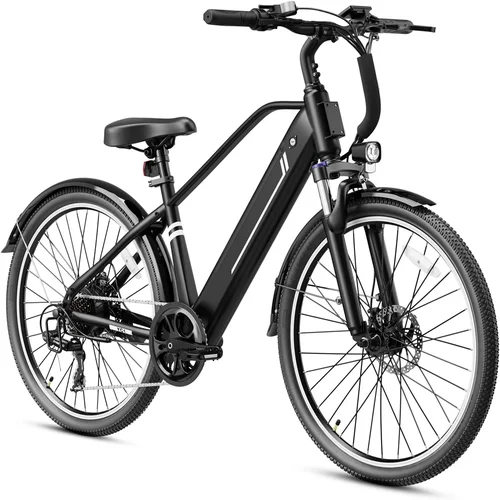
Electric bikes have evolved from niche commuter tools into powerful, versatile machines capable of tackling everything from urban streets to rugged mountain trails. Among the most impressive in this transformation are 1500W e-bikes—high-performance models that deliver serious speed, torque, and range. These bikes aren’t just about getting from point A to B; they’re about doing it with power, confidence, and style. Whether you’re a daily commuter looking to conquer steep hills without breaking a sweat, an off-road adventurer seeking trail dominance, or someone who simply wants the thrill of near-motorcycle acceleration on two wheels, a 1500W e-bike could be your ideal ride.
But with great power comes great responsibility—and a complex buying decision. The market is flooded with options, from budget-friendly imports to premium American-built machines, each claiming to be the “best.” How do you separate marketing hype from real performance? What should you prioritize: battery life, frame strength, motor type, or warranty coverage? And how do you avoid overpaying for features you don’t need—or worse, ending up with a bike that fails after a few months? This guide is designed to cut through the noise. We’ll walk you through every critical factor, compare top categories, highlight common pitfalls, and give you actionable advice to make a smart, informed purchase. By the end, you’ll know exactly what to look for—and which 1500W e-bike truly fits your lifestyle, budget, and riding goals.
The 1500W e-bike segment has exploded in recent years, driven by advances in battery technology, motor efficiency, and consumer demand for faster, more capable electric rides. These bikes typically fall into the “high-power” or “performance” category, often classified as Class 3 (up to 28 mph) or even off-road/unclassified models depending on local regulations. They’re built for riders who refuse to compromise—whether that means hauling heavy cargo up a 20% grade, cruising at highway-adjacent speeds, or shredding backcountry singletrack. Brands like Rad Power Bikes, Aventon, Juiced Bikes, and specialized builders like Biktrix and Himiway have pushed the envelope with robust frames, high-capacity batteries, and advanced drivetrains. Yet despite the variety, not all 1500W e-bikes are created equal. Some prioritize raw speed, others focus on durability, and many strike a balance. Understanding your own needs—and the nuances between models—is key to finding the right match.

What to Look for When Buying a 1500W E-Bike
1. Motor Type and Placement
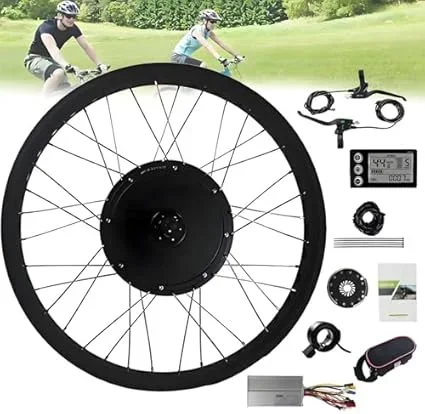
The heart of any e-bike is its motor, and for 1500W models, this component defines everything from acceleration to hill-climbing ability. Most high-wattage e-bikes use either hub motors (located in the front or rear wheel) or mid-drive motors (mounted near the pedals, integrated with the drivetrain). Hub motors are common in 1500W bikes because they’re simpler, cheaper to produce, and deliver strong torque—ideal for quick launches and flatland speed. Rear hub motors are preferred over front hubs for better weight distribution and traction, especially when accelerating hard. Mid-drive motors, while rarer in this wattage class due to cost and complexity, offer superior balance, leverage the bike’s gears for efficiency, and provide a more natural riding feel. However, they’re typically found in premium models and may not sustain 1500W continuously without overheating. When evaluating motor specs, look beyond just wattage: check if the motor is rated for continuous or peak output. A 1500W peak motor might only sustain 750–1000W under load, which can affect real-world performance. Also consider torque (measured in Newton-meters or Nm)—higher torque means better hill climbing and quicker response. For example, a motor delivering 80+ Nm will feel significantly more responsive than one with 50 Nm, even at the same wattage.
2. Battery Capacity and Chemistry
A powerful motor needs a robust power source, and that’s where battery capacity becomes critical. Measured in watt-hours (Wh), battery capacity determines how far you can go on a single charge. For a 1500W e-bike, we recommend a minimum of 750Wh—anything less will drain quickly under full throttle. Many top-tier models now feature 900Wh to 1200Wh batteries, enabling 40–80+ miles of range depending on terrain, rider weight, and assist level. Lithium-ion (Li-ion) is the standard chemistry, but pay attention to the cell type: Samsung, LG, and Panasonic cells are industry gold standards for longevity and safety. Avoid generic or unnamed cells, as they may degrade faster or pose fire risks. Also consider battery placement: downtube-mounted batteries lower the center of gravity for better handling, while rear rack batteries can make the bike feel tail-heavy. Removable batteries are a must for urban riders who need to charge indoors. Finally, check charging time—most 750Wh+ batteries take 5–8 hours to fully charge, though some fast chargers can cut that in half.
3. Frame Material and Build Quality
At 1500W, your e-bike will generate substantial forces—especially during hard acceleration or off-road use—so the frame must be built to handle it. Aluminum alloy (typically 6061 or 7005) is the most common material due to its strength-to-weight ratio and corrosion resistance. Look for reinforced joints, thick tubing, and quality welds. Avoid thin or flimsy frames, even if they’re labeled “aluminum.” Steel frames offer excellent durability and vibration damping but add significant weight—fine for cargo hauling, less ideal for agility. Carbon fiber is rare in this segment due to cost and impact vulnerability, but some premium brands offer it for reduced weight. Beyond material, inspect details like internal cable routing (protects wires and looks clean), dropper seatpost compatibility (for off-road control), and mounting points for racks, fenders, and water bottles. A well-built frame should feel solid when you lift it—no creaks, flex, or loose parts. Remember: a 1500W motor can stress a weak frame over time, leading to cracks or failure.
4. Braking System
Speed demands stopping power. With 1500W motors capable of pushing bikes to 30+ mph, reliable brakes aren’t optional—they’re essential. Hydraulic disc brakes are the gold standard: they offer consistent, powerful stopping with minimal hand effort, perform well in wet conditions, and require less maintenance than mechanical discs. Look for reputable brands like Shimano, Tektro, or Magura with at least 180mm rotors (203mm preferred for heavy riders or off-road use). Avoid rim brakes entirely—they can’t handle the heat and wear generated by high-speed e-bike braking. Also check for brake integration: many modern e-bikes cut motor power instantly when brakes are applied (called “brake cutoff” or “e-brake”), which improves safety and prevents drivetrain strain. Test the lever feel—if it’s spongy or requires excessive pull, the system may need bleeding or isn’t up to spec.
5. Suspension and Tire Setup
Riding a 1500W e-bike over rough terrain without proper suspension is like driving a sports car on cobblestones—possible, but uncomfortable and damaging long-term. Front suspension forks (typically 100–150mm travel) absorb bumps and improve control, especially on trails or pothole-ridden streets. Full-suspension models offer even better comfort and traction but add weight and cost. For city commuting, a quality front fork may suffice; for off-road adventures, consider full suspension. Pair suspension with appropriate tires: fat tires (3.0”–4.0” wide) provide stability and grip on loose surfaces, while narrower slicks (2.0”–2.5”) reduce rolling resistance for pavement efficiency. Look for puncture-resistant casings and tubeless-ready options if you ride frequently. Tire pressure also matters—lower PSI increases comfort and traction but risks pinch flats; higher PSI saves battery but sacrifices grip.
6. Display and User Interface
Your e-bike’s display is your command center—it shows speed, battery level, assist mode, trip data, and sometimes navigation or connectivity features. A clear, backlit LCD or color TFT screen is ideal for visibility in all conditions. Look for intuitive controls: thumb throttles are common on 1500W bikes (allowing instant power without pedaling), but ensure they’re responsive and don’t stick. Some displays offer Bluetooth connectivity to smartphone apps for ride tracking, firmware updates, or anti-theft alerts. Pay attention to waterproofing (IP65 or higher rating) if you ride in rain. Also consider placement: handlebar-mounted displays should be within easy view without obstructing brakes or shifters. Avoid tiny, dim screens that force you to squint—especially at high speeds where every second counts.
7. Legal Compliance and Local Regulations
Before buying, understand your local e-bike laws. In the U.S., federal law classifies e-bikes into three categories based on speed and throttle use. Most 1500W bikes exceed Class 3 limits (28 mph max with pedal assist only) and may be restricted to private property or off-road use in many states and cities. Some jurisdictions require helmets, registration, or prohibit throttles entirely. Europe has even stricter rules—many countries cap e-bike power at 250W with speed limited to 25 km/h (15.5 mph). Riding a 1500W bike on public roads where it’s illegal can result in fines, impoundment, or insurance issues. Check your state/province regulations carefully. If you plan to ride off-road only, ensure the bike is designed for trail use (e.g., knobby tires, reinforced frame). Some manufacturers offer “dual-mode” bikes that can be software-limited to comply with local laws—a smart feature for travelers.
8. Warranty and Customer Support
A 1500W e-bike is a significant investment—typically $2,000 to $5,000+—so protect it with a solid warranty. Look for at least a 1-year comprehensive warranty covering motor, battery, and frame, with 2–3 years preferred. Battery warranties often specify cycle life (e.g., “80% capacity after 800 cycles”)—this indicates expected longevity. Avoid brands with vague or short coverage. Customer support matters too: can you reach a human quickly? Are replacement parts readily available? Read reviews about post-purchase service—some companies excel here, others leave customers stranded. Extended warranties or service plans may be worth considering for high-mileage riders. Also check return policies: a 14–30 day trial period lets you test the bike in real conditions before committing.
Different Types of 1500W E-Bikes

Common Buying Mistakes to Avoid
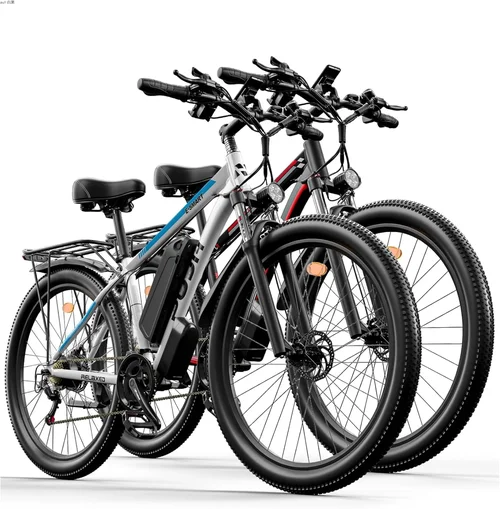
❌ Mistake: Ignoring Local Laws
Why it’s bad: Buying a 1500W e-bike without checking regulations can lead to legal trouble, fines, or being banned from roads and trails. Many areas restrict high-power e-bikes to private property.
What to do instead: Research your city, state, and country laws before purchasing. If legal restrictions apply, consider a software-limited model or choose a lower-wattage bike for street use.
❌ Mistake: Prioritizing Wattage Over Real-World Performance
Why it’s bad: A 1500W label doesn’t guarantee speed or range. Some motors can’t sustain that output, and poor batteries drain fast under load.
What to do instead: Focus on torque, battery capacity (Wh), and continuous power ratings. Read independent reviews that test real-world speed and range.
❌ Mistake: Skipping the Test Ride
Why it’s bad: E-bikes handle differently based on weight distribution, suspension, and motor response. What looks good on paper may feel unstable or uncomfortable.
What to do instead: Always test ride before buying—especially for high-power models. If buying online, choose retailers with generous return policies.
❌ Mistake: Overlooking Maintenance Needs
Why it’s bad: 1500W bikes stress components more than lower-wattage models. Worn chains, weak brakes, or degraded batteries can cause failures or accidents.
What to do instead: Factor in maintenance costs and learn basic upkeep. Choose bikes with standard parts (e.g., Shimano drivetrains) for easy repairs.
❌ Mistake: Choosing Based on Price Alone
Why it’s bad: The cheapest 1500W bike often cuts corners on safety, durability, or support—leading to higher long-term costs.
What to do instead: Balance budget with quality. Mid-range models ($2,500–$4,000) often offer the best value for performance and reliability.
❌ Mistake: Ignoring Weight and Portability
Why it’s bad: Many 1500W e-bikes weigh 70–90+ lbs. Lifting or storing them can be difficult, especially in apartments or on public transit.
What to do instead: Consider foldable designs or lighter materials if portability matters. Check weight before buying.
Budget Guidelines: How Much Should You Spend?
Entry-Level ($1,800–$2,500): These bikes offer basic 1500W performance but may use lower-quality components, smaller batteries (600–750Wh), and minimal warranties. Ideal for occasional riders or those on tight budgets—but expect shorter lifespan and more maintenance.
Mid-Range ($2,500–$4,000): The sweet spot for most buyers. Expect reliable motors (80+ Nm torque), 750–900Wh batteries, hydraulic brakes, and solid frames from reputable brands. Great balance of performance, durability, and value.
Premium ($4,000–$6,000): Built for enthusiasts and daily heavy users. Features include high-end suspension, 1000Wh+ batteries, advanced displays, and extended warranties. Often made in the USA or EU with superior craftsmanship.
Luxury ($6,000+): Top-tier machines with carbon frames, custom builds, race-grade components, and cutting-edge tech. Designed for professionals, competitive riders, or collectors who demand the absolute best.
Expert Tips for Getting the Best Deal
– Buy during off-season: Late fall and winter often see discounts as retailers clear inventory for new models.
– Check manufacturer direct: Brands like Rad Power Bikes or Juiced Bikes often offer better prices and bundles than third-party retailers.
– Look for refurbished or open-box deals: These can save 15–30% with minimal risk, especially if covered by warranty.
– Join loyalty programs: Some brands offer member discounts, early access to sales, or free shipping.
– Read return policies carefully: Ensure you can return the bike within 14–30 days if it doesn’t meet expectations.
– Negotiate add-ons: Ask for free accessories (locks, lights, racks) when purchasing—many dealers will include them to close the sale.
– Consider financing: Some retailers offer 0% APR plans, spreading cost over 6–24 months without extra fees.
– Verify authenticity: Avoid counterfeit or gray-market imports that may lack safety certifications or support.

Frequently Asked Questions
Q: Are 1500W e-bikes street legal?
A: It depends on your location. In the U.S., federal law limits e-bikes to 750W for Class 1–3, but some states allow higher power on private land or off-road. Always check local regulations before riding on public roads.
Q: How fast can a 1500W e-bike go?
A: Most can reach 28–35 mph on flat ground with throttle or pedal assist. Actual speed varies based on rider weight, terrain, wind, and battery charge.
Q: How far can I ride on a single charge?
A: Range typically ranges from 30–80 miles. Factors include battery size (Wh), assist level, terrain, and rider weight. Eco mode extends range; throttle-only shortens it.
Q: Do I need a special license or insurance?
A: Generally no for off-road or private property use. On public roads, requirements vary—some states require helmets, registration, or insurance for high-power e-bikes.
Q: Can I upgrade the battery later?
A: Some brands offer higher-capacity batteries as upgrades, but compatibility varies. Check with the manufacturer before assuming you can swap.
Q: Are 1500W e-bikes good for hills?
A: Absolutely. The high torque and power make climbing steep grades (15–25%+) much easier than with lower-wattage bikes.
Q: How long do batteries last?
A: Quality lithium batteries last 800–1,200 charge cycles before dropping to 80% capacity—roughly 3–5 years with regular use.
Q: Can I ride in the rain?
A: Most 1500W e-bikes are water-resistant (IP65 rated), but avoid submerging them or high-pressure washing. Dry thoroughly after wet rides.
Q: What’s the difference between hub and mid-drive motors?
A: Hub motors are simpler and cheaper, mounted in the wheel. Mid-drives sit near the pedals, use the bike’s gears, and offer better efficiency and balance—but are rarer in 1500W models.
Q: Should I buy online or in-store?
A: In-store lets you test ride and get immediate support, but online often has better prices and selection. Choose based on your comfort level and return policy.
Our Final Recommendations
Best for Budget-Conscious Buyers: Juiced CrossCurrent X – Packs a 1000W continuous (1500W peak) motor, 960Wh battery, and hydraulic brakes under $3,000. Excellent value with real-world performance.
Best Overall Value: Rad Power Bikes RadRover 6 Plus – A versatile fat-tire commuter with 750W continuous (1500W peak), 672Wh battery, and rugged build. Reliable, well-supported, and under $2,000.
Best Premium Option: Biktrix Monte 1000 – Full-suspension, 1000Wh battery, 90Nm torque, and trail-ready specs. Built for serious off-road performance at ~$4,500.
Best for Beginners: Aventon Aventure.2 – User-friendly interface, comfortable ride, and strong customer support. Great entry point into high-power e-biking at $2,299.
Best for Advanced Users: Himiway Cobra Pro – Dual-battery option (up to 1,440Wh), full suspension, and 85Nm torque. Designed for long-range adventure and technical terrain (~$3,999).
Conclusion: Making the Right Choice
Choosing the best 1500W e-bike isn’t just about picking the most powerful or cheapest option—it’s about aligning performance, durability, and usability with your specific needs. Whether you’re commuting through city canyons, exploring mountain trails, or hauling gear across town, the right bike will feel like an extension of your will, not a compromise. We’ve covered the critical factors: motor quality, battery capacity, frame strength, braking power, legal compliance, and support. We’ve compared categories, warned against common pitfalls, and offered budget guidance to help you invest wisely. Now it’s your turn. Prioritize what matters most to you—speed, range, comfort, or versatility—and don’t rush the decision. Take advantage of test rides, read real user reviews, and ask questions. A 1500W e-bike is more than a vehicle; it’s a gateway to freedom, adventure, and effortless mobility. Choose well, ride safely, and enjoy the ride.