
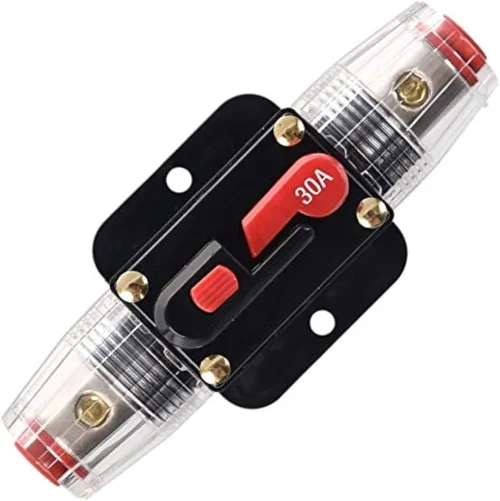
When it comes to electrical safety and reliability in automotive, marine, or off-grid power systems, few components are as critical—and often misunderstood—as the humble fuse holder. Whether you’re troubleshooting a faulty circuit breaker in your RV, upgrading your boat’s wiring, or building a solar power setup, the idea of replacing a malfunctioning breaker with a standard 30-amp inline blade fuse holder might sound like a quick, cheap fix. And in many cases, it absolutely can be—but only if you understand exactly what you’re doing, why it works, and when it’s appropriate.
This comprehensive buying guide is designed for DIYers, weekend mechanics, off-grid enthusiasts, and even seasoned technicians who want to make informed decisions about 30-amp inline blade fuse holders. We’ll walk you through everything from core specifications and build quality to common pitfalls and expert-level installation tips. By the end, you’ll know not just how to choose the right fuse holder, but why certain features matter—and how to avoid costly mistakes that could compromise safety or performance.
The market for inline fuse holders is surprisingly diverse. From ultra-cheap plastic housings sold at big-box stores to rugged, marine-grade units built to withstand saltwater and vibration, options abound. Yet many buyers end up with products that fail prematurely, overheat under load, or don’t actually provide the protection they promise. Our goal here is to cut through the noise, clarify misconceptions (like whether a fuse holder truly “replaces” a breaker), and arm you with the knowledge to select a fuse holder that delivers reliable, long-term performance—without overspending.

What to Look for When Buying Buying Guide
1. Amperage Rating & Compatibility
The most fundamental specification for any fuse holder is its amperage rating—and for this guide, we’re focusing on 30-amp models. But don’t assume all “30-amp” fuse holders are created equal. The rating refers to the maximum current the holder can safely carry continuously without overheating or degrading. However, real-world performance depends on wire gauge, ambient temperature, and duty cycle.
Always match your fuse holder’s rating to your circuit’s requirements. If your system draws 28 amps under peak load, a 30-amp holder is technically sufficient—but operating near the limit increases heat buildup and reduces lifespan. For safety margins, consider stepping up to a 40-amp holder if your wiring supports it. Also, ensure the holder accepts standard ATC or ATO blade fuses (the most common type), and verify that the fuse itself is rated for 30 amps—not higher, not lower.
2. Voltage Rating
While amperage gets most of the attention, voltage rating is equally important—and often overlooked. Most automotive and marine fuse holders are rated for 32V DC, which covers 12V and 24V systems. However, if you’re working with higher-voltage applications (like 48V solar arrays or industrial equipment), you’ll need a holder rated for at least 58V DC or more.
Using a fuse holder below its required voltage rating can lead to arcing, failure to interrupt fault currents, or even catastrophic melting. Check the product specs carefully: a “32V” label means it’s unsafe for anything above that threshold. For mixed-voltage environments or future-proofing, opt for holders rated at 60V or 100V DC.
3. Build Quality & Materials
Not all fuse holders are built to last. Cheap plastic housings may crack under vibration, while thin copper contacts can overheat and corrode. Look for holders made from high-temperature thermoplastic (like PBT or nylon) that resist melting at 150°C+. The contact terminals should be solid brass or tinned copper—not plated steel—to ensure low resistance and corrosion resistance.
Sealing is another key factor, especially for outdoor, marine, or under-hood use. IP67-rated holders offer dustproof and waterproof protection, crucial for boats, RVs, or off-road vehicles. Avoid “open-frame” designs in harsh environments—they invite moisture, dirt, and accidental shorts.
Material Comparison Table
| Material | Pros | Cons |
| ABS Plastic | Low cost, lightweight | Brittle, melts at ~100°C |
| PBT/Nylon | Heat-resistant, durable | Slightly more expensive |
| Brass Contacts | Excellent conductivity, corrosion-resistant | Heavier than steel |

4. Wire Gauge Compatibility
A 30-amp circuit typically requires 10-gauge wire (or 8-gauge for longer runs). Your fuse holder must accommodate this wire size securely. Many budget holders only accept up to 12-gauge, forcing you to crimp down or use adapters—both of which increase resistance and heat.
Look for holders with clearly marked wire range specs (e.g., “10–14 AWG”). Better yet, choose models with screw-type terminals or heavy-duty crimp barrels instead of push-in connectors, which can loosen over time. If you’re splicing wires, ensure the holder includes heat-shrink tubing or adhesive-lined sleeves for moisture protection.
5. Environmental Resistance
Where will your fuse holder live? Under the hood of a truck? Inside a boat’s engine compartment? On a solar panel combiner box in the desert? Environment dictates design.
For automotive use, basic heat and vibration resistance suffice. Marine applications demand UV-stabilized materials, salt-spray resistance, and sealed housings. Off-grid solar setups need holders that won’t degrade under constant sun exposure or temperature swings from -20°C to 70°C.
Check for certifications like UL listing (safety), RoHS compliance (environmental), or MIL-STD ratings (durability). These aren’t always necessary, but they signal rigorous testing.
6. Ease of Installation & Maintenance
A fuse holder should simplify your life—not complicate it. Look for features like:
– Tool-free fuse access (snap-open covers)
– Clear polarity markings (+ and –)
– Pre-stripped wire compatibility
– Mounting holes or adhesive backing
Avoid designs that require soldering unless you’re experienced. Inline holders with pre-attached wires (e.g., 6″ leads) save time but limit flexibility. For tight spaces, low-profile or right-angle models may be preferable.
7. Brand Reputation & Certifications
Stick with reputable brands like Blue Sea Systems, Bussmann, Littelfuse, or Ancor. These companies invest in R&D, quality control, and customer support. Generic “no-name” holders from unknown sellers may save $5 upfront but cost you in reliability and safety.
Look for UL, CSA, or ETL listings—these indicate third-party testing for electrical safety. While not every good product is certified (especially smaller brands), lack of certification should raise a red flag for high-current applications.
8. Warranty & Customer Support
A solid warranty (1–3 years) reflects manufacturer confidence. More importantly, responsive customer service matters if you encounter defects or installation questions. Check return policies—some retailers won’t accept electrical items once opened.
Avoid sellers with no-contact info or vague warranties like “lifetime” with no terms. Real support includes datasheets, installation guides, and replacement part availability.
Different Types of Buying Guide
Common Buying Mistakes to Avoid
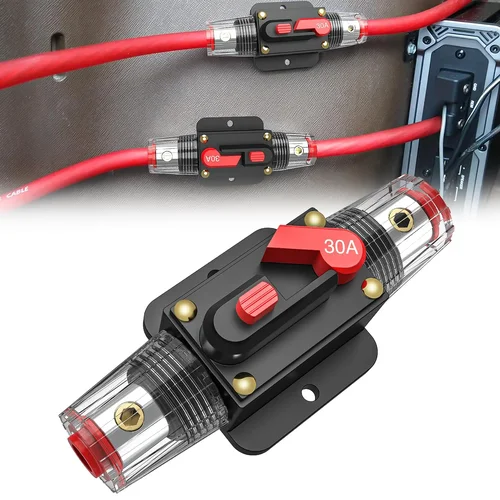
❌ Mistake: Assuming All 30-Amp Fuse Holders Are Interchangeable
Why it’s bad: A fuse holder rated for 30 amps doesn’t guarantee it can handle 30 amps continuously in your specific environment. Factors like wire length, ambient heat, and connector quality drastically affect real-world performance. Using an undersized or low-quality holder can cause overheating, voltage drop, or fire.
What to do instead: Calculate your actual load (including surge currents), verify wire gauge compatibility, and choose a holder with a 20–25% safety margin. When in doubt, go one size up.
❌ Mistake: Ignoring Voltage Ratings
Why it’s bad: A 32V-rated holder used in a 48V solar system may arc internally during a fault, failing to protect the circuit—and potentially igniting surrounding materials.
What to do instead: Always match voltage rating to your system’s maximum potential voltage (including spikes). For 12V systems, 32V is fine; for 48V+, seek 60V+ rated units.
❌ Mistake: Buying Based Solely on Price
Why it’s bad: The cheapest $2 fuse holder often uses thin contacts and brittle plastic. It might work for a week—then fail catastrophically when you need it most.
What to do instead: Treat electrical components as safety-critical investments. Spend a few extra dollars for UL-listed, well-reviewed products from trusted brands.
❌ Mistake: Overlooking Environmental Conditions
Why it’s bad: Installing a standard plastic holder in a marine engine bay invites corrosion, cracking, and short circuits from salt spray and humidity.
What to do instead: Match the holder to your environment: sealed for wet areas, high-temp for engine compartments, UV-resistant for outdoor solar use.
❌ Mistake: Confusing Fuse Holders with Circuit Breakers
Why it’s bad: While a 30-amp fuse holder can temporarily replace a faulty breaker in low-risk scenarios, it lacks reset capability and precise trip curves. Breakers are designed for repeated overload protection; fuses are single-use.
What to do instead: Use fuse holders as permanent replacements only if your system design allows for fuse-based protection. For frequently tripping circuits, invest in a proper breaker or address the root cause (e.g., undersized wiring).
❌ Mistake: Poor Wire Termination
Why it’s bad: Loose crimp connections or stripped wires that don’t fill the terminal create hot spots, leading to melted insulation or fire.
What to do instead: Use quality ring terminals or butt splices rated for your wire gauge. Apply dielectric grease on connections in corrosive environments, and always tug-test after installation.
❌ Mistake: Skipping Fuse Inspection
Why it’s bad: A blown fuse indicates an underlying issue—not just a random failure. Replacing it without diagnosing the cause risks repeated blowing or component damage.
What to do instead: Investigate why the fuse blew: short circuit, overload, or faulty device. Fix the root problem before restoring power.
Budget Guidelines: How Much Should You Spend?
– Entry-Level ($3–$8): Suitable for low-risk, indoor automotive applications (e.g., accessory lights, radio circuits). Expect basic plastic housings, minimal sealing, and limited durability. Best for temporary fixes or low-current sub-circuits—not main battery lines.
– Mid-Range ($9–$18): The sweet spot for most DIYers. These holders offer better materials (PBT plastic, brass contacts), basic weather resistance, and reliable performance for 30-amp loads. Ideal for RVs, trailers, and garage projects. Look for brands like Nilight or Muzata in this range.
– Premium ($19–$35): For professionals and mission-critical systems. Features include IP67 sealing, 100V+ ratings, high-temp materials, and robust mounting. Perfect for marine, solar, or commercial use. Blue Sea Systems and Ancor dominate here.
– Luxury ($35+): Overkill for most users, but justified in extreme environments (e.g., racing, military, offshore rigs). These often include integrated LED indicators, tool-less fuse access, and military-spec certifications.
Expert Tips for Getting the Best Deal
– Buy During Off-Seasons: Automotive and marine suppliers often discount electrical components in winter (January–March). Stock up for spring projects.
– Check Specialty Retailers: Stores like West Marine, Advance Auto Parts, or Renogy offer better selection and expertise than Amazon for niche needs. Their staff can often recommend exact matches.
– Bundle with Other Components: Many sellers offer discounts when you buy fuse holders with fuses, wire, or terminals. A “solar starter kit” might include a quality holder at a lower effective price.
– Read Deep Into Reviews: Look for comments about long-term durability, heat resistance, and real-world amp handling—not just “works great!” Search for “overheated,” “melted,” or “failed after 6 months” to spot red flags.
– Verify Return Policies: Electrical items are often final sale. Ensure you can return defective units—even if opened—before purchasing.
– Test Before Final Install: Temporarily connect your fuse holder to the circuit and monitor temperature with an infrared thermometer after 30 minutes of load. If it’s too hot to touch (>60°C), it’s undersized.
– Consider Multi-Packs: If you have multiple circuits, buying a 3- or 5-pack reduces per-unit cost and ensures consistent quality across your system.
– Watch for Counterfeits: On marketplaces like Amazon or eBay, verify seller ratings and look for official brand logos. Fake Bussmann holders are common—and dangerous.
Frequently Asked Questions
Q: Can I really replace a faulty 30-amp circuit breaker with an inline fuse holder?
A: Technically, yes—but with caveats. A fuse holder provides overcurrent protection similar to a breaker, but it’s not a direct functional replacement. Breakers reset; fuses must be replaced. Use this approach only for non-critical, infrequently accessed circuits (e.g., auxiliary lights). For main power lines or safety-critical systems, repair or replace the breaker properly.
Q: What’s the difference between ATC and ATO fuses?
A: Nearly identical in function, ATC (Automotive Blade Fuse – Covered) has a transparent cover protecting the element, while ATO (Open) does not. Most modern holders accept both, but ATC is preferred for dust/moisture resistance.
Q: How do I know if my fuse holder is overheating?
A: Signs include melted plastic, discolored wires, a burning smell, or the fuse blowing repeatedly under normal load. Use a thermal camera or infrared thermometer to check temperature during operation—anything above 60°C warrants investigation.
Q: Can I use a 30-amp fuse holder with a 20-amp fuse?
A: Yes, and it’s common practice. The holder’s rating is its maximum capacity; the fuse determines the actual protection level. Just ensure the holder is rated for at least the fuse’s amperage.
Q: Do I need a fuse holder on both positive and negative wires?
A: Only on the positive (hot) side. Fusing the negative can create dangerous scenarios where the circuit appears dead but remains energized through ground paths.
Q: Are waterproof fuse holders necessary for my RV?
A: If the holder is exposed to rain, snow, or high humidity (e.g., under sink, exterior lighting), yes. Interior cabin circuits may get by with basic models, but sealed holders add peace of mind.
Q: How often should I inspect my fuse holder?
A: At least annually, or after any electrical issue. Check for corrosion, loose wires, cracks, or heat damage. In marine or off-road environments, inspect every 3–6 months.
Q: Can I splice multiple wires into one fuse holder?
A: Not recommended. Each circuit should have its own fused protection. Daisy-chaining increases fault risk and complicates troubleshooting.
Q: What wire gauge do I need for a 30-amp fuse holder?
A: 10-gauge wire is standard for runs up to 10 feet in 12V systems. For longer distances or higher temps, use 8-gauge to minimize voltage drop.
Q: Are there fuse holders with built-in LED indicators?
A: Yes—premium models from Blue Sea Systems and others include LEDs that light when the fuse is blown. Helpful for quick diagnostics but add cost and complexity.
Our Final Recommendations
– Best for Budget-Conscious Buyers: Nilight 30A Inline Fuse Holder ($6–$8) – Solid mid-tier performer with decent materials and wide availability. Great for basic automotive use.
– Best Overall Value: Ancor 702030 Marine Fuse Holder ($15) – IP67 sealed, tinned copper contacts, and rugged construction. Ideal for boats, RVs, and outdoor setups.
– Best Premium Option: Blue Sea Systems 30A Fuse Block with Cover ($28) – UL-listed, high-temp rated, and includes a protective cover. Perfect for professional installations.
– Best for Beginners: Muzata 30A Waterproof Fuse Holder Kit ($12) – Comes with heat shrink, fuses, and clear instructions. Everything you need in one package.
– Best for Advanced Users: Bussmann FMG30 Marine Fuse Holder ($22) – MIL-SPEC durability, 100V rating, and field-replaceable contacts. Built for harsh environments and frequent maintenance.
Conclusion: Making the Right Choice
Choosing the right 30-amp inline blade fuse holder isn’t just about finding the cheapest option—it’s about balancing safety, durability, and suitability for your specific application. While it’s tempting to view these components as disposable, remember: they’re the first line of defense against electrical fires, equipment damage, and personal injury.
We’ve covered everything from core specs and material science to real-world installation pitfalls and expert shopping strategies. Now it’s your turn to apply this knowledge. Prioritize your needs: Are you protecting a $500 sound system or a $50,000 solar array? Your answer dictates your budget and feature requirements.
Don’t let a $5 savings lead to a $5,000 loss. Invest wisely, install carefully, and always respect the power flowing through those wires. With the right fuse holder in place, you’ll gain not just protection—but peace of mind.
Ready to upgrade your electrical system? Start by assessing your current setup, then use our recommendations and checklist to find the perfect match. Your future self (and your vehicle) will thank you.