

This guide walks you through common Gotrax electric scooter problems and how to fix them—from dead batteries to brake issues. With clear instructions and safety tips, you’ll save time and money by handling repairs yourself.
Key Takeaways
- Safety first: Always power off and unplug your Gotrax scooter before attempting any repairs to avoid injury or damage.
- Check the battery: Most performance issues stem from a weak or improperly charged battery—test voltage and connections first.
- Inspect tires regularly: Flat or worn tires reduce traction and efficiency; inflate or replace as needed.
- Clean and lubricate moving parts: Dirt and friction cause wear; keep the deck, folding mechanism, and brakes clean.
- Use genuine parts: For long-term reliability, replace components with Gotrax-approved or compatible parts.
- Reset the controller: Many electronic glitches can be resolved with a simple power cycle or controller reset.
- Know when to seek help: If internal wiring or motor issues persist, consult a professional technician.
How to Fix a Gotrax Electric Scooter: A Complete DIY Guide
Gotrax electric scooters are popular for their affordability, portability, and eco-friendly design. Whether you’re commuting to work, running errands, or just enjoying a weekend ride, these scooters offer a convenient way to get around. But like any electronic device, they can develop issues over time. The good news? Many common problems are easy to fix at home—no need to pay for expensive repairs or wait weeks for a replacement.
In this guide, you’ll learn how to diagnose and fix the most frequent Gotrax scooter problems, from battery troubles to brake malfunctions. We’ll walk you through step-by-step instructions, share practical tips, and help you maintain your scooter for long-term performance. By the end, you’ll feel confident tackling repairs yourself and keeping your ride in top shape.
Before You Begin: Safety and Preparation
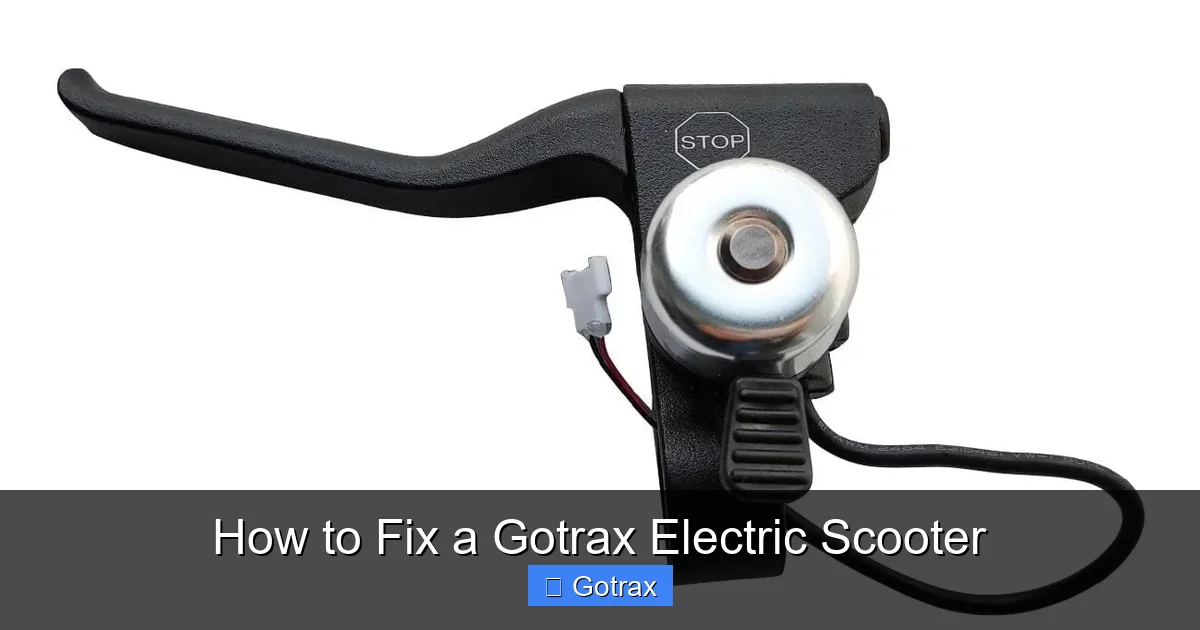
Visual guide about How to Fix a Gotrax Electric Scooter
Image source: alphaproscooters.com
Before diving into any repair, safety should be your top priority. Electric scooters contain high-voltage batteries and moving parts, so taking precautions is essential.
Power Down and Unplug
Always turn off your Gotrax scooter and remove the battery if possible. For models with removable batteries, disconnect it completely. If your model has a built-in battery, ensure the scooter is powered off and not charging. This prevents accidental shocks or short circuits.
Gather Your Tools
You don’t need a full workshop, but having the right tools makes repairs much easier. Here’s what you’ll likely need:
- Phillips and flathead screwdrivers
- Allen wrench set (common for scooter bolts)
- Multimeter (to test voltage and continuity)
- Tire pump with pressure gauge
- Lubricant (silicone or lithium-based)
- Clean cloths and isopropyl alcohol
- Replacement parts (if needed, such as fuses, brake pads, or tires)
Work in a Clean, Well-Lit Area
Choose a flat, dry workspace with good lighting. Avoid working outdoors in wet or dusty conditions, as moisture and debris can damage electrical components.
Common Gotrax Scooter Problems and How to Fix Them
Now that you’re prepared, let’s tackle the most common issues Gotrax owners face. We’ll go from simple fixes to more involved repairs, so start with the easiest solutions first.
Problem 1: Scooter Won’t Turn On
If your Gotrax scooter doesn’t power up when you press the button, don’t panic—this is often a simple fix.
Step 1: Check the Battery
The most common cause is a dead or disconnected battery.
- Ensure the battery is fully charged. Plug it in for at least 4–6 hours.
- If your model has a removable battery, take it out and reinsert it firmly.
- Use a multimeter to test the battery voltage. A fully charged Gotrax battery should read around 36V (for 36V models) or 42V (for 48V models). If it’s below 30V, the battery may be failing.
Step 2: Inspect the Power Button
Sometimes the power button gets stuck or loses contact.
- Press the button several times to see if it clicks properly.
- If it feels loose or unresponsive, you may need to open the deck to check the wiring (see advanced troubleshooting below).
Step 3: Reset the Controller
The controller manages power flow to the motor. A simple reset can often restore function.
- Turn off the scooter.
- Hold the power button for 10–15 seconds.
- Release and press the button again to turn it back on.
This clears temporary glitches in the system.
Problem 2: Scooter Runs Slowly or Loses Power
If your scooter feels sluggish or cuts out during rides, it’s usually related to battery health, tire pressure, or motor issues.
Step 1: Check Tire Pressure
Underinflated tires increase rolling resistance, making the motor work harder.
- Use a tire pump with a gauge to inflate tires to the recommended PSI (usually 40–50 PSI, check the sidewall).
- Inspect tires for cuts, punctures, or excessive wear. Replace if damaged.
Step 2: Test the Battery Under Load
A battery might show full charge when idle but drop voltage when riding.
- Take a short test ride and monitor performance.
- If power drops quickly, the battery may be aging or damaged.
- Consider replacing the battery if it’s over 1–2 years old or has been deeply discharged multiple times.
Step 3: Clean the Motor and Sensors
Dust and debris can interfere with the motor’s Hall sensors, which regulate speed.
- Use compressed air to blow out dirt around the rear wheel and motor.
- Wipe the sensor area with a dry cloth.
- Avoid using water or solvents near electrical parts.
Problem 3: Brakes Not Working Properly
Brakes are critical for safety. If they feel spongy, unresponsive, or squeaky, they need attention.
Step 1: Adjust the Brake Cable (for Mechanical Brakes)
Most Gotrax models use a rear foot brake or hand brake with a cable.
- Locate the brake adjuster near the brake lever or rear wheel.
- Turn the barrel adjuster clockwise to tighten the cable (less slack).
- Test the brake: it should engage firmly when pressed, without dragging.
Step 2: Replace Worn Brake Pads
Over time, brake pads wear down and lose effectiveness.
- Remove the rear wheel (see wheel removal section below).
- Unscrew the old brake pads and install new ones.
- Ensure they align properly with the brake disc or rim.
Tip: Use Gotrax-compatible brake pads for best results.
Step 3: Check Electronic Braking (Regenerative Braking)
Some Gotrax models use regenerative braking, which relies on the motor.
- If the brake lever feels weak, the motor or controller may be faulty.
- Reset the controller (as described earlier).
- If the issue persists, consult a technician—this may require internal repairs.
Problem 4: Scooter Won’t Charge
If your scooter isn’t charging, the issue could be the charger, battery, or charging port.
Step 1: Inspect the Charger
- Check the charger cable for fraying or damage.
- Plug the charger into a different outlet to rule out power issues.
- Look for LED indicators: a red light usually means charging, green means full.
Step 2: Clean the Charging Port
Dirt or corrosion in the port can prevent proper connection.
- Use a dry toothbrush or compressed air to clean the port.
- Never use water or metal tools—this can cause shorts.
Step 3: Test the Battery
If the charger works but the scooter won’t charge, the battery may be faulty.
- Use a multimeter to check voltage before and after charging.
- If voltage doesn’t increase, the battery likely needs replacement.
Problem 5: Unusual Noises or Vibrations
Rattling, grinding, or squeaking sounds often indicate loose parts or wear.
Step 1: Tighten Loose Bolts
Vibrations can loosen screws over time.
- Check the handlebar, stem, deck, and wheel bolts.
- Use an Allen wrench to tighten them securely—don’t over-tighten.
Step 2: Inspect the Folding Mechanism
The hinge where the scooter folds can become loose.
- Lubricate the hinge with silicone spray.
- Tighten the locking bolt if it wobbles.
Step 3: Check the Motor and Wheel Bearings
Grinding noises from the rear wheel may mean worn bearings.
- Spin the wheel by hand—it should turn smoothly without resistance.
- If it grinds or wobbles, the bearings may need replacement (advanced repair).
Advanced Repairs: When to Open the Deck
Some issues require accessing the internal components under the deck. Only attempt this if you’re comfortable with electronics.
Removing the Deck Cover
- Turn the scooter upside down on a soft surface.
- Use a Phillips screwdriver to remove the screws along the edge of the deck.
- Lift the cover carefully—don’t pull too hard, as wires may be connected.
Checking Wiring and Connections
Once inside, inspect for:
- Loose or disconnected wires
- Burn marks or melted insulation
- Corroded connectors
Reconnect any loose wires and clean corrosion with isopropyl alcohol.
Replacing the Fuse
Some Gotrax models have a replaceable fuse near the battery.
- Locate the fuse holder (usually a small black box).
- Remove the old fuse and replace it with one of the same rating (e.g., 15A).
Preventative Maintenance Tips
Regular maintenance prevents many common problems. Follow this routine to keep your Gotrax scooter in great condition.
Weekly Checks
- Inflate tires to proper PSI.
- Test brakes and lights.
- Wipe down the deck and handlebars.
Monthly Maintenance
- Lubricate the folding mechanism and brake pivots.
- Check all bolts and screws for tightness.
- Clean the motor area with compressed air.
Battery Care
- Avoid draining the battery completely—recharge when it drops to 20–30%.
- Store the scooter in a cool, dry place (not in extreme heat or cold).
- Charge the battery at least once a month if not in use.
Troubleshooting Summary Table
| Problem | Likely Cause | Solution |
|---|---|---|
| Won’t turn on | Dead battery, loose connection | Charge battery, reset controller |
| Runs slowly | Low tire pressure, weak battery | Inflate tires, test battery |
| Brake issues | Worn pads, loose cable | Adjust or replace brake components |
| Won’t charge | Faulty charger, dirty port | Clean port, test charger |
| Unusual noise | Loose parts, worn bearings | Tighten bolts, inspect bearings |
When to Seek Professional Help
While many repairs are DIY-friendly, some issues require expert attention:
- Motor failure or burnt windings
- Controller malfunction (if reset doesn’t work)
- Internal wiring damage
- Battery replacement (if not user-serviceable)
Contact Gotrax customer support or a certified repair shop for these cases.
Conclusion
Fixing a Gotrax electric scooter doesn’t have to be intimidating. With the right tools, a bit of patience, and this guide, you can resolve most common issues at home. Remember to prioritize safety, perform regular maintenance, and know your limits—some repairs are best left to professionals.
By taking care of your scooter, you’ll extend its lifespan, save money on repairs, and enjoy smoother, safer rides. Whether it’s a simple tire inflation or a controller reset, every fix brings you one step closer to mastering your Gotrax.
Now get out there and ride with confidence!