
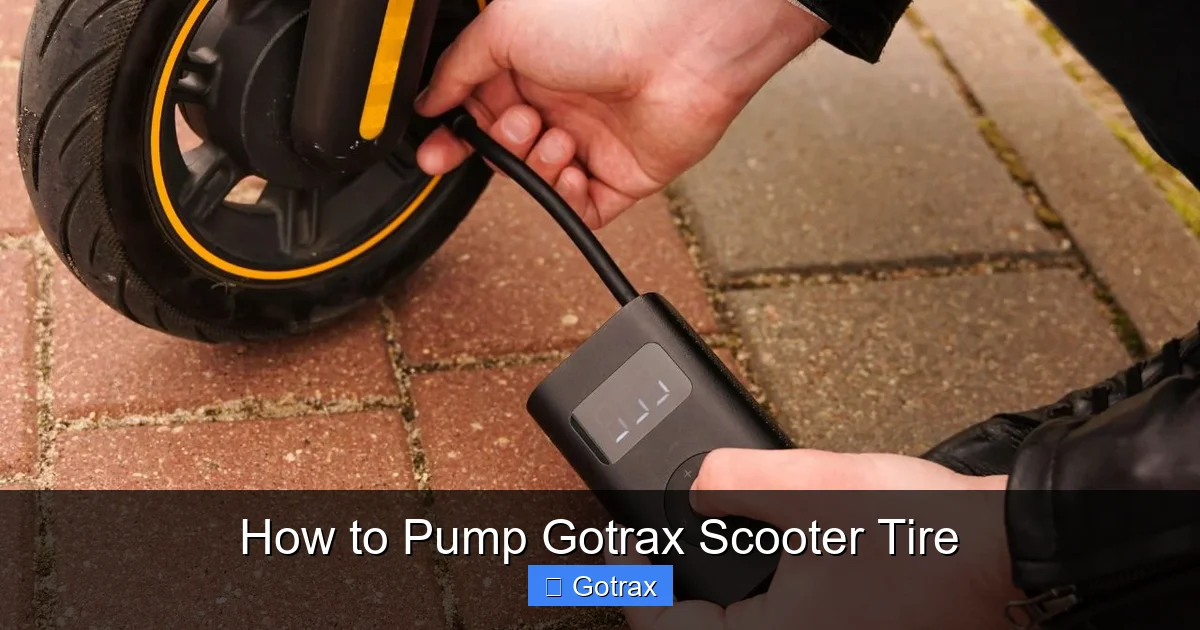
Properly inflated tires are essential for a safe, smooth, and efficient ride on your Gotrax scooter. This guide walks you through everything you need to know—from checking tire pressure to using the right pump—so you can maintain optimal performance and extend the life of your tires.
Key Takeaways
- Check tire pressure regularly: Underinflated tires reduce range, increase wear, and compromise safety.
- Use the correct PSI: Most Gotrax scooters require 35–45 PSI—always check your manual for exact specs.
- Choose the right pump: A portable mini pump with a pressure gauge is ideal for on-the-go top-ups.
- Inspect tires before inflating: Look for cracks, punctures, or embedded debris that could cause leaks.
- Inflate slowly and monitor pressure: Overinflation can damage tires or lead to blowouts.
- Store your pump with your scooter: Keep it in a waterproof bag or under the deck for quick access.
- Replace worn tires promptly: Bald or cracked tires won’t hold air properly and should be swapped out.
How to Pump Gotrax Scooter Tire: A Complete Step-by-Step Guide
If you own a Gotrax electric scooter, you already know how convenient and fun it is to zip around town. But like any vehicle with wheels, your scooter’s tires need regular maintenance—especially when it comes to air pressure. Learning how to pump Gotrax scooter tire correctly is one of the simplest yet most impactful things you can do to keep your ride safe, efficient, and enjoyable.
In this comprehensive guide, we’ll walk you through every step—from identifying the right tire pressure to choosing the best pump and troubleshooting common issues. Whether you’re a new Gotrax owner or just need a refresher, this guide will ensure your tires are always in top shape.
Why Tire Pressure Matters for Your Gotrax Scooter
Visual guide about How to Pump Gotrax Scooter Tire
Image source: m.media-amazon.com
Before diving into the “how,” let’s talk about the “why.” Proper tire inflation isn’t just about comfort—it directly affects your scooter’s performance, safety, and longevity.
Underinflated tires create more rolling resistance, which means your motor has to work harder. This drains your battery faster and reduces your scooter’s range. You might notice you’re charging more often or not reaching your usual distance per charge. Plus, soft tires wear down unevenly and are more prone to pinch flats (also called “snake bites”) when hitting potholes or curbs.
On the flip side, overinflated tires offer a harsher ride, reduce traction—especially on wet or uneven surfaces—and increase the risk of blowouts. They also don’t absorb shocks as well, making bumps feel jarring and potentially damaging your scooter’s frame over time.
Gotrax scooters typically use pneumatic (air-filled) tires, which require regular checks. Most models, including the GXL, G2, G3, and G4, recommend a tire pressure between 35 and 45 PSI (pounds per square inch). Always refer to your owner’s manual or the sticker near the tire sidewall for the exact specification.
What You’ll Need to Pump Your Gotrax Scooter Tire
You don’t need fancy tools to inflate your scooter tires. Here’s a simple checklist of essentials:
- A portable mini pump: Look for one with a built-in pressure gauge. Hand pumps or compact electric pumps work well.
- Schrader valve adapter (if needed): Most Gotrax tires use Schrader valves (the same as car tires), but some older models may have Presta valves. Double-check your valve type.
- A tire pressure gauge (optional but recommended): If your pump doesn’t have a built-in gauge, use a separate one for accuracy.
- A clean cloth or rag: To wipe dirt off the valve before inflating.
- A well-lit, flat workspace: Ideally outdoors or in a garage where you can kneel comfortably.
Many riders carry a small pump in their backpack or store one under the scooter deck using a Velcro strap or zip tie. It’s a smart habit that ensures you’re never stranded with a flat.
Step-by-Step: How to Pump Gotrax Scooter Tire
Now that you’re prepared, let’s get into the actual process. Follow these steps carefully to safely and effectively inflate your Gotrax scooter tires.
Step 1: Check the Current Tire Pressure
Before adding any air, you need to know how much (if any) is already in the tire.
- Remove the valve cap by twisting it counterclockwise. Set it aside in a safe place—don’t lose it!
- If you have a separate pressure gauge, press it firmly onto the valve stem. You’ll hear a brief hiss as air escapes—that’s normal.
- Read the PSI displayed on the gauge. Compare it to the recommended pressure in your manual (usually 35–45 PSI).
- If your pump has a built-in gauge, you can skip the separate gauge and use the pump’s reading instead—but only after attaching it securely.
Pro Tip: Check tire pressure when the tires are cold (i.e., not after a long ride). Heat from friction can increase pressure readings and give you a false sense of inflation.
Step 2: Inspect the Tire and Valve
While the valve is exposed, take a moment to inspect both the tire and the valve stem.
- Look for cracks, bulges, or deep cuts in the tire tread or sidewall. These are signs of wear and may require tire replacement.
- Check for embedded objects like nails, glass, or thorns. If you find something, don’t pull it out yet—note its location and consider patching or replacing the tube.
- Examine the valve stem. It should be straight, not cracked, and free of dirt. Wipe it clean with a cloth if needed.
- If the valve is damaged or leaking air slowly, you may need to replace the inner tube or have it professionally repaired.
A quick visual inspection can prevent bigger problems down the road.
Step 3: Attach the Pump to the Valve
This step varies slightly depending on your pump type, but the principle is the same: create a secure, airtight connection.
- For a hand pump with a Schrader chuck: Unscrew the pump’s nozzle cap, then press the chuck firmly onto the valve stem. Flip the lever (if present) to lock it in place.
- For an electric pump: Most come with a universal nozzle that fits Schrader valves. Simply press it on and ensure it’s snug.
- If your pump has a Presta adapter, screw it onto the valve first, then attach the pump.
Important: Never force the pump onto the valve. If it doesn’t fit easily, double-check the valve type. Forcing it can damage the valve or pump.
Step 4: Inflate the Tire Slowly
Now it’s time to add air—but go slowly and monitor the pressure.
- Start pumping. With a hand pump, use steady, full strokes. Don’t rush—quick, shallow pumps are inefficient.
- After every 5–10 pumps, check the pressure using your gauge. This prevents overinflation.
- If using an electric pump, turn it on and let it run until it reaches the desired PSI. Many modern pumps auto-stop at a preset pressure.
- Stop inflating once you reach the recommended PSI. For most Gotrax models, that’s around 40 PSI—but again, check your manual.
Example: If your tire reads 28 PSI and your target is 40 PSI, you’ll need to add about 12 PSI. That might take 30–50 pumps with a hand pump, depending on its size.
Step 5: Detach the Pump and Recheck Pressure
Once inflated, it’s time to disconnect and verify.
- Turn off the pump (if electric) or release the lever (if hand pump).
- Gently pull the pump nozzle away from the valve. You may hear a small puff of air—that’s normal.
- Immediately screw the valve cap back on. This keeps dirt and moisture out of the valve.
- Use your gauge one last time to confirm the pressure is correct. Small fluctuations are okay, but if it’s significantly off, adjust accordingly.
Step 6: Repeat for the Other Tire
Don’t forget the second tire! Both front and rear tires should be inflated to the same pressure for balanced handling.
- Repeat Steps 1–5 for the other tire.
- If one tire was significantly lower than the other, investigate why. A slow leak could indicate a puncture or valve issue.
Choosing the Right Pump for Your Gotrax Scooter
Not all pumps are created equal. Here’s what to look for when selecting a pump for your Gotrax:
- Portability: You want something lightweight and compact—ideally under 12 inches long.
- Pressure gauge: A built-in gauge saves time and improves accuracy.
- Valve compatibility: Ensure it works with Schrader valves (standard on Gotrax).
- Power source: Hand pumps are reliable and don’t need batteries. Electric pumps are faster but require charging.
- Durability: Look for metal or reinforced plastic construction—avoid flimsy plastic pumps.
Popular options include the Topeak Mini Master Blaster, Lezyne Pressure Drive, or Black+Decker ASI300 electric pump. Many riders also use bike pumps, which work perfectly fine.
Common Mistakes to Avoid When Pumping Gotrax Tires
Even experienced riders make errors. Here are some pitfalls to watch out for:
- Overinflating: Going above 45 PSI can cause blowouts or a bouncy ride. Stick to the recommended range.
- Ignoring slow leaks: If a tire keeps losing air, don’t just keep refilling it—find and fix the source.
- Using the wrong valve adapter: Forcing a Presta pump on a Schrader valve (or vice versa) can damage the valve.
- Pumping hot tires: Always check pressure when tires are cool for accurate readings.
- Skipping regular checks: Make tire pressure part of your weekly maintenance routine.
Troubleshooting Common Tire Issues
Sometimes, pumping isn’t enough. Here’s how to handle common problems:
Tire Won’t Hold Air
- Check for punctures: Submerge the tire in water and look for bubbles.
- Inspect the valve: A loose or damaged valve core can leak. Use a valve core tool to tighten or replace it.
- Consider a patch kit: For small holes, a rubber patch can seal the inner tube.
Pump Won’t Attach Properly
- Clean the valve stem: Dirt or debris can prevent a tight seal.
- Use the correct adapter: Ensure your pump matches the valve type.
- Try a different pump: Sometimes compatibility issues arise—test with another model.
Tire Feels Too Hard or Too Soft After Inflation
- Recheck the PSI: Use a reliable gauge to confirm.
- Adjust gradually: Add or release air in small increments.
- Consider temperature: Cold weather can lower pressure; warm weather can increase it.
Maintenance Tips to Keep Your Tires in Great Shape
Pumping your tires is just one part of the equation. Follow these tips for long-term tire health:
- Check pressure weekly: Make it a habit, like checking your phone battery.
- Avoid rough terrain: Potholes, gravel, and curbs increase wear and puncture risk.
- Store indoors: Extreme heat or cold can degrade rubber over time.
- Rotate tires (if possible): Some riders swap front and rear tires to even out wear.
- Replace when needed: Tires with worn tread or cracks should be replaced—don’t wait for a flat.
Conclusion
Knowing how to pump Gotrax scooter tire is a simple skill that pays big dividends. With proper inflation, you’ll enjoy better range, smoother rides, improved safety, and longer tire life. By following this guide—checking pressure regularly, using the right tools, and avoiding common mistakes—you’ll keep your Gotrax scooter running at its best.
Remember, a few minutes of maintenance each week can prevent hours of frustration later. Keep your pump handy, stay consistent, and ride with confidence. Your scooter—and your future self—will thank you.