
This guide walks you through how to charge your Gotrax electric scooter the right way—ensuring safety, speed, and battery longevity. You’ll learn proper techniques, common mistakes to avoid, and how to troubleshoot charging issues.
Key Takeaways
- Use the correct charger: Always use the original Gotrax charger or a certified replacement to avoid damage or fire risks.
- Charge in a safe environment: Charge your scooter in a dry, cool, and well-ventilated area away from flammable materials.
- Avoid overcharging: Unplug the scooter once fully charged to preserve battery health and prevent overheating.
- Check battery level regularly: Recharge when the battery drops to 20–30% to extend its lifespan.
- Store properly when not in use: If storing long-term, keep the battery at 50–70% charge and recharge every 2–3 months.
- Recognize charging issues early: Watch for signs like slow charging, no power, or overheating—these may indicate charger or battery problems.
- Follow manufacturer guidelines: Always refer to your Gotrax model’s manual for model-specific charging instructions.
How to Charge Gotrax Electric Scooter: A Complete Step-by-Step Guide
If you’ve recently bought a Gotrax electric scooter—or you’re just getting the hang of daily use—you’ve probably wondered: How do I charge this thing properly? Charging your Gotrax scooter might seem simple, but doing it the right way can make a big difference in performance, safety, and how long your battery lasts.
In this guide, we’ll walk you through everything you need to know about how to charge your Gotrax electric scooter safely and efficiently. Whether you’re a first-time rider or a seasoned commuter, you’ll learn the best practices, common mistakes to avoid, and troubleshooting tips to keep your scooter running smoothly.
By the end of this guide, you’ll know exactly how to charge your Gotrax scooter, how long it takes, what to watch out for, and how to maintain your battery for years of reliable rides.
Why Proper Charging Matters
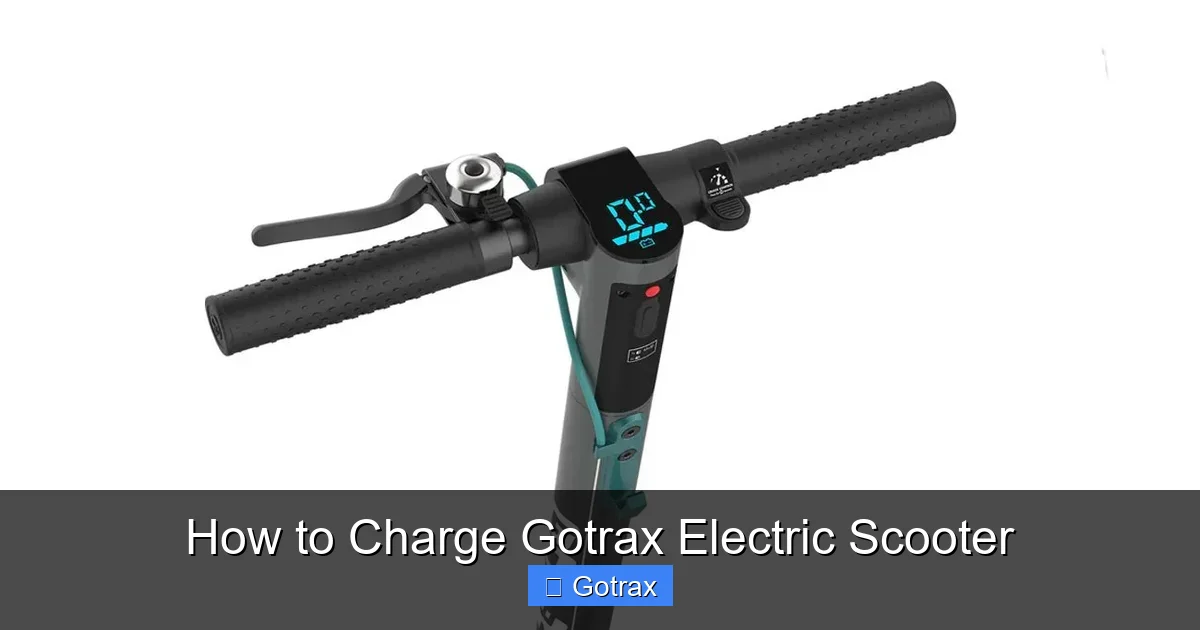
Visual guide about How to Charge Gotrax Electric Scooter
Image source: gotrax.com
Before we dive into the steps, let’s talk about why charging matters. Your Gotrax scooter runs on a rechargeable lithium-ion battery—similar to the ones in your phone or laptop. These batteries are powerful and lightweight, but they’re also sensitive to how they’re treated.
Charging your scooter incorrectly—like using the wrong charger, overcharging, or letting the battery drain completely—can shorten its lifespan, reduce performance, and even pose safety risks like overheating or fire.
On the flip side, charging correctly helps you:
– Maximize battery life (often 300–500 charge cycles)
– Maintain consistent speed and range
– Avoid unexpected breakdowns
– Keep your scooter safe to ride
So, let’s make sure you’re doing it right.
What You’ll Need to Charge Your Gotrax Scooter
Before you plug in, make sure you have the right tools and setup. Here’s what you’ll need:
- Original Gotrax charger: This is the most important item. Gotrax scooters come with a specific charger designed for your model. Using a third-party or incompatible charger can damage the battery or cause safety hazards.
- Power outlet: A standard wall outlet (110–120V in the U.S.) is all you need. Avoid extension cords or power strips if possible—direct wall plugs are safest.
- Clean, dry charging area: Charge your scooter indoors in a cool, dry place. Avoid garages with extreme temperatures or damp basements.
- Your Gotrax scooter: Make sure it’s turned off before charging.
Pro tip: Keep your charger in a safe, dry place when not in use. Don’t wrap the cord tightly around the charger—this can damage the wires over time.
Step-by-Step: How to Charge Your Gotrax Electric Scooter
Now that you’re prepared, let’s go through the charging process step by step. These instructions work for most Gotrax models, including the GXL, G2, G3, G4, and XR series. Always check your user manual for model-specific details.
Step 1: Turn Off the Scooter
Before you plug anything in, make sure your Gotrax scooter is completely turned off. This is a safety precaution to prevent electrical surges or accidental activation.
To turn it off:
– Press and hold the power button until the display turns off.
– Some models may have a physical key switch—turn it to the “off” position.
Never charge a scooter that’s still powered on. It can confuse the charging system and potentially damage the battery.
Step 2: Locate the Charging Port
Next, find the charging port on your scooter. It’s usually located:
– On the deck (base) near the rear wheel
– Protected by a rubber or plastic cover
Gently lift or slide the cover to expose the port. It’s typically a small, round DC input jack—similar to what you’d see on a laptop charger.
Avoid forcing the cover open. If it’s stuck, check for dirt or debris and clean it gently with a dry cloth.
Step 3: Plug in the Charger
Now, take your Gotrax charger and connect it properly:
1. Insert the DC plug into the scooter’s charging port. Push it in gently until it clicks or feels secure.
2. Plug the other end (the AC plug) into a wall outlet.
You should see a light on the charger—usually red or orange—indicating that charging has started.
Important: Only use the charger that came with your scooter. Gotrax chargers are designed to deliver the exact voltage and current your battery needs. Using a different charger—even if it fits—can overcharge the battery or cause it to charge too slowly.
Step 4: Monitor the Charging Process
Once plugged in, your scooter will begin charging. Here’s what to expect:
– The charger light will typically glow red or orange while charging.
– When the battery is fully charged, the light will turn green (on most models).
– Charging time varies by model but usually takes 4–6 hours for a full charge from empty.
For example:
– Gotrax GXL: ~4 hours
– Gotrax G4: ~5 hours
– Gotrax XR: ~6 hours
Avoid unplugging the scooter too early. Even if the light turns green, give it a few extra minutes to ensure a full charge.
Step 5: Unplug When Fully Charged
Once the charger light turns green, it’s time to unplug. Here’s how:
1. Unplug the AC end from the wall outlet first.
2. Then, gently remove the DC plug from the scooter.
Never yank the cord—this can damage the charger or the port. Always grip the plug itself, not the wire.
After unplugging, close the charging port cover to keep dust and moisture out.
Step 6: Store or Ride
Now your scooter is ready to go! You can either:
– Take it for a ride
– Store it for later use
If you’re not riding right away, store the scooter in a cool, dry place. Avoid leaving it in direct sunlight or extreme cold.
How Long Does It Take to Charge a Gotrax Scooter?
Charging time depends on several factors:
– Battery capacity (measured in watt-hours or Ah)
– How depleted the battery is
– Ambient temperature
– Charger output
Most Gotrax scooters take between 4 and 6 hours to charge from 0% to 100%. Here’s a quick breakdown:
- Gotrax G2: ~4 hours
- Gotrax G3: ~4.5 hours
- Gotrax G4: ~5 hours
- Gotrax XR: ~6 hours
- Gotrax GXL V2: ~5 hours
If your scooter is only partially drained (say, 50%), it will charge faster—usually in 2–3 hours.
Tip: Charge your scooter overnight for convenience. Just make sure to unplug it once fully charged to avoid overcharging.
Best Practices for Charging Your Gotrax Scooter
To get the most out of your battery and keep your scooter in top shape, follow these best practices:
Charge Regularly—Don’t Wait Until It’s Dead
Lithium-ion batteries don’t like being fully drained. Try to recharge your scooter when the battery drops to 20–30%. This helps prevent “deep discharge,” which can stress the battery and reduce its lifespan.
For example:
– If your scooter has a range of 15 miles, recharge after riding 10–12 miles.
– Use the built-in battery indicator (usually on the handlebar display) to monitor charge level.
Avoid Overcharging
While most Gotrax scooters have built-in protection to prevent overcharging, it’s still best to unplug once the light turns green. Leaving it plugged in for hours after full charge can generate excess heat and degrade the battery over time.
Set a timer if you’re charging overnight. Or, use a smart plug with a timer function to automatically cut power after 6 hours.
Charge in a Safe Environment
Always charge your scooter indoors in a dry, well-ventilated area. Avoid:
– Outdoor charging (rain, snow, or humidity can damage the charger)
– Hot garages or near heaters
– Carpeted floors (can trap heat)
– Near flammable materials (curtains, paper, etc.)
A cool, dry corner of your living room or bedroom is ideal.
Use the Right Charger
Never substitute your Gotrax charger with a generic or third-party one—even if it fits. Gotrax chargers are calibrated to deliver the correct voltage (usually 42V) and current (2A or 3A) for your specific model.
Using the wrong charger can:
– Charge too slowly
– Overheat the battery
– Cause permanent damage
– Void your warranty
If you lose your charger, buy a replacement directly from Gotrax or an authorized retailer.
Keep the Charging Port Clean
Dust, dirt, and moisture can interfere with charging. Regularly inspect the charging port and clean it with a dry cloth. If there’s debris, use a can of compressed air to blow it out gently.
Never use water or cleaning liquids near the port.
How to Store Your Gotrax Scooter Long-Term
If you’re not riding your scooter for weeks or months (like during winter), proper storage is key to preserving the battery.
Follow these steps:
Charge to 50–70%
Don’t store your scooter with a full or empty battery. Lithium-ion batteries last longest when stored at a partial charge—around 50–70%.
Use the battery indicator to check the level. If it’s below 50%, give it a quick charge. If it’s above 70%, ride it briefly to bring it down.
Store in a Cool, Dry Place
Keep your scooter indoors in a temperature-controlled environment. Ideal storage temperature is between 50°F and 77°F (10°C–25°C).
Avoid:
– Attics or garages that get very hot or cold
– Basements with high humidity
– Direct sunlight
Recharge Every 2–3 Months
Even when not in use, lithium-ion batteries slowly lose charge. To prevent deep discharge, plug in your scooter every 2–3 months and charge it back to 50–70%.
This simple habit can add years to your battery’s life.
Troubleshooting Common Charging Issues
Sometimes, your Gotrax scooter might not charge as expected. Here are common problems and how to fix them.
Problem: Charger Light Doesn’t Turn On
Possible causes:
– Faulty outlet
– Damaged charger
– Loose connection
Solutions:
1. Try a different wall outlet.
2. Check the charger cord for fraying or damage.
3. Ensure the DC plug is fully inserted into the scooter.
4. Test the charger with another Gotrax scooter (if available).
If the light still doesn’t turn on, the charger may be defective. Contact Gotrax support.
Problem: Scooter Charges Very Slowly
Possible causes:
– Weak or incompatible charger
– Cold environment
– Old or degraded battery
Solutions:
1. Use the original Gotrax charger.
2. Charge in a warm room (above 50°F).
3. If the battery is more than 2–3 years old, it may need replacement.
Problem: Charger Light Turns Green Immediately
This could mean:
– The battery is already full
– The battery isn’t holding a charge
– The charger is faulty
Solutions:
1. Check the battery level on the display.
2. Ride the scooter briefly to drain it slightly, then try charging again.
3. If the issue persists, the battery or charger may need professional inspection.
Problem: Scooter Gets Hot While Charging
Some warmth is normal, but excessive heat is a red flag.
Solutions:
1. Unplug immediately.
2. Let the scooter cool down in a ventilated area.
3. Check for blocked vents or debris.
4. Avoid charging in hot environments.
If overheating continues, stop using the scooter and contact Gotrax support—it could indicate a battery or charger fault.
Problem: Charging Port Feels Loose
Over time, the charging port can wear out from repeated plugging and unplugging.
Solutions:
1. Be gentle when inserting the charger.
2. Avoid twisting or bending the plug.
3. If the port is damaged, contact Gotrax for repair or replacement.
Safety Tips for Charging Your Gotrax Scooter
Safety should always come first. Here are essential tips to prevent accidents:
- Never charge unattended for long periods: While it’s okay to charge overnight, avoid leaving it plugged in for days.
- Don’t cover the scooter while charging: This traps heat and increases fire risk.
- Avoid charging near water: Never charge in the bathroom, kitchen, or outdoors in the rain.
- Inspect the charger regularly: Look for cracks, frayed wires, or burn marks. Replace if damaged.
- Keep children and pets away: Chargers and scooters can pose electrical hazards.
- Use a surge protector: This protects your scooter from power spikes.
Remember: Lithium-ion batteries are generally safe, but they can be dangerous if mishandled. When in doubt, consult the manual or contact Gotrax.
How to Extend Your Gotrax Battery Life
Want your scooter to last longer? Follow these tips to maximize battery health:
- Avoid extreme temperatures: Don’t ride or charge in very hot or cold weather.
- Don’t fully drain the battery: Recharge at 20–30%.
- Use eco mode when possible: This reduces power draw and extends range.
- Keep tires properly inflated: Underinflated tires increase resistance and drain the battery faster.
- Clean and maintain your scooter: A well-maintained scooter runs more efficiently.
With proper care, your Gotrax battery can last 2–4 years or 300–500 charge cycles.
Conclusion
Charging your Gotrax electric scooter is simple—but doing it correctly makes all the difference. By following this guide, you’ll ensure your scooter charges safely, efficiently, and lasts for years of reliable rides.
Remember the key steps:
– Use the original charger
– Charge in a safe, dry place
– Unplug when the light turns green
– Recharge regularly, not just when empty
– Store properly when not in use
And if you ever run into issues, don’t panic—most charging problems have simple solutions. When in doubt, consult your user manual or reach out to Gotrax customer support.
Now that you know how to charge your Gotrax electric scooter the right way, you’re ready to hit the road with confidence. Happy riding!