
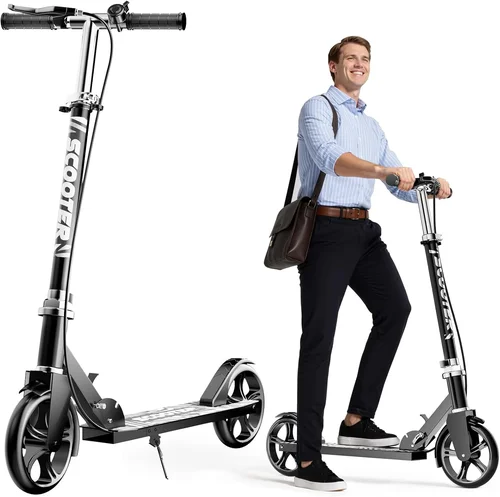
Electric scooters have evolved from quirky childhood toys into serious transportation tools for adults. Whether you’re commuting to work, running errands around town, or simply exploring your city on weekends, a well-chosen adult scooter can transform how you move through urban environments. With advancements in battery technology, motor efficiency, and smart features, today’s models offer impressive speed, range, and comfort—even for riders over 200 pounds or those navigating hilly terrain.
But with so many options flooding the market, choosing the right scooter isn’t as simple as picking the shiniest one on the shelf. Prices range from under $300 to well over $2,000, and not all scooters are built to handle adult weight, daily use, or real-world conditions like potholes, rain, or long commutes. That’s why this guide exists: to cut through the noise, clarify what matters most, and help you make a confident, informed decision based on your lifestyle, budget, and needs.
In this comprehensive buying guide, we’ll walk you through every critical factor—from motor power and battery life to build quality and warranty coverage. You’ll learn how to compare different types of scooters, avoid common pitfalls, understand pricing tiers, and even score the best deals. By the end, you’ll know exactly what to look for and which models deliver the best value for adult riders in 2026.

What to Look for When Buying an Adult Scooter
1. Budget & Price Range
Your budget is the foundation of your purchase decision—but it shouldn’t be the only factor. Adult scooters vary dramatically in price, and while it’s tempting to go for the cheapest option, skimping too much can lead to frustration, frequent repairs, or even safety risks. A good rule of thumb: if you plan to use your scooter regularly (more than once a week), invest at least $500–$700. This range typically gets you reliable motors, decent batteries, and sturdy frames that can handle adult weight and daily wear.
That said, don’t assume that spending more always means better performance. Some premium brands charge a “brand tax” without offering proportional improvements in durability or functionality. Instead, focus on value—what you get per dollar. Look for models that balance cost with essential features like regenerative braking, app connectivity, and puncture-resistant tires. And remember: a slightly higher upfront cost often pays off in lower maintenance and longer lifespan.
2. Performance Specifications
Performance isn’t just about top speed—it’s a combination of motor power, range, acceleration, and hill-climbing ability. For adult riders, especially those over 180 lbs or living in hilly areas, these specs are non-negotiable.
Start with motor power: measured in watts (W), a 250W motor may suffice for flat city streets and lighter riders, but 500W or higher is ideal for most adults. Dual-motor setups (common in premium models) provide extra torque and stability, making them excellent for hills and quick starts.
Range is equally important. Manufacturers often quote “ideal” range under perfect conditions—light rider, flat terrain, no wind. In reality, expect 60–80% of advertised range. If you need to travel 10 miles round-trip daily, choose a scooter rated for at least 15–20 miles. Battery type matters too: lithium-ion (Li-ion) batteries are standard and offer good energy density, but check the cell quality—brands like Samsung or LG indicate higher reliability.
Acceleration and braking matter for safety and comfort. Look for scooters with smooth throttle response and responsive brakes (disc or regenerative). Test rides—if possible—are invaluable here.
3. Build Quality & Durability
An adult scooter must withstand real-world abuse: curbs, potholes, rain, and daily folding/unfolding. Cheap aluminum frames may bend or crack under stress, while poorly welded joints can fail over time. Opt for scooters made from aircraft-grade aluminum or reinforced steel, with thick tubing and robust folding mechanisms.
Check the IP rating for water and dust resistance. IP54 means splash-resistant (good for light rain), while IP65 offers better protection against dust and water jets. If you ride in wet climates, aim for at least IP54.
Tires also impact durability. Solid rubber tires never go flat but offer a rougher ride; air-filled (pneumatic) tires provide better shock absorption but require occasional inflation and are prone to punctures. Hybrid options like honeycomb or airless tires are emerging as smart middle-ground solutions.
Finally, inspect the deck size and grip. A narrow or slippery deck can be uncomfortable or unsafe for adult feet, especially during longer rides.
4. Weight Capacity & Rider Fit
Not all scooters are designed for adult proportions. Many budget models list a max weight limit of 220 lbs—but that’s often optimistic. For riders over 200 lbs, look for scooters rated for 260–330 lbs. Overloading a scooter strains the motor, drains the battery faster, and increases wear on brakes and suspension.
Deck size matters too. A short or narrow deck forces your feet into awkward positions, reducing control and comfort. Ideally, the deck should accommodate size 10–12 shoes with room to shift your stance. Handlebar height should also suit your torso length—too low causes back strain; too high reduces steering precision.
Test the ergonomics: can you stand comfortably with knees slightly bent? Is the throttle easy to reach without leaning forward? These small details make a big difference on longer rides.
5. Portability & Folding Mechanism
If you’ll be carrying your scooter onto public transit, storing it under a desk, or lifting it upstairs, portability is crucial. Weight under 30 lbs is ideal for most adults, though some high-performance models weigh 40+ lbs—manageable for short carries but tiring over time.
The folding mechanism should be quick, secure, and intuitive. Avoid models with loose locks or wobbly joints—they can fail mid-ride. Look for scooters that fold compactly (under 40” long when folded) and include a carrying handle or strap. Some premium models even feature auto-folding via app or remote.
Consider where you’ll store it: apartments, offices, car trunks. A bulky scooter might not fit in tight spaces, defeating the purpose of owning one.
6. Features & Functionality
Modern adult scooters come packed with features that enhance safety, convenience, and ride quality. Prioritize based on your needs:
– Lighting: Front LED headlight and rear brake light are essential for night riding. Some models include side or deck lighting for visibility.
– Display & Controls: A clear LCD or LED display shows speed, battery level, and mode. Bluetooth connectivity lets you track stats, lock the scooter, or customize settings via app.
– Suspension: Front, rear, or dual suspension absorbs bumps—critical for rough pavements or off-road paths.
– Regenerative Braking: Recovers energy during braking, extending range slightly and reducing wear on mechanical brakes.
– Cruise Control: Maintains steady speed without holding the throttle—great for long, flat stretches.
– App Integration: Allows firmware updates, ride tracking, anti-theft alerts, and performance tuning.
Avoid “feature bloat”—extra gadgets that add cost without real benefit. Focus on what you’ll actually use.
7. Brand Reputation & Customer Support
Not all scooter brands are created equal. Established names like Segway-Ninebot, Xiaomi, Apollo, and Gotrax have proven track records for reliability and customer service. Lesser-known brands may offer tempting prices but often lack spare parts, repair networks, or responsive support.
Research brand history: How long have they been in the market? Do they honor warranties? Check forums and Reddit for real-user experiences. A brand with a strong community and active support team can save you headaches down the line.
Also consider availability of accessories—replacement tires, chargers, phone mounts—and whether third-party parts are compatible.
8. Warranty & Return Policy
A solid warranty reflects manufacturer confidence in their product. For adult scooters, look for at least a 12-month warranty covering motor, battery, and frame. Some premium brands offer 18–24 months or even lifetime frame warranties.
Read the fine print: Does the warranty cover normal wear? What voids it? (e.g., water damage, modifications). Also check the return policy—most reputable retailers offer 14–30 days for returns, but some charge restocking fees.
If buying online, ensure the seller is authorized. Unauthorized dealers may not honor warranties, leaving you stranded if something breaks.
Different Types of Adult Scooters

Common Buying Mistakes to Avoid
❌ Mistake: Ignoring Weight Capacity
Why it’s bad: Overloading a scooter reduces performance, shortens battery life, and increases the risk of mechanical failure—especially in the motor or frame. Many budget scooters claim high weight limits but use weak components that can’t sustain them.
What to do instead: Always choose a scooter rated for at least 20–30 lbs above your body weight. If you weigh 180 lbs, pick a model rated for 220+ lbs.
❌ Mistake: Prioritizing Top Speed Over Range
Why it’s bad: A scooter that hits 25 mph but dies after 8 miles isn’t practical for most commutes. Speed is exciting, but range determines usability.
What to do instead: Calculate your daily distance needs and add a 30% buffer. Choose range as your primary metric, then consider speed within that constraint.
❌ Mistake: Skipping the Test Ride
Why it’s bad: Scooters feel different in person—throttle response, brake sensitivity, and balance vary widely. What looks good on paper might be uncomfortable or unsafe.
What to do instead: Visit local retailers or attend scooter demo events. If buying online, check if the seller offers a trial period or generous return policy.
❌ Mistake: Overlooking Tire Type
Why it’s bad: Solid tires save you from flats but transmit every bump to your body, causing fatigue on longer rides. Pneumatic tires offer comfort but need maintenance.
What to do instead: Match tire type to your terrain. Urban riders on smooth pavements can use solids; those on rough roads should opt for air-filled or hybrid tires.
❌ Mistake: Buying Based Solely on Brand Hype
Why it’s bad: Flashy marketing doesn’t guarantee quality. Some brands inflate specs or use misleading images.
What to do instead: Rely on independent reviews, real-user feedback, and verified spec sheets. Cross-check claims with third-party testing.
❌ Mistake: Neglecting After-Sales Support
Why it’s bad: Scooters have moving parts that wear out. Without reliable support, a $1,000 scooter can become a paperweight after a minor issue.
What to do instead: Choose brands with local service centers or strong online support. Check warranty terms before purchasing.
❌ Mistake: Forgetting About Local Laws
Why it’s bad: Many cities restrict scooter speed, require helmets, or ban riding on sidewalks. A high-speed scooter might be illegal where you live.
What to do instead: Research local regulations. Some scooters have speed limiters or geofencing to comply with laws.
Budget Guidelines: How Much Should You Spend?
Entry-Level ($250–$450):
These scooters are best for occasional use, light riders, or short trips under 5 miles. Expect basic motors (250–350W), limited range (8–12 miles), and minimal features. Build quality varies—some hold up well, others fail within months. Ideal for teens or secondary vehicles, but not recommended for daily adult commuting.
Mid-Range ($450–$900):
This is the sweet spot for most adult buyers. You’ll find reliable 500W motors, 15–25 mile ranges, decent suspension, and useful features like app connectivity and LED lights. Brands like Gotrax, Segway, and Xiaomi dominate here with good value. Perfect for daily commutes under 10 miles.
Premium ($900–$1,800):
Built for performance and durability. Dual motors, long-range batteries (25–40+ miles), advanced suspension, and smart features like GPS tracking and customizable ride modes. Great for hilly cities, longer commutes, or riders who want a premium experience without going full luxury.
Luxury ($1,800+):
Top-tier engineering with aerospace materials, ultra-long range, rapid charging, and cutting-edge tech. Models like the Dualtron or Apollo Phantom offer motorcycle-level performance. Best for enthusiasts, delivery riders, or those who treat their scooter as a primary vehicle.

Expert Tips for Getting the Best Deal
– Shop During Off-Seasons: Scooter sales peak in spring and summer. Buy in late fall or winter for discounts of 15–30%.
– Compare Authorized Retailers: Prices vary between Amazon, brand websites, and specialty stores. Sometimes brand sites offer exclusive bundles or extended warranties.
– Look for Refurbished Models: Certified refurbished scooters from reputable sellers often come with full warranties at 20–40% off retail.
– Use Price Tracking Tools: Sites like Honey or CamelCamelCamel alert you to price drops on Amazon.
– Check Return Policies: Ensure you can return the scooter if it doesn’t meet expectations—some retailers charge restocking fees.
– Test Before You Buy: If possible, rent a similar model for a day to assess comfort and performance.
– Join Scooter Communities: Reddit’s r/scooters or Facebook groups often share exclusive promo codes or flash sales.
– Negotiate Bundles: Some retailers offer free accessories (helmet, lock, phone mount) if you ask—especially in-store.

Frequently Asked Questions
Q: Can an adult safely ride a scooter designed for kids?
A: Generally, no. Kids’ scooters have lower weight limits, weaker motors, and smaller decks—unsafe and uncomfortable for adults. Always choose a model explicitly rated for adult use.
Q: How long do electric scooter batteries last?
A: Most Li-ion batteries last 300–500 charge cycles before capacity drops to 80%. With daily use, that’s 1–2 years. Proper care (avoiding extreme temps, not draining to 0%) can extend lifespan.
Q: Are electric scooters waterproof?
A: Most are water-resistant (IP54), not waterproof. Avoid submerging or riding in heavy rain. Check the IP rating and avoid models without any rating.
Q: Do I need insurance for my scooter?
A: In most U.S. states, no—but liability insurance is wise if you ride in traffic. Some homeowners’ policies cover scooter accidents; check with your provider.
Q: Can I take my scooter on a plane?
A: Most airlines prohibit Li-ion batteries over 100Wh in checked luggage. Scooters with removable batteries under 160Wh may be allowed in carry-on—check airline rules before flying.
Q: How fast can adult scooters go?
A: Entry-level models reach 15–18 mph; performance scooters hit 25–35 mph; high-end models exceed 40 mph. Always wear a helmet and obey local speed limits.
Q: What’s the difference between hub motors and belt drives?
A: Hub motors are inside the wheel—quieter, simpler, and maintenance-free. Belt drives use external belts—more efficient at high speeds but require occasional tension adjustments.
Q: Can I ride my scooter in the rain?
A: Light rain is usually fine if the scooter has IP54 or higher. Avoid deep puddles, heavy downpours, and wet brakes (which reduce stopping power).
Q: How do I maintain my scooter?
A: Regularly check tire pressure (if pneumatic), tighten bolts, clean the deck, and store in a dry place. Lubricate folding mechanisms monthly and inspect brakes for wear.
Q: Are scooters eco-friendly?
A: Yes—compared to cars, they produce far fewer emissions per mile. Charging uses minimal electricity (costs ~$0.10 per full charge).
Our Final Recommendations
Best for Budget-Conscious Buyers:
Gotrax G4 – At around $550, it offers a 500W motor, 20-mile range, and solid build quality. Great for city commuting with reliable performance and decent portability.
Best Overall Value:
Segway Ninebot MAX G30LP – Priced near $800, it delivers 35-mile range, IPX5 water resistance, and excellent suspension. A proven workhorse for daily riders.
Best Premium Option:
Apollo Explore – Around $1,300, this dual-motor scooter hits 31 mph with 34-mile range, full suspension, and app integration. Ideal for serious commuters.
Best for Beginners:
Xiaomi Mi Electric Scooter 4 Pro – User-friendly interface, smooth ride, and strong brand support. Perfect for first-time electric scooter owners.
Best for Advanced Users:
Dualtron Thunder 3 – A $2,500+ beast with 70+ mph top speed, 80-mile range, and off-road capability. For enthusiasts who demand maximum performance.
Conclusion: Making the Right Choice
Choosing the best adult scooter isn’t about finding the fastest or most expensive model—it’s about matching the right tool to your lifestyle. Whether you’re navigating downtown traffic, exploring park trails, or just avoiding crowded buses, the ideal scooter should feel like a natural extension of your movement: reliable, comfortable, and empowering.
Throughout this guide, we’ve emphasized that performance, durability, and fit matter more than flashy specs or brand names. Prioritize your must-haves—range for your commute, weight capacity for your body, portability for your storage—and let those needs guide your decision. Don’t rush; take time to research, compare, and even test ride if possible.
Remember, a great scooter isn’t just a purchase—it’s an investment in convenience, freedom, and sustainability. With the right choice, you’ll wonder how you ever got around without it. So gear up, stay safe, and enjoy the ride. Your perfect scooter is out there—now you know exactly how to find it.