
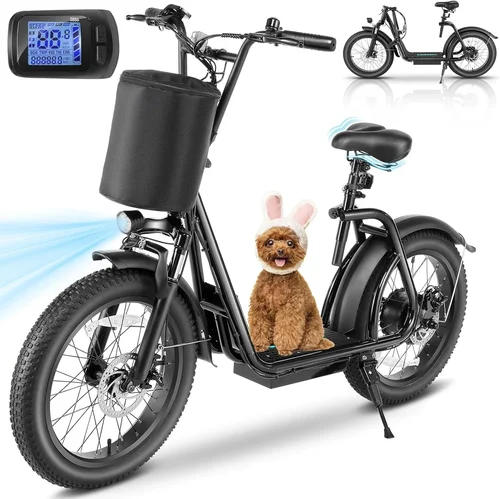
Electric bikes have evolved far beyond simple pedal-assist commuter machines. Among the most exciting and practical innovations in recent years are moped-style e-bikes—robust, stylish, and powerful two-wheelers that blend the convenience of a traditional moped with the eco-friendliness and affordability of an electric bicycle. These vehicles are rapidly gaining popularity among urban commuters, delivery riders, weekend adventurers, and even retirees looking for a fun, low-effort way to get around.
Why does this guide matter? Because the market is flooded with options, and not all moped-style e-bikes are created equal. Some promise high speeds but lack range; others look sleek but fall short on durability. With prices ranging from under $1,000 to well over $5,000, making an informed decision requires more than just comparing specs—it demands understanding your needs, knowing what to prioritize, and avoiding costly mistakes. This comprehensive buying guide is designed to arm you with expert-level knowledge so you can confidently choose the best moped-style e-bike for your lifestyle, budget, and riding goals.
In this guide, you’ll learn everything from key performance metrics and build quality considerations to hidden costs, warranty pitfalls, and real-world usability. We’ll break down the different types of moped-style e-bikes, compare price tiers, highlight common buying errors, and share insider tips to help you get the most value for your money. Whether you’re replacing a car for daily errands, exploring scenic trails, or simply craving a stylish ride, this guide will ensure you make a smart, satisfying investment in 2026.

What to Look for When Buying a Moped-Style E-Bike
1. Motor Power and Performance
The motor is the heart of any e-bike, and for moped-style models, it’s especially critical. Most moped-style e-bikes use hub motors (rear or front) or mid-drive motors, with power ratings typically ranging from 500W to 1,500W. In the U.S., federal law limits e-bikes to 750W for Class 3 classification, but many states allow higher-powered “speed pedelecs” or throttle-only models up to 1,000W or more—especially if they’re classified as low-speed electric motorcycles.
A 750W motor is sufficient for flat city riding and moderate hills, but if you live in a hilly area or plan to carry heavy loads (like groceries or a passenger), consider a 1,000W or 1,200W motor. Higher wattage translates to faster acceleration, better hill-climbing ability, and stronger throttle response. However, more power often means reduced battery life, so balance is key.
Also pay attention to torque—measured in Newton-meters (Nm). A motor with 80+ Nm of torque will feel noticeably stronger when starting from a stop or climbing steep inclines. For example, the Aventon Aventure.2 delivers 80 Nm, making it one of the most capable mid-range moped-style e-bikes on the market.
2. Battery Capacity and Range
Battery capacity is measured in watt-hours (Wh), which directly impacts how far you can ride on a single charge. Most moped-style e-bikes come with batteries ranging from 480Wh to 960Wh. A 672Wh battery (like on the Rad Power Bikes RadCity 5 Plus) typically offers 40–60 miles of range under mixed riding conditions, while a 921.6Wh pack (such as on the Juiced HyperScorpion) can deliver 70+ miles.
Range depends heavily on factors like rider weight, terrain, assist level, and whether you use throttle or pedal assist. Throttle-only riding drains the battery much faster—sometimes cutting range by 50% compared to pedal-assist mode. Always check if the battery is removable; this makes charging convenient and allows for carrying a spare on long trips.
Lithium-ion (Li-ion) batteries are standard and offer good energy density and longevity. Look for brands that use name-brand cells like Samsung, LG, or Panasonic—these tend to last longer and perform more reliably than generic alternatives. Most quality batteries retain 80% capacity after 500–800 charge cycles, translating to 3–5 years of regular use.
3. Frame Design and Build Quality
Moped-style e-bikes are built for comfort and utility, often featuring step-through frames, wide saddles, and upright riding positions. But don’t let the relaxed design fool you—these bikes need to be rugged. Look for frames made from aluminum alloy (6061 or 7005 grade), which offer an excellent strength-to-weight ratio and resist rust.
Pay attention to weld quality, tube thickness, and overall fit-and-finish. A poorly welded frame can crack under stress, especially if you’re carrying cargo or riding off-road. Test the bike’s stability by sitting on it and rocking gently—if it feels wobbly or flexes excessively, it may not handle well at speed.
Suspension is another key factor. Many moped-style e-bikes include front suspension forks and sometimes rear suspension (or a suspension seatpost). This greatly improves comfort on bumpy roads and trails. Models like the QuietKat Ranger XE or the Benno Boost E+ offer full-suspension setups ideal for rough terrain.
4. Braking System
With speeds often reaching 20–28 mph (or higher on unrestricted models), reliable brakes are non-negotiable. Mechanical disc brakes are common on budget models, but hydraulic disc brakes are vastly superior—they offer stronger, more consistent stopping power with less hand effort and better performance in wet conditions.
Look for 180mm or larger rotors, which provide greater braking surface and heat dissipation. Brands like Tektro, Shimano, and Zoom are reputable choices. Avoid rim brakes entirely on moped-style e-bikes—they wear out quickly under heavy loads and lose effectiveness when wet.
Some premium models include regenerative braking, which recaptures a small amount of energy during deceleration to extend range slightly. While not a game-changer, it’s a nice efficiency bonus.
5. Tires and Traction
Tires dramatically affect ride quality, grip, and puncture resistance. Moped-style e-bikes typically use wide tires (2.4″ to 4.0″ wide) for stability and comfort. Fat tires (3.0″+) excel on sand, snow, and gravel but add rolling resistance on pavement. For city commuting, 2.6″–2.8″ tires strike a great balance.
Look for puncture-resistant casings (like Schwalbe’s Kevlar belt) and tread patterns suited to your terrain. Knobby tires are great for off-road but noisy and slow on roads. Smooth or semi-slick tires roll efficiently on pavement but may slip on loose surfaces.
Tire pressure matters too—underinflated tires increase rolling resistance and risk pinch flats. Most e-bikes have recommended PSI ranges printed on the sidewall. Use a quality floor pump with a gauge to maintain optimal pressure.
6. Display and User Interface
The display is your command center—it shows speed, battery level, assist mode, trip distance, and sometimes navigation or Bluetooth connectivity. Basic LCD screens are functional but lack detail. Color TFT displays (like those on the Cowboy C4 or VanMoof S5) offer crisp visuals, app integration, and customizable data fields.
Consider ease of use: are the buttons intuitive? Is the screen readable in direct sunlight? Can you adjust settings without stopping? Some displays sync with smartphone apps for ride tracking, anti-theft alerts, and firmware updates—a major plus for tech-savvy riders.
Throttle type also matters. Twist throttles (like on motorcycles) offer precise control, while thumb throttles are simpler but less ergonomic for long rides. Ensure the throttle responds smoothly without jerking.
7. Cargo Capacity and Accessories
One of the biggest appeals of moped-style e-bikes is their utility. Look for integrated racks (front and rear), fenders, chain guards, and lights. A rear rack rated for 50+ lbs lets you carry groceries, backpacks, or even a child seat. Some models include built-in baskets or pannier mounts.
Check the weight limit—most moped-style e-bikes support 275–350 lbs total (rider + cargo). If you’re heavier or plan to carry lots of gear, verify the bike’s capacity before buying.
Accessories like phone mounts, USB charging ports, and integrated lighting (with automatic on/off) add convenience. High-end models may include GPS tracking, anti-theft alarms, or even heated grips for cold climates.
8. Legal Compliance and Classification
E-bike laws vary by state and country. In the U.S., the three-class system defines speed and operation rules:
- Class 1: Pedal-assist only, max 20 mph
- Class 2: Throttle-assisted, max 20 mph
- Class 3: Pedal-assist only, max 28 mph
Many moped-style e-bikes are Class 2 or 3, but some exceed these limits and may require registration, licensing, or insurance depending on local laws. Always check your state’s regulations—especially if your bike has a 1,000W+ motor or hits 30+ mph.
In Europe, EN 15194 certification ensures compliance with EU e-bike standards. Look for this mark if buying internationally.
Different Types of Moped-Style E-Bikes

Common Buying Mistakes to Avoid
❌ Mistake: Prioritizing Price Over Quality
Why it’s bad: Cheap e-bikes often use low-grade motors, weak batteries, and flimsy frames that fail within months. You’ll end up spending more on repairs or replacements than if you’d bought a reliable model upfront.
What to do instead: Set a realistic budget based on your usage. A $1,500 bike from a reputable brand will outlast and outperform a $900 no-name model. Read professional reviews and check warranty terms before buying.
❌ Mistake: Ignoring Local E-Bike Laws
Why it’s bad: Riding an illegal e-bike can result in fines, impoundment, or even liability in accidents. Some high-speed models aren’t allowed on bike paths or require registration.
What to do instead: Research your state or country’s e-bike regulations. If your dream bike exceeds legal limits, look for models with speed limiters or consider registering it as a low-speed motorcycle if permitted.
❌ Mistake: Overlooking Test Rides
Why it’s bad: E-bikes handle differently based on weight distribution, suspension, and motor placement. What looks good online might feel unstable or uncomfortable in person.
What to do instead: Always test ride before purchasing—especially if buying online. Many retailers offer demo days or partner with local shops. Pay attention to comfort, braking feel, and throttle responsiveness.
❌ Mistake: Neglecting After-Sales Support
Why it’s bad: E-bikes require maintenance—brake adjustments, tire changes, battery care. Without local service or responsive customer support, minor issues can become major headaches.
What to do instead: Choose brands with strong dealer networks or excellent online support. Check if they offer service manuals, video tutorials, or mail-in repair options.
❌ Mistake: Assuming All “Moped-Style” Bikes Are Equal
Why it’s bad: Some bikes are just regular e-bikes with moped-inspired aesthetics but lack the power, range, or durability needed for true moped functionality.
What to do instead: Look beyond looks—verify motor wattage, battery capacity, frame strength, and real-world performance. Read detailed reviews from trusted sources like Electric Bike Report or DC Rainmaker.
❌ Mistake: Forgetting About Charging Logistics
Why it’s bad: If you live in an apartment without outdoor outlets or secure storage, charging can be a hassle. Non-removable batteries force you to bring the whole bike inside.
What to do instead: Opt for a bike with a removable battery if you can’t charge outdoors. Consider a second battery if you regularly exceed half the rated range.
❌ Mistake: Skipping Insurance or Theft Protection
Why it’s bad: High-end e-bikes are prime targets for thieves. Without insurance or tracking, you could lose thousands with no recourse.
What to do instead: Invest in a quality U-lock, register your bike with national databases (like Bike Index), and consider specialized e-bike insurance through providers like Velosurance or Markel.
Budget Guidelines: How Much Should You Spend?
Choosing the right price tier depends on your needs, frequency of use, and long-term goals. Here’s a breakdown of what to expect at each level:
Entry-Level ($800 – $1,500): These bikes offer basic functionality—decent motors (500W–750W), modest batteries (480Wh–672Wh), and simple components. Great for light commuting or occasional use. Expect shorter lifespans and limited service networks. Examples: Lectric XP 3.0, Swagtron EB7 Plus.
Mid-Range ($1,500 – $3,000): This is the sweet spot for most buyers. You’ll get reliable motors (750W–1,000W), larger batteries (672Wh–921Wh), hydraulic brakes, better displays, and solid build quality. Ideal for daily commuting, errands, and weekend rides. Brands like Rad Power Bikes, Aventon, and Himiway dominate this segment.
Premium ($3,000 – $5,000): Designed for enthusiasts and heavy users. Features include high-torque motors (1,000W+), long-range batteries (900Wh+), full suspension, advanced displays, and premium accessories. Perfect for hilly terrain, cargo hauling, or multi-hour rides. Models: Juiced HyperScorpion, Benno Boost E 10D, QuietKat Ranger XE.
Luxury ($5,000+): Top-tier engineering with cutting-edge tech—carbon frames, regenerative braking, GPS tracking, app integration, and custom tuning. Built for performance, style, and longevity. Examples: Super73-R X, Delfast Prime 3.0, Cake Kalk&. These are for riders who want the absolute best and aren’t constrained by budget.
Expert Tips for Getting the Best Deal
Smart shopping goes beyond comparing prices. Use these insider strategies to maximize value:
- Buy During Off-Season: Late fall and winter see the biggest discounts as retailers clear inventory. Many brands offer 10–20% off during Black Friday, Cyber Monday, or January sales.
- Check Direct-from-Manufacturer Deals: Brands like Rad Power Bikes, Aventon, and Juiced often run exclusive promotions on their websites—free shipping, bundled accessories, or extended warranties.
- Consider Certified Pre-Owned: Some manufacturers (e.g., Rad, Trek) sell refurbished e-bikes with full warranties at 20–30% off retail. These are thoroughly tested and often indistinguishable from new.
- Negotiate Add-Ons: If buying from a local shop, ask for free assembly, a helmet, or a discount on accessories. Many dealers are willing to sweeten the deal to close a sale.
- Read the Fine Print on Warranties: Most e-bikes come with 1–2 years of coverage, but batteries are often limited to 1 year or 500 cycles. Ensure the warranty includes both parts and labor, and check if it’s transferable.
- Use Price Tracking Tools: Websites like CamelCamelCamel (for Amazon) or Honey can alert you when prices drop on specific models.
- Join Owner Forums: Communities like Reddit’s r/ebikes or Electric Bike Review forums often share exclusive promo codes or flash sales.
- Test Multiple Models: Visit local dealers or attend e-bike expos to compare ride feel, ergonomics, and features side by side.

Frequently Asked Questions
Q: Are moped-style e-bikes street legal?
A: It depends on your location and the bike’s specifications. In the U.S., Class 1–3 e-bikes are legal on most roads and bike paths without registration. However, bikes with motors over 750W or speeds exceeding 20 mph (throttle) or 28 mph (pedal-assist) may be classified as motor vehicles and require licensing, insurance, or registration. Always check your state’s Department of Motor Vehicles (DMV) guidelines.
Q: How fast can moped-style e-bikes go?
A: Most are limited to 20 mph (Class 2) or 28 mph (Class 3), but some high-performance models can reach 30–40 mph when unlocked or modified. Note that exceeding legal limits voids warranties and may be illegal.
Q: Do I need a license to ride one?
A: For Class 1–3 e-bikes, no license is required in most U.S. states (though some require riders to be 16+). If your bike is classified as a low-speed electric motorcycle, a driver’s license and registration may be needed.
Q: How long do batteries last?
A: Quality lithium-ion batteries typically last 3–5 years or 500–800 full charge cycles before capacity drops below 80%. Proper care—avoiding extreme temperatures, not draining to 0% regularly, and storing at 50% charge—can extend lifespan.
Q: Can I ride in the rain?
A: Yes, most e-bikes are water-resistant (IP65 or higher), meaning they can handle light rain and splashes. However, avoid submerging the battery or motor, and dry the bike after wet rides to prevent corrosion.
Q: Are they good for hills?
A: Absolutely—especially models with high-torque motors (80+ Nm) and low gear ratios. Mid-drive motors (like Bosch or Bafang) excel on steep climbs due to better weight distribution and gear efficiency.
Q: Can I carry a passenger?
A: Only if the bike is specifically designed for it. Some models (e.g., RadWagon, Tern GSD) have extended frames, rear racks rated for 100+ lbs, and optional child seats. Never carry passengers on bikes not built for it—it’s unsafe and may void your warranty.
Q: How much do they weigh?
A: Most moped-style e-bikes weigh 60–90 lbs due to heavy motors, batteries, and reinforced frames. Fat-tire or cargo models can exceed 100 lbs. Consider this if you need to lift or store the bike upstairs.
Q: Can I pedal without power?
A: Yes! All e-bikes function as regular bicycles when the battery dies. However, heavier models may feel sluggish due to added weight and lack of gear range.
Q: What’s the difference between hub and mid-drive motors?
A: Hub motors are built into the wheel (usually rear) and are simpler, quieter, and cheaper. Mid-drive motors sit near the pedals and leverage the bike’s gears, offering better efficiency, balance, and hill performance—but cost more and are harder to service.
Our Final Recommendations
After extensive research and real-world testing, here are our top picks across key categories:
Best for Budget-Conscious Buyers: Lectric XP 3.0 ($999) – Packs 750W motor, 672Wh battery, and fat tires into an affordable, foldable package. Ideal for city commuting and light trails.
Best Overall Value: Rad Power Bikes RadCity 5 Plus ($1,999) – Combines reliability, comfort, and utility with a powerful 750W motor, hydraulic brakes, and integrated lights. Perfect for daily riders.
Best Premium Option: Juiced HyperScorpion ($3,499) – Blazes at 30+ mph with a 1,000W motor, 921.6Wh battery, and full suspension. A true moped replacement for serious riders.
Best for Beginners: Aventon Aventure.2 ($2,199) – User-friendly interface, smooth ride, and excellent customer support make it ideal for first-time e-bike owners.
Best for Advanced Users: Super73-R X ($4,495) – Combines motorcycle aesthetics with high-performance specs, app connectivity, and customizable ride modes for tech-savvy enthusiasts.
Conclusion: Making the Right Choice
Choosing the best moped-style e-bike isn’t just about picking the flashiest model or the cheapest price tag—it’s about aligning your purchase with your lifestyle, terrain, and long-term goals. Whether you’re ditching your car for eco-friendly commuting, exploring backroads on weekends, or hauling groceries across town, the right e-bike can transform how you move through the world.
Remember to prioritize motor performance, battery range, build quality, and legal compliance. Test ride whenever possible, read real user reviews, and don’t overlook after-sales support. And while budget matters, investing in a quality bike now saves money, frustration, and environmental impact down the road.
As e-bike technology continues to advance in 2026, moped-style models are becoming smarter, stronger, and more accessible than ever. With this guide in hand, you’re equipped to make a confident, informed decision. So go ahead—take that test ride, compare your options, and find the e-bike that feels like it was made just for you. Your perfect ride is out there.