
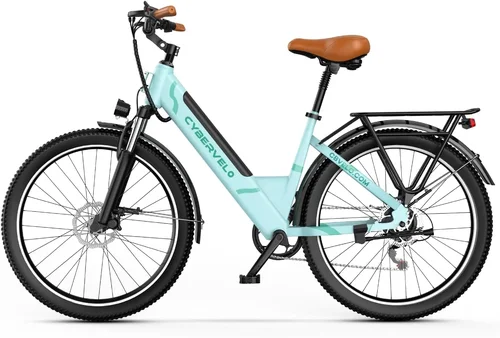
Electric bikes have evolved from niche novelties into mainstream transportation solutions, and 2026 is shaping up to be a pivotal year in their evolution. With advancements in battery technology, motor efficiency, smart connectivity, and urban infrastructure support, e-bikes are now more accessible, reliable, and versatile than ever before. Whether you’re commuting to work, running errands, exploring trails, or simply looking for a fun and eco-friendly way to stay active, there’s an electric bike tailored to your lifestyle. But with hundreds of models flooding the market—from budget-friendly commuter rides to high-performance off-road machines—choosing the right one can feel overwhelming. That’s exactly why this comprehensive buying guide exists: to cut through the noise, clarify your options, and help you make a confident, informed decision.
In this guide, you’ll learn everything you need to know to find the best electric bike for your specific needs. We’ll walk you through the most critical factors to consider—from motor power and battery range to frame materials and warranty coverage—and explain how each element impacts real-world performance. You’ll also discover the different types of e-bikes available, common pitfalls to avoid, smart budgeting strategies, and insider tips for getting the best value. By the end, you won’t just know what to buy—you’ll understand why it’s the right choice for you. The e-bike market in 2026 is more competitive and innovative than ever, with brands pushing boundaries in sustainability, safety, and user experience. From sleek city commuters with integrated GPS and anti-theft systems to rugged fat-tire bikes capable of handling snow, sand, and steep mountain trails, the options are vast. But variety doesn’t have to mean confusion. With the right knowledge, you can navigate this landscape with clarity and confidence.

What to Look for When Buying an Electric Bike
1. Motor Type and Power Output
The motor is the heart of any electric bike, and its type and power output directly influence how the bike performs in real-world conditions. Most e-bikes use either hub motors (located in the front or rear wheel) or mid-drive motors (positioned near the pedals, integrated with the drivetrain). Hub motors are common in entry-level and mid-range models because they’re simpler, quieter, and generally more affordable. Rear hub motors offer better traction and a more natural riding feel, especially on flat terrain or gentle hills. Front hub motors can feel less balanced but are easier to service. Mid-drive motors, found on higher-end models, are more efficient because they leverage the bike’s gears, providing better torque, hill-climbing ability, and weight distribution. They’re ideal for off-road riding, long commutes, or hilly areas.
Motor power is measured in watts (W), and while higher wattage doesn’t always mean better performance, it does indicate the bike’s capability. In the U.S., e-bikes are legally classified into three categories based on speed and motor assistance. Class 1 bikes provide pedal assist up to 20 mph with no throttle. Class 2 bikes include a throttle and also cap assistance at 20 mph. Class 3 bikes offer pedal assist up to 28 mph and are often used by commuters who need to keep up with traffic. Most consumer e-bikes range from 250W to 750W. A 250W motor is sufficient for flat city riding with light loads, while a 500W to 750W motor is better for hills, heavier riders, or cargo hauling. Some high-performance models go up to 1000W or more, but these may require special licensing or be restricted in certain regions. Always check local regulations before purchasing.
2. Battery Capacity and Range
The battery determines how far you can ride on a single charge, making it one of the most crucial specs to evaluate. Battery capacity is measured in watt-hours (Wh), which is calculated by multiplying voltage (V) by amp-hours (Ah). For example, a 36V 10Ah battery has a capacity of 360Wh. In general, a 400Wh battery provides a range of 20–40 miles, depending on terrain, rider weight, assist level, and weather conditions. A 500Wh to 600Wh battery can extend that to 40–70 miles, while high-capacity 700Wh+ batteries are ideal for long-distance touring or heavy use.
Battery placement also matters. Integrated batteries (built into the downtube or rear rack) offer a sleek, balanced look and better protection from the elements. External or removable batteries are easier to charge off-bike and replace, which is useful if you don’t have a convenient charging spot at home or work. Lithium-ion (Li-ion) batteries are the standard due to their high energy density, long lifespan (typically 500–1,000 charge cycles), and lightweight design. Avoid older lead-acid or nickel-based batteries, which are heavier and less efficient.
Charging time varies from 3 to 6 hours for most modern batteries. Fast-charging options are becoming more common, with some models reaching 80% charge in under 2 hours. Always check the charger specs and whether it’s included. Also, consider battery management systems (BMS)—these protect against overcharging, overheating, and deep discharge, extending battery life and improving safety.
3. Frame Material and Build Quality
The frame is the foundation of your e-bike, affecting durability, weight, ride comfort, and overall longevity. The three most common materials are aluminum, steel, and carbon fiber. Aluminum is the most popular due to its excellent strength-to-weight ratio, corrosion resistance, and affordability. It’s lightweight enough for easy handling but strong enough to support motors and batteries. Most mid-range and premium e-bikes use aluminum alloys like 6061 or 7005.
Steel frames are heavier but offer superior shock absorption and durability, making them ideal for rugged use or touring. They’re often found on vintage-style or cargo e-bikes. However, steel is prone to rust if not properly treated, so look for powder-coated finishes. Carbon fiber is used in high-end performance models for its extreme lightness and stiffness. It dampens vibrations well and enhances ride quality, but it’s expensive and less repairable than metal frames.
Beyond material, examine the frame design. Step-through frames are easier to mount and dismount, especially for riders with limited mobility or those wearing skirts or dresses. Traditional diamond frames offer better structural rigidity and are preferred for sportier riding. Weld quality, cable routing (internal vs. external), and component integration (like battery and motor placement) are also indicators of build quality. A well-built frame should feel solid, balanced, and free of rattles or flex during riding.
4. Braking System
Safety is paramount, and your brakes are your first line of defense. E-bikes travel faster and often carry more weight than traditional bikes, so reliable stopping power is essential. The two main types of brakes are mechanical disc brakes and hydraulic disc brakes. Mechanical disc brakes use cables to actuate the brake pads and are easier to maintain and adjust. They’re common on budget and mid-range models and perform well in dry conditions.
Hydraulic disc brakes, found on higher-end bikes, use fluid to transfer force from the lever to the caliper. They offer superior modulation, more consistent performance in wet or muddy conditions, and require less hand effort. They’re the gold standard for performance and safety, especially on steep descents or long commutes. Rim brakes (V-brakes or caliper brakes) are less common on modern e-bikes due to reduced stopping power and faster wear, especially under heavy loads or wet conditions.
Look for brake rotor size as well—larger rotors (180mm or 203mm) provide better heat dissipation and stopping power. Some premium models include regenerative braking, which recaptures a small amount of energy during braking to extend range, though the benefit is minimal on most e-bikes. Always test the brakes during a demo ride—ensure they engage smoothly, don’t squeal, and bring the bike to a complete stop quickly without locking the wheels.
5. Tires and Suspension
Tires and suspension significantly affect comfort, traction, and handling. Tire width ranges from 1.75 inches (narrow, road-focused) to 4+ inches (fat tires for off-road or snow). Wider tires provide better grip and cushioning, ideal for rough roads, gravel, or trails. Narrower tires reduce rolling resistance and are better for speed on pavement. Tread pattern matters too: slick tires are quiet and efficient on roads, while knobby tires offer grip on dirt or wet surfaces.
Puncture resistance is another key factor. Look for tires with reinforced casings or built-in liners (like Schwalbe’s SmartGuard). Tubeless setups are becoming more common and reduce the risk of flats, though they require special rims and sealant. For suspension, most e-bikes fall into three categories: rigid (no suspension), front suspension (hardtail), or full suspension. Rigid bikes are lighter and more efficient but transmit more road vibration. Front suspension forks absorb bumps and improve control on uneven terrain, making them ideal for commuting or light trail use. Full suspension is rare on e-bikes due to added weight and complexity but is available on high-end mountain e-bikes for serious off-road performance.
6. Display and Smart Features
The display is your command center, showing speed, battery level, assist mode, distance, and more. Basic LED displays show essential info, while full-color LCD or TFT screens offer detailed metrics, navigation, and connectivity. Higher-end models include Bluetooth and app integration, allowing you to track rides, update firmware, lock the bike remotely, or share location data.
Smart features are becoming standard in 2026. GPS tracking helps recover stolen bikes, while anti-theft alarms and geofencing send alerts if the bike moves outside a set area. Some bikes include integrated lights, turn signals, and even collision detection. USB ports for charging devices are also common. Consider ease of use—buttons should be intuitive, and screens readable in sunlight. Touchscreens are sleek but can be hard to use with gloves or in rain.
Assist modes (Eco, Tour, Sport, Turbo) let you control how much motor power you get. More modes offer greater flexibility, but even basic bikes usually have 3–5 settings. Regenerative braking, while not common, is a nice bonus for extending range on long rides.
7. Weight and Portability
E-bikes are heavier than traditional bikes due to motors and batteries, typically ranging from 40 to 70 pounds. Weight affects handling, especially when lifting the bike upstairs, onto a rack, or storing it in tight spaces. Lighter models (under 50 lbs) are easier to manage but may sacrifice battery capacity or durability.
Portability features include folding frames, removable batteries, and integrated carrying handles. Folding e-bikes are ideal for commuters who need to take their bike on public transit or store it in small apartments. However, they often have smaller wheels and reduced range. Removable batteries make charging convenient and reduce theft risk. Some models include rear racks or front baskets for cargo, adding utility but also weight.
Consider where and how you’ll store the bike. If you live in an apartment without elevator access, a lighter or foldable model may be worth the trade-off in performance. For garage or outdoor storage, weight is less of a concern.
8. Warranty and Customer Support
A good warranty reflects the manufacturer’s confidence in their product. Most reputable brands offer at least a 1-year warranty on the entire bike, with 2–3 years on the battery and motor. Some premium brands provide up to 5 years of coverage. Read the fine print: does it cover wear and tear? What about shipping costs for repairs? Is labor included?
Customer support is equally important. Look for brands with responsive service teams, online resources (manuals, FAQs, video guides), and local dealer networks. Some companies offer on-site repairs or loaner bikes during service. Avoid brands with no clear support channels or long response times.
Different Types of Electric Bikes

Common Buying Mistakes to Avoid
❌ Mistake: Prioritizing Price Over Performance
Why it’s bad: The cheapest e-bike may save you money upfront but could cost more in repairs, replacements, or frustration. Low-end models often use weak motors, poor batteries, and flimsy frames that wear out quickly.
What to do instead: Set a realistic budget based on your usage. If you plan to ride daily or in hilly areas, invest in a mid-range model with a reliable motor and battery. Think of it as a long-term investment in mobility and health.
❌ Mistake: Ignoring Local Laws and Regulations
Why it’s bad: E-bike laws vary by state, city, and country. Some areas restrict motor power, speed, or where you can ride. Riding an illegal bike could result in fines or confiscation.
What to do instead: Research local regulations before buying. In the U.S., check your state’s Department of Motor Vehicles (DMV) or transportation website. Ensure your bike complies with Class 1, 2, or 3 standards.
❌ Mistake: Overlooking Test Rides
Why it’s bad: E-bikes handle differently based on weight, balance, and motor response. Buying without riding can lead to discomfort, poor fit, or buyer’s remorse.
What to do instead: Always test ride before purchasing. Visit local dealers, attend e-bike expos, or use brands that offer at-home trials. Pay attention to comfort, ease of use, and how the bike feels on hills and turns.
❌ Mistake: Neglecting Maintenance Needs
Why it’s bad: E-bikes require regular maintenance—brake adjustments, tire checks, chain lubrication, and battery care. Ignoring upkeep shortens lifespan and increases safety risks.
What to do instead: Learn basic maintenance or find a reliable bike shop. Choose brands with good service networks and accessible parts. Keep a maintenance schedule and inspect your bike monthly.
❌ Mistake: Choosing the Wrong Size or Fit
Why it’s bad: An ill-fitting bike causes discomfort, reduces control, and can lead to injury. E-bikes are heavier, so proper fit is even more critical.
What to do instead: Use sizing charts and consult with staff. Ensure you can stand over the frame with both feet flat, reach the handlebars comfortably, and adjust the seat height properly. Consider a professional bike fit if riding long distances.
❌ Mistake: Forgetting About Storage and Security
Why it’s bad: E-bikes are expensive and attractive to thieves. Poor storage increases theft risk and exposure to weather, which can damage electronics.
What to do instead: Invest in a high-quality U-lock or chain lock. Use a bike cover if storing outdoors. Consider indoor storage or secure bike rooms. Some models include built-in locks or GPS tracking.
❌ Mistake: Assuming All E-Bikes Are the Same
Why it’s bad: E-bikes vary widely in quality, design, and intended use. Treating them as interchangeable leads to poor choices.
What to do instead: Identify your primary use case—commuting, recreation, cargo, off-road—and choose a bike designed for that purpose. Don’t expect a folding bike to handle mountain trails or a commuter to carry 100 lbs of cargo.
Budget Guidelines: How Much Should You Spend?
Entry-Level ($500 – $1,200): These bikes are ideal for casual riders, short commutes, or occasional use. Expect basic components, hub motors (250W–500W), and batteries with 300–400Wh capacity. Range is typically 15–30 miles. Build quality may be lower, with mechanical disc brakes and minimal features. Brands like Gotrax, Ancheer, and Swagtron offer models in this range. Great for beginners or those on a tight budget, but may lack durability for daily use.
Mid-Range ($1,200 – $2,500): This is the sweet spot for most buyers. Bikes in this tier offer better motors (500W–750W), higher-capacity batteries (500–600Wh), and improved components like hydraulic disc brakes, suspension forks, and integrated lights. Many include smart features, app connectivity, and reliable warranties. Examples include Rad Power Bikes, Aventon, and Lectric. These bikes balance performance, comfort, and value, making them perfect for daily commuting, weekend adventures, or light cargo hauling.
Premium ($2,500 – $5,000): Designed for enthusiasts and serious riders, premium e-bikes feature mid-drive motors, full suspension, high-end drivetrains (like Shimano or SRAM), and advanced electronics. Batteries often exceed 600Wh, with ranges of 50–100 miles. Brands like Trek, Specialized, and Bosch-powered models dominate this space. Ideal for long-distance touring, mountain biking, or riders who demand top-tier performance and reliability.
Luxury ($5,000+): These are the Ferraris of e-bikes—handcrafted frames, cutting-edge tech, and bespoke features. Expect carbon fiber construction, regenerative braking, AI-assisted riding modes, and luxury finishes. Models from brands like Riese & Müller, Stromer, or DYU’s high-end line offer unparalleled comfort and innovation. Best for collectors, tech lovers, or those who want the absolute best regardless of cost.
Expert Tips for Getting the Best Deal
1. Buy During Off-Peak Seasons: E-bike sales peak in spring and summer. Shop in late fall or winter for discounts, clearance deals, or bundled accessories. Many retailers offer end-of-season sales to clear inventory.
2. Compare Online and In-Store Prices: Online retailers often have lower prices due to reduced overhead, but local shops may offer better service, test rides, and assembly. Use online deals as leverage in-store—some shops will price-match.
3. Look for Bundle Deals: Some brands offer packages with helmets, locks, lights, or racks included. These can save $100–$300 compared to buying separately.
4. Check for Rebates and Incentives: Many cities and states offer e-bike purchase rebates or tax credits to promote green transportation. California, Colorado, and New York have active programs. Check local government websites for eligibility.
5. Read Return and Exchange Policies: Ensure the seller offers a reasonable return window (at least 14–30 days) and covers return shipping. Some brands charge restocking fees, so read the fine print.
6. Consider Certified Pre-Owned Models: Reputable dealers sell refurbished e-bikes with warranties at 20–40% off retail. These are often inspected, repaired, and tested, offering great value.
7. Join E-Bike Communities: Online forums, Facebook groups, and Reddit communities share deals, reviews, and insider tips. Members often post about flash sales or exclusive discounts.
8. Negotiate Accessories: If buying in-store, ask for free or discounted accessories like phone mounts, panniers, or upgraded locks. Dealers often have flexibility on add-ons.

Frequently Asked Questions
Q: How far can an electric bike go on a single charge?
A: Range varies widely based on battery capacity, terrain, rider weight, assist level, and weather. Most e-bikes offer 20–70 miles per charge. A 500Wh battery typically provides 30–50 miles in mixed conditions. Use lower assist modes and maintain proper tire pressure to maximize range.
Q: Are electric bikes legal everywhere?
A: In the U.S., e-bikes are legal in all 50 states but regulated differently. Most states follow the three-class system. Some cities restrict e-bikes on sidewalks or trails. Always check local laws before riding.
Q: Can I ride an e-bike in the rain?
A: Yes, most e-bikes are designed to handle wet conditions. Look for IP65 or higher water resistance ratings. Avoid submerging the battery or motor, and dry the bike after riding in heavy rain.
Q: How often should I charge the battery?
A: Charge regularly but avoid letting the battery drop below 20% frequently. Lithium-ion batteries last longest when kept between 20% and 80%. Store the battery at 50% charge if not using for extended periods.
Q: Do I need a license or insurance for an e-bike?
A: In most U.S. states, no license or insurance is required for Class 1, 2, or 3 e-bikes. However, some states require helmets for riders under 18. Check your local DMV for specifics.
Q: Can I pedal an e-bike without the motor?
A: Yes, all e-bikes can be ridden like regular bikes. The motor only assists when you pedal (or use the throttle). This is useful if the battery dies or you want a workout.
Q: How much does it cost to maintain an e-bike?
A: Annual maintenance costs $100–$300, depending on usage. Basic upkeep includes brake adjustments, tire replacements, chain lubrication, and battery checks. Premium components may cost more to service.
Q: Are e-bikes good for exercise?
A: Absolutely. Even with motor assistance, you’re still pedaling and engaging muscles. Using lower assist levels increases workout intensity. E-bikes make cycling accessible to people of all fitness levels.
Q: What’s the difference between pedal assist and throttle?
A: Pedal assist (PAS) provides power only when you pedal, with varying levels of support. Throttle lets you ride without pedaling, like a scooter. Class 2 bikes have throttles; Class 1 and 3 do not.
Q: Can I upgrade my e-bike’s battery?
A: Some models allow battery upgrades, but compatibility varies. Check with the manufacturer. Upgrading may void the warranty, so proceed with caution.
Our Final Recommendations
Best for Budget-Conscious Buyers: Gotrax GXL V2 – At under $800, this commuter e-bike offers solid performance with a 36V 7.8Ah battery, 30-mile range, and lightweight aluminum frame. Ideal for city riders who want reliability without the premium price.
Best Overall Value: Rad Power Bikes RadCity 5 Plus – Priced around $1,800, this mid-range champion features a 750W motor, 672Wh battery, hydraulic disc brakes, and a comfortable step-through design. Perfect for daily commuting and weekend adventures.
Best Premium Option: Specialized Turbo Vado SL 5.0 – With a lightweight carbon frame, 60-mile range, and smart connectivity, this $4,500 bike delivers elite performance for serious riders who demand the best.
Best for Beginners: Aventon Pace 350 – Easy to ride, affordable ($1,299), and packed with features like a color display, integrated lights, and a relaxed geometry. Great for new e-bike owners.
Best for Advanced Users: Trek Allant+ 9.9S – A high-performance commuter with a Bosch Performance Line CX motor, 725Wh battery, and full suspension. Built for long distances, hills, and tech-savvy riders.
Conclusion: Making the Right Choice
Choosing the best electric bike in 2026 isn’t just about picking the shiniest model or the lowest price—it’s about finding the right balance of performance, comfort, and value for your lifestyle. Whether you’re commuting to work, exploring trails, or transporting your family, there’s an e-bike designed to enhance your journey. By understanding key factors like motor power, battery capacity, build quality, and smart features, you can cut through the marketing hype and make a decision that truly fits your needs.
Remember, the best e-bike is the one you’ll actually ride. Don’t let perfection paralysis stop you—start with a model that meets your core requirements, and upgrade as your needs evolve. Take advantage of test rides, research local incentives, and invest in quality components that will last. With the right bike, you’ll enjoy cleaner air, lower transportation costs, and the simple joy of riding. So gear up, charge up, and hit the road—your perfect electric bike is waiting.