
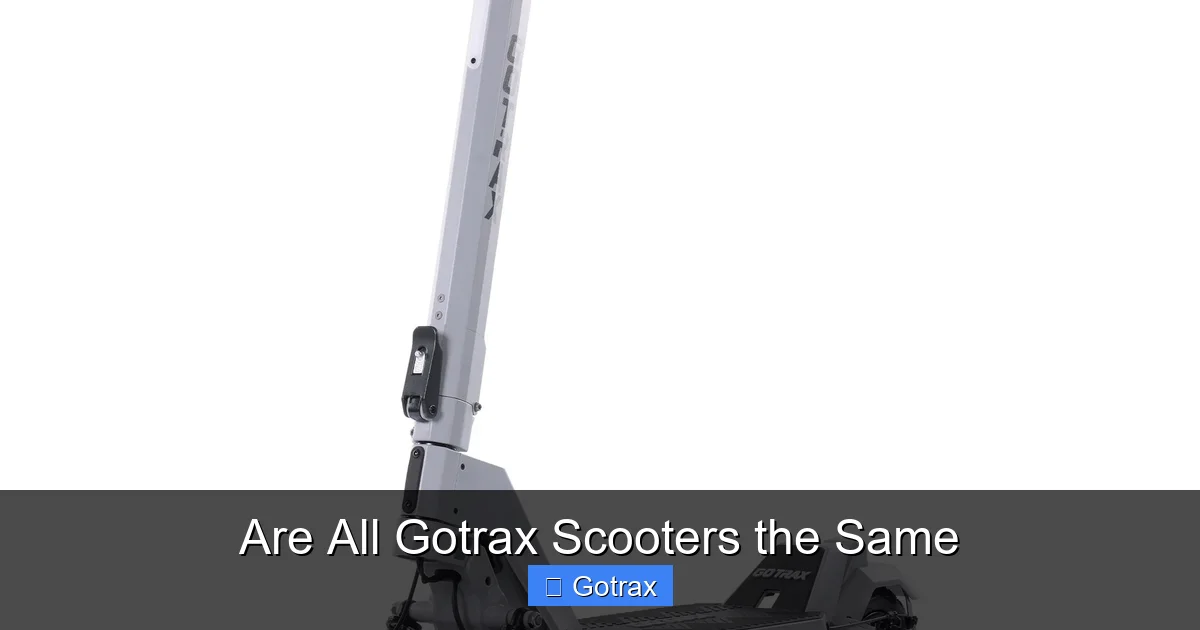
Gotrax offers a diverse lineup of electric scooters designed for different riders and uses—from kids to commuters. While they share a brand name, models vary significantly in speed, battery life, build quality, and price, so choosing the right one matters.
Key Takeaways
- Gotrax scooters differ in motor power: Entry-level models like the GKS have 150W motors, while high-end ones like the GXL V2 boast 300W for better hill climbing.
- Battery range varies widely: Some scooters go only 7 miles, others up to 19 miles on a single charge, depending on model and riding conditions.
- Weight capacity and size matter: Kids’ models support up to 120 lbs, while adult scooters handle 220–275 lbs and have larger decks and wheels.
- Design and portability features differ: Foldable frames, LED displays, and suspension systems are not standard across all models.
- Price reflects performance: Budget models start under $200, while premium scooters cost $500+, offering better durability and tech.
- Safety features vary: Braking systems, lights, and tire types (airless vs. pneumatic) differ by model and impact ride quality.
- Intended use defines the best fit: Commuters need range and speed; kids need safety and simplicity; off-road riders need rugged builds.
📑 Table of Contents
- Are All Gotrax Scooters the Same?
- Gotrax Scooter Lineup: An Overview
- Motor Power and Performance Differences
- Battery Life and Range: What to Expect
- Design, Build Quality, and Portability
- Safety Features and Ride Quality
- Price vs. Value: Which Gotrax Scooter Is Right for You?
- Conclusion: Choosing the Right Gotrax Scooter for Your Needs
Are All Gotrax Scooters the Same?
If you’re shopping for an electric scooter and have come across the Gotrax brand, you might be wondering: are all Gotrax scooters the same? The short answer is no—far from it. While Gotrax has built a solid reputation for affordable, reliable e-scooters, their product lineup is intentionally diverse. They offer models tailored to different age groups, riding styles, budgets, and needs. From lightweight scooters for kids to high-performance commuter machines, Gotrax designs each model with specific goals in mind.
Think of Gotrax like a car manufacturer. They don’t just make one type of vehicle—they have compact cars for city driving, SUVs for families, and trucks for heavy-duty work. Similarly, Gotrax offers entry-level scooters for short trips, mid-range models for daily commuting, and even rugged versions for rougher terrain. So while they all carry the Gotrax name and share some design DNA—like foldable frames and electric motors—the similarities often end there.
Understanding the differences between Gotrax scooters is crucial if you want to get the best value and performance for your needs. A scooter that’s perfect for a 10-year-old won’t cut it for a 180-pound adult commuting five miles to work. Likewise, a high-speed model with long range might be overkill—and too expensive—for a teen just riding around the neighborhood. In this guide, we’ll break down the key differences across the Gotrax lineup so you can make an informed decision.
Gotrax Scooter Lineup: An Overview
Visual guide about Are All Gotrax Scooters the Same
Image source: gotrax.com
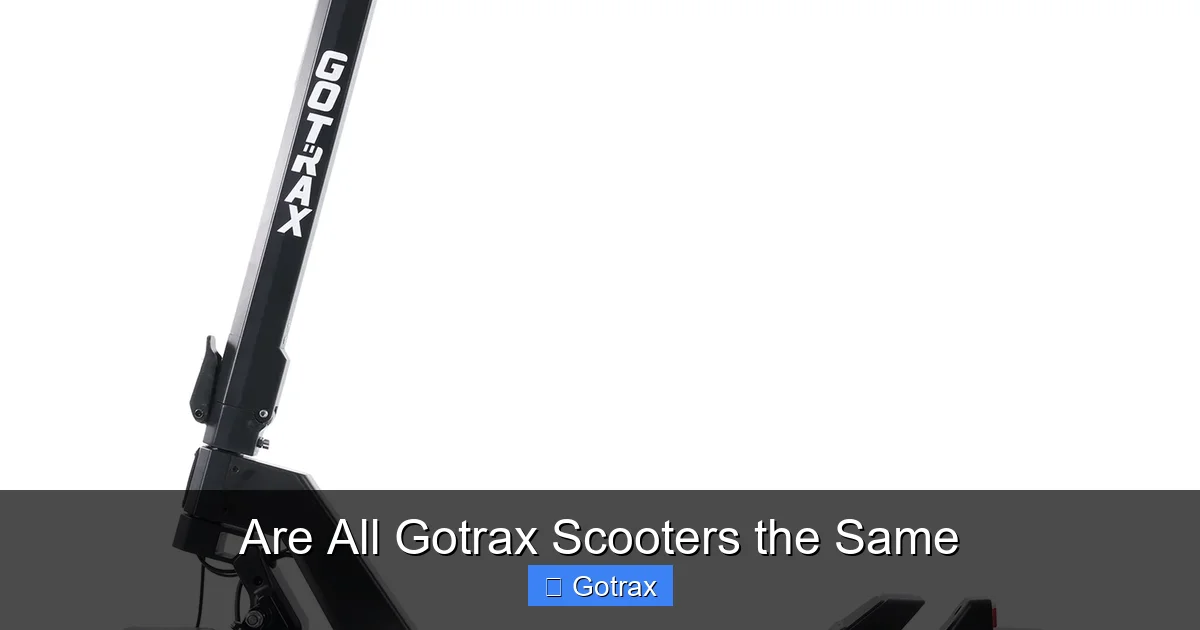
Gotrax currently offers over a dozen electric scooter models, each with unique specs and target audiences. The lineup can be loosely grouped into three categories: kids and beginner scooters, commuter and adult scooters, and performance or off-road models. Let’s take a quick tour of the most popular models to see how they stack up.
Kids and Beginner Models
These scooters are designed for younger riders or first-time users. They prioritize safety, simplicity, and lightweight design. The Gotrax GKS and GKS Plus are prime examples. Both feature a 150W motor, a top speed of around 10 mph, and a range of about 7–9 miles. They’re perfect for short rides in the park or around the neighborhood. The GKS Plus adds a slightly larger deck and improved battery, but both are ideal for kids aged 8–14.
Commuter and Adult Models
For adults who need a reliable way to get to work, school, or run errands, Gotrax offers several commuter-focused scooters. The Gotrax GXL V2 is one of the most popular in this category. It features a 300W motor, a top speed of 15.5 mph, and a range of up to 12 miles. It also includes a digital display, LED headlight, and rear fender brake. The Gotrax XR Elite and XR Ultra take it further with 350W motors, longer ranges (up to 19 miles), and better suspension.
Performance and Off-Road Models
For riders who want more power and durability, Gotrax offers models like the G4 and G6. The G4 features a 400W motor, 19-mile range, and air-filled tires for a smoother ride on rough surfaces. The G6 is even more robust, with dual suspension, a 500W motor, and a top speed of 20 mph. These are built for longer commutes, hilly terrain, or riders who just want a more thrilling experience.
Motor Power and Performance Differences
Visual guide about Are All Gotrax Scooters the Same
Image source: cdn.shopify.com
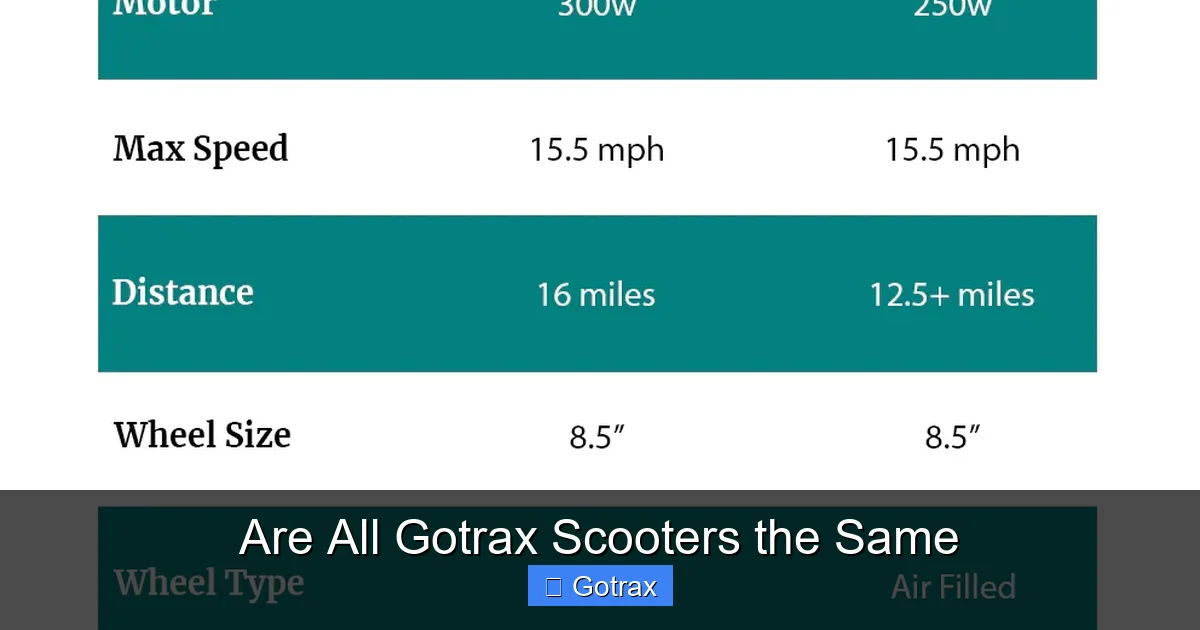
One of the biggest factors that sets Gotrax scooters apart is motor power. This directly affects how fast the scooter can go, how well it handles hills, and how smoothly it accelerates. Gotrax uses different wattage motors across its models, and understanding these differences can help you choose the right scooter for your needs.
Entry-Level Motors (150W–200W)
Scooters like the GKS and GKS Plus use 150W motors. These are great for flat surfaces and light riders. They’re not built for speed or steep inclines, but they’re efficient and cost-effective. If you’re buying for a child or only plan to ride on smooth sidewalks, this level of power is more than enough. However, if you weigh over 150 pounds or live in a hilly area, you’ll likely find these motors underwhelming.
Mid-Range Motors (250W–350W)
The GXL V2, XR Elite, and XR Ultra fall into this category. With 300W to 350W motors, these scooters offer a noticeable boost in performance. They can reach speeds of 15–16 mph and handle moderate hills with ease. This makes them ideal for daily commuting in cities or suburbs. The extra power also means better acceleration, which is helpful when starting from a stop or merging into traffic.
High-Performance Motors (400W–500W)
For serious riders, the G4 and G6 deliver 400W and 500W motors, respectively. These scooters are built for speed and power. The G6, for example, can hit 20 mph and climb steep hills without breaking a sweat. They’re also better suited for heavier riders or longer distances. If you’re planning to use your scooter for daily commuting over varied terrain, these high-wattage models are worth the investment.
Real-World Performance Tips
Motor power isn’t the only factor in performance. Weight, tire type, and battery health also play roles. For example, a 300W motor might feel sluggish if the battery is low or if you’re riding into a strong headwind. Always consider your typical riding conditions when choosing a scooter. If you live in a hilly area, go for at least a 300W motor. For flat cities, even a 200W motor can be sufficient.
Battery Life and Range: What to Expect
Battery life is one of the most important considerations when buying an electric scooter. It determines how far you can go on a single charge and how often you’ll need to plug it in. Gotrax scooters vary significantly in battery capacity, which directly impacts their range.
Battery Types and Capacities
Most Gotrax scooters use lithium-ion batteries, which are lightweight and long-lasting. However, the size (measured in watt-hours or Wh) varies. The GKS has a 187Wh battery, giving it a range of about 7–9 miles. The GXL V2 bumps that up to 256Wh for 10–12 miles. The XR Ultra and G4 go even further, with 360Wh and 432Wh batteries, respectively, offering up to 19 miles of range.
Factors That Affect Range
The advertised range is usually based on ideal conditions: a light rider, flat terrain, moderate speed, and a fully charged battery. In real life, your actual range may be shorter. Heavier riders, hills, wind, and frequent starts and stops can all reduce battery life. For example, a 200-pound rider on the GXL V2 might only get 8–10 miles instead of the advertised 12.
Charging Time and Maintenance
Charging times also vary. Most Gotrax scooters take 4–6 hours to fully charge. The G4 and G6, with larger batteries, may take up to 7 hours. It’s best to charge your scooter after each use to maintain battery health. Avoid letting the battery drain completely, as this can shorten its lifespan over time.
Practical Range Tips
If you need to travel 10 miles round-trip to work, don’t buy a scooter with a 10-mile range. Always factor in a buffer for safety. A scooter with a 15-mile range is a better choice for a 10-mile commute. Also, consider carrying a portable charger if you plan to use your scooter for long trips or errands.
Design, Build Quality, and Portability
While performance specs are important, the physical design of a Gotrax scooter also plays a big role in your riding experience. This includes frame material, weight, foldability, deck size, and overall build quality.
Frame and Weight
Most Gotrax scooters are made from aluminum alloy, which is lightweight yet durable. However, the total weight of the scooter varies. The GKS weighs just 17.5 pounds, making it easy for kids to carry. The GXL V2 is heavier at 26.5 pounds, while the G6 tips the scales at 44 pounds. Heavier scooters are more stable but harder to carry upstairs or on public transit.
Foldability and Portability
All Gotrax scooters are foldable, but the ease of folding and portability differs. The GKS and GXL V2 have simple one-step folding mechanisms. The G4 and G6 have more complex frames due to suspension and larger wheels, making them slightly harder to fold and carry. If you plan to take your scooter on the bus or train, consider a lighter model with a compact fold.
Deck Size and Rider Comfort
Deck size affects comfort, especially on longer rides. The GKS has a smaller deck suited for kids, while the GXL V2 and XR Ultra offer larger, more spacious decks for adults. A wider deck gives you more room to shift your weight and improves balance. Some models also include deck padding for extra comfort.
Build Quality and Durability
Higher-end models like the G4 and G6 use thicker aluminum and better welding, making them more durable over time. They’re also better sealed against dust and moisture, which is important if you ride in wet or dirty conditions. Entry-level models are fine for casual use but may wear out faster with heavy daily use.
Safety Features and Ride Quality
Safety should always be a top priority when choosing an electric scooter. Gotrax includes various safety features across its models, but not all are created equal.
Braking Systems
Most Gotrax scooters use a combination of electronic and mechanical brakes. The GKS has a foot brake on the rear fender, which is simple but less effective in emergencies. The GXL V2 adds a hand-operated rear disc brake, offering better stopping power. The G4 and G6 include front and rear disc brakes for maximum safety.
Lighting and Visibility
All Gotrax scooters come with a front LED headlight, but only some have rear lights or brake lights. The GXL V2 and higher models include a rear light that brightens when you brake, improving visibility at night. Reflective strips on the sides also help, but adding extra lights or a helmet light is a smart upgrade.
Tire Types and Suspension
Tire type greatly affects ride quality. The GKS and GXL V2 use solid, airless tires, which are puncture-proof but offer a rougher ride on bumpy surfaces. The XR Ultra, G4, and G6 feature pneumatic (air-filled) tires, which absorb shocks better and provide a smoother ride. The G4 and G6 also include front and rear suspension, making them ideal for rough roads or off-road use.
Stability and Handling
Larger wheels and lower centers of gravity improve stability. The G6, with its 10-inch wheels and dual suspension, handles bumps and turns with ease. Smaller scooters like the GKS are more agile but can feel shaky at higher speeds. Always test ride if possible, and wear a helmet regardless of the model.
Price vs. Value: Which Gotrax Scooter Is Right for You?
Gotrax scooters range in price from under $200 to over $600. While it’s tempting to go for the cheapest option, it’s important to consider value—what you get for your money.
Budget Models ($150–$250)
The GKS and GKS Plus are great for kids or occasional riders. They’re affordable and reliable for short, casual rides. However, they lack advanced features like digital displays, strong brakes, or long range. If you’re buying for a child or only need a scooter for weekend fun, these are solid choices.
Mid-Range Models ($300–$450)
The GXL V2 and XR Elite offer the best balance of price and performance. They’re suitable for daily commuting, have decent range and speed, and include useful features like LED displays and better brakes. These are ideal for students, office workers, or anyone who needs a dependable ride.
Premium Models ($500+)
The G4 and G6 are built for serious riders. They offer top-tier performance, long range, and rugged construction. If you commute long distances, live in a hilly area, or want a scooter that lasts for years, these models are worth the investment. They also hold their value better if you plan to resell later.
Tips for Getting the Best Value
– Buy based on your needs, not just price.
– Check for sales or refurbished models to save money.
– Consider warranty and customer support—Gotrax offers a 1-year limited warranty on most models.
– Read reviews from real users to see how the scooter performs in daily use.
Conclusion: Choosing the Right Gotrax Scooter for Your Needs
So, are all Gotrax scooters the same? Absolutely not. While they share a brand and some design elements, each model is built with a specific user in mind. Whether you’re buying for a child, commuting to work, or seeking high-performance thrills, Gotrax has a scooter that fits.
The key is to match the scooter’s specs to your lifestyle. Consider your weight, typical riding distance, terrain, and budget. Don’t overlook safety features like brakes and lights, and think about portability if you’ll be carrying the scooter often. By understanding the differences between models, you can avoid buyer’s remorse and enjoy years of smooth, reliable rides.
Gotrax continues to innovate, so keep an eye out for new models and updates. And remember—just because a scooter looks similar doesn’t mean it performs the same. Take the time to compare, test, and choose wisely. Your perfect ride is out there.
Frequently Asked Questions
Are all Gotrax scooters foldable?
Yes, all Gotrax electric scooters are designed to be foldable for easy storage and portability. However, the folding mechanism and overall portability vary by model, with lighter scooters like the GKS being easier to carry than heavier ones like the G6.
Can Gotrax scooters handle hills?
It depends on the model. Entry-level scooters like the GKS struggle on steep hills, while mid-range and high-performance models like the GXL V2, XR Ultra, and G6 can handle moderate to steep inclines thanks to their more powerful motors and better torque.
What is the weight limit for Gotrax scooters?
Weight limits vary by model. Kids’ scooters like the GKS support up to 120 lbs, while adult models like the GXL V2 and XR Ultra support up to 220 lbs. The G4 and G6 have higher limits, supporting up to 275 lbs.
Do Gotrax scooters come with a warranty?
Yes, most Gotrax scooters come with a 1-year limited warranty that covers manufacturing defects. Be sure to register your scooter and keep your receipt to qualify for warranty service.
How long do Gotrax scooter batteries last?
With proper care, Gotrax lithium-ion batteries can last 300–500 charge cycles, which translates to 2–3 years of regular use. Avoid overcharging and deep discharges to extend battery life.
Can I ride a Gotrax scooter in the rain?
Gotrax scooters are not waterproof, but most are water-resistant to some degree. Light rain is usually fine, but avoid submerging the scooter or riding through deep puddles. Always dry it off after wet rides to prevent damage.