
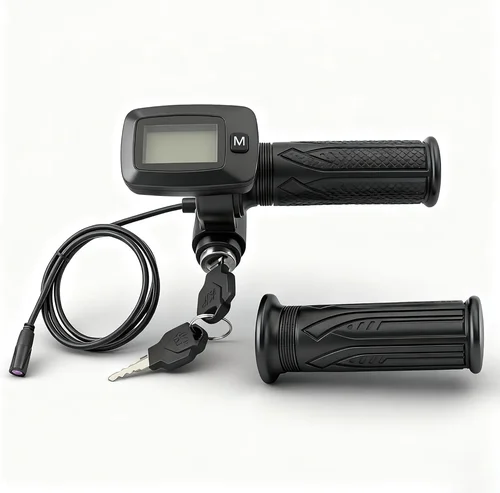
Electric bikes have revolutionized personal transportation, offering a blend of pedal power and motor assistance that makes commuting, recreation, and even cargo hauling more accessible than ever. At the heart of this experience lies one critical component: the throttle. Unlike pedal-assist systems that require you to pedal to activate the motor, a throttle gives you instant, on-demand power with just a twist or press—making it ideal for starting from a stop, climbing steep hills, or taking a break when you’re tired. Whether you’re new to e-bikes or upgrading your current ride, choosing the right throttle can dramatically impact your comfort, safety, and overall enjoyment.
This comprehensive guide is designed to help you navigate the often-overwhelming world of ebike throttles in 2026. We’ll break down everything you need to know—from how throttles work and what types are available, to key performance specs, compatibility concerns, and real-world usability. You’ll learn how to match a throttle to your riding style, budget, and bike setup, avoid common pitfalls, and ultimately make a confident, informed decision. The market has evolved rapidly, with innovations in responsiveness, ergonomics, and integration, so whether you’re building a custom e-bike or replacing a worn-out throttle, this guide will arm you with expert-level insight.
From budget-friendly options under $30 to premium, feature-rich models exceeding $150, the throttle market offers something for every rider. But not all throttles are created equal. Some prioritize smooth acceleration, while others focus on durability or ease of installation. Regulatory differences across regions also play a role—some areas restrict or even ban throttles altogether. By the end of this article, you’ll understand not only what to look for but also how to evaluate trade-offs, interpret technical specs, and choose a throttle that enhances your ride without compromising safety or legality.

What to Look for When Buying an Ebike Throttle
1. Throttle Type: Twist vs. Thumb vs. Trigger
The first and most fundamental decision is choosing the type of throttle mechanism. There are three main styles: twist-grip, thumb (or push-button), and trigger throttles. Each has distinct advantages depending on your hand strength, riding habits, and bike configuration.
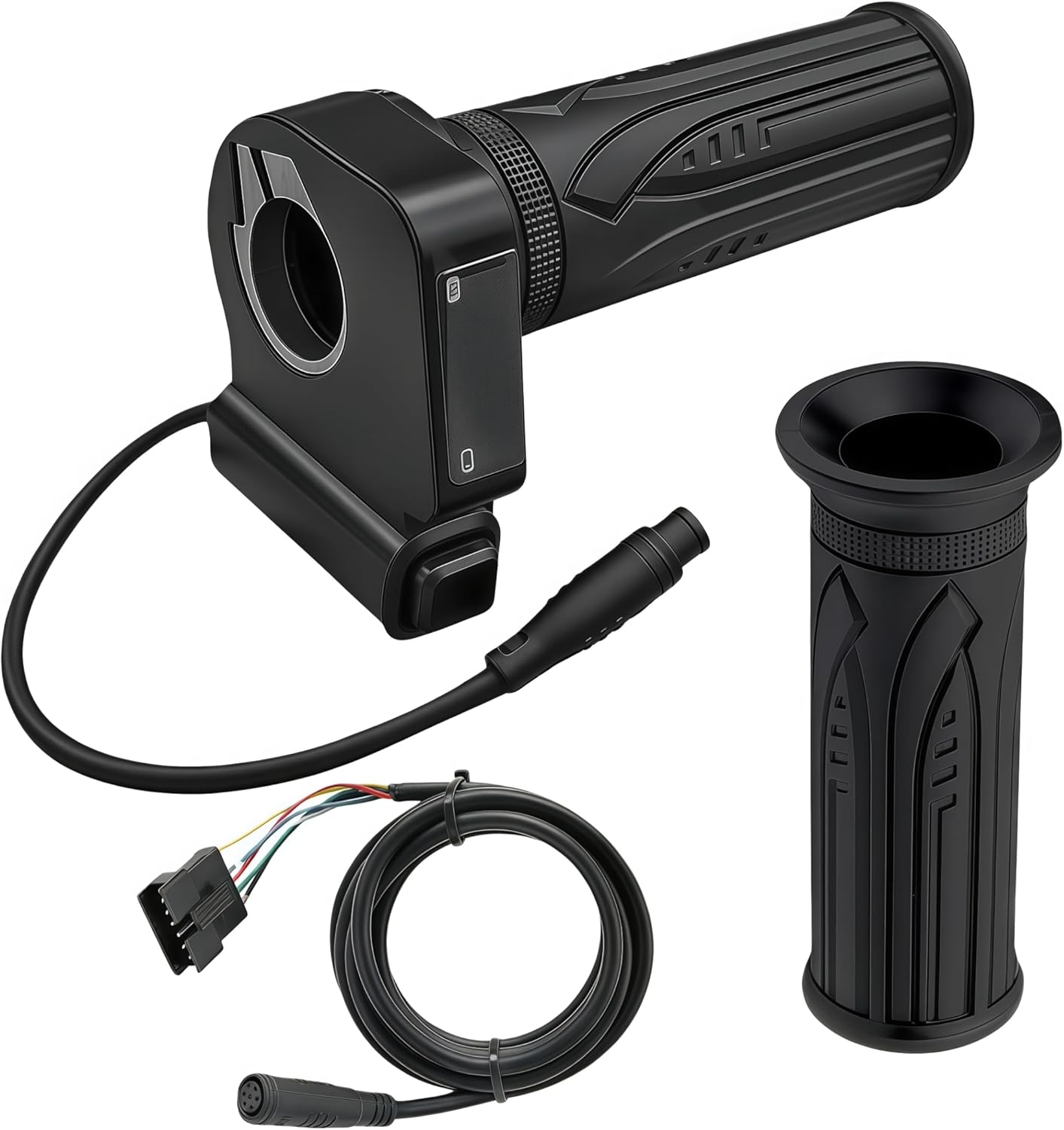
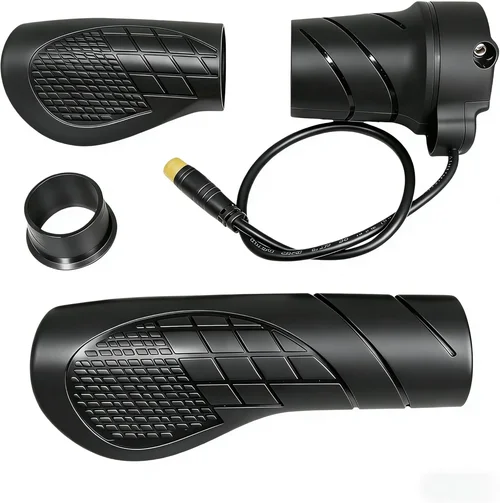
Twist-grip throttles, modeled after motorcycle controls, involve rotating the right grip forward to increase speed. They offer precise, incremental control and are popular among riders who want smooth acceleration. However, they can be tiring on long rides or for users with limited wrist mobility. Thumb throttles, on the other hand, are activated by pressing a lever or button with your thumb—ideal for those who prefer minimal hand movement or have arthritis. They’re often easier to operate while gripping the handlebar firmly, especially on rough terrain. Trigger throttles are less common but function like a brake lever, pulled toward the grip. These are rare on consumer e-bikes but may appear on specialty or off-road models.
When evaluating type, consider your physical comfort and riding environment. If you frequently navigate stop-and-go traffic, a thumb throttle might offer quicker, more intuitive control. For long-distance cruising or downhill descents where fine speed adjustments matter, a twist-grip could be preferable. Also, check compatibility: some throttles are designed specifically for certain motor controllers or brands (like Bafang, Tongsheng, or Bosch), so ensure yours matches your system.
2. Voltage & Compatibility
Not all throttles work with all e-bike systems. Voltage compatibility is critical—most modern e-bikes operate at 24V, 36V, or 48V, and using a throttle rated for the wrong voltage can damage your controller or cause erratic behavior. Always verify your bike’s battery voltage before purchasing. For example, a 48V system requires a 48V-compatible throttle; mixing voltages risks overheating or failure.
Beyond voltage, check connector types. Common connectors include JST, XT60, and proprietary plugs used by brands like Shimano or Bosch. Mismatched connectors mean you’ll need adapters or soldering, which adds complexity and potential points of failure. If you’re unsure, consult your motor manufacturer’s documentation or reach out to their support team. Some universal throttles claim broad compatibility, but real-world performance may vary—especially with mid-drive motors that have stricter signal requirements than hub motors.
3. Signal Output: Hall Effect vs. Potentiometer
Throttles communicate with the motor controller via electrical signals, and the method they use affects responsiveness, reliability, and longevity. The two primary technologies are potentiometer-based and Hall effect sensors.
Potentiometer throttles use a physical wiper moving across a resistive track to vary voltage output. They’re inexpensive and widely available but prone to wear over time, leading to “jittery” or unresponsive behavior as dust and moisture degrade the contact points. In contrast, Hall effect throttles use magnetic fields to detect position without physical contact, resulting in smoother, more consistent output and significantly longer lifespan. They’re more expensive but worth the investment for serious riders or those in wet/dusty climates.
Look for throttles explicitly labeled as “Hall effect” if you prioritize precision and durability. Many mid-to-high-end models now include this feature, and it’s becoming standard even in sub-$50 options. Avoid generic “analog” throttles unless you’re on a tight budget and willing to replace them sooner.
4. Build Quality & Weather Resistance
Ebike throttles are exposed to the elements—rain, mud, UV rays, and temperature swings—so build quality directly impacts longevity. A flimsy plastic housing or poorly sealed internals will fail prematurely, especially if you ride year-round or in harsh conditions.
Seek throttles with an IP rating (Ingress Protection), such as IP65 or IP67, which indicate resistance to dust and water. IP65 means protected against low-pressure water jets, while IP67 allows temporary immersion. Even if your region doesn’t see heavy rain, condensation and road spray can accumulate over time. Metal housings (often aluminum) offer better heat dissipation and durability than plastic, though they may add weight.
Also inspect the cable quality. Braided or sheathed cables resist abrasion and kinking, and longer cables (typically 1.5–2 meters) provide flexibility during installation. Avoid throttles with thin, unshielded wires—they’re prone to interference and breakage.
5. Ergonomics & User Experience
A throttle might be technically compatible, but if it’s uncomfortable to use, it defeats the purpose. Ergonomics matter—especially on long rides or for riders with hand conditions like carpal tunnel or arthritis.
Test the actuation force: does it require a firm squeeze, or is it too sensitive? A good throttle should offer tactile feedback without straining your hand. The placement on the handlebar is also crucial. Most mount on the right side, but left-side options exist for custom builds or left-handed users. Ensure it doesn’t interfere with brake levers, shifters, or grips.
Some premium throttles include features like LED indicators (showing battery level or assist mode), adjustable sensitivity, or even Bluetooth connectivity for app-based customization. While not essential, these can enhance usability—particularly if you switch between riding modes frequently.
6. Legal Compliance & Regional Restrictions
Throttle legality varies significantly by country and even state or province. In the U.S., federal law allows throttles on Class 2 e-bikes (which can reach 20 mph via throttle alone), but many states impose additional limits. For example, New York only permits throttles on e-bikes under 750W and with speed governors. In the EU, throttles are generally prohibited unless the bike meets strict L1e-A classification (limited to 6 km/h or ~3.7 mph).
Before buying, research local regulations. Using an illegal throttle could result in fines, confiscation, or voided insurance. Some throttles come with built-in speed limiters or can be programmed via controller software to comply with regional rules. If you plan to travel with your e-bike, consider a throttle that’s easily removable or disableable.
7. Warranty & Customer Support
Even the best throttles can fail—especially if improperly installed or exposed to extreme conditions. A solid warranty (typically 1–2 years) provides peace of mind and reflects manufacturer confidence in their product. Check what the warranty covers: does it include water damage? What about accidental drops?
Customer support is equally important. Brands like Bafang, Swytch, and Grin Technologies offer responsive technical assistance, detailed installation guides, and replacement parts. Avoid no-name sellers on marketplaces with no return policy or contact information. If something goes wrong, you’ll want reliable help—not a dead-end email thread.
8. Installation Complexity & DIY Friendliness
Unless you’re replacing an identical model, installing a new throttle may require wiring, splicing, or controller configuration. Some throttles are plug-and-play with standard connectors, while others need soldering or firmware updates.
If you’re not comfortable with basic electronics, look for throttles labeled “easy install” or “universal fit.” Many come with zip ties, mounting brackets, and clear instructions. Mid-drive systems (like Bosch or Yamaha) often require specific signal protocols, so confirm compatibility before buying. For DIY builders, consider throttles with open documentation or community support—forums like Endless-Sphere or Reddit’s r/ebikes can be invaluable resources.
Different Types of Ebike Throttles
Common Buying Mistakes to Avoid
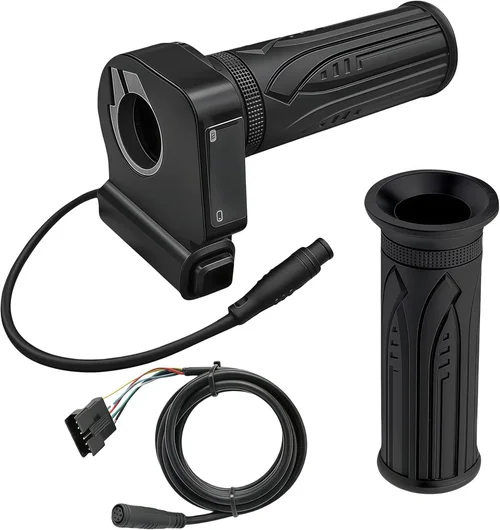
❌ Mistake: Ignoring Voltage Compatibility
Why it’s bad: Plugging a 36V throttle into a 48V system can fry the controller or cause erratic motor behavior, leading to unsafe riding conditions and costly repairs.
What to do instead: Always double-check your battery and controller voltage. When in doubt, consult your e-bike’s manual or contact the manufacturer. Use a multimeter to verify if necessary.
❌ Mistake: Choosing Based Solely on Price
Why it’s bad: The cheapest throttles often use potentiometers and low-grade plastics, leading to premature failure, poor responsiveness, and safety risks.
What to do instead: Invest in a Hall effect throttle with at least IP65 rating. The extra $20–$30 pays off in reliability and longevity—especially if you ride daily.
❌ Mistake: Overlooking Local Laws
Why it’s bad: Riding with an illegal throttle can result in fines, bike impoundment, or denial of insurance claims in accidents.
What to do instead: Research your local e-bike regulations before purchasing. Some regions require throttles to cut off at 20 mph or disable above certain speeds. Consider a programmable throttle if you travel frequently.
❌ Mistake: Assuming All Throttles Are Universal
Why it’s bad: Connector types, signal protocols, and mounting styles vary widely. A throttle that fits one brand may not work with another—even if voltages match.
What to do instead: Verify compatibility with your specific motor and controller model. Check forums or manufacturer specs. When replacing, take photos of your old throttle’s connectors and wiring.
❌ Mistake: Neglecting Ergonomics
Why it’s bad: An uncomfortable throttle causes hand fatigue, reduces control, and discourages use—defeating the purpose of having one.
What to do instead: If possible, test different types (twist vs. thumb) before buying. Read user reviews focusing on comfort and ease of use. Consider your typical ride duration and hand strength.
❌ Mistake: Skipping Waterproofing Checks
Why it’s bad: Moisture ingress is a leading cause of throttle failure. Even light rain can corrode internal components over time.
What to do instead: Choose throttles with IP65 or higher ratings. Apply dielectric grease to connectors and seal cable entries with silicone if needed.
❌ Mistake: Not Planning for Installation
Why it’s bad: Complex wiring or incompatible mounts can turn a simple upgrade into a frustrating project—or require professional help.
What to do instead: Review installation requirements beforehand. Ensure you have the right tools (wire strippers, soldering iron, zip ties). Watch tutorial videos for your specific bike model.
Budget Guidelines: How Much Should You Spend?
Entry-Level ($15–$35): These throttles are typically potentiometer-based with basic plastic housings. They work for occasional riders or budget builds but may lack durability and smooth control. Ideal for testing e-bike conversion kits or short-term use. Expect to replace them within 1–2 years with regular riding.
Mid-Range ($35–$70): This is the sweet spot for most riders. You’ll find Hall effect sensors, better weather sealing (IP65), and improved ergonomics. Brands like Bafang, Swytch, and Voilamart offer reliable options in this range. Perfect for daily commuters, weekend adventurers, and DIY enthusiasts who want quality without overspending.
Premium ($70–$120): Designed for serious riders and custom builds, these throttles feature metal housings, advanced signal processing, and sometimes smart features like LED displays or app integration. They’re built to last 5+ years and perform consistently in all conditions. Great for mountain e-bikes, cargo bikes, or anyone prioritizing reliability.
Luxury ($120+): Top-tier throttles from brands like Grin Technologies or custom CNC-machined units offer极致 precision, modular designs, and full programmability. Often used in high-performance or experimental e-bikes, these are overkill for casual riders but invaluable for engineers, racers, or tech enthusiasts.
Expert Tips for Getting the Best Deal
– Buy during off-season sales: Many retailers discount e-bike components in late winter or early spring. Watch for Black Friday, Cyber Monday, or end-of-season clearances.
– Check manufacturer direct: Brands like Bafang or Grin often sell throttles directly at lower prices than third-party sellers, with better warranties.
– Bundle with other parts: If you’re upgrading your motor or battery, ask about package deals—some suppliers offer discounts on combos.
– Read real user reviews: Look beyond star ratings. Search for comments about longevity, weather performance, and ease of install. YouTube unboxing videos can reveal build quality issues.
– Test before committing: If buying locally, ask to try the throttle on a demo bike. Feel the actuation force and responsiveness firsthand.
– Verify return policies: Ensure you can return or exchange if the throttle doesn’t fit or work as expected. Avoid sellers with “all sales final” policies.
– Consider refurbished or open-box: Reputable sellers sometimes offer tested, like-new throttles at 20–30% off. Just confirm warranty coverage.
– Join e-bike communities: Forums and Facebook groups often share exclusive discount codes or flash sales from trusted vendors.

Frequently Asked Questions
Q: Can I add a throttle to any e-bike?
A: Not necessarily. Your e-bike’s controller must support throttle input. Most hub motor systems do, but some mid-drive motors (especially Bosch Active Line) require specific throttle models or firmware updates. Always check compatibility before purchasing.
Q: Do I need a throttle if my bike has pedal assist?
A: It depends on your needs. Pedal assist is great for exercise and efficiency, but a throttle provides instant power for hills, fatigue, or quick starts—ideal for urban commuting or riders with physical limitations.
Q: Are twist throttles harder on the hands than thumb throttles?
A: Generally, yes—especially on long rides. Twist grips engage wrist muscles continuously, which can cause fatigue. Thumb throttles use smaller muscle groups and are often preferred for comfort, though personal preference varies.
Q: Will a throttle drain my battery faster?
A: Yes, significantly. Using throttle-only mode consumes more power than pedal assist because the motor does all the work. Expect 20–40% less range when relying heavily on throttle.
Q: Can I use a throttle in the rain?
A: Only if it’s rated IP65 or higher. Even then, avoid submerging it. Regular cleaning and drying after wet rides will extend its life.
Q: How do I know if my throttle is failing?
A: Common signs include jerky acceleration, delayed response, complete non-responsiveness, or intermittent power cuts. These often indicate worn potentiometers or water damage.
Q: Are there wireless throttles?
A: Rarely, and usually not recommended due to latency and reliability concerns. Most e-bike systems rely on wired connections for real-time control and safety.
Q: Can I install a throttle myself?
A: Yes, if you’re comfortable with basic wiring. Most throttles come with instructions. However, if your system uses proprietary protocols (e.g., Shimano STEPS), professional installation may be needed.
Q: Do throttles work with regenerative braking?
A: Generally no. Regen systems are complex and rarely compatible with standard throttles. Most e-bikes with regen use specialized controllers not found in consumer models.
Q: What’s the lifespan of a typical throttle?
A: A quality Hall effect throttle can last 5–10 years with proper care. Potentiometer models may fail within 1–3 years, especially in harsh conditions.
Our Final Recommendations
Best for Budget-Conscious Buyers: Bafang Thumb Throttle (36V/48V, Hall Effect) – Reliable, widely compatible, and under $40. Great for entry-level conversions or replacements.
Best Overall Value: Swytch Universal Ebike Throttle – Combines Hall effect precision, IP67 rating, and easy installation. Priced around $65, it’s a favorite among DIYers.
Best Premium Option: Grin Technologies Phaserunner Throttle Interface – Not a throttle itself, but a programmable module that works with high-end throttles for custom tuning. Ideal for advanced users seeking full control.
Best for Beginners: Voilamart Twist-Grip Throttle (48V, Hall Effect) – Simple, affordable ($35), and includes clear instructions. Perfect for first-time installers.
Best for Advanced Users: CNC Machined Aluminum Trigger Throttle (Custom Build) – Available from specialty shops, these offer极致 durability and ergonomics for off-road or performance builds.
Conclusion: Making the Right Choice
Choosing the best ebike throttle isn’t just about picking the shiniest or cheapest option—it’s about aligning the component with your riding style, technical setup, and long-term needs. From understanding voltage compatibility and signal types to navigating legal restrictions and ergonomic preferences, every detail matters. A well-chosen throttle enhances safety, comfort, and control, turning your e-bike into a truly versatile machine.
Remember: prioritize Hall effect sensors for reliability, verify local laws to stay compliant, and don’t skimp on weather resistance if you ride in variable conditions. Whether you’re a weekend warrior, daily commuter, or DIY tinkerer, investing time in research now will save frustration—and money—later.
Ultimately, the “best” throttle is the one that feels natural in your hand, works seamlessly with your system, and stands up to the miles ahead. Use this guide as your roadmap, test your options when possible, and ride with confidence. Your perfect e-bike experience starts with the right throttle.