
Electric bikes have revolutionized personal transportation, offering speed, convenience, and eco-friendly mobility. But with great power comes great responsibility—especially when it comes to stopping safely. As e-bikes continue to gain popularity, riders are pushing the limits of speed and terrain, making reliable braking systems more critical than ever. Whether you’re commuting through city traffic, tackling mountain trails, or cruising along scenic routes, your brakes are your first line of defense against accidents. Choosing the right braking system isn’t just about performance—it’s about safety, control, and peace of mind.
This comprehensive buying guide is designed to help you navigate the complex world of e-bike brakes in 2026. We’ll break down everything you need to know, from understanding the different types of brakes available to evaluating key performance factors like stopping power, modulation, and durability. You’ll learn how to match your brake choice to your riding style, budget, and terrain. Whether you’re upgrading an existing e-bike or purchasing your first electric ride, this guide will equip you with the knowledge to make a confident, informed decision.
The e-bike brake market has evolved rapidly in recent years. Mechanical disc brakes, once the standard, are now being surpassed by hydraulic systems that offer superior performance and reliability. Meanwhile, regenerative braking—once limited to high-end models—is becoming more accessible, especially in urban commuter e-bikes. With brands like Shimano, SRAM, Magura, and Tektro leading innovation, riders now have more options than ever. However, this abundance of choice can be overwhelming. That’s why we’ve created this expert-level guide: to cut through the noise, highlight what truly matters, and help you find the best brakes for your specific needs.

What to Look for When Buying E-Bike Brakes
1. Brake Type: Mechanical vs. Hydraulic vs. Regenerative
The type of braking system you choose will have the most significant impact on your riding experience. There are three primary types of e-bike brakes: mechanical disc brakes, hydraulic disc brakes, and regenerative braking systems.
Mechanical disc brakes use a cable to transfer force from the brake lever to the caliper, which then clamps the brake pads onto the rotor. These systems are affordable, easy to maintain, and widely available. However, they require more hand effort to achieve strong braking and are less consistent in wet or muddy conditions. They’re best suited for casual riders or those on a tight budget.
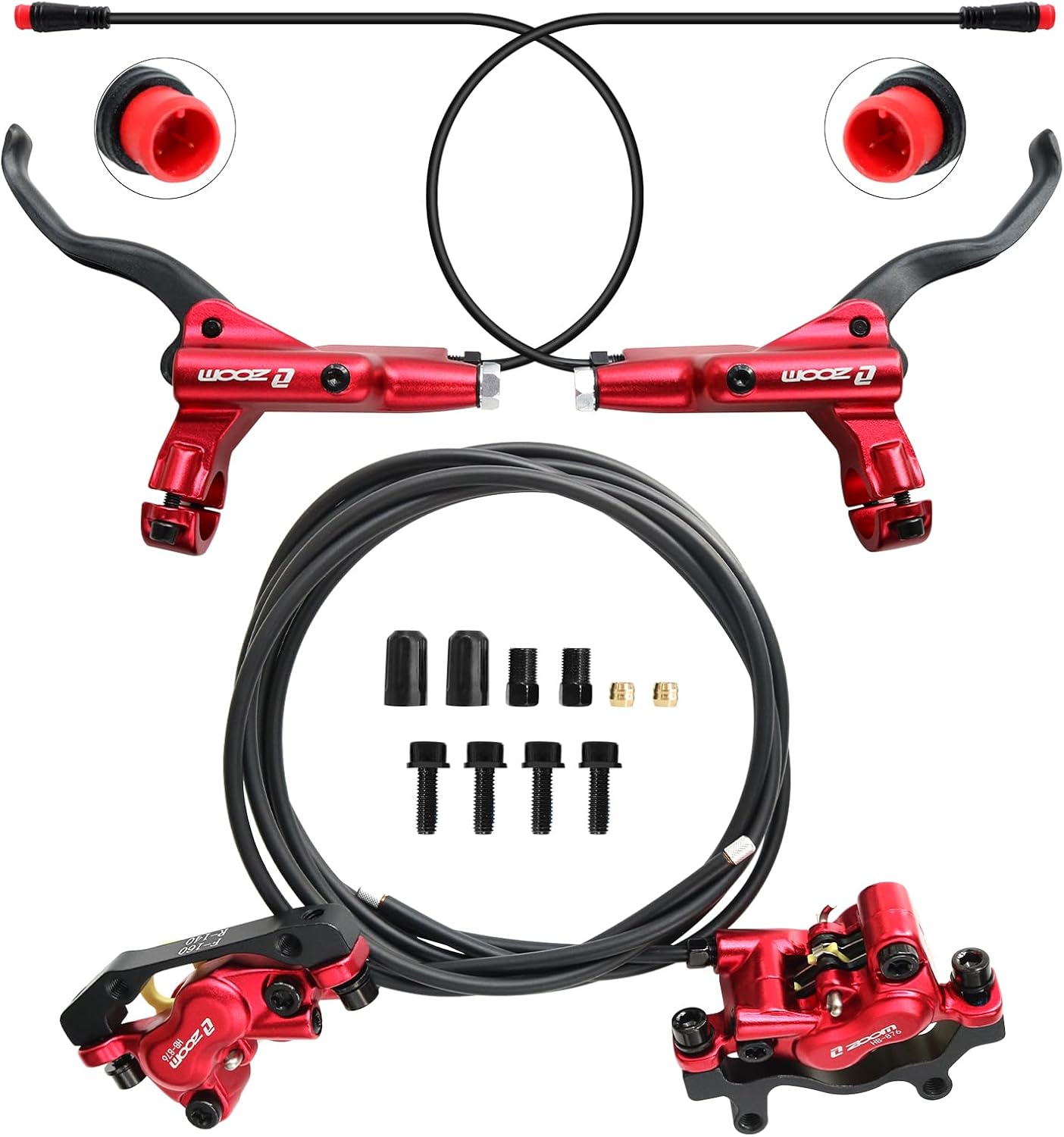
Hydraulic disc brakes, on the other hand, use fluid to transmit pressure from the lever to the caliper. This results in smoother, more responsive braking with less effort. Hydraulic systems offer better modulation—meaning you can finely control how much braking force is applied—which is crucial for navigating steep descents or slippery surfaces. They’re also self-adjusting as pads wear down, reducing maintenance needs. For serious riders, mountain bikers, or those carrying heavy loads, hydraulic brakes are the gold standard.
Regenerative braking is a newer technology that captures kinetic energy during braking and feeds it back into the battery. While not a primary braking system, it works in conjunction with mechanical or hydraulic brakes to extend range and reduce wear on traditional components. This feature is most common in high-end commuter e-bikes and is ideal for city riders who frequently stop and start. However, regenerative braking alone is not sufficient for emergency stops, so it should always be paired with a reliable mechanical or hydraulic system.
2. Rotor Size and Material
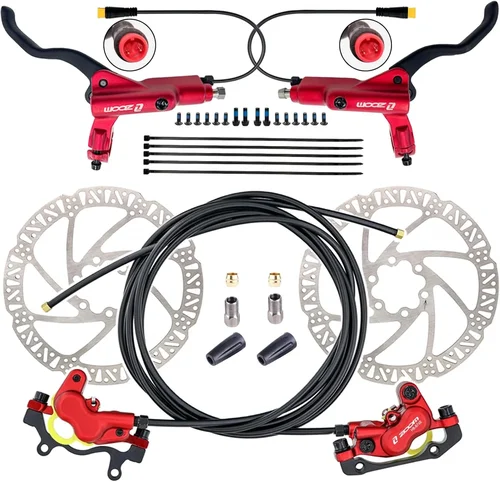
The rotor—the metal disc attached to your wheel hub—plays a crucial role in braking performance. Larger rotors provide greater stopping power and better heat dissipation, which is essential for long descents or heavy loads. Most e-bikes use rotors between 160mm and 203mm in diameter.
For city commuting or light trail riding, 160mm or 180mm rotors are usually sufficient. However, if you’re riding a powerful e-bike (750W+), carrying cargo, or tackling steep mountain trails, opt for 203mm rotors. The extra surface area allows the brake pads to generate more friction and dissipate heat more effectively, preventing brake fade—a dangerous condition where brakes lose effectiveness due to overheating.
Rotor material also matters. Most rotors are made from stainless steel, which offers a good balance of durability, corrosion resistance, and heat tolerance. Some high-performance models use rotors with aluminum centers (two-piece design) to reduce weight while maintaining strength. These are ideal for performance-oriented riders who want to minimize unsprung weight without sacrificing braking power.
3. Brake Pad Composition
Brake pads are the consumable part of your braking system, and their material directly affects performance, noise, and wear. There are three main types of brake pad compounds: organic (resin), semi-metallic, and metallic (sintered).
Organic pads are quiet, provide excellent initial bite, and are gentle on rotors. They’re ideal for dry conditions and casual riding. However, they wear out faster and can overheat on long descents, leading to brake fade.
Semi-metallic pads contain a mix of organic materials and metal fibers. They offer better heat resistance and longer life than organic pads, making them a popular choice for all-around use. They’re a great compromise between performance and durability.
Metallic (sintered) pads are made almost entirely of metal and are the most durable option. They perform well in wet, muddy, or high-temperature conditions and are commonly used in downhill and electric mountain biking. The downside is that they can be noisy and may wear down rotors faster.
For e-bikes, semi-metallic or metallic pads are generally recommended due to the added weight and speed of electric motors. If you ride in wet climates or on rough terrain, go with sintered pads. For city commuting in dry conditions, organic or semi-metallic pads may suffice.
4. Lever Feel and Modulation
How a brake lever feels in your hand is more important than you might think. Lever feel refers to the responsiveness and smoothness of the brake action, while modulation is your ability to control the amount of braking force applied.
Hydraulic brakes typically offer superior modulation because the fluid system provides consistent pressure. This allows for precise control, especially during emergency stops or when navigating technical terrain. Mechanical brakes, while functional, often feel “grabby” or inconsistent, making it harder to feather the brakes.
Look for levers with adjustable reach, which allow you to customize the distance between the lever and the handlebar. This is especially helpful for riders with smaller hands or those wearing gloves. Some high-end models also feature tool-free adjustment, making it easy to fine-tune on the go.
5. Compatibility with Your E-Bike
Not all brakes are compatible with every e-bike. Before purchasing, check the following:
– Mounting standard: Most modern e-bikes use either post-mount or flat-mount brake calipers. Post-mount is common on mountain and hybrid e-bikes, while flat-mount is typical on road and gravel e-bikes. Make sure your new brakes match your frame and fork mounts.
– Rotor compatibility: Ensure the rotor size you want is supported by your frame and fork. Some frames have clearance limitations that prevent the use of larger rotors.
– Cable routing: Hydraulic brakes require internal or external routing for the brake hose. Verify that your bike’s frame can accommodate the routing style of your chosen brakes.
– Motor and sensor integration: Some e-bikes have brake sensors that cut power to the motor when the brakes are applied. If your bike has this feature, ensure your new brakes are compatible with the sensor system.
Upgrading brakes on an older e-bike may require additional components like adapters or new rotors. Always consult your bike’s manual or a professional mechanic before making changes.
6. Maintenance Requirements
E-bike brakes require regular maintenance to perform safely and reliably. Hydraulic systems are generally low-maintenance but may need periodic bleeding to remove air bubbles from the fluid. This process restores lever feel and ensures consistent performance. Most manufacturers recommend bleeding every 6–12 months, depending on usage.
Mechanical brakes require more frequent adjustments as the cables stretch and pads wear down. You’ll need to regularly check cable tension and pad alignment. While this is manageable for DIY enthusiasts, it can be a hassle for casual riders.
Regenerative braking systems require minimal maintenance but rely on the health of the battery and motor controller. If your battery is aging or the system is malfunctioning, regenerative braking may not function properly.
Consider your willingness and ability to perform maintenance when choosing a brake type. If you prefer a “set it and forget it” solution, hydraulic brakes are the best choice.
7. Weather and Terrain Performance
Your riding environment plays a major role in brake selection. If you ride in wet, muddy, or snowy conditions, you need brakes that can handle moisture and debris.
Hydraulic disc brakes excel in adverse weather because the sealed system prevents water and dirt from affecting performance. They also offer consistent power regardless of conditions. Mechanical brakes, especially those with exposed cables, are more susceptible to corrosion and reduced effectiveness in the rain.
For off-road or mountain e-biking, look for brakes with strong heat dissipation and durable pads. Sintered metallic pads are ideal for muddy or rocky terrain, while larger rotors (203mm) help manage the increased heat from frequent braking on descents.
City commuters may prioritize quiet operation and low maintenance. Organic or semi-metallic pads with 160mm–180mm rotors are usually sufficient for stop-and-go traffic.
8. Brand Reputation and Support
Not all brake brands are created equal. Established brands like Shimano, SRAM, Magura, and Tektro have decades of experience and rigorous testing standards. They offer reliable performance, widespread availability of parts, and strong customer support.
Shimano is known for its smooth, reliable hydraulic systems and excellent value. Their Deore and SLX lines are popular among e-bike riders. SRAM offers high-performance brakes with aggressive styling and strong modulation, often favored by mountain bikers. Magura specializes in premium hydraulic systems with exceptional build quality and innovative features like magnetic piston technology. Tektro provides affordable, durable options that are great for budget-conscious buyers.
When choosing a brand, consider availability of replacement parts, warranty coverage, and local service options. A brake from a lesser-known brand may save money upfront but could cost more in the long run if parts are hard to find or the system fails prematurely.
Different Types of E-Bike Brakes
Common Buying Mistakes to Avoid
❌ Mistake: Choosing Brakes Based Solely on Price
Why it’s bad: Opting for the cheapest brakes to save money can compromise safety and performance. Low-quality brakes may lack stopping power, wear out quickly, or fail in critical moments. On an e-bike, where speeds and weights are higher, inadequate brakes can lead to accidents.
What to do instead: Prioritize performance and reliability over cost. Invest in hydraulic disc brakes if your budget allows, even if it means saving a bit longer. Remember, brakes are not an area to cut corners.
❌ Mistake: Ignoring Rotor Size
Why it’s bad: Using undersized rotors on a powerful e-bike can result in brake fade, reduced stopping power, and overheating. This is especially dangerous on long descents or when carrying heavy loads.
What to do instead: Match rotor size to your riding style and bike specs. For most e-bikes, 180mm is a good starting point. Upgrade to 203mm if you ride aggressively or frequently descend steep hills.
❌ Mistake: Overlooking Compatibility
Why it’s bad: Installing brakes that aren’t compatible with your frame, fork, or rotor size can lead to poor performance, damage, or even failure. It can also void your warranty.
What to do instead: Check your bike’s specifications before purchasing. Consult the manufacturer or a bike mechanic to ensure compatibility. Use adapters if necessary, but avoid forcing incompatible parts.
❌ Mistake: Neglecting Maintenance
Why it’s bad: Even the best brakes will fail if not maintained. Worn pads, air in hydraulic lines, or corroded cables can reduce effectiveness and increase stopping distance.
What to do instead: Schedule regular inspections. Replace pads when they’re worn down to the indicator line. Bleed hydraulic systems annually. Keep rotors clean and free of oil or debris.
❌ Mistake: Assuming All Hydraulic Brakes Are Equal
Why it’s bad: Not all hydraulic systems offer the same performance. Budget hydraulic brakes may use lower-quality seals, fluids, or pistons, leading to inconsistent feel and faster wear.
What to do instead: Stick to reputable brands like Shimano, SRAM, or Magura. Read reviews and look for models with proven track records in e-bike applications.
❌ Mistake: Forgetting About Brake Sensors
Why it’s bad: Many e-bikes cut motor power when brakes are applied. If your new brakes don’t integrate with the sensor, the motor may not disengage, creating a dangerous situation.
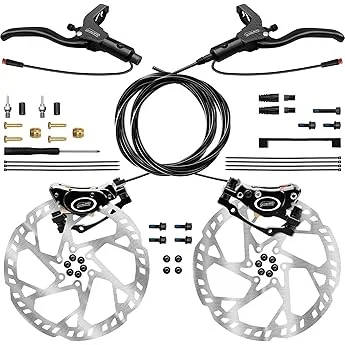
What to do instead: Ensure your brake levers include or are compatible with a brake sensor. Some aftermarket levers come with built-in sensors; others require a separate switch.
❌ Mistake: Buying Without Testing
Why it’s bad: Brake feel is subjective. What works for one rider may not suit another. Buying online without testing can lead to dissatisfaction or unsafe performance.
What to do instead: Test ride bikes with different brake systems if possible. Pay attention to lever feel, stopping power, and noise. If buying online, choose retailers with good return policies.
Budget Guidelines: How Much Should You Spend?
Entry-Level ($30 – $80): This range includes basic mechanical disc brakes and older hydraulic models. Ideal for casual riders or those on a tight budget. Expect decent performance in dry conditions but limited power and modulation. Best for low-speed city commuting on lightweight e-bikes.
Mid-Range ($80 – $150): The sweet spot for most riders. This tier includes reliable hydraulic disc brakes from brands like Tektro, Zoom, and entry-level Shimano. You’ll get strong stopping power, good modulation, and decent durability. Perfect for daily commuting, light trail riding, and moderate speeds.
Premium ($150 – $300): For enthusiasts and serious riders. These brakes offer top-tier performance, lightweight construction, and advanced features like tool-free reach adjustment and heat-resistant pads. Models from Shimano SLX/XT, SRAM Guide, and Magura are common here. Ideal for mountain e-biking, long-distance touring, and high-speed riding.
Luxury ($300+): Top-of-the-line systems with cutting-edge technology. Think Magura MT7 Pro, SRAM Code, or custom-built setups. These brakes are used by professional riders and offer unmatched power, precision, and reliability. Only necessary for extreme conditions or competitive use.
Expert Tips for Getting the Best Deal
– Buy during off-season sales: Late fall and winter are the best times to find discounts on bike components. Retailers often clear out inventory before the new year.
– Shop at specialty bike shops: While online retailers offer convenience, local shops provide expert advice, fitting services, and often price-match policies.
– Look for bundle deals: Some brands offer brake and rotor packages at a discount. This can save you 10–20% compared to buying separately.
– Check warranty terms: Most reputable brands offer 1–2 year warranties. Register your purchase to ensure coverage.
– Read user reviews: Look for feedback from other e-bike riders, not just mountain bikers. E-bike-specific experiences are more relevant.
– Consider refurbished or open-box items: These can offer significant savings with minimal risk, especially from trusted sellers.
– Test before you buy: If possible, test ride bikes with different brake systems. Your hands will tell you more than any spec sheet.
– Don’t forget the rotors: High-quality rotors make a big difference. Invest in stainless steel or two-piece rotors for better performance and longevity.

Frequently Asked Questions
Q: Can I upgrade my e-bike’s brakes myself?
A: Yes, but it depends on your mechanical skill level. Mechanical brakes are easier to install, while hydraulic systems require bleeding and precise routing. If you’re unsure, have a professional do it.
Q: How often should I replace brake pads?
A: It varies by usage, but check pads every 500–1,000 miles. Replace them when the pad material is less than 1mm thick or if you hear grinding noises.
Q: Do I need different brakes for front and rear?
A: Not necessarily, but many riders use a larger rotor (e.g., 203mm) on the front wheel for stronger stopping power, since most braking force is applied there.
Q: Are hydraulic brakes worth the extra cost?
A: For most e-bike riders, yes. The improved modulation, lower effort, and self-adjusting nature make them a worthwhile investment, especially for higher-speed or heavier bikes.
Q: Can I use mountain bike brakes on my e-bike?
A: Often, yes—if they’re compatible with your frame mounts and rotor size. Many e-bikes use mountain bike-standard post-mount brakes.
Q: What causes brake squeal?
A: Common causes include contaminated pads (oil or dirt), glazed pads, or misaligned calipers. Clean the rotors with isopropyl alcohol and check alignment.
Q: Do regenerative brakes replace traditional brakes?
A: No. Regenerative braking assists traditional systems but cannot provide emergency stopping power on its own. Always rely on mechanical or hydraulic brakes for safety.
Q: How do I know if my brakes need bleeding?
A: Signs include a spongy lever, reduced stopping power, or a lever that pulls too close to the handlebar. If bleeding doesn’t help, check for leaks or worn seals.
Q: Are there brakes designed specifically for e-bikes?
A: Yes. Some brands now offer e-bike-specific brakes with stronger calipers, larger pistons, and enhanced heat dissipation to handle the extra weight and speed.
Q: Can I mix brake brands?
A: It’s not recommended. Mixing brands can lead to compatibility issues, inconsistent performance, and warranty problems. Stick to one brand for best results.
Our Final Recommendations
– Best for Budget-Conscious Buyers: Tektro HD-M285 Hydraulic Disc Brake – Reliable, affordable, and widely compatible. Great entry-level hydraulic option.
– Best Overall Value: Shimano Deore BR-M6100 – Excellent performance, durability, and brand support. Ideal for most e-bike applications.
– Best Premium Option: Magura MT7 Pro – Top-tier braking with exceptional modulation and build quality. Perfect for performance-oriented riders.
– Best for Beginners: Zoom HB-875 Hydraulic Disc Brake – Simple, effective, and easy to maintain. Great for new e-bike owners.
– Best for Advanced Users: SRAM Code RSC – Race-proven power and precision. Designed for aggressive riding and extreme conditions.
Conclusion: Making the Right Choice
Choosing the best brakes for your e-bike is one of the most important decisions you’ll make as a rider. It’s not just about stopping—it’s about confidence, control, and safety. Throughout this guide, we’ve covered the key factors to consider, from brake type and rotor size to maintenance and compatibility. We’ve compared different systems, highlighted common mistakes, and provided actionable tips to help you get the best value.
Remember, there’s no one-size-fits-all solution. Your ideal brake system depends on your riding style, terrain, budget, and personal preferences. A commuter in a rainy city will have different needs than a mountain biker tackling steep trails. Take the time to assess your priorities and match them to the right technology.
Don’t rush the decision. Test different systems if possible, read real-world reviews, and consult with experts. And when in doubt, lean toward quality over cost. Your brakes are not an expense—they’re an investment in your safety and enjoyment.
As e-bikes continue to evolve, so too will braking technology. Stay informed, stay safe, and ride with confidence. With the right brakes, every journey—whether a quick trip to the store or an epic mountain adventure—can be smooth, controlled, and secure.