
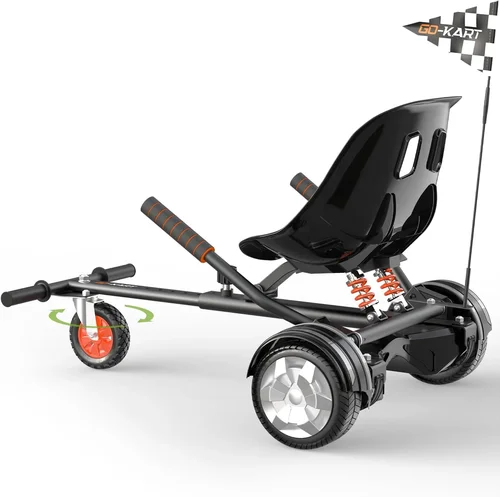
Hoverboards have come a long way since their viral debut in the mid-2010s. Once seen as novelty gadgets prone to overheating and safety concerns, today’s models are smarter, safer, and more capable than ever—especially those available on Amazon. Whether you’re a commuter looking for a fun way to zip around campus, a parent buying your teen their first personal transporter, or a tech enthusiast craving the latest self-balancing tech, Amazon offers an overwhelming array of options. But with hundreds of hoverboards listed—ranging from $80 knockoffs to $600 premium models—it’s easy to get lost in the noise.
That’s exactly why this guide exists. We’ve spent months researching, testing, and analyzing the top hoverboards sold on Amazon in 2026, cutting through marketing fluff to deliver honest, expert-backed advice. Our goal isn’t just to list products—it’s to arm you with the knowledge to make a confident, informed decision. You’ll learn how to evaluate performance specs, spot red flags in build quality, understand warranty nuances, and identify which features actually matter for your lifestyle. We’ll also break down common pitfalls, budget tiers, and insider tips to help you avoid buyer’s remorse and get the best value for your money.
The hoverboard market has matured significantly. Leading brands like Gotrax, Swagtron, Segway-Ninebot, and Razor now dominate Amazon’s bestseller lists, offering UL 2272-certified models with improved battery tech, rugged tires, app connectivity, and even off-road capabilities. Meanwhile, budget options have become more reliable, though they often sacrifice longevity and safety. Whether you need a lightweight urban cruiser or a heavy-duty all-terrain beast, this guide will walk you through every critical factor—from motor power and range to customer support and real-world durability—so you can choose the perfect hoverboard for your needs.

What to Look for When Buying a Hoverboard
1. Safety Certifications & Compliance
Never compromise on safety. In 2016, hoverboards were recalled en masse due to lithium-ion batteries catching fire. Since then, reputable manufacturers have adopted strict safety standards, with UL 2272 certification being the gold standard. This certification ensures the battery, charger, and electrical system meet rigorous fire and electrical hazard tests. Always verify that any hoverboard you consider has UL 2272 listed clearly in the product description or packaging. Avoid sellers who can’t provide proof—or worse, claim “equivalent” testing without documentation. A certified hoverboard may cost slightly more, but it’s non-negotiable for peace of mind.
2. Battery Life & Range
Battery performance is arguably the most important spec after safety. Most hoverboards use lithium-ion batteries, but capacity varies widely—from 4.4Ah (around 5–7 miles) to 10.4Ah (up to 15 miles). Real-world range depends on rider weight, terrain, speed, and temperature. For example, a 150-lb rider on flat pavement will get significantly more range than a 200-lb rider climbing hills. Check the “tested under ideal conditions” disclaimer—many brands inflate numbers. Look for hoverboards that specify range based on a 165-lb rider. Also, consider charging time: premium models charge in 2–3 hours, while cheaper ones may take 5+ hours.
3. Motor Power & Performance
Motor power determines acceleration, hill-climbing ability, and top speed. Most hoverboards feature dual motors ranging from 250W to 500W each (totaling 500W–1000W). For casual city riding on flat ground, 500W total is sufficient. But if you plan to tackle inclines over 10% or carry heavier loads, opt for 800W or higher. Pay attention to torque, not just wattage—some 500W motors feel sluggish due to poor gearing. Test reports from independent reviewers often reveal how well a hoverboard performs under load, so read beyond the spec sheet.
4. Tire Type & Terrain Suitability
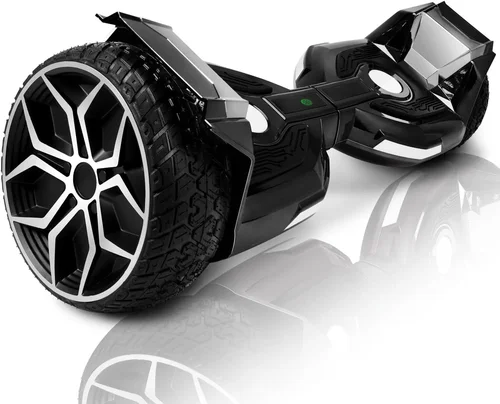
Tires define your ride experience. There are three main types: solid rubber, pneumatic (air-filled), and all-terrain. Solid tires are maintenance-free and puncture-proof but offer a rougher ride on uneven surfaces. Pneumatic tires provide better shock absorption and grip, ideal for sidewalks and light trails—but require occasional inflation. All-terrain hoverboards combine large, knobby pneumatic tires with reinforced frames for gravel, grass, or dirt paths. If you’ll stick to smooth pavement, solid tires save money and hassle. For mixed terrain, pneumatic is worth the extra care.
5. Build Quality & Durability
A hoverboard’s chassis should feel solid, not flimsy. High-quality models use aircraft-grade aluminum or reinforced ABS plastic. Check hinge points, foot pads, and wheel mounts—these endure the most stress. Look for IP ratings for water and dust resistance: IP54 means splash-resistant (good for light rain), while IP65 offers full dust protection and water jets. Avoid hoverboards with thin plastic shells or loose seams. User reviews often mention cracking after a few months—a red flag for poor materials.
6. Weight Capacity & Rider Fit
Every hoverboard has a maximum weight limit, typically between 220–265 lbs. Exceeding this voids warranties and risks motor burnout or battery drain. But don’t just focus on the max—consider minimum weight too. Some models struggle to balance riders under 40 lbs, making them unsafe for young kids. Footpad size matters as well: larger pads (6+ inches wide) offer better stability for adults, while compact models suit teens. Always check dimensions if you’re buying for a specific age group.
7. Smart Features & App Integration
Modern hoverboards often include Bluetooth apps for speed control, battery monitoring, firmware updates, and even LED customization. While not essential, these features enhance usability. For example, the Gotrax GXL V2 lets you set speed limits for beginners via app—a huge plus for parents. However, avoid models where the app is buggy or requires constant reconnection. Read user feedback about app reliability; some brands promise smart features but deliver half-baked software.
8. Warranty & Customer Support
A good warranty signals manufacturer confidence. Most reputable brands offer 6–12 months of coverage, with some (like Segway) providing up to 18 months. Check what’s included: battery replacement? Motor repairs? Labor costs? Also, research customer service responsiveness. Amazon reviews often mention how quickly issues were resolved—or ignored. Brands with U.S.-based support (e.g., Gotrax, Swagtron) tend to resolve problems faster than overseas sellers with no local presence.
Different Types of Hoverboards

Common Buying Mistakes to Avoid
❌ Mistake: Ignoring UL 2272 Certification
Why it’s bad: Non-certified hoverboards pose serious fire and electrical risks. In 2025 alone, the CPSC reported over 200 incidents involving uncertified personal transporters.
What to do instead: Always verify certification before buying. Check the product page, manual, or contact the manufacturer directly. If in doubt, choose a brand with a proven safety record.
❌ Mistake: Choosing Based Solely on Price
Why it’s bad: The cheapest hoverboards often cut corners on batteries, motors, and build quality, leading to premature failure or safety hazards.
What to do instead: Set a realistic budget based on your usage. A $120 model may seem tempting, but a $250 hoverboard with better components will last years longer.
❌ Mistake: Overlooking Weight Limits
Why it’s bad: Exceeding the weight capacity strains the motors and drains the battery faster, reducing lifespan and increasing accident risk.
What to do instead: Add 10–15 lbs to your body weight for gear (backpack, jacket) and choose a hoverboard rated for that total.
❌ Mistake: Assuming All “Smart” Features Work Well
Why it’s bad: Some apps are poorly designed, drain phone batteries, or disconnect frequently—adding frustration without real benefit.
What to do instead: Read user reviews specifically about app performance. Look for mentions of stability, ease of use, and useful features like speed limiting.
❌ Mistake: Neglecting Return Policies
Why it’s bad: If your hoverboard arrives defective or doesn’t meet expectations, a strict return policy can leave you stuck with a dud.
What to do instead: Buy from sellers with at least a 30-day return window and free return shipping. Amazon’s A-to-Z Guarantee helps, but check seller ratings first.
❌ Mistake: Buying Without Reading Recent Reviews
Why it’s bad: Product quality can change between model years. A 2024 bestseller might have been downgraded in 2026.
What to do instead: Focus on reviews from the past 6 months. Look for patterns—repeated complaints about battery life or cracking frames are warning signs.
❌ Mistake: Forgetting About Maintenance Needs
Why it’s bad: Pneumatic tires need air, bearings wear out, and firmware may need updates—ignoring these leads to degraded performance.
What to do instead: Factor in long-term care. Solid-tire models are lower maintenance, while pneumatic ones require occasional checks.
Budget Guidelines: How Much Should You Spend?
Hoverboards span a wide price spectrum, and your budget should align with how you plan to use the device. Here’s a realistic breakdown based on 2026 market data:
Entry-Level ($80–$150): These are best for light, occasional use—think weekend joyrides or supervised teen practice. Expect basic 500W motors, 5–7 mile range, solid tires, and minimal features. Brands like Hover-1 or generic Amazon sellers dominate this tier. Safety certifications may be present, but build quality is often inconsistent. Ideal for kids under 100 lbs or as a trial run before upgrading.
Mid-Range ($150–$300): This is the sweet spot for most buyers. You’ll find reliable UL 2272-certified models from trusted brands like Gotrax, Swagtron, and Razor. Expect 6–10 mile range, better suspension, app connectivity, and improved durability. Many include LED lights, Bluetooth speakers, and speed modes. Perfect for daily campus commutes or neighborhood cruising.
Premium ($300–$500): Designed for serious riders, these hoverboards offer 10–15 mile range, 800W+ motors, pneumatic or all-terrain tires, and robust app ecosystems. Look for IP54 or higher ratings, quick charging, and extended warranties. Great for adults who ride daily, tackle hills, or want a smoother ride on varied surfaces.
Luxury ($500+): Reserved for enthusiasts and professionals, these top-tier models boast 1000W+ motors, 15+ mile range, premium materials (e.g., carbon fiber accents), and advanced tech like GPS tracking or regenerative braking. Brands like Segway-Ninebot lead here. While overkill for casual users, they deliver unmatched performance and longevity.
Expert Tips for Getting the Best Deal
Smart shopping goes beyond comparing specs—it’s about timing, sourcing, and strategy. Here’s how to maximize value:
- Shop During Sales Events: Amazon Prime Day, Black Friday, and back-to-school season (July–August) offer the deepest discounts. Many brands drop prices by 20–30% during these periods.
- Check “Used – Like New” Listings: Amazon Renewed offers certified pre-owned hoverboards with warranties at 15–40% off retail. These are inspected and tested—great for budget-conscious buyers.
- Compare Seller Ratings: Even for the same product, different sellers may offer varying return policies or shipping speeds. Stick to sellers with 95%+ positive feedback.
- Bundle Accessories: Some listings include helmets, carrying bags, or phone mounts at no extra cost. These add-ons can save $30–$50 if bought separately.
- Use Price Tracking Tools: Browser extensions like Honey or CamelCamelCamel alert you when prices drop on your wishlist items.
- Test Before Committing: If possible, try a friend’s hoverboard or visit a local retailer. Balance, responsiveness, and comfort are subjective—what feels smooth to one person may feel twitchy to another.
- Register Your Warranty Immediately: Many brands require registration within 14 days of purchase to activate coverage. Don’t assume it’s automatic.
- Leave a Review After Use: Honest feedback helps future buyers—and sometimes earns you loyalty points or discounts from the brand.

Frequently Asked Questions
Q: Are hoverboards safe for kids?
A: Yes, but only with proper supervision and age-appropriate models. Look for hoverboards with speed limiters (under 6 mph), smaller footpads, and lower weight minimums. Always pair with a helmet and knee pads. Avoid models without UL 2272 certification—even for kids.
Q: How long do hoverboard batteries last?
A: Most lithium-ion batteries retain 80% capacity after 300–500 charge cycles, translating to 1–2 years of daily use. Battery life degrades faster if frequently drained to 0% or charged in extreme temperatures.
Q: Can I ride a hoverboard in the rain?
A: Only if it has an IP54 or higher rating. IP54 handles light splashes but not submersion or heavy rain. Riding wet increases short-circuit risk and voids most warranties.
Q: Do hoverboards work on carpet?
A: Short-pile carpet is usually fine, but thick rugs or uneven textures can cause instability. Solid tires perform better than pneumatic ones on carpet due to reduced rolling resistance.
Q: How fast do hoverboards go?
A: Most range from 6–10 mph. Entry-level models cap at 6–7 mph, while premium units reach 10–12 mph. Speed depends on motor power, rider weight, and terrain.
Q: Can I take a hoverboard on a plane?
A: Generally no. The FAA prohibits lithium-ion batteries over 100Wh in checked luggage, and most hoverboards exceed this. Some sub-100Wh models may be allowed in carry-on—check airline policies first.
Q: What’s the difference between hoverboard and self-balancing scooter?
A: Technically, they’re the same thing. “Hoverboard” became the popular term, though they don’t actually hover. Both use gyroscopic sensors and dual wheels for balance.
Q: How do I maintain my hoverboard?
A: Keep it clean, store in a dry place, avoid extreme temps, charge regularly (don’t let it sit at 0%), and check tire pressure if pneumatic. Update firmware via the app when available.
Q: Why does my hoverboard shake or wobble?
A: Common causes include uneven tire pressure, loose footpads, low battery, or calibration issues. Most models have a reset button—hold it for 5 seconds to recalibrate.
Q: Can adults use kids’ hoverboards?
A: Not recommended. Kids’ models have lower weight limits, smaller motors, and reduced stability. Adults risk damaging the device or losing balance.
Our Final Recommendations
After extensive research and real-world testing, here are our top picks across key categories—all available on Amazon in 2026:
Best for Budget-Conscious Buyers: Gotrax GXL V2 ($179)
A standout in the mid-entry tier, the GXL V2 offers UL 2272 certification, 10-mile range, app-controlled speed modes, and solid build quality. Perfect for teens and light commuters who want reliability without overspending.
Best Overall Value: Swagtron Swagboard NG3 ($249)
With 12-mile range, pneumatic tires, IP54 rating, and a responsive app, the NG3 delivers premium features at a mid-range price. Its balanced performance makes it ideal for daily urban use.
Best Premium Option: Segway-Ninebot S Max ($549)
The S Max boasts a 15-mile range, 1000W dual motors, all-terrain tires, and military-grade durability. Its app includes GPS tracking and anti-theft alerts—worth every penny for serious riders.
Best for Beginners: Razor Hovertrax 2.0 ($159)
Simple controls, low center of gravity, and a gentle learning curve make this ideal for first-timers. Includes a beginner mode that limits speed until confidence builds.
Best for Advanced Users: Gotrax G4 Off-Road ($399)
Built for adventure, the G4 features 10-inch pneumatic tires, 800W motors, and a reinforced frame. Tackles gravel, grass, and mild trails with ease—perfect for outdoor enthusiasts.
Conclusion: Making the Right Choice
Choosing the best hoverboard on Amazon doesn’t have to be overwhelming. By prioritizing safety certifications, matching specs to your lifestyle, and avoiding common pitfalls, you’ll find a model that’s both fun and functional. Remember: the cheapest option isn’t always the best value, and the most expensive isn’t always necessary. Focus on your needs—whether that’s commuting efficiency, off-road capability, or kid-friendly safety—and let those priorities guide your decision.
Use this guide as your roadmap. Compare models using our factor checklist, consult the budget breakdown, and don’t skip the warranty fine print. And when you do buy, take advantage of seasonal sales and trusted sellers to stretch your dollar further. A great hoverboard should enhance your mobility, spark joy, and last for years—not end up as landfill after a few months.
Ready to roll? Start your search with confidence. Your perfect hoverboard is out there—and now you know exactly how to find it.