
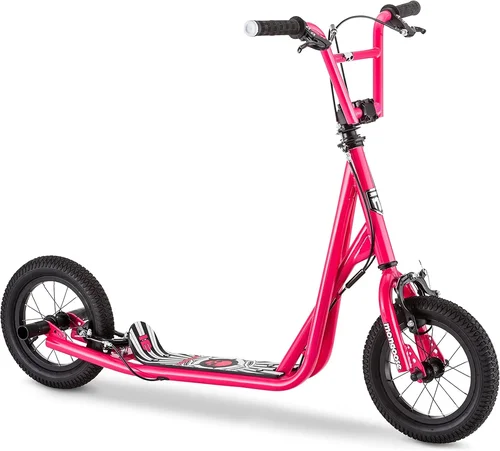
Electric scooters have evolved far beyond simple urban commuters. In 2026, the all terrain electric scooter market is thriving—offering riders the freedom to tackle gravel paths, dirt trails, grassy parks, and even light off-road terrain with confidence and control. Whether you’re an adventure seeker looking to explore beyond paved roads, a commuter navigating mixed surfaces, or someone who simply wants a more versatile ride, choosing the right all terrain electric scooter requires careful consideration. With dozens of models flooding the market—from budget-friendly options to high-performance machines—it’s easy to feel overwhelmed.
This comprehensive buyer’s guide cuts through the noise. We’ll walk you through every critical factor you need to evaluate before making a purchase, from motor power and suspension systems to battery life and build quality. You’ll learn how to match your specific needs—whether that’s weekend trail riding, daily commuting over rough pavement, or hauling gear across uneven ground—with the right scooter. We’ll also debunk common myths, highlight frequently overlooked features, and share expert tips to help you avoid costly mistakes. By the end, you’ll have the knowledge and confidence to choose an all terrain electric scooter that delivers performance, durability, and value for years to come.
The all terrain electric scooter segment has matured significantly in recent years. Early models were often underpowered or lacked the ruggedness needed for real off-road use, but today’s offerings are engineered with serious capability in mind. Brands like Segway-Ninebot, Dualtron, Kaabo, and Apollo have pushed the boundaries with dual motors, hydraulic brakes, advanced suspension, and puncture-resistant tires. At the same time, more affordable options from companies like Gotrax and Hiboy now offer surprisingly capable entry-level models that can handle light off-road conditions. This means there’s truly something for everyone—from casual weekend riders to hardcore enthusiasts. Our goal is to help you navigate this expanding landscape and find the perfect balance of performance, price, and practicality.

What to Look for When Buying an All Terrain Electric Scooter
1. Motor Power and Performance
Motor power is arguably the most important factor when evaluating an all terrain electric scooter. Measured in watts (W), the motor determines how well your scooter can climb hills, accelerate from a stop, and maintain speed on uneven or soft surfaces. For true all terrain capability, we recommend a minimum of 500W continuous power, with 800W–1000W being ideal for most riders. Dual-motor setups (offering 1000W–2000W combined) are best for steep inclines, heavy loads, or aggressive trail riding.
Look for scooters that specify both continuous and peak wattage—peak indicates short bursts of power (e.g., for hill starts), while continuous reflects sustained output. A 500W continuous motor might handle flat gravel well, but struggle on a 15% grade. Also consider torque: higher torque means better low-end grunt, which is crucial for getting moving on loose terrain like sand or mud. Real-world testing shows that scooters with brushless hub motors (as opposed to cheaper brushed types) deliver smoother, quieter, and more efficient performance over time.
2. Tire Type and Size
All terrain scooters must have tires capable of gripping varied surfaces without sacrificing ride comfort. Pneumatic (air-filled) tires are the gold standard—they absorb shocks better than solid rubber and provide superior traction on dirt, grass, and gravel. Look for tires at least 10 inches in diameter; 11–13 inch tires offer even better stability and bump absorption. Some premium models feature tubeless designs or self-sealing inner tubes to reduce puncture risk.
Avoid solid or honeycomb tires if you plan to ride off-road—they may save you from flats, but they transmit every pebble and root directly to your body, making long rides uncomfortable and increasing fatigue. Knobby or semi-slick tread patterns are ideal: aggressive knobs for loose terrain, smoother centers for pavement efficiency. Tire pressure also matters—most manufacturers recommend 35–45 PSI for mixed use, but always check the sidewall and adjust based on terrain and rider weight.
3. Suspension System
A quality suspension system is non-negotiable for serious all terrain riding. Without it, repeated impacts from rocks, roots, and potholes can damage components, reduce control, and cause rider fatigue. Most capable all terrain scooters feature either front-only or dual (front and rear) suspension. Hydraulic or coil-over shocks offer the best damping and adjustability, while spring-based systems are simpler but less refined.
Pay attention to travel distance—the amount the suspension compresses under load. At least 2–3 inches of travel is recommended for light off-roading; 4+ inches is ideal for rougher trails. Some scooters use proprietary suspension designs (like Ninebot’s “ShockTec” or Dualtron’s “HyperSpring”), which can offer excellent performance but may complicate repairs. Test rides are invaluable here: a smooth, controlled bounce over bumps indicates good suspension tuning.
4. Battery Capacity and Range
Battery capacity, measured in watt-hours (Wh), directly impacts how far you can ride on a single charge. For all terrain use, expect 20–30% less range than on smooth pavement due to increased resistance and motor load. A 500Wh battery might give you 15–20 miles on trails versus 25+ on asphalt. Aim for at least 600Wh for moderate off-road adventures, and 1000Wh+ for extended rides or hilly terrain.
Lithium-ion (Li-ion) batteries are standard—look for cells from reputable brands like Samsung, LG, or Panasonic for longevity and safety. Removable batteries are a huge plus, allowing you to carry a spare or charge indoors. Charging time varies: most scooters take 4–8 hours, but fast-charging models (1–3 hours) are becoming more common. Always factor in real-world conditions—cold weather, headwinds, and heavy loads all reduce effective range.
5. Build Quality and Frame Material
An all terrain scooter must withstand abuse. The frame should be made from high-grade aluminum alloy (like 6061-T6) or reinforced steel—avoid plastic-heavy constructions. Weld quality matters: look for clean, consistent welds without cracks or porosity. Check hinge points, folding mechanisms, and motor mounts for reinforcement; these are common failure points under stress.
Water resistance is another key consideration. While no consumer scooter is fully waterproof, an IP54 or IP65 rating means it can handle light rain, puddles, and mud splashes. Avoid riding in heavy rain or submerging the deck, as water can damage electronics and bearings. Also inspect deck grip tape—it should be durable and textured to prevent slipping, especially when wet.
6. Braking System
Reliable stopping power is critical, especially when descending hills or navigating unpredictable terrain. Disc brakes (mechanical or hydraulic) are vastly superior to drum or foot brakes for all terrain use. Hydraulic disc brakes offer the best modulation and stopping force with minimal hand effort. Regenerative braking (which recaptures energy during deceleration) is a nice bonus but shouldn’t replace mechanical brakes as the primary system.
Look for scooters with dual braking systems—front and rear discs—for balanced stopping. Some high-end models include ABS or electronic brake force distribution to prevent wheel lockup. Test the brake lever feel: it should engage smoothly without excessive travel. Remember, braking performance degrades when tires lose traction on loose surfaces, so tire choice and suspension also play indirect roles.
7. Weight Capacity and Rider Fit
All terrain scooters are often built sturdier than city models, but weight limits still vary widely—from 220 lbs on entry-level units to 330+ lbs on heavy-duty rigs. Always choose a scooter rated for at least 20–30 lbs above your body weight to ensure optimal performance and longevity. Overloading strains the motor, drains the battery faster, and increases wear on tires and suspension.
Deck size and ergonomics matter too. A wider, longer deck provides better foot placement and stability, especially on rough ground. Handlebar height should allow a slight bend in your elbows for control. Some scooters offer adjustable stems or ergonomic grips—small details that make long rides more comfortable. If you’re taller than 6’2″ or shorter than 5’4″, check reviews for fit feedback.
8. Portability and Folding Mechanism
Even all terrain scooters are often used for mixed commuting—so portability matters. A secure, one-step folding mechanism is essential. Look for scooters that lock firmly when folded and include a carry handle or strap. Weight is a trade-off: rugged builds mean heavier frames (often 40–60 lbs). If you’ll be lifting it frequently (e.g., onto public transit or upstairs), consider a lighter model or one with a trolley mode (wheels that roll while folded).
Be wary of flimsy latches or weak hinge points—these can fail under stress. Test the fold/unfold process: it should be quick and require minimal force. Some premium models use aircraft-grade locking pins or magnetic catches for added security. Remember, a scooter that’s too heavy or awkward to carry defeats the purpose of owning a personal electric vehicle.
Different Types of All Terrain Electric Scooters

Common Buying Mistakes to Avoid
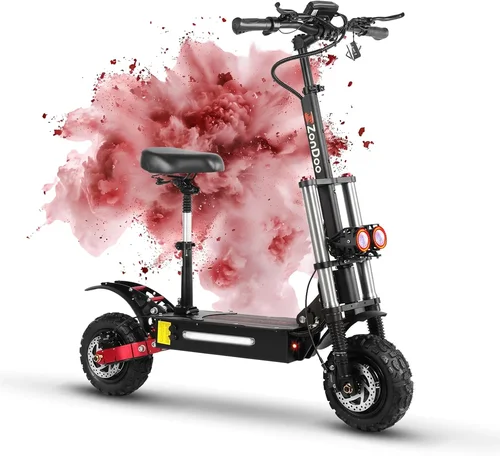
❌ Mistake: Prioritizing Top Speed Over Real-World Performance
Why it’s bad: Many budget scooters advertise “up to 25 mph” but only achieve that on flat pavement with a lightweight rider. On hills or rough terrain, speed drops dramatically. Focusing solely on max speed ignores critical factors like torque, hill-climbing ability, and braking performance.
What to do instead: Look at real-world test data and user reviews. Prioritize continuous motor power and torque over peak speed claims. A scooter that maintains 15 mph up a 10% grade is more useful than one that hits 25 mph only on level ground.
❌ Mistake: Ignoring Suspension Because “Tires Absorb Bumps”
Why it’s bad: While large pneumatic tires help, they can’t replace a proper suspension system on rough terrain. Without suspension, vibrations transmit directly to your arms and spine, causing fatigue and reducing control—especially at higher speeds.
What to do instead: Always choose a scooter with at least front suspension for all terrain use. Dual suspension is even better. Test ride over uneven pavement or gravel to feel the difference.
❌ Mistake: Assuming All “All Terrain” Scooters Are Created Equal
Why it’s bad: Some manufacturers slap “all terrain” on scooters with barely-modified city models—small tires, weak motors, no suspension. These won’t handle anything beyond packed dirt.
What to do instead: Verify specs: look for 10″+ pneumatic tires, 500W+ motor, suspension, and IP54+ rating. Read independent reviews that test off-road capability, not just spec sheets.
❌ Mistake: Overlooking Weight and Portability Needs
Why it’s bad: A 55-lb scooter with dual motors may be powerful, but if you need to carry it up stairs or onto a bus daily, it becomes a burden. Many buyers regret choosing power over practicality.
What to do instead: Be honest about how often you’ll need to transport the scooter. If portability is key, consider a lighter mid-range model or look for scooters with trolley modes and ergonomic handles.
❌ Mistake: Skipping the Warranty and Support Check
Why it’s bad: All terrain scooters endure more stress than city models, increasing the likelihood of component failure. A short or vague warranty can leave you paying hundreds for repairs.
What to do instead: Choose brands with at least a 12-month warranty covering motor, battery, and frame. Check if they offer US-based support, replacement parts, and clear repair policies. Avoid no-name brands with no service network.
❌ Mistake: Buying Based Solely on Price
Why it’s bad: The cheapest scooter often costs more in the long run due to poor durability, frequent repairs, or early battery degradation. Conversely, overspending on features you’ll never use wastes money.
What to do instead: Define your use case first, then find the best value within your budget. Mid-range scooters ($800–$1,500) often offer the sweet spot of performance, reliability, and price.
Budget Guidelines: How Much Should You Spend?
Entry-Level ($400–$700): These scooters are ideal for casual riders who stick to light gravel, packed dirt, or park paths. Expect single 500W motors, basic spring suspension, 10″ pneumatic tires, and 15–20 mile range. Brands like Gotrax GXL V2 or Hiboy S2 Pro offer surprising capability at this price. Perfect for teens, light commuters, or weekend explorers—but avoid steep hills or rough trails.
Mid-Range ($800–$1,500): This is the sweet spot for most buyers. Scooters like the Segway Ninebot MAX G30LP or Apollo Explore deliver 600–800W motors, dual suspension, 10–12″ tires, and 25–35 mile range. They handle mixed urban and off-road use with confidence, offer better build quality, and include features like app connectivity and LED lighting. Great for daily commuters who encounter varied terrain.
Premium ($1,600–$3,000): For enthusiasts and serious adventurers, premium models like the Dualtron Thunder 2 or Kaabo Wolf King GT provide dual 1000W+ motors, hydraulic brakes, 11–13″ tubeless tires, and 40–60 mile range. These scooters conquer steep hills, rocky trails, and long distances with ease. Built with aircraft-grade materials and advanced electronics, they’re built to last—but require more maintenance and skill to operate safely.
Luxury ($3,000+): Reserved for pros and collectors, luxury scooters like the Dualtron X or Inokim Ox Super offer cutting-edge tech: customizable ride modes, regenerative braking, smartphone integration, and modular designs. They’re overkill for most users but deliver unmatched performance and prestige. Only consider if you ride daily in extreme conditions or value top-tier engineering.
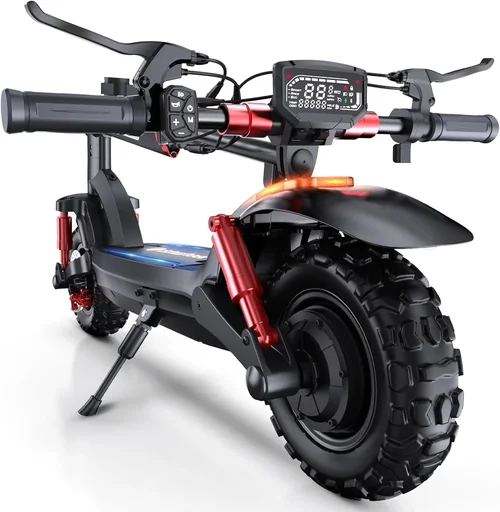
Expert Tips for Getting the Best Deal
1. Buy During Seasonal Sales: Major discounts happen during Black Friday, Cyber Monday, and end-of-summer clearances (August–September). Many brands also offer student or military discounts—always ask!
2. Shop from Authorized Retailers: Buying directly from the manufacturer or authorized dealers (like RevRides, Urban Scooters, or Scooter Hut) ensures warranty validity and access to genuine parts. Avoid third-party sellers on Amazon with unclear return policies.
3. Test Ride Before You Buy: If possible, visit a local dealer or attend a scooter demo event. Feeling the suspension, brakes, and acceleration firsthand is irreplaceable. If in-person isn’t an option, watch detailed review videos that show real terrain testing.
4. Check Return and Warranty Policies: Look for at least a 14-day return window and a 12-month warranty. Some brands offer extended warranties for an extra fee—worth it for premium models. Avoid “as-is” sales or refurbished units without clear coverage.
5. Consider Certified Pre-Owned: High-end scooters hold value well. Certified pre-owned models from reputable sellers can save you 20–30% off retail while still offering warranty protection.
6. Join Owner Communities: Forums like Reddit’s r/ElectricScooters or Facebook groups provide real-user insights, deal alerts, and troubleshooting help. Members often share discount codes or trade tips.
7. Negotiate Add-Ons: When buying new, ask for free accessories (helmet, phone mount, extra fender) or discounted service packages. Many retailers are willing to sweeten the deal to close a sale.

Frequently Asked Questions
Q: Can all terrain scooters handle snow or ice?
A: Most consumer all terrain scooters are not designed for snow or ice. While large tires provide some grip, lack of studs, reduced battery performance in cold weather, and slippery decks make them unsafe. If you need winter capability, look for specialized models with winter tires and heated grips—but expect limited availability and higher cost.
Q: How often do I need to maintain an all terrain scooter?
A: Basic maintenance should be done monthly: check tire pressure, inspect brakes, clean the deck, and lubricate moving parts. After off-road rides, rinse off mud and debris to prevent corrosion. Major servicing (bearing replacement, brake pad changes) may be needed every 6–12 months depending on use.
Q: Are all terrain scooters street legal?
A: Laws vary by location. In most US states, electric scooters under 20 mph are allowed on bike lanes and roads with speed limits under 35 mph, but helmets and lights are often required. Off-road use is typically restricted to private property or designated trails. Always check local regulations before riding.
Q: Will riding off-road void my warranty?
A: It depends on the manufacturer. Some explicitly exclude “extreme use” or “off-road abuse” from coverage, while others honor warranties as long as the scooter is used within its rated specifications. Read the fine print—and avoid modifications that could void coverage.
Q: How long do batteries last?
A: A quality lithium-ion battery should retain 80% of its capacity after 500–800 charge cycles (roughly 2–3 years of daily use). Avoid deep discharges and store the scooter at 50–70% charge if not used for weeks. Replace the battery when range drops significantly.
Q: Can I upgrade parts later?
A: Some scooters are modular and support upgrades (tires, controllers, batteries), while others are sealed systems. Premium brands like Dualtron offer extensive upgrade paths; budget models often do not. Consider future-proofing if you plan to enhance performance over time.
Q: What’s the difference between hub motors and belt drives?
A: Most all terrain scooters use direct-drive or geared hub motors mounted in the wheel—simple, reliable, and low-maintenance. Belt-driven systems (common on high-end models) offer better torque control and serviceability but require periodic belt tensioning. For most riders, hub motors are sufficient.
Our Final Recommendations
Best for Budget-Conscious Buyers: Gotrax GXL V2 – At under $600, it offers 25 mph top speed, 10″ pneumatic tires, and decent build quality. Ideal for light off-road use and urban commuting. Lacks suspension, but great value for the price.
Best Overall Value: Apollo Explore – Priced around $1,200, it delivers 800W motor, dual suspension, 10″ tires, and 34-mile range. Excellent balance of performance, comfort, and reliability for mixed terrain.
Best Premium Option: Dualtron Thunder 2 – With dual 1800W motors, 11″ tubeless tires, and 75-mile range, this $2,800 beast dominates hills and trails. Built like a tank with top-tier components.
Best for Beginners: Segway Ninebot MAX G30LP – User-friendly, reliable, and well-supported. Features 700W motor, IPX5 rating, and app integration. Great first all terrain scooter for new riders.
Best for Advanced Users: Kaabo Wolf King GT – Dual 1200W motors, hydraulic brakes, and aggressive styling make this a trail monster. Customizable via app and built for serious adventure seekers.
Conclusion: Making the Right Choice
Choosing the best all terrain electric scooter isn’t just about specs—it’s about matching the machine to your lifestyle, terrain, and expectations. Whether you’re cruising forest trails on weekends or navigating pothole-ridden city streets daily, the right scooter will enhance your freedom, reduce your carbon footprint, and deliver countless hours of reliable performance. Remember to prioritize motor power, tire quality, suspension, and build durability over flashy features or inflated speed claims. Test when you can, read real reviews, and don’t rush the decision.
Investing in a capable all terrain scooter is an investment in adventure, convenience, and long-term satisfaction. With the insights from this guide, you’re now equipped to cut through marketing hype and make a confident, informed purchase. So gear up, charge up, and get ready to explore beyond the pavement—your perfect ride is out there waiting.