
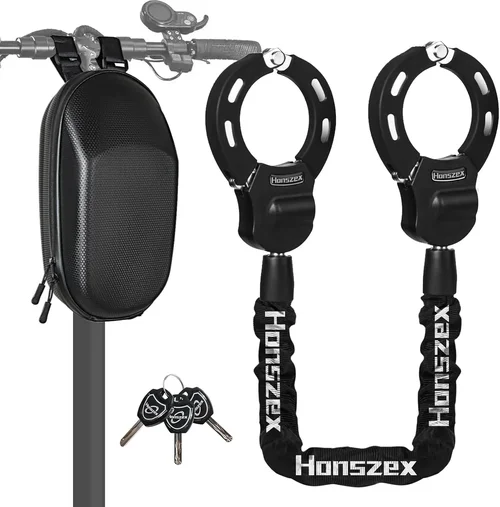
Securing your scooter isn’t just about peace of mind—it’s about protecting a significant investment. Whether you’re commuting to work, running errands around town, or simply enjoying a weekend ride, leaving your scooter unattended without proper protection can be a costly gamble. In urban environments where theft rates are rising and public parking is limited, a high-quality lock isn’t optional—it’s essential. Yet, with dozens of options on the market ranging from flimsy cable locks to heavy-duty U-locks, choosing the right one can feel overwhelming. That’s why this comprehensive buying guide exists: to cut through the noise, clarify your options, and help you make an informed decision that matches your lifestyle, budget, and security needs.
In this guide, you’ll learn everything you need to know to pick the best scooter lock in 2026. We’ll walk you through the key factors that determine a lock’s effectiveness—from build quality and resistance to cutting tools, to portability and ease of use. You’ll discover the different types of locks available, understand common pitfalls buyers fall into, and get expert-backed advice on how to maximize value without overspending. Whether you ride a lightweight electric kick scooter, a foldable commuter model, or a high-performance e-scooter, we’ve got recommendations tailored to your needs. By the end, you won’t just know which lock to buy—you’ll know why it’s the right choice for you.
The scooter lock market has evolved significantly in recent years. As electric scooters have surged in popularity—especially in cities like New York, San Francisco, and London—so too has the sophistication of both scooter thieves and anti-theft technology. Today’s top-tier locks feature hardened steel shackles, anti-pick cylinders, weather-resistant coatings, and even smart integration with apps and alarms. At the same time, budget-friendly options have improved, offering decent security for casual riders or low-risk areas. However, not all locks are created equal, and a false sense of security can be more dangerous than no lock at all. This guide will help you navigate that landscape with confidence.

What to Look for When Buying a Scooter Lock
1. Security Rating & Theft Resistance
Not all locks are built to withstand the same level of attack. A lock’s security rating—often provided by independent testing organizations like Sold Secure (UK) or ART (Netherlands)—is one of the most reliable indicators of its real-world effectiveness. These ratings range from Bronze (basic protection) to Diamond (maximum resistance), with Gold being the sweet spot for most urban riders. Look for locks rated Sold Secure Gold or higher if you live in a high-theft area or own a premium scooter.
Beyond ratings, consider the materials used. High-security locks typically feature boron or hardened steel shackles at least 14mm thick, which resist bolt cutters, angle grinders, and leverage attacks. Avoid thin or hollow shackles—they may look sturdy but can be snapped with basic tools. Also check for anti-drill plates and pick-resistant cylinder mechanisms, especially if you park in busy public spaces where opportunistic thieves operate.
2. Lock Type & Design
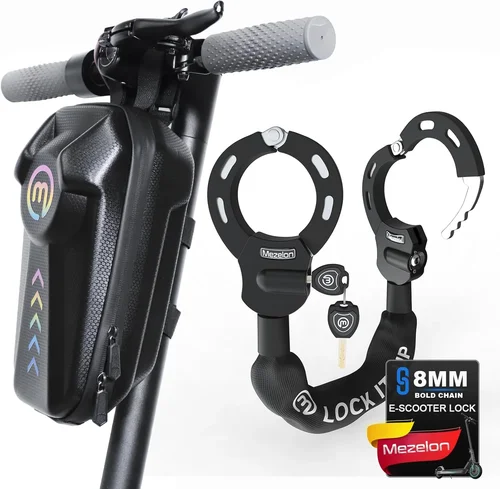
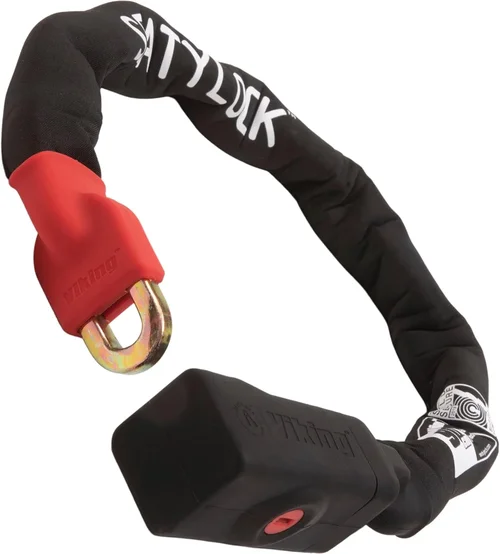
The physical design of your lock determines not just how secure it is, but also how practical it is to use daily. The three main types are U-locks (D-locks), chain locks, and cable locks—each with distinct pros and cons. U-locks offer excellent resistance to cutting and prying but can be bulky and limit where you can secure your scooter. Chain locks are highly flexible and can wrap around larger objects like bike racks or street signs, but they’re heavier and often more expensive. Cable locks are lightweight and portable but provide minimal security—ideal only for quick stops in safe neighborhoods.
Consider also whether the lock uses a key or combination mechanism. Keyed locks generally offer better pick resistance, while combination locks eliminate the risk of losing keys—but may wear out over time or be vulnerable to brute-force decoding. Some premium models now include smart features like Bluetooth unlocking or tamper alerts via smartphone apps, though these add complexity and potential points of failure.
3. Size & Portability
A lock that’s too heavy or cumbersome won’t get used—and an unused lock is as good as no lock at all. Scooter riders often prioritize portability since they may need to carry the lock while riding or store it in a backpack. U-locks under 2.5 lbs (1.1 kg) are manageable for most users, while chain locks can easily exceed 5 lbs (2.3 kg). Measure the internal dimensions of the lock too: you need enough space to loop through your scooter’s frame and a fixed object like a bike rack or pole.
Foldable locks are a newer category gaining traction—they combine the strength of hardened steel links with compact folding designs that fit in small bags. Brands like Abus and Kryptonite offer foldable models that weigh under 3 lbs yet deliver Gold-level security. If you commute daily or travel frequently, portability should be a top consideration.
4. Weather Resistance & Durability
Your lock will face rain, snow, salt, UV exposure, and temperature swings—especially if you live in a four-season climate. Look for locks with corrosion-resistant coatings (like zinc plating or polymer shells) and sealed mechanisms that prevent moisture from jamming the cylinder. Internal components should be lubricated with dry Teflon-based grease, not oil, which attracts dirt and grime.
Durability also extends to long-term wear. Cheaper locks may develop play in the shackle or stiffness in the mechanism after a few months. Read user reviews to see how well a lock holds up over time. A lock that fails when you need it most defeats its entire purpose.
5. Ease of Use & Convenience
Even the strongest lock is useless if it’s inconvenient. Consider how quickly you can lock and unlock your scooter—especially if you make frequent short stops. A lock that requires precise alignment or multiple steps slows you down and increases the chance you’ll skip using it. Look for smooth-operating cylinders, ergonomic shapes, and intuitive designs.
Mounting options matter too. Many U-locks come with frame mounts that attach to your scooter’s deck or stem, keeping the lock accessible without adding bulk to your bag. Some models include quick-release brackets, while others require tools to install. If you plan to leave the lock on your scooter permanently, ensure the mount is secure and doesn’t rattle during rides.
6. Price vs. Value
It’s tempting to go for the cheapest option, but scooter locks are one area where skimping can cost you dearly. A $15 cable lock might save money upfront but won’t stop a determined thief with bolt cutters. Conversely, spending $150 on a top-tier chain lock may be overkill if you only park in your garage. The goal is to match your investment to your risk level.
As a rule of thumb, spend at least 10–15% of your scooter’s value on a lock. So if your scooter costs $800, aim for a $80–$120 lock. This ensures you’re getting meaningful protection without overspending. Mid-range locks ($50–$100) often offer the best balance of security, weight, and features for everyday riders.
7. Brand Reputation & Warranty
Stick with established brands known for security products: Kryptonite, Abus, OnGuard, and Seatylock are industry leaders with decades of experience. These companies invest in R&D, rigorous testing, and customer support. Avoid unknown brands sold exclusively on Amazon or eBay with vague specifications—they may cut corners on materials or lack accountability.
Check the warranty policy. Reputable brands often offer anti-theft guarantees: if your scooter is stolen while properly locked with their product, they’ll reimburse you up to a certain amount (e.g., $1,000–$3,500). Read the fine print—these guarantees usually require proof of purchase, proper usage, and police reports. Still, it’s a strong indicator of confidence in their product.
8. Compatibility with Your Scooter
Not every lock fits every scooter. Electric scooters often have unique frame geometries, thick stems, or integrated lights that limit where you can thread a lock. Measure the diameter of your scooter’s stem or frame tube—most locks need at least 2–3 inches of clearance. Also consider wheel size: if you’re locking through the rear wheel, ensure the lock’s internal jaw is wide enough to accommodate it without damaging spokes or rims.
Some scooters, like the Xiaomi Mi or Segway Ninebot series, have proprietary locking systems or built-in cable loops. In these cases, you may need an adapter or a specific lock model designed for that brand. Always double-check compatibility before purchasing.
Different Types of Scooter Locks

Common Buying Mistakes to Avoid
❌ Mistake: Choosing a Lock Based Solely on Price
Why it’s bad: A cheap lock gives a false sense of security. Thieves can cut through thin cables or weak U-locks in under 10 seconds with basic tools. Replacing a stolen $1,000 scooter far outweighs the savings from a $20 lock.
What to do instead: Allocate at least 10–15% of your scooter’s value to the lock. Prioritize security rating and build quality over upfront cost.
❌ Mistake: Ignoring the Security Rating
Why it’s bad: Without a verified rating, you’re guessing at the lock’s real strength. Many “heavy-duty” locks lack third-party testing and fail under pressure.
What to do instead: Only consider locks with Sold Secure Gold, ART 3-star, or equivalent certifications. These have been tested against real-world attack methods.
❌ Mistake: Buying a Lock Too Small for Your Needs
Why it’s bad: A U-lock that can’t fit around your scooter’s frame and a sturdy anchor point is useless. You might end up looping it through the wheel, which offers minimal protection.
What to do instead: Measure your scooter’s stem diameter and choose a lock with an internal jaw at least 2–3 inches wider than needed. Test the fit before relying on it.
❌ Mistake: Overlooking Portability
Why it’s bad: A 6-pound chain lock might be secure, but if it’s too heavy to carry, you’ll leave it at home—and your scooter unprotected.
What to do instead: Balance security with weight. Aim for under 3 lbs for daily carry. Consider foldable or compact U-locks if space is tight.
❌ Mistake: Not Using the Lock Properly
Why it’s bad: Even the best lock fails if used incorrectly—like looping only through the wheel or leaving slack that allows leverage attacks.
What to do instead: Always secure the frame (not just the wheel) to an immovable object. Minimize gaps between the lock and your scooter to prevent prying.
❌ Mistake: Skipping the Warranty Check
Why it’s bad: If your scooter is stolen, you want recourse. Many buyers don’t realize some brands offer theft reimbursement—but only if terms are followed.
What to do instead: Read the warranty details. Register your lock online if required, and keep receipts. Understand what’s covered (and what’s not).
❌ Mistake: Assuming All Urban Areas Have Equal Risk
Why it’s bad: Theft rates vary wildly by neighborhood. A lock sufficient for suburban parking may be inadequate downtown.
What to do instead: Research local scooter theft trends. Upgrade to a higher-security lock if you park in high-risk zones or overnight.
Budget Guidelines: How Much Should You Spend?
Entry-Level ($15–$40): This tier includes basic cable locks and lightweight U-locks. They’re suitable for short stops in low-crime areas or as a secondary lock. Expect minimal theft resistance—most can be defeated with handheld cutters. Ideal for budget scooters under $300 or indoor storage.
Mid-Range ($50–$100): The sweet spot for most riders. These locks typically feature 14–16mm hardened steel shackles, Sold Secure Bronze or Gold ratings, and weather-resistant finishes. U-locks like the Kryptonite Keeper 785 or Abus Granit X-Plus 540 fall here. They offer strong protection without excessive weight or cost.
Premium ($100–$200): For high-value scooters ($800+) or high-theft environments. Includes heavy-duty chain locks (e.g., Kryptonite New York Fahgettaboudit Chain) and advanced U-locks with dual-locking mechanisms. Often come with comprehensive theft guarantees and app connectivity. Best for daily urban commuters.
Luxury ($200+): Top-tier smart locks and custom security systems. Examples include the Seatylock Mason Smart Lock with GPS tracking and alarm integration. These are overkill for most users but ideal for luxury e-scooters or fleet operators needing remote monitoring.
Expert Tips for Getting the Best Deal
- Buy during off-season sales: Scooter locks often go on sale in late fall or winter when demand drops. Retailers like REI, Backcountry, and Amazon run discounts up to 30%.
- Check manufacturer websites directly: Brands like Kryptonite and Abus frequently offer exclusive bundles (lock + mount + insurance) not available elsewhere.
- Look for refurbished or open-box deals: Certified pre-owned locks from reputable sellers can save 20–40% with full warranty coverage.
- Bundle with your scooter purchase: Some retailers include a free or discounted lock when you buy a new scooter—don’t overlook this!
- Read return policies carefully: Ensure you can test the lock’s fit and function within the return window. Some mounts aren’t compatible with all scooter models.
- Register your lock immediately: Activate any anti-theft guarantees and download companion apps if applicable. This ensures full protection from day one.
- Consider insurance as a complement: While not a replacement for a good lock, scooter insurance (through homeowners’ policies or specialized providers) can cover theft if the worst happens.

Frequently Asked Questions
Q: Can I use a bike lock for my scooter?
A: Yes—but ensure it’s compatible. Most bike U-locks and chain locks work fine for scooters, provided the internal dimensions fit your frame and anchor point. Avoid very narrow U-locks designed for thin bike tubes.
Q: How do I know if a lock is truly secure?
A: Look for third-party certifications like Sold Secure Gold or ART 3-star. These indicate the lock has passed standardized tests against cutting, drilling, and prying. Avoid unverified claims like “unbreakable” or “military-grade.”
Q: Should I lock through the wheel or the frame?
A: Always prioritize the frame. Locking only through the wheel leaves the rest of the scooter vulnerable. If possible, secure both the frame and rear wheel to prevent wheel theft.
Q: Are smart locks worth the extra cost?
A: For most riders, no. While features like app alerts and remote unlocking sound appealing, they add complexity, battery dependence, and potential failure points. Traditional high-security locks remain more reliable.
Q: What’s the best way to carry a heavy lock?
A: Use a frame mount if your scooter supports it. Otherwise, invest in a padded lock bag that attaches to your backpack or under the deck. Distribute weight evenly to avoid discomfort.
Q: Do I need two locks?
A: In high-theft areas, yes. Use a U-lock for the frame and a secondary cable to secure the wheels. This “layered defense” deters opportunistic thieves and slows down professionals.
Q: How often should I maintain my lock?
A: Clean and lubricate the cylinder every 3–6 months with dry Teflon spray. Wipe down the shackle to remove dirt and moisture. Avoid oil-based lubricants—they attract grime.
Q: Can thieves cut through any lock?
A: Given enough time and tools, yes—but high-quality locks force thieves to use loud, time-consuming methods (like angle grinders), increasing their risk of detection. The goal is to make theft impractical, not impossible.
Q: Are folding locks as secure as U-locks?
A: Top-tier folding locks (e.g., Abus Bordo Granit XPlus) match or exceed U-lock security while offering superior portability. Choose models with Sold Secure Gold ratings for confidence.
Q: What should I do if my scooter is stolen despite using a lock?
A: File a police report immediately, then contact your lock manufacturer if they offer a theft guarantee. Provide proof of purchase, photos, and the police report. Also check if your homeowner’s or renter’s insurance covers scooter theft.
Our Final Recommendations
Best for Budget-Conscious Buyers: Kryptonite Keeper 785 – At around $50, this U-lock offers Sold Secure Gold-level security in a lightweight, portable design. Perfect for riders with sub-$600 scooters in moderate-risk areas.
Best Overall Value: Abus Granit X-Plus 540 – Priced near $90, it combines a 13mm hardened steel shackle, anti-drill protection, and a smooth key mechanism. Widely regarded as the gold standard for urban commuters.
Best Premium Option: Kryptonite New York Fahgettaboudit Mini – A heavyweight champion at $120, this 18mm U-lock resists even angle grinders. Ideal for expensive scooters in high-theft cities.
Best for Beginners: OnGuard Brute STD – User-friendly with a simple key system, sturdy build, and included frame mount. Great for first-time scooter owners learning proper locking techniques.
Best for Advanced Users: Seatylock Mason Smart Lock – Combines a 14mm chain with Bluetooth unlocking, GPS tracking, and a 120dB alarm. Best for tech enthusiasts willing to pay $200+ for cutting-edge features.
Conclusion: Making the Right Choice
Choosing the best scooter lock isn’t about finding the strongest or cheapest option—it’s about matching your security needs to your riding habits, environment, and budget. A thoughtful investment in a quality lock can save you thousands in replacement costs and countless hours of frustration. Remember: the best lock is the one you actually use, so prioritize convenience alongside protection. Don’t fall for marketing hype; rely on verified ratings, real user feedback, and expert insights like those in this guide.
Take the time to assess your risk level, measure your scooter, and compare options across price tiers. Whether you opt for a reliable mid-range U-lock or splurge on a smart chain system, you’re making a smart move toward safer, more confident riding. Your scooter deserves that peace of mind—and so do you. Lock it right, ride worry-free.