
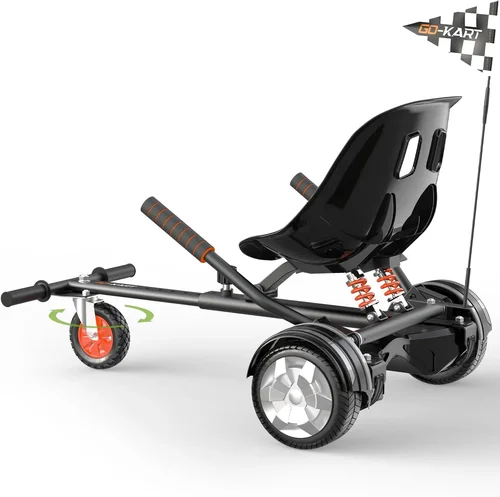
Hoverboards have come a long way since their flash-in-the-pan debut nearly a decade ago. Once seen as novelty gadgets prone to catching fire or wobbling out of control, today’s hoverboards are safer, smarter, and more capable than ever. Whether you’re commuting short distances, entertaining kids at the park, or just looking for a fun way to get around your neighborhood, a quality hoverboard can be a surprisingly practical and enjoyable investment. But with hundreds of models flooding the market—ranging from $100 knockoffs to $1,000+ premium machines—it’s easy to feel overwhelmed. That’s where this guide comes in.
In this comprehensive 2026 buying guide, we’ll cut through the noise and help you make an informed decision. You’ll learn exactly what to look for in a hoverboard, how different features impact real-world performance, and which brands and models deliver the best value for your needs. We’ll cover everything from safety certifications and battery life to terrain compatibility, app connectivity, and long-term durability. By the end, you’ll know not only what to buy but why—so you can ride with confidence, avoid buyer’s remorse, and enjoy every glide.
The hoverboard market today is more diverse and competitive than it’s ever been. Major brands like Gotrax, Segway-Ninebot, Razor, and Swagtron now offer models tailored to specific use cases: lightweight kids’ boards, rugged off-road variants, high-speed commuter versions, and even self-balancing scooters with seats. At the same time, budget options continue to improve, offering surprisingly solid performance for under $200. However, not all hoverboards are created equal. Some prioritize flashy LED lights over build quality; others cut corners on battery safety or motor power. Our goal is to arm you with the knowledge to spot the difference—and choose the best hoverboard for your lifestyle, budget, and riding goals.

What to Look for When Buying a Hoverboard
1. Safety Certifications & Battery Quality
Safety should always be your top priority when shopping for a hoverboard. In the early 2010s, poorly manufactured lithium-ion batteries caused numerous fires and even led to bans on airlines. Thankfully, regulations have tightened significantly, but not all manufacturers comply. Always look for hoverboards that carry UL 2272 certification—this is the gold standard for electrical and fire safety in personal e-mobility devices. UL 2272 ensures the battery, charger, and internal wiring meet rigorous testing standards for overcharge protection, short-circuit prevention, and thermal stability.
Beyond certification, pay attention to the battery type and capacity. Most modern hoverboards use lithium-ion (Li-ion) or lithium polymer (LiPo) batteries. Li-ion is more common and generally safer, while LiPo offers slightly better energy density but requires more careful handling. Battery capacity is measured in watt-hours (Wh)—higher Wh means longer range. For example, a 360Wh battery will typically last 12–15 miles, whereas a 180Wh model may only manage 6–8 miles. Also check if the board includes smart battery management systems (BMS), which monitor voltage, temperature, and charge cycles to prevent overheating or degradation.
2. Performance Specifications
Performance specs define how your hoverboard behaves in real-world conditions. Key metrics include top speed, motor power, range, and climbing ability. Most consumer hoverboards max out between 6 and 10 mph—fast enough for casual cruising but not built for racing. If you plan to commute or ride on hills, aim for dual motors with at least 350W total power (e.g., 2x 250W). Single-motor boards (often 250W or less) struggle on inclines above 10–15% and may overheat during extended use.
Range is another critical factor. Manufacturers often advertise “up to” distances based on ideal conditions (flat pavement, light rider, full charge), but real-world range is usually 20–30% lower. A 10-mile advertised range might realistically give you 7–8 miles. Consider your typical ride length: if you need to travel 5 miles round-trip daily, choose a board with at least an 8–10 mile real-world range to account for battery drain over time.
Hill-climbing ability is measured in degrees or percentage grade. Most hoverboards handle 10–15° inclines comfortably. Off-road models can tackle 20°+ thanks to larger tires and more torque. If you live in a hilly area or plan to ride on trails, prioritize torque and motor power over top speed.
3. Build Quality & Durability
A hoverboard is only as good as its construction. Cheap plastic shells, flimsy foot pads, and weak wheel hubs can turn a fun ride into a frustrating repair nightmare. Look for boards with reinforced ABS or polycarbonate bodies, non-slip rubber foot pads, and sturdy alloy wheel hubs. The deck should feel solid underfoot—no creaking or flexing.
Tire type also affects durability. Standard hoverboards use solid rubber tires, which are puncture-proof and low-maintenance but offer minimal shock absorption. Pneumatic (air-filled) tires, found on off-road and premium models, provide a smoother ride on rough surfaces but require occasional inflation and are prone to flats. Some newer models feature “semi-pneumatic” or honeycomb-structured tires that balance comfort and durability without air.
Weight capacity matters too. Most hoverboards support 220–265 lbs, but heavier riders should verify the exact limit. Exceeding the weight rating strains motors and reduces range. Also check ingress protection (IP) ratings: IP54 means splash-resistant, while IP65 offers dust and water resistance—ideal for wet sidewalks or light rain.
4. Features & Functionality
Modern hoverboards pack a surprising array of features beyond basic balancing. Bluetooth speakers, LED headlights, app connectivity, and customizable lighting are common extras. While these don’t affect core performance, they enhance usability and fun.
Bluetooth speakers allow you to stream music directly from your phone—great for outdoor rides. Just note that sound quality varies widely; some boards have tinny speakers that distort at high volumes. LED lights improve visibility at night and add flair, but aren’t substitutes for proper bike lights in low-light conditions.
App integration is increasingly common. Brands like Gotrax and Segway offer companion apps that let you track speed, battery level, ride history, and even lock the board remotely. Some apps include firmware updates to improve stability or add new riding modes. However, not all apps are well-designed—check user reviews to see if the app is functional or just a gimmick.
Other features to consider include:
– Ride modes: Beginner, normal, and sport settings adjust sensitivity and max speed.
– Self-balancing startup: Automatically levels the board when powered on.
– Carry handle or strap: Makes transporting easier, especially for kids.
– Water resistance: Essential if you ride in damp weather.
5. Brand Reputation & Reliability
Not all hoverboard brands are equal. Established names like Gotrax, Segway-Ninebot, Razor, and Swagtron have proven track records for quality control, customer service, and post-purchase support. They’re more likely to honor warranties, provide replacement parts, and respond to issues promptly.
Cheap no-name brands often cut corners on materials, testing, and support. They may disappear after a few months, leaving you stranded with a broken board and no recourse. Check brand history: how long have they been in the e-mobility space? Do they specialize in hoverboards or just resell generic units?
Customer service matters too. Can you reach a human? Is there a US-based support team? Brands with responsive support tend to resolve issues faster—whether it’s a defective charger, firmware glitch, or warranty claim.
6. Warranty & Support
A solid warranty is a strong indicator of a manufacturer’s confidence in their product. Most reputable brands offer 6–12 months of coverage, with some premium models extending to 18 months. The warranty should cover defects in materials and workmanship—not just cosmetic damage.
Read the fine print: Does it include the battery? Many warranties exclude batteries because they degrade naturally over time. However, a good policy will cover battery failure within the first 6–9 months if it drops below 70% capacity. Also check if the warranty is voided by unauthorized repairs, water damage, or misuse.
Return policies are equally important. Ideally, you should have at least 30 days to test the board and return it if unsatisfied. Some retailers (like Amazon) offer extended holiday return windows, which is helpful if buying as a gift.
7. Size & Portability
Hoverboards vary in weight and dimensions. Standard models weigh 20–25 lbs and measure about 23–26 inches long. Off-road versions can exceed 30 lbs due to larger tires and reinforced frames. If you need to carry the board upstairs, onto public transit, or store it in a small space, lighter is better.
Wheel size affects portability and ride quality. Most hoverboards have 6.5-inch wheels—compact and agile but sensitive to cracks and debris. Off-road models use 8–10 inch wheels for better stability on uneven terrain but are bulkier to transport.
Consider how you’ll store the board. Some fold or have removable components, though true folding hoverboards are rare. Most are stored upright or laid flat. If space is tight, measure your storage area before buying.
8. User Reviews & Real-World Feedback
Spec sheets tell one story; user reviews tell another. Always read verified purchase reviews on Amazon, Best Buy, or the brand’s website. Look for patterns: Do multiple users report the same issue (e.g., “battery died after 3 months”)? Are complaints about shipping damage, missing parts, or poor instructions?
Pay attention to long-term reviews (6+ months). A board that works great out of the box may degrade quickly if the battery or motors are low-quality. Also check video reviews on YouTube—they often show real riding conditions, terrain handling, and build quality better than photos.
Be wary of fake reviews. Overly generic praise (“Amazing product! Love it!”) or identical phrasing across multiple accounts can signal manipulation. Focus on detailed, balanced feedback that mentions both pros and cons.
Different Types of Hoverboards

Common Buying Mistakes to Avoid
❌ Mistake: Ignoring Safety Certifications
Why it’s bad: Buying a hoverboard without UL 2272 certification risks fire, electrical failure, or sudden shutdowns mid-ride. These incidents can cause injury or property damage.
What to do instead: Always verify the certification before purchasing. Look for the UL logo on the product page, packaging, or charger. If it’s missing, walk away—even if the price seems tempting.
❌ Mistake: Prioritizing Price Over Quality
Why it’s bad: Ultra-cheap hoverboards ($80–$120) often use subpar batteries, weak motors, and brittle plastics. They may last only a few weeks before failing.
What to do instead: Set a realistic budget ($150 minimum for decent quality). Remember: you’re paying for safety, reliability, and longevity—not just a toy.
❌ Mistake: Overlooking Real-World Range
Why it’s bad: Relying solely on advertised range leads to unexpected battery depletion, leaving you stranded.
What to do instead: Multiply the advertised range by 0.7 to estimate real-world performance. If you need 8 miles, buy a board rated for at least 12 miles.
❌ Mistake: Choosing Based on Looks Alone
Why it’s bad: Flashy LED patterns or cool colors don’t improve performance. A visually appealing board may have weak motors or poor build quality.
What to do instead: Focus on specs first, aesthetics second. Choose a color you like, but never compromise on safety or functionality for style.
❌ Mistake: Not Checking Weight Limits
Why it’s bad: Exceeding the weight capacity strains motors, reduces range, and increases wear. It can also void the warranty.
What to do instead: Weigh yourself and add any gear (backpack, etc.). Choose a board with a limit at least 20–30 lbs above your total weight.
❌ Mistake: Skipping the Test Ride
Why it’s bad: Hoverboards feel different in person. A board that looks great online might be too sensitive, sluggish, or uncomfortable.
What to do instead: If possible, test ride at a store or borrow from a friend. Pay attention to balance, responsiveness, and foot pad comfort.
❌ Mistake: Ignoring Return Policies
Why it’s bad: If the board arrives damaged or doesn’t meet expectations, a strict return policy could leave you stuck with a dud.
What to do instead: Buy from retailers with generous return windows (30+ days) and clear policies. Avoid third-party sellers with no return options.
Budget Guidelines: How Much Should You Spend?
Entry-Level ($100–$180): These are best for young kids or occasional indoor use. Expect basic features, shorter range (4–6 miles), and minimal durability. Look for UL 2272 certification and at least 250W motors. Brands like Gotrax GXL V2 or Swagtron SWAGGY offer decent entry points.
Mid-Range ($180–$350): This is the sweet spot for most buyers. You’ll get reliable performance, 8–12 mile range, dual motors, Bluetooth, and solid build quality. Models like the Gotrax Hoverfly EYE or Segway Ninebot S are excellent choices here.
Premium ($350–$600): Ideal for commuters and enthusiasts. These feature high-capacity batteries (400Wh+), off-road capabilities, advanced apps, and rugged construction. Expect 15+ mile range, hill-climbing power, and IP65 water resistance.
Luxury ($600+): Top-tier boards with cutting-edge tech, premium materials, and extended warranties. Examples include the Segway-Ninebot S Max or custom-built models. Only necessary for heavy daily use or professional applications.
Expert Tips for Getting the Best Deal
– Shop during seasonal sales: Black Friday, Cyber Monday, and back-to-school periods often feature 20–30% discounts on hoverboards. Sign up for brand newsletters to get early access.
– Buy directly from reputable retailers: Amazon, Best Buy, and the brand’s official website offer buyer protection, easy returns, and authentic products. Avoid unknown eBay or Wish sellers.
– Check for refurbished models: Certified refurbished hoverboards from Gotrax or Segway can save you 25–40% and come with full warranties.
– Read the manual before riding: Proper calibration and startup procedures prevent accidents and extend battery life.
– Charge correctly: Use only the included charger, avoid overcharging, and store the board at 50–70% charge if unused for weeks.
– Inspect upon delivery: Check for scratches, loose parts, or damaged packaging. Report issues immediately to qualify for replacements.
– Register your warranty: Many brands require online registration within 30 days to activate coverage.
– Join owner communities: Reddit’s r/hoverboard or Facebook groups share tips, firmware hacks, and troubleshooting advice.

Frequently Asked Questions
Q: Are hoverboards safe for kids?
A: Yes, but only with proper supervision and age-appropriate models. Choose boards with lower max speeds (6–8 mph), smaller decks, and UL 2272 certification. Kids under 8 should start with training wheels or adult guidance.
Q: How long does a hoverboard battery last?
A: Most lithium-ion batteries retain 80% capacity after 300–500 charge cycles, translating to 1.5–3 years of daily use. Avoid deep discharges and extreme temperatures to maximize lifespan.
Q: Can I ride a hoverboard in the rain?
A: Only if it has an IP65 or higher rating. Standard boards (IP54) can handle light splashes but will fail in heavy rain. Water damage usually voids warranties.
Q: Do I need a license or helmet?
A: Laws vary by location. In most US states, no license is required, but helmets are strongly recommended—especially for kids. Some cities restrict hoverboard use on sidewalks or require lights at night.
Q: Why does my hoverboard wobble or drift?
A: This usually indicates calibration issues or uneven tire wear. Turn the board off, place it on level ground, and power it back on to auto-calibrate. If problems persist, check for loose components or sensor faults.
Q: Can hoverboards go uphill?
A: Yes, but performance depends on motor power and incline steepness. Dual-motor boards with 500W+ total power can handle 15–20° hills. Single-motor models struggle beyond 10°.
Q: How do I clean my hoverboard?
A: Wipe the deck and tires with a damp cloth. Avoid spraying water directly on seams or ports. Use a soft brush for tire treads. Never submerge or use harsh chemicals.
Q: What’s the difference between hoverboards and self-balancing scooters?
A: Technically, they’re the same thing. “Hoverboard” is a marketing term; the correct name is self-balancing scooter. Some newer models include seats, turning them into seated scooters.
Q: Can I take my hoverboard on a plane?
A: Generally no. Most airlines ban hoverboards due to lithium battery restrictions, even if UL-certified. Check with your carrier before traveling.
Q: How fast can hoverboards go?
A: Consumer models typically max out at 6–10 mph. Racing or modified boards can reach 15+ mph but are unsafe for public use and often illegal.
Our Final Recommendations
Best for Budget-Conscious Buyers: Gotrax Hoverfly EYE – At under $200, it offers UL 2272 certification, 10-mile range, Bluetooth, and solid build quality. Perfect for teens and casual riders.
Best Overall Value: Segway-Ninebot S – Priced around $350, it delivers premium features like app control, 13.7-mile range, and excellent stability. Ideal for daily commuters.
Best Premium Option: Gotrax GXL V2 Pro – With 15-mile range, off-road tires, and IP54 rating, this $450 model bridges urban and trail riding without compromise.
Best for Beginners: Swagtron T6 – Features beginner mode, 8.5-inch all-terrain tires, and a low center of gravity for easy learning. Great for first-time riders.
Best for Advanced Users: Segway-Ninebot S Max – At $700+, it boasts 23-mile range, 18 mph top speed, and military-grade durability. Built for serious riders who demand performance.
Conclusion: Making the Right Choice
Choosing the best hoverboard isn’t about finding the flashiest model or the cheapest price—it’s about matching the right features to your needs, environment, and experience level. Safety, build quality, and real-world performance should always outweigh gimmicks or aesthetics. By prioritizing UL certification, understanding your range and terrain requirements, and investing in a reputable brand, you’ll enjoy years of smooth, reliable rides.
Remember: a hoverboard is more than a toy—it’s a personal mobility device that deserves thoughtful consideration. Use this guide as your roadmap, test before you commit, and don’t hesitate to spend a little more for peace of mind. Whether you’re gliding through campus, exploring local trails, or just having fun in the driveway, the right hoverboard will make every ride better. Now go find yours—and ride smart.