
Electric scooters have evolved far beyond smooth city pavements and sidewalks. In 2026, off-road electric scooters are no longer niche curiosities—they’re powerful, rugged machines capable of conquering dirt trails, gravel paths, steep hills, and even light mountain terrain. Whether you’re an adventure seeker looking to explore nature trails, a commuter navigating uneven urban landscapes, or someone who simply refuses to be limited by pavement, the right off-road electric scooter can transform your mobility experience.
This comprehensive buying guide is designed for anyone serious about investing in a high-performance off-road e-scooter. We’ll walk you through every critical factor—from motor power and suspension systems to battery life and build quality—so you can make a confident, informed decision. You’ll learn how to match your needs with the right model, avoid common pitfalls, and get the best value for your money. The market has exploded with options, but not all “off-road” scooters are created equal. Some are glorified city scooters with knobby tires; others are true trail beasts built for real terrain. Our goal is to help you tell the difference.
In this guide, we’ll break down the key specifications that matter most, compare different categories of off-road scooters, highlight common buying mistakes, and provide expert-backed recommendations across various budgets. By the end, you’ll have a clear roadmap to choosing the perfect off-road electric scooter for your lifestyle, whether you’re riding for fun, fitness, or function.
What to Look for When Buying Off-Road Electric Scooters
1. Motor Power and Performance
The heart of any off-road electric scooter is its motor. Unlike city scooters that prioritize efficiency and top speed on flat ground, off-road models need torque—lots of it. Look for scooters with motors rated at 500W or higher, with many capable of delivering 800W to 1200W continuous power and peak outputs exceeding 2000W. Dual-motor setups are increasingly common in premium models and offer superior traction, especially on loose or slippery surfaces like sand, mud, or wet grass.
Why does this matter? A weak motor will struggle on inclines, bog down in soft terrain, and drain the battery quickly. For example, a 500W motor might handle a 15% grade on pavement, but an 800W+ motor can tackle 25% grades on dirt without breaking a sweat. Pay attention to both continuous and peak wattage ratings—peak power indicates short bursts for acceleration or climbing, while continuous power reflects sustained performance.
2. Battery Capacity and Range
Battery technology has advanced significantly, but range remains one of the most misunderstood specs. Off-road riding consumes far more energy than city commuting due to constant acceleration, climbing, and resistance from uneven surfaces. A scooter advertised with “40 miles of range” might only deliver 20–25 miles off-road.
Focus on battery capacity measured in watt-hours (Wh). A 500Wh battery is a solid baseline for light off-road use, but serious riders should consider 700Wh or higher. Lithium-ion (Li-ion) batteries are standard, but look for high-discharge cells like Samsung, LG, or Panasonic, which maintain performance under load. Some premium models now use lithium iron phosphate (LiFePO4) batteries, which offer longer lifespans and better thermal stability—ideal for intense off-road sessions.
Charging time also matters. Fast-charging capabilities (e.g., 3–4 hours from 0–100%) are convenient, but avoid ultra-fast chargers that degrade battery health over time unless they include smart charging profiles.
3. Tires and Suspension
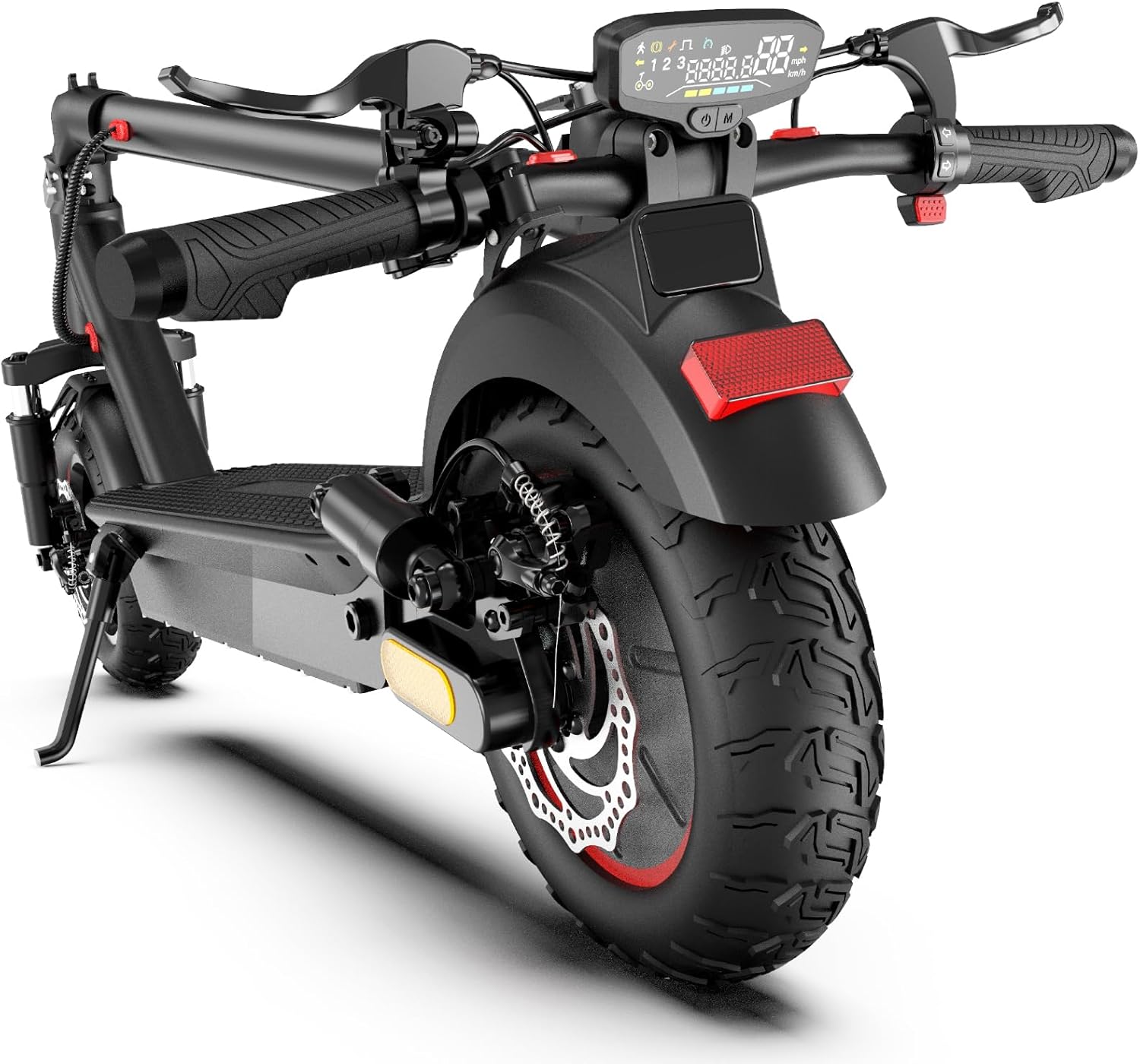
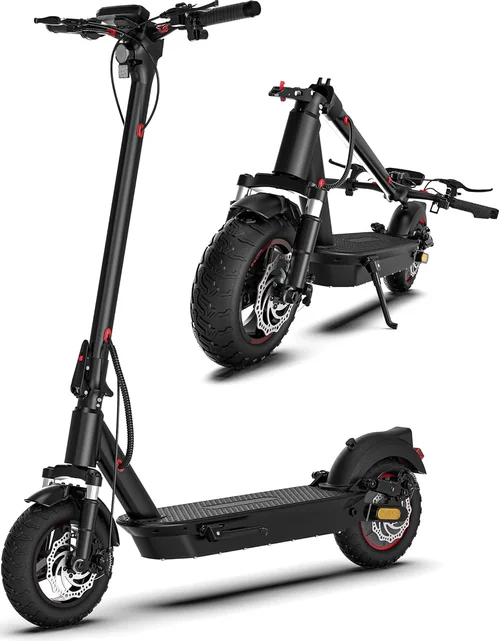
Off-road capability starts with the tires. Pneumatic (air-filled) tires are essential—they absorb shocks, provide grip, and conform to uneven terrain. Look for tires at least 10 inches in diameter, with aggressive tread patterns designed for dirt, gravel, or mud. Tubeless tires reduce the risk of pinch flats, while some models offer self-sealing inner tubes for added peace of mind.
Suspension is equally critical. Dual suspension systems (front fork + rear shock absorber) are ideal for absorbing bumps and maintaining control at speed. High-end scooters may feature hydraulic or air suspension with adjustable damping. Without proper suspension, repeated impacts can damage the frame, electronics, and your body.
Solid rubber tires, while puncture-proof, are a hard no for off-road use—they offer zero shock absorption and minimal traction on loose surfaces. Even “all-terrain” solid tires fall short compared to pneumatic alternatives.
4. Build Quality and Durability
Off-road scooters endure punishment that city models never face. The frame must be robust enough to handle jumps, drops, and rough landings. Look for aircraft-grade aluminum alloys (like 6061-T6) or reinforced steel frames. Weld quality matters—inspect joints for smooth, consistent welds without cracks or porosity.
Water resistance is another key factor. While no scooter is truly waterproof, an IPX5 or higher rating means it can handle rain, puddles, and light splashes. Avoid models with exposed wiring or unsealed battery compartments. Sealed motors and connectors add longevity.
Weight capacity is often overlooked but vital. Most off-road scooters support 220–300 lbs, but if you’re heavier or carry gear, verify the rated limit. Exceeding it can strain the motor, bend the deck, or cause brake failure.
5. Braking System
Stopping power is non-negotiable, especially when descending steep trails at speed. Disc brakes—preferably hydraulic—are the gold standard for off-road scooters. They offer consistent performance in wet or muddy conditions and require less hand force than mechanical disc or drum brakes.
Regenerative braking is a nice bonus, as it recaptures energy during deceleration and extends range. However, it should complement, not replace, mechanical brakes. Some models combine both: regenerative braking for gentle stops and hydraulic discs for emergency halts.
Avoid scooters that rely solely on electronic or foot brakes—they lack the stopping force needed for off-road safety.
6. Portability and Weight
Off-road scooters are inherently heavier than urban models due to reinforced frames, larger batteries, and suspension systems. Expect weights between 50–80 lbs. While portability isn’t the top priority for trail use, it still matters if you need to carry the scooter up stairs, load it into a car, or store it in tight spaces.
Look for foldable designs with secure locking mechanisms. Some models feature removable batteries, reducing carry weight by 10–15 lbs. Telescoping handlebars and compact folding footprints help with storage. However, don’t sacrifice durability for portability—a flimsy hinge or weak latch can fail under stress.
If you plan to transport your scooter frequently, consider models with integrated wheels or carrying handles. A few premium scooters even include motorized wheel assists for easier loading.
7. Features and Smart Functionality
Modern off-road scooters come packed with features that enhance safety, convenience, and performance. Bright LED headlights (500+ lumens) are essential for night riding, while taillights and brake lights improve visibility. Side reflectors and turn signals are rare but valuable for mixed-use riding.
Digital displays should show speed, battery level, riding mode, and error codes. Bluetooth connectivity allows firmware updates and customization via smartphone apps—some let you adjust acceleration curves, top speed, or regenerative braking strength.
Cruise control reduces hand fatigue on long rides, while multiple riding modes (Eco, Sport, Turbo) let you balance range and performance. GPS tracking and anti-theft alarms are emerging features in high-end models.
Be cautious of gimmicks: RGB lighting, built-in speakers, or touchscreens add cost without improving off-road capability.
8. Brand Reputation and Community Support
Not all brands are equal when it comes to off-road scooters. Established names like Dualtron, Kaabo, Apollo, and Nanrobot have proven track records with durable, high-performance models. They often provide better documentation, firmware updates, and customer service.
Check online communities (Reddit, Facebook groups, forums like ESG) for real-world feedback. Brands with active user bases tend to respond faster to issues and release improvements based on rider input. Avoid obscure brands with no service network or spare parts availability—repairing a broken scooter can be impossible if components aren’t stocked.
Look for brands that publish detailed spec sheets, not just marketing fluff. Transparency about motor type, battery chemistry, and frame materials is a good sign.
9. Warranty and After-Sales Support
A strong warranty reflects confidence in product quality. Most reputable brands offer 6–12 months on the entire scooter, with extended coverage (up to 24 months) on the battery and motor. Read the fine print: some warranties void if used off-road, while others explicitly cover trail riding.
Customer support matters. Can you reach a human quickly? Are replacement parts (tires, brakes, controllers) readily available? Do they offer repair guides or video tutorials? Brands with US or EU service centers reduce downtime compared to those shipping from overseas.
Consider third-party extended warranties if available, but weigh the cost against the scooter’s price and expected lifespan.
Different Types of Off-Road Electric Scooters
Common Buying Mistakes to Avoid
❌ Mistake: Prioritizing Top Speed Over Torque
Why it’s bad: A scooter that hits 40 mph on flat pavement may crawl at 8 mph up a dirt hill. Off-road riding demands low-end torque, not just high top speed. Scooters optimized for speed often have weaker motors and less suspension travel.
What to do instead: Focus on motor wattage, gear ratios, and real-world hill-climbing tests. Look for torque specs (if available) or user reports of incline performance.
❌ Mistake: Ignoring Tire Type
Why it’s bad: Solid tires or slick city tires will slip, slide, and offer no comfort on trails. You’ll feel every rock and root, increasing fatigue and risk of injury.
What to do instead: Insist on pneumatic tires with aggressive tread. Check tire width—wider tires (4+ inches) provide better flotation on soft ground.
❌ Mistake: Overlooking Suspension
Why it’s bad: Without suspension, vibrations damage components and reduce control. Riders report cracked decks, loose bolts, and premature motor failure on rigid scooters used off-road.
What to do instead: Choose models with at least front suspension; dual suspension is ideal. Test ride if possible—feel how it handles bumps.
❌ Mistake: Buying Based on Marketing Claims Alone
Why it’s bad: Phrases like “all-terrain” or “off-road ready” are often misleading. A scooter with knobby tires but a 350W motor and no suspension isn’t truly off-road capable.
What to do instead: Dig into technical specs, watch independent reviews, and read user forums. Real performance matters more than buzzwords.
❌ Mistake: Skimping on Brakes
Why it’s bad: Inadequate brakes can lead to accidents, especially on descents. Electronic brakes alone won’t stop a 70-lb scooter moving at 30 mph on a slope.
What to do instead: Always choose hydraulic disc brakes for serious off-road use. Test braking distance before purchasing if possible.
❌ Mistake: Neglecting Weight and Portability
Why it’s bad: A 90-lb scooter might be tough to lift after a breakdown or when loading into a vehicle. Heavy scooters also consume more battery.
What to do instead: Balance durability with manageable weight. Consider removable batteries or models under 70 lbs unless you have help transporting it.
❌ Mistake: Forgetting About Maintenance and Repairs
Why it’s bad: Off-road scooters wear out faster. Without access to spare parts or service, a minor issue can leave you stranded.
What to do instead: Choose brands with good parts availability and clear repair guides. Learn basic maintenance like tire changes and brake adjustments.
Budget Guidelines: How Much Should You Spend?
Entry-Level ($600–$1,200): These scooters offer a taste of off-road capability but come with compromises. Expect single 500–800W motors, basic front suspension, 10–12” pneumatic tires, and 300–500Wh batteries. Range is typically 15–25 miles off-road. Ideal for light trails, park paths, and beginners. Examples include the Segway X260 and entry-level Kaabo models. Not recommended for steep hills or technical terrain.
Mid-Range ($1,200–$2,500): This is the sweet spot for most riders. Scooters here feature 800–1200W motors, dual suspension, larger batteries (600–800Wh), and better build quality. You’ll get 25–35 miles of real-world range and confident performance on moderate trails. Brands like Apollo, Nanrobot, and budget Dualtron models shine here. Great for weekend adventurers and daily mixed-use commuting.
Premium ($2,500–$4,500): For enthusiasts and serious trail riders. Dual motors (1600W+ combined), advanced suspension (adjustable or hydraulic), 900–1200Wh batteries, and robust frames define this tier. Expect 35–50+ miles of range, top speeds of 40–50 mph, and the ability to handle rocky, root-filled trails. Models like the Dualtron Thunder 3, Kaabo Wolf King GT, and Apollo Phantom Pro dominate here.
Luxury ($4,500+): These are the Ferraris of electric scooters—built for extreme performance, durability, and customization. Features include swappable batteries, carbon fiber components, GPS tracking, app-based tuning, and military-grade waterproofing. Range can exceed 60 miles, and speeds top 60 mph. The Dualtron X2, Kaabo Mantis GT Pro, and custom builds fall into this category. Best for professionals, long-distance explorers, or collectors.
Expert Tips for Getting the Best Deal
- Shop During Off-Season: Prices drop in late fall and winter when demand is low. Many brands clear inventory before new models launch in spring.
- Compare Retailers: Buy directly from manufacturers (Dualtron, Kaabo) for better warranties, or use authorized dealers like Scooter Hut or Urban Scooters for bundled deals and local support.
- Watch for Refurbished Models: Certified refurbished scooters from reputable sellers offer significant savings (20–30% off) with full warranties.
- Bundle Accessories: Some retailers include helmets, lights, or phone mounts at no extra cost during promotions.
- Read Return Policies: Ensure you can return or exchange within 14–30 days if the scooter doesn’t meet expectations. Test rides are rare, so flexibility is key.
- Check for Firmware Updates: Some scooters ship with conservative settings. Post-purchase updates can unlock performance or fix bugs—ask if the brand supports this.
- Join Owner Groups: Members often share discount codes, sell used parts, or alert others to sales.
- Consider Total Cost of Ownership: Factor in replacement tires ($50–$100), brake pads, and potential repairs. Cheaper scooters may cost more long-term.

Frequently Asked Questions
Q: Can I ride an off-road scooter on pavement?
A: Absolutely. Most off-road scooters handle pavement well and often outperform city models in comfort and stability due to better suspension and tires. Just be mindful of local laws—some areas restrict high-speed scooters to bike lanes or trails.
Q: How do I maintain my off-road scooter?
A: Regular maintenance includes checking tire pressure (weekly), inspecting brakes and suspension, cleaning dirt from the deck and motor, tightening bolts, and storing in a dry place. Lubricate the chain (if applicable) and update firmware periodically.
Q: Are off-road scooters legal everywhere?
A: Laws vary by region. In the US, many states allow e-scooters on roads and bike paths if under 20 mph, but off-road use is often restricted to private property or designated trails. Check local regulations before riding.
Q: Can I carry a passenger?
A: Most off-road scooters are designed for single riders. Carrying a passenger exceeds weight limits, strains the motor, and compromises safety. Some heavy-duty models support two riders, but verify specs first.
Q: How long do batteries last?
A: With proper care (avoid deep discharges, store at 50% charge), lithium batteries last 500–800 charge cycles—roughly 2–4 years of regular use. Capacity gradually declines over time.
Q: What’s the difference between hub motors and belt-driven motors?
A: Hub motors are integrated into the wheel, offering direct drive, low maintenance, and quiet operation—ideal for off-road. Belt-driven systems use external belts and gears, which can slip or break under high torque. Most modern off-road scooters use hub motors.
Q: Can I upgrade my scooter later?
A: Some components like tires, brakes, and displays can be upgraded. However, motor and battery upgrades are complex and often not cost-effective. Buy the best scooter you can afford upfront.
Q: What should I wear when riding off-road?
A: Always wear a helmet. Add knee and elbow pads, gloves, and sturdy shoes. High-visibility clothing helps if riding near roads. Consider eye protection for dusty trails.
Q: How do I charge my scooter on long trips?
A: Portable power stations or car inverters allow charging on the go. Some riders carry spare batteries. Plan routes with charging stops if range is limited.
Q: Are off-road scooters worth the extra cost?
A: If you ride on anything other than smooth pavement, yes. The improved comfort, safety, and capability justify the investment. For city-only use, a standard scooter suffices.
Our Final Recommendations
Best for Budget-Conscious Buyers: Kaabo Mantis 8 – At around $1,100, it offers 800W dual motors, 10” pneumatic tires, front and rear suspension, and a 600Wh battery. Great for light to moderate trails and urban commuting.
Best Overall Value: Apollo Phantom Pro – Priced near $2,200, it delivers 1200W dual motors, 11” tubeless tires, hydraulic brakes, and a 960Wh battery. Exceptional build quality and 40+ mile range make it a versatile trail companion.
Best Premium Option: Dualtron Thunder 3 – At $3,500, this beast boasts 5400W peak power, adjustable hydraulic suspension, 11” tires, and a 72V 35Ah battery. Built for speed, hills, and technical terrain.
Best for Beginners: Segway X260 – Around $1,000, it’s user-friendly with a lower top speed (20 mph), good suspension, and reliable build. Perfect for learning off-road basics.
Best for Advanced Users: Kaabo Wolf King GT Pro – Pushing $4,000, it features dual 1500W motors, 12” tires, 72V 35Ah battery, and a top speed of 62 mph. Ideal for experts seeking极限 performance and customization.
Conclusion: Making the Right Choice
Choosing the best off-road electric scooter isn’t just about specs—it’s about matching a machine to your lifestyle, terrain, and ambitions. Whether you’re exploring forest trails on weekends or navigating rugged urban landscapes daily, the right scooter can open up new possibilities for adventure, fitness, and freedom.
We’ve covered the essentials: motor power, battery life, tires, suspension, build quality, and smart features. We’ve warned you about common pitfalls, broken down budget tiers, and shared expert strategies to get the best deal. Now it’s your turn to prioritize what matters most. Are you after raw power, long-range exploration, or beginner-friendly reliability?
Don’t rush. Test ride if you can, read real user reviews, and choose a reputable brand with strong support. Your off-road scooter is an investment in fun, freedom, and future adventures. With the knowledge from this guide, you’re ready to make a confident, informed decision—and hit the trails with confidence in 2026 and beyond.