
Finding the right bicycle when you weigh 300 pounds is about far more than just picking a stylish ride off the shelf. It’s about safety, comfort, durability, and confidence—both in the bike and in yourself. Too many people assume that all bicycles are built to handle heavier riders, but the reality is that standard bikes often have weight limits well below 300 lbs, putting you at risk of mechanical failure, injury, or a frustratingly short lifespan for your investment. This guide exists to cut through the noise, misinformation, and marketing fluff to give you a clear, expert-backed roadmap for choosing a bicycle that truly supports your weight, your goals, and your lifestyle.
In this comprehensive buying guide, you’ll learn exactly what to look for when shopping for a bike at 300 lbs—from frame materials and wheel strength to suspension systems and warranty coverage. We’ll break down the most critical factors that determine whether a bike can safely and comfortably carry your weight, compare different types of bicycles suited for heavier riders, highlight common pitfalls to avoid, and provide real-world recommendations based on performance, value, and reliability. Whether you’re looking to commute, exercise, explore trails, or simply enjoy weekend rides, this guide will empower you to make an informed decision that prioritizes your safety and long-term satisfaction.
The market for heavy-duty bicycles has grown significantly in recent years, driven by increased awareness of inclusive design and the demand for durable, high-capacity bikes. Brands now offer everything from reinforced city cruisers to full-suspension mountain bikes rated for 400+ lbs. However, not all “heavy-duty” claims are created equal. Some bikes are overbuilt but poorly engineered; others look rugged but use weak components under the surface. Our goal is to help you navigate this landscape with confidence, so you can find a bike that doesn’t just hold your weight—but enhances your riding experience.

What to Look for When Buying a Bicycle for 300 lbs
1. Weight Capacity & Load Rating
The single most important factor when choosing a bicycle for a 300-pound rider is the manufacturer’s stated weight capacity. This isn’t a suggestion—it’s a hard engineering limit based on frame strength, component durability, and safety testing. Most standard bikes are rated for 250–275 lbs, which leaves you dangerously close to or over the limit. Look for bikes explicitly rated for at least 350–400 lbs to provide a comfortable safety margin. This extra buffer accounts for dynamic forces like bumps, hills, braking, and gear shifts that increase stress on the bike during real-world use.
Always check the fine print. Some brands list “rider weight” limits that exclude cargo, bags, or even water bottles. A true 350+ lb rating should include the rider plus typical gear. If a bike only lists a 300 lb limit, it’s cutting it too close—especially if you plan to carry a backpack, panniers, or ride aggressively. Reputable manufacturers like Rad Power Bikes, Trek (with their FX+ series), and specialized brands like Yuba or Benno clearly state their load capacities and often provide detailed testing data.
2. Frame Material & Construction
The frame is the backbone of your bike—and for a 300-pound rider, it needs to be exceptionally strong. Aluminum alloys (like 6061 or 7005) are common in mid-to-high-end bikes because they offer a great balance of strength, weight, and corrosion resistance. Look for frames labeled as “reinforced,” “oversized tubing,” or “high-tensile” aluminum. These designs use thicker walls and larger diameter tubes to distribute stress more effectively.
Steel frames, particularly chromoly steel, are another excellent option. They’re heavier than aluminum but offer superior shock absorption and fatigue resistance—meaning they’re less likely to crack over time under repeated stress. Many cruiser and touring bikes use steel for this reason. Avoid cheap hi-ten (high-tensile) steel, which is brittle and prone to failure.
Carbon fiber, while lightweight and stiff, is generally not recommended for riders over 250–275 lbs unless specifically engineered for high loads. Most consumer carbon frames aren’t built to handle the torsional and impact forces a heavier rider generates. If you do consider carbon, verify the weight rating and look for reinforced bottom brackets and head tubes.
3. Wheel Strength & Tire Compatibility
Wheels are often the weakest link for heavier riders. Standard 32-spoke wheels may seem adequate, but under 300+ lbs of dynamic load—especially on rough terrain—they can bend, warp, or even collapse. Opt for wheels with at least 36 double-butted stainless steel spokes arranged in a strong cross pattern (3-cross or 4-cross). Double-butted spokes are thicker at the ends (where stress concentrates) and thinner in the middle, offering strength without unnecessary weight.
Rim width and material also matter. Look for double-wall rims made from reinforced aluminum (e.g., Weinmann, Alex, or Sun Ringle). Avoid single-wall or lightweight racing rims. Wider rims (23–32mm internal width) support larger tires, which improve stability and cushioning.
Tire choice is equally critical. Use tires rated for at least 1.75” to 2.3” width with reinforced casings (look for terms like “puncture-resistant,” “Kevlar belt,” or “dual-ply”). Wider tires run at lower pressures provide better shock absorption and reduce the risk of pinch flats. Tubeless setups can also help, as they eliminate inner tubes that can fail under high load.
4. Suspension & Comfort Features
For a 300-pound rider, suspension isn’t a luxury—it’s a necessity. Even on paved roads, potholes, cracks, and curbs transmit significant shock through the frame. A front suspension fork with at least 80–100mm of travel helps absorb impacts and reduces strain on your wrists, back, and the bike itself. Look for forks with adjustable preload or lockout features to fine-tune performance.
Full-suspension bikes offer even greater comfort and control, especially on trails or uneven surfaces. However, they’re heavier and more complex. If you’re riding mostly on roads or light gravel, a quality front suspension fork paired with a suspension seatpost is often sufficient.
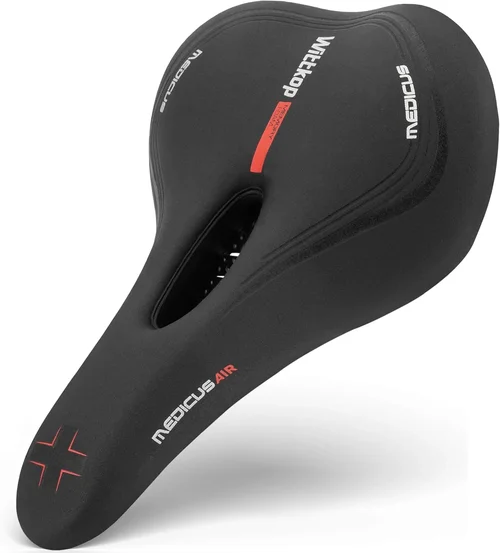
Don’t overlook the saddle and handlebars. A wide, well-padded saddle with a cutout (to reduce pressure) and steel or titanium rails will last longer under heavy use. Handlebars should be wide enough (680–720mm) to provide stability and control. Consider ergonomic grips to reduce hand fatigue.
5. Drivetrain & Braking Power
The drivetrain must handle the torque generated by a heavier rider, especially when climbing hills or accelerating from stops. Look for components from reputable brands like Shimano (Deore, SLX, or XT levels), SRAM (NX or GX), or Microshift. Avoid entry-level groupsets (like Shimano Tourney or Altus) for long-term durability.
A wide-range cassette (e.g., 11-42T or 11-51T) gives you low gears for climbing, which reduces strain on your knees and the drivetrain. A clutch-equipped rear derailleur (found on mid-to-high-end models) prevents chain slap and improves shifting under load.
Brakes are non-negotiable. Hydraulic disc brakes are the gold standard for heavy riders. They offer consistent stopping power in all conditions, require less hand force, and dissipate heat better than mechanical discs or rim brakes. Look for 180mm or 203mm rotors—larger rotors provide more braking torque. Avoid V-brakes or cantilever brakes, which lose effectiveness when wet or under heavy load.
6. Geometry & Fit
A bike that fits poorly can cause discomfort, pain, or even injury—especially under extra weight. Look for a relaxed geometry with a longer wheelbase and slacker head tube angle. This improves stability and reduces the chance of going over the handlebars.
Frame size is critical. Most manufacturers provide size charts based on height, but for heavier riders, standover height and top tube length matter more. You should have at least 1–2 inches of clearance between your groin and the top tube when standing over the bike. A longer top tube allows a more upright, comfortable riding position.
Consider step-through frames if mobility is a concern. They make mounting and dismounting easier and are often built with reinforced downtubes for added strength.
7. Brand Reputation & Community Support
Not all bike brands are created equal when it comes to supporting heavier riders. Some companies actively design for inclusivity, while others ignore the needs of larger cyclists. Research brands known for robust builds and transparent weight ratings. Companies like Rad Power Bikes, Trek, Specialized (with their “Expedition” line), Yuba, and Benno have strong reputations for building durable, high-capacity bikes.
Check online communities like Reddit’s r/bicycletouring or r/heavybikeriders, where users share real-world experiences. A brand with a loyal following of heavy riders is more likely to stand behind its products and offer helpful customer service.
8. Warranty & After-Sales Support
A strong warranty is a sign of confidence in a product’s durability. Look for at least a 2–3 year frame warranty and 1-year coverage on components. Some brands, like Rad Power Bikes, offer lifetime frame warranties—a huge plus for long-term peace of mind.
Also consider availability of replacement parts. Can you easily find new spokes, brake pads, or drivetrain components? Are there local dealers or service centers? A bike that’s hard to maintain will quickly become a liability.
Different Types of Bicycles for 300 lbs

Common Buying Mistakes to Avoid
❌ Mistake: Ignoring the Weight Limit
Why it’s bad: Riding a bike rated below your weight dramatically increases the risk of frame cracks, wheel failure, or brake malfunction—any of which can cause serious injury. Even if the bike “feels fine” at first, repeated stress leads to fatigue and sudden failure.
What to do instead: Always choose a bike rated for at least 350–400 lbs. Treat the weight limit as a non-negotiable safety threshold.
❌ Mistake: Choosing Based on Looks Alone
Why it’s bad: A sleek, lightweight road bike may look appealing, but it’s likely built for speed, not strength. These bikes often have narrow tires, weak wheels, and minimal suspension—disaster for a heavier rider.
What to do instead: Prioritize function over form. Choose a bike designed for durability and comfort, even if it’s less flashy.
❌ Mistake: Skimping on Brakes
Why it’s bad: Rim brakes and mechanical discs lose power when wet or hot. At 300 lbs, you need maximum stopping force to avoid accidents, especially downhill.
What to do instead: Invest in hydraulic disc brakes with large rotors. They’re more expensive upfront but essential for safety.
❌ Mistake: Overlooking Suspension
Why it’s bad: Without proper suspension, every bump sends shock through your body and the bike. This leads to discomfort, joint pain, and accelerated wear on components.
What to do instead: Choose a bike with at least a front suspension fork. Add a suspension seatpost if needed.
❌ Mistake: Buying Online Without Testing
Why it’s bad: Fit is personal. A bike that looks right on paper may feel unstable or uncomfortable in real life—especially under your weight.
What to do instead: Test ride whenever possible. If buying online, choose retailers with generous return policies (30+ days) and detailed sizing guides.
❌ Mistake: Neglecting Maintenance
Why it’s bad: Heavy riders put more stress on components. Without regular maintenance, parts wear out faster, leading to breakdowns and safety risks.
What to do instead: Schedule tune-ups every 6–12 months. Learn basic maintenance like checking spoke tension, brake pads, and tire pressure.
Budget Guidelines: How Much Should You Spend?
Entry-Level ($400 – $800): At this price, you’ll find basic cruisers and hybrid bikes. While some models (like the sixthreezero EVRYjourney or Schwinn Discover) are rated for 300+ lbs, they often use weaker components. Expect limited suspension, mechanical disc brakes, and shorter warranties. Best for casual, flat-terrain riding only.
Mid-Range ($800 – $1,500): This is the sweet spot for most 300-lb riders. You’ll find bikes with reinforced frames, hydraulic disc brakes, front suspension, and 36-spoke wheels. Models like the RadRover 6 Plus or Trek DualSport 3 offer excellent value and durability. Ideal for commuting, light trails, and daily exercise.
Premium ($1,500 – $3,000): Here, you get top-tier components, full suspension (on some models), and extended warranties. Electric fat tire bikes like the Juiced CrossCurrent X or Aventon Aventure.2 dominate this range, offering motor assistance that reduces physical strain. Perfect for long rides, hills, and varied terrain.
Luxury ($3,000+): Custom-built or high-end touring bikes (e.g., Surly Long Haul Trucker, Co-Motion Americano) fall here. These are hand-built, use premium materials, and are designed for decades of use. Best for serious cyclists or those who want a lifetime bike.
Expert Tips for Getting the Best Deal
- Buy in the off-season: Late fall and winter see the biggest discounts as retailers clear inventory. You can save 15–30% on last year’s models.
- Shop local bike shops: Many offer free tune-ups, fitting services, and expert advice. Support businesses that cater to heavier riders.
- Check manufacturer rebates: Brands like Rad Power Bikes and Aventon often run promotions or bundle accessories (helmets, locks, racks).
- Consider refurbished models: Certified pre-owned bikes from reputable sellers can offer premium features at mid-range prices.
- Read return policies carefully: Ensure you can return or exchange the bike if it doesn’t fit or perform as expected.
- Test ride multiple bikes: Don’t settle for the first one that “feels okay.” Compare stability, comfort, and handling.
- Invest in accessories: A good helmet, rear rack, and puncture-resistant tires enhance safety and utility.

Frequently Asked Questions
Q: Can I modify a regular bike to support 300 lbs?
A: While you can upgrade components like wheels, tires, and brakes, the frame itself is the limiting factor. If the frame isn’t rated for your weight, modifications won’t make it safe. It’s better to start with a bike designed for heavy riders.
Q: Are electric bikes better for heavier riders?
A: Yes—especially if you’re new to cycling or live in hilly areas. The motor reduces strain on your joints and the drivetrain, making riding more enjoyable and sustainable. Just ensure the e-bike is rated for your weight.
Q: How often should I maintain my bike?
A: For a 300-lb rider, inspect tires, brakes, and spokes weekly. Get a professional tune-up every 6 months. Heavy use accelerates wear, so don’t skip maintenance.
Q: What tire pressure should I use?
A: Follow the manufacturer’s recommendation on the tire sidewall, but generally, run tires at the higher end of the range for better support. For example, a 2.0” tire might be inflated to 45–50 PSI instead of 35–45 PSI.
Q: Can I ride on trails with a heavy-duty bike?
A: Absolutely—if it’s a mountain bike or fat tire e-bike with proper suspension and knobby tires. Avoid technical trails until you build confidence and skill.
Q: Will a heavier rider wear out components faster?
A: Yes, but quality components and regular maintenance can offset this. Choose durable parts and replace them proactively.
Q: Are step-through frames as strong as traditional frames?
A: Modern step-through frames use reinforced downtubes and oversized tubing to maintain strength. Many are rated for 350+ lbs and are excellent for accessibility.
Q: Should I get a bike with a rear rack?
A: Highly recommended. A rack lets you carry bags, groceries, or gear, distributing weight safely and reducing strain on your back.
Q: How do I know if a bike fits me?
A: Stand over the bike—there should be 1–2 inches of clearance. When seated, your feet should touch the ground flat. Handlebars should be within comfortable reach without straining.
Our Final Recommendations
- Best for Budget-Conscious Buyers: Schwinn Discover Hybrid Bike – Rated for 300+ lbs, includes front suspension, rear rack, and fenders. Great for city commuting under $700.
- Best Overall Value: Rad Power Bikes RadRover 6 Plus – 400 lb capacity, fat tires, hydraulic brakes, and a powerful 750W motor. Ideal for all-terrain riding at $1,999.
- Best Premium Option: Trek DualSport+ 2 – Full-suspension capable, Shimano Deore drivetrain, and a 350 lb rating. Perfect for serious riders at $2,499.
- Best for Beginners: sixthreezero EVRYjourney Step-Through – Comfortable, easy to mount, and rated for 350 lbs. Priced under $600.
- Best for Advanced Users: Surly Long Haul Trucker – Steel touring frame, built for 400+ lbs, and designed for long-distance loaded rides. Starts at $2,200.
Conclusion: Making the Right Choice
Choosing a bicycle when you weigh 300 pounds isn’t just about finding something that “holds you.” It’s about investing in a machine that supports your health, mobility, and joy of riding. By prioritizing weight capacity, frame strength, wheel durability, and comfort features, you set yourself up for success—not just on day one, but for years to come.
Remember, the cheapest bike isn’t always the best deal. A poorly built bike can lead to frustration, injury, or costly repairs. Instead, focus on value: a bike that’s safe, reliable, and enjoyable to ride. Test multiple options, ask questions, and don’t be afraid to spend a little more for peace of mind.
Your weight doesn’t define your ability to ride—but your bike should reflect your needs. With the right choice, you’ll gain not just transportation, but confidence, freedom, and a renewed connection to the world around you. So take the leap. Your perfect ride is out there.