

Gotrax scooters are primarily manufactured in China, with key production facilities located in Shenzhen and other industrial hubs. The company partners with experienced OEM manufacturers to ensure quality, affordability, and timely delivery of its electric scooters and mobility devices.
Have you ever unboxed a brand-new Gotrax scooter, zipped down the sidewalk, and wondered, “Where was this thing actually made?” You’re not alone. With so many electric scooters flooding the market from various brands, it’s natural to be curious about where your ride comes from—especially when it affects quality, price, and even environmental impact.
Gotrax, one of the most recognizable names in affordable electric mobility, has built a strong reputation for offering reliable, budget-friendly scooters. From college campuses to city streets, their sleek designs and smooth rides have won over commuters and casual riders alike. But behind every Gotrax scooter is a global supply chain that starts thousands of miles away. Understanding where Gotrax is manufactured isn’t just about geography—it’s about knowing what goes into the product you trust to get you from point A to point B.
In this article, we’ll take a deep dive into Gotrax’s manufacturing process, exploring the factories, partnerships, and logistics that bring these scooters to life. Whether you’re a first-time buyer, a tech enthusiast, or just someone who cares about where their products come from, this guide will give you the full picture.
Key Takeaways
- Gotrax is headquartered in the U.S. but manufactures most products in China: While Gotrax is based in California, its scooters are produced in Chinese factories known for electronics and EV manufacturing.
- Production occurs in Shenzhen and surrounding regions: Shenzhen is a global tech and manufacturing center, making it ideal for producing high-volume electric scooters efficiently.
- Gotrax uses OEM partnerships for production: The company works with original equipment manufacturers (OEMs) rather than owning factories, allowing flexibility and cost control.
- Quality control is managed through third-party inspections: Gotrax employs rigorous testing and inspection protocols to ensure safety and performance standards are met.
- Global shipping and distribution from Asia: Finished scooters are shipped worldwide from Chinese ports to meet demand in the U.S., Europe, and other markets.
- Environmental and labor practices are monitored: Gotrax claims to follow ethical sourcing and manufacturing guidelines, though transparency varies.
- Future expansion may include U.S. assembly: As demand grows, Gotrax may explore local assembly options to reduce shipping costs and delivery times.
📑 Table of Contents
- Gotrax Company Overview: A Brief History
- Where Are Gotrax Scooters Actually Made?
- The Role of OEM Partnerships in Gotrax’s Supply Chain
- Quality Control and Safety Standards
- Shipping, Distribution, and Global Reach
- Ethical and Environmental Considerations
- Conclusion: What You Need to Know About Gotrax Manufacturing
Gotrax Company Overview: A Brief History
Before we get into the nitty-gritty of manufacturing, let’s take a quick look at who Gotrax is and how they got here. Founded in 2017 and headquartered in Irvine, California, Gotrax quickly rose to prominence in the electric scooter market. The company was launched by Segway-Ninebot, a global leader in personal transportation, which gave Gotrax instant credibility and access to advanced engineering resources.
From the start, Gotrax focused on making electric mobility accessible. Unlike high-end brands that target luxury or performance, Gotrax aimed squarely at the everyday rider—students, commuters, and casual users who wanted a fun, eco-friendly way to get around without breaking the bank. Their first models, like the Gotrax GXL and XR, offered solid performance at a fraction of the cost of competitors.
Over the years, Gotrax expanded its lineup to include not just scooters but also electric bikes, hoverboards, and even electric skateboards. Despite this growth, the core mission remained the same: deliver reliable, affordable electric transportation to the masses.
But here’s the catch: while Gotrax is an American brand with a U.S. headquarters, its products are not made in the United States. Instead, they’re manufactured overseas—primarily in China. This is a common practice in the electronics and EV industries, where production costs, supply chain efficiency, and manufacturing expertise are concentrated in specific regions.
Where Are Gotrax Scooters Actually Made?
Visual guide about Where Is Gotrax Manufactured
Image source: riderguide.com
So, where exactly are Gotrax scooters manufactured? The short answer: China. But let’s dig deeper.
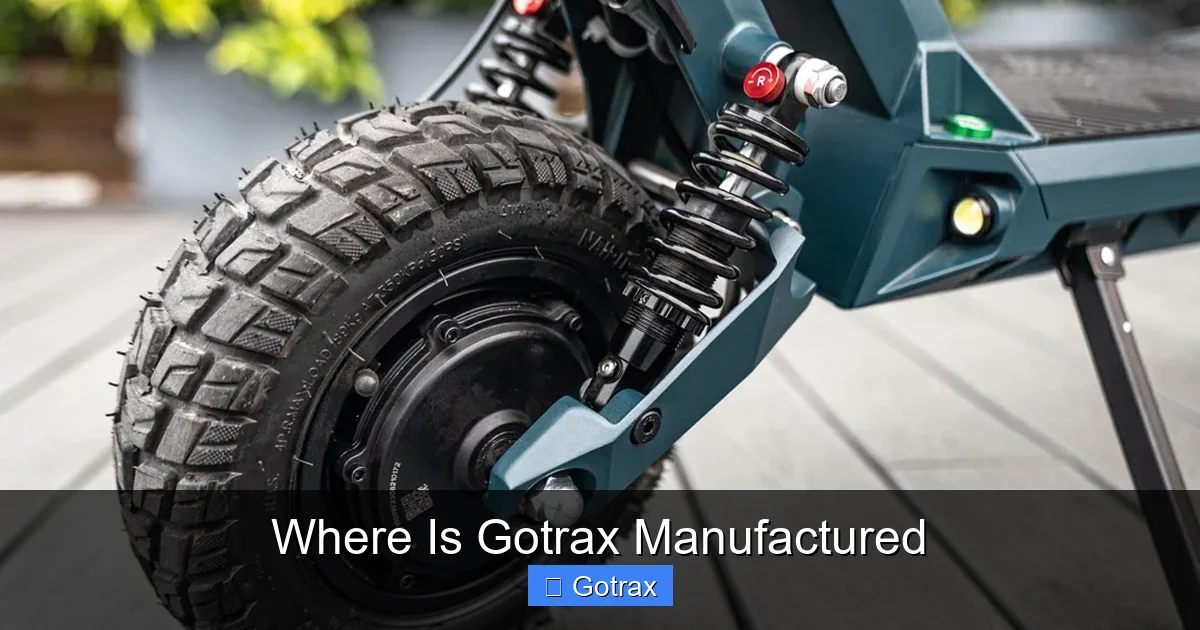
Most Gotrax electric scooters are produced in manufacturing hubs across southern China, with Shenzhen being the primary location. Shenzhen is often called the “Silicon Valley of Hardware” for good reason—it’s home to thousands of factories, tech startups, and supply chain networks that support everything from smartphones to drones.
Gotrax doesn’t own its own factories. Instead, it partners with original equipment manufacturers (OEMs)—companies that specialize in building products designed by others. These OEMs have the machinery, workforce, and experience to produce high volumes of electric scooters quickly and efficiently.
One of the key advantages of this model is scalability. When Gotrax launches a new model or sees a surge in demand (like during back-to-school season), it can ramp up production without investing in new facilities. The OEMs handle the assembly, quality checks, and packaging, while Gotrax focuses on design, marketing, and customer support.
Why China? The Manufacturing Advantage
You might be wondering: why China? Why not the U.S. or Europe? The answer lies in cost, infrastructure, and expertise.
China has spent decades building a world-class manufacturing ecosystem. From raw materials to final assembly, every part of the production process is optimized for speed and efficiency. Factories in Shenzhen and nearby cities like Dongguan and Guangzhou have deep experience in producing electric vehicles, batteries, and consumer electronics.
For example, lithium-ion batteries—the heart of every electric scooter—are predominantly manufactured in China. Companies like CATL and BYD, both based in China, supply batteries to global brands. Gotrax sources its batteries from these suppliers, which means it makes sense to assemble the scooters nearby to reduce shipping costs and lead times.
Labor costs in China are also significantly lower than in the U.S. or Western Europe. While this raises ethical questions about working conditions, it allows companies like Gotrax to keep prices low. A Gotrax scooter that costs $300 in the U.S. would likely be much more expensive if made domestically.
Additionally, China’s infrastructure supports rapid prototyping and iteration. If Gotrax wants to test a new brake system or upgrade the motor, it can do so quickly with local engineers and suppliers. This agility is crucial in a fast-moving market where consumer preferences change rapidly.
Key Manufacturing Hubs: Shenzhen and Beyond
While Shenzhen is the epicenter of Gotrax’s production, manufacturing isn’t limited to a single city. Gotrax works with multiple factories across Guangdong Province, a region known for its dense network of suppliers and manufacturers.
These factories are typically large, modern facilities equipped with automated assembly lines, robotic welding, and advanced quality control systems. Workers assemble frames, install motors and batteries, and test each scooter before it’s packed and shipped.
One advantage of this decentralized approach is risk mitigation. If one factory faces delays due to weather, labor issues, or supply chain disruptions, Gotrax can shift production to another facility. This flexibility helps ensure that customers receive their scooters on time, even during peak seasons.
It’s also worth noting that many of these factories produce scooters for other brands as well. The same facility that builds a Gotrax XR might also assemble models for Xiaomi, Segway, or Razor. This shared production model is common in the industry and allows brands to leverage economies of scale.
The Role of OEM Partnerships in Gotrax’s Supply Chain
Visual guide about Where Is Gotrax Manufactured
Image source: alphaproscooters.com
Gotrax’s reliance on OEMs is a strategic choice that shapes everything from product design to delivery timelines. But what exactly does an OEM do, and how does it impact the final product?
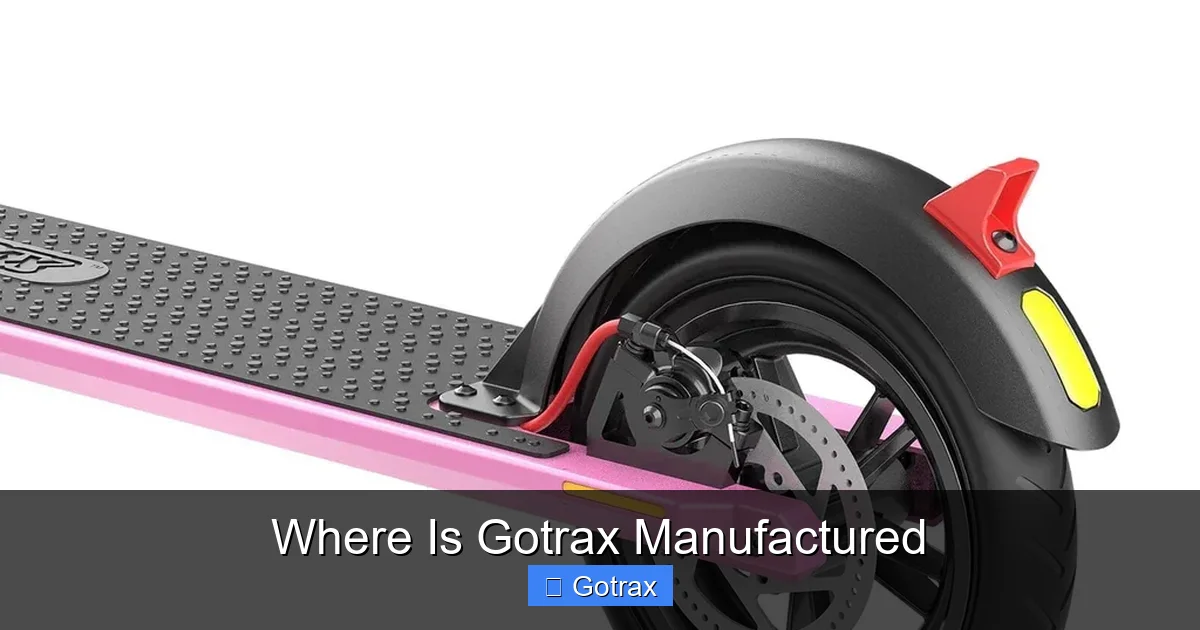
An original equipment manufacturer (OEM) is a company that produces parts or complete products that are marketed by another company. In Gotrax’s case, the OEM designs and builds the scooter based on Gotrax’s specifications, then ships it with the Gotrax branding.
This model has several benefits. First, it allows Gotrax to focus on what it does best: understanding customer needs, designing user-friendly products, and building a strong brand. The OEM handles the complex logistics of manufacturing, sourcing components, and managing labor.
Second, OEMs often have decades of experience in the industry. They know how to optimize production lines, reduce waste, and maintain consistent quality. This expertise translates into better-performing scooters at lower prices.
However, there are also challenges. Because Gotrax doesn’t own the factories, it has less direct control over production schedules, labor practices, and environmental impact. To address this, Gotrax works with third-party auditors to monitor factory conditions and ensure compliance with safety and ethical standards.
How Gotrax Chooses Its Manufacturing Partners
Not every factory can become a Gotrax partner. The company has a rigorous vetting process to ensure its OEMs meet strict criteria.
First, factories must have experience producing electric scooters or similar products. Gotrax looks for partners with a proven track record of quality and reliability.
Second, factories must pass inspections for safety, labor practices, and environmental compliance. Gotrax claims to follow international standards, including those set by the International Labour Organization (ILO) and local regulations.
Third, factories must be able to scale production quickly. Gotrax often sees spikes in demand, especially around holidays or back-to-school season. Its partners need to be able to ramp up output without sacrificing quality.
Finally, cost is a factor—but not the only one. Gotrax balances affordability with quality, ensuring that its scooters are both budget-friendly and durable.
The Design-to-Production Pipeline
So how does a Gotrax scooter go from concept to your doorstep? The process typically looks like this:
1. **Design and Prototyping:** Gotrax’s engineering team in California creates the initial design, including frame geometry, motor specs, and battery requirements. They build prototypes and test them for performance, safety, and durability.
2. **Supplier Sourcing:** Gotrax works with its OEMs to source components like motors, batteries, brakes, and tires. Many of these parts come from specialized suppliers in China.
3. **Manufacturing:** The OEM assembles the scooters in its factory. Workers follow detailed assembly instructions and quality checkpoints at each stage.
4. **Quality Control:** Each scooter is tested for speed, braking, battery life, and structural integrity. Defective units are repaired or discarded.
5. **Packaging and Shipping:** Scooters are packed in boxes with manuals, chargers, and tools. They’re then shipped to distribution centers in the U.S., Europe, and other markets.
6. **Retail and Delivery:** From distribution centers, scooters are sent to retailers like Amazon, Walmart, or Best Buy, or shipped directly to customers.
This entire process can take anywhere from 6 to 12 weeks, depending on demand and shipping logistics.
Quality Control and Safety Standards
One of the biggest concerns for consumers is whether scooters made overseas are safe and reliable. Gotrax addresses this through a multi-layered quality control system.
Pre-Production Testing
Before mass production begins, Gotrax conducts extensive testing on prototypes. This includes stress tests, drop tests, and real-world riding simulations. The goal is to catch design flaws early and ensure the scooter can handle everyday use.
In-Process Inspections
During assembly, workers perform checks at key stages. For example, after the motor is installed, it’s tested for power output and noise. After the battery is connected, it’s checked for charging and discharge rates.
Final Quality Assurance
Every scooter that rolls off the line undergoes a final inspection. This includes:
– Speed and range testing
– Brake performance checks
– Frame integrity assessment
– Battery safety verification
Only scooters that pass all tests are approved for shipping.
Third-Party Certifications
Gotrax scooters are certified to meet international safety standards, including:
– **UL 2271:** A safety standard for lithium-ion batteries used in light electric vehicles.
– **FCC Certification:** Ensures the scooter’s electronics don’t interfere with other devices.
– **CE Marking:** Indicates compliance with European health, safety, and environmental standards.
These certifications provide peace of mind that the scooter has been tested and approved by independent labs.
Customer Feedback and Continuous Improvement
Gotrax also uses customer feedback to improve its products. If a common issue arises—like a faulty charger or loose handlebars—the company works with its OEMs to address it in future batches. This feedback loop helps ensure that each new model is better than the last.
Shipping, Distribution, and Global Reach
Once scooters are manufactured and tested, they’re ready to hit the road. But getting them from a factory in Shenzhen to your front door involves a complex logistics network.
Export from China
Finished scooters are packed into shipping containers and transported by truck to major ports like Yantian or Shekou in Shenzhen. From there, they’re loaded onto cargo ships bound for the U.S., Europe, and other regions.
Shipping by sea is the most cost-effective method for large volumes, but it’s also the slowest—typically taking 3 to 6 weeks depending on the destination.
Import and Customs Clearance
When containers arrive at U.S. ports like Los Angeles or Long Beach, they go through customs inspection. Gotrax works with freight forwarders and customs brokers to ensure all documentation is in order and duties are paid.
Once cleared, scooters are transported by rail or truck to regional distribution centers.
Last-Mile Delivery
From distribution centers, scooters are shipped to retailers or directly to customers via courier services like FedEx, UPS, or Amazon Logistics. Gotrax offers various shipping options, including standard, expedited, and same-day delivery in select areas.
Environmental Impact of Global Shipping
While global manufacturing keeps costs low, it also has an environmental cost. Shipping scooters across the ocean generates carbon emissions. Gotrax has not publicly detailed its carbon footprint or sustainability initiatives, but many companies in the industry are exploring ways to offset emissions through renewable energy, eco-friendly packaging, and local assembly.
Ethical and Environmental Considerations
Manufacturing in China raises important questions about labor practices and environmental impact. Gotrax has not released detailed reports on its supply chain ethics, but it claims to follow industry best practices.
Labor Practices
Factories in China are subject to local labor laws, which regulate working hours, wages, and safety. However, enforcement can vary. Gotrax says it works only with factories that comply with ethical labor standards, but independent audits are not publicly available.
Environmental Sustainability
Electric scooters are generally more eco-friendly than gas-powered vehicles, but their production still has an environmental footprint. Lithium mining, battery disposal, and plastic use are all concerns.
Gotrax uses recyclable materials in its packaging and encourages customers to recycle old batteries. However, the company has not announced plans for a take-back or recycling program for end-of-life scooters.
Future Trends: Local Assembly and Reshoring
As supply chain disruptions and geopolitical tensions increase, some companies are exploring local assembly options. Gotrax could potentially assemble scooters in the U.S. using imported components, reducing shipping costs and delivery times.
While this would increase the final price, it could appeal to environmentally conscious consumers and those who prefer “Made in USA” products. For now, however, Gotrax remains committed to its global manufacturing model.
Conclusion: What You Need to Know About Gotrax Manufacturing
So, where is Gotrax manufactured? The answer is clear: primarily in China, with production centered in Shenzhen and surrounding industrial hubs. Gotrax partners with experienced OEMs to build its scooters, ensuring affordability, scalability, and quality.
While the company is headquartered in the U.S., its manufacturing strategy reflects the realities of global supply chains. By leveraging China’s manufacturing expertise, Gotrax can offer reliable electric scooters at prices that appeal to a broad audience.
That said, consumers should be aware of the trade-offs. Lower prices come with less transparency about labor and environmental practices. And while quality control is strong, the distance between factory and customer can lead to longer delivery times and higher carbon emissions.
Ultimately, Gotrax’s manufacturing model is a balancing act—between cost and quality, speed and sustainability, global reach and local responsibility. As the company grows, it may face increasing pressure to improve transparency and explore more sustainable production methods.
But for now, if you’re riding a Gotrax scooter, you’re riding a product of global collaboration—designed in California, built in China, and delivered to your doorstep with care.
Frequently Asked Questions
Are Gotrax scooters made in the USA?
No, Gotrax scooters are not made in the USA. While the company is headquartered in California, all manufacturing takes place in China. Gotrax designs its products in the U.S. but relies on overseas factories for production.
Where exactly in China are Gotrax scooters manufactured?
Most Gotrax scooters are manufactured in Shenzhen and other cities in Guangdong Province, China. These regions are known for their advanced electronics and electric vehicle manufacturing capabilities.
Does Gotrax own its own factories?
No, Gotrax does not own any factories. Instead, it partners with original equipment manufacturers (OEMs) that produce scooters based on Gotrax’s designs and specifications.
Are Gotrax scooters safe if they’re made in China?
Yes, Gotrax scooters undergo rigorous testing and meet international safety standards like UL 2271 and FCC certification. The company also performs quality control checks during and after production.
How long does it take for a Gotrax scooter to be manufactured and shipped?
The entire process—from design to delivery—typically takes 6 to 12 weeks. Manufacturing and quality control take a few weeks, while international shipping adds another 3 to 6 weeks depending on the destination.
Will Gotrax ever manufacture scooters in the U.S.?
There are no official plans yet, but as demand grows and supply chain challenges increase, Gotrax may explore local assembly options in the future to reduce costs and delivery times.