
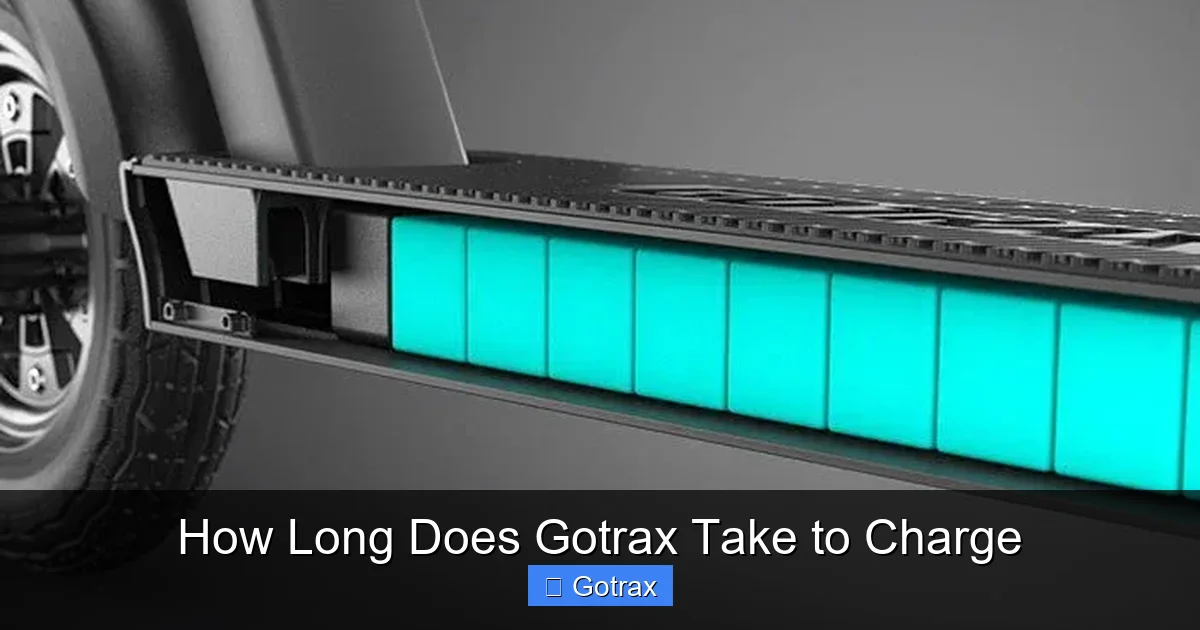
Gotrax electric scooters typically take 4 to 6 hours to fully charge, depending on the model and battery capacity. Charging time can vary based on battery age, temperature, and charger type, but following best practices ensures faster, safer charging.
If you’ve recently bought a Gotrax electric scooter—or you’re thinking about it—you’ve probably asked yourself: *How long does Gotrax take to charge?* It’s a fair question. After all, your scooter is only as good as its battery. Whether you’re commuting to work, zipping around campus, or just enjoying a weekend ride, knowing how long it takes to recharge can make or break your plans.
Gotrax has become one of the most popular names in the affordable electric scooter market. Known for their reliability, sleek design, and solid performance, Gotrax scooters are a favorite among students, urban commuters, and eco-conscious riders. But like any electric vehicle, they rely heavily on battery power—and that means charging is a regular part of ownership.
So, how long does it actually take? The short answer is: most Gotrax models take between 4 and 6 hours to charge fully. But as with most things in life, the full story is a bit more nuanced. Factors like battery size, charger type, ambient temperature, and even how old your battery is can all influence charging time. In this guide, we’ll break down everything you need to know about Gotrax charging times, how to optimize them, and how to keep your battery healthy for the long haul.
Key Takeaways
- Standard charging time: Most Gotrax scooters take 4 to 6 hours to charge from empty to full using the included charger.
- Battery capacity matters: Models with larger batteries (like the G4 or GXL V2) may take slightly longer than smaller ones (like the G2 or G3).
- Use the right charger: Always use the original Gotrax charger to avoid overheating, slow charging, or battery damage.
- Avoid extreme temperatures: Charging in very hot or cold environments can slow down the process and harm battery life.
- Partial charging is fine: You don’t need to charge to 100% every time—topping up between rides helps maintain battery health.
- Monitor charging progress: LED indicators on the scooter or charger show when charging is complete—don’t overcharge.
- Long-term storage tips: Store your Gotrax with a 50–70% charge and recharge every 2–3 months to preserve battery life.
📑 Table of Contents
Understanding Gotrax Battery Basics
Before we dive into charging times, it helps to understand what’s under the hood—or rather, under the deck—of your Gotrax scooter. Gotrax uses lithium-ion (Li-ion) batteries, which are lightweight, efficient, and capable of holding a charge for long periods. These batteries are similar to what you’d find in laptops, smartphones, and other portable electronics.
Lithium-ion batteries are favored in electric scooters because they offer a high energy density, meaning they can store a lot of power without being too heavy. They also have a low self-discharge rate, so your scooter won’t lose much charge just sitting in the garage. However, they do require careful handling to maintain performance and longevity.
Gotrax scooters typically come with batteries ranging from 250Wh to 360Wh, depending on the model. For example, the Gotrax G2 has a 250Wh battery, while the Gotrax G4 boasts a 360Wh battery. The higher the watt-hour (Wh) rating, the more energy the battery can store—and the longer it will take to charge.
Battery Chemistry and Charging
Lithium-ion batteries charge in stages. First, they go through a “constant current” phase, where the charger delivers a steady flow of electricity to quickly replenish the battery. Once the battery reaches about 80% capacity, it switches to a “constant voltage” phase, where the charger slows down to top off the remaining 20% safely. This two-stage process helps prevent overheating and extends battery life.
Because of this, you’ll notice that the first 80% of charging happens relatively quickly—often within 3 to 4 hours. The final 20% can take another hour or more, which is why a full charge typically takes 4 to 6 hours. This is normal and actually beneficial for the battery.
Charger Specifications
Gotrax includes a dedicated charger with every scooter. These chargers are designed specifically for Gotrax batteries and output around 2A (amps) at 36V or 42V, depending on the model. Using the correct charger is crucial. A charger with too high an output can overheat the battery, while one with too low an output will take much longer to charge.
For example, the Gotrax G3 uses a 36V 2A charger, while the G4 uses a 42V 2A charger. Always check your scooter’s manual or the label on the charger to confirm compatibility. Never substitute a third-party charger unless it’s explicitly approved by Gotrax.
How Long Does Each Gotrax Model Take to Charge?
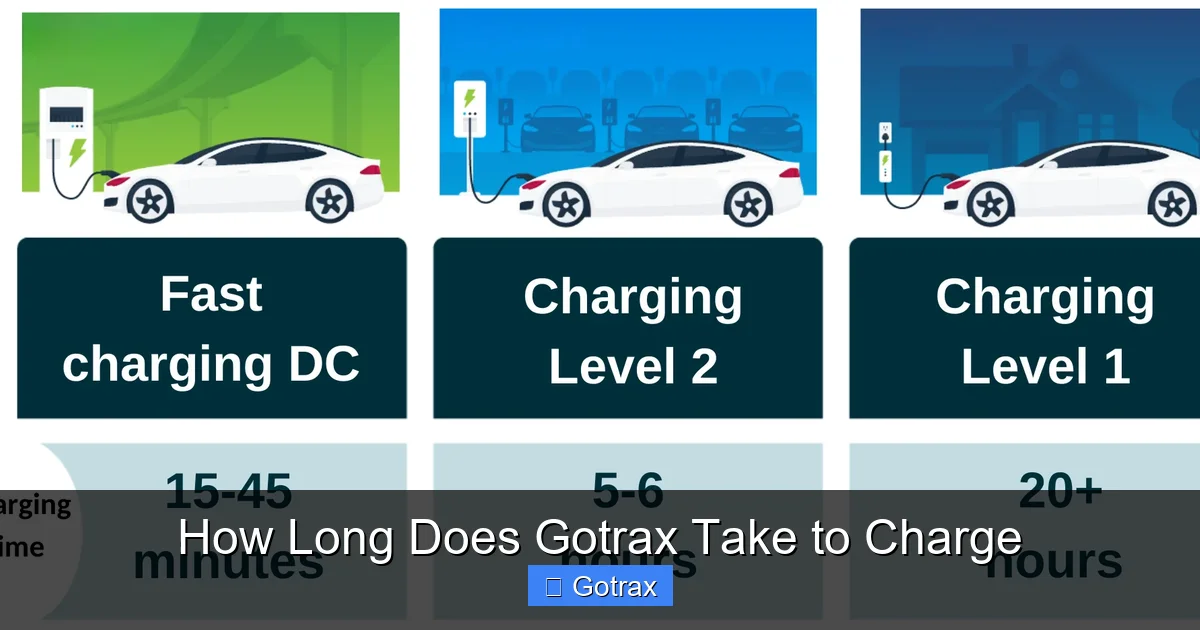
Visual guide about How Long Does Gotrax Take to Charge
Image source: octa.energy
Now that we’ve covered the basics, let’s get specific. Charging time varies slightly between Gotrax models due to differences in battery capacity and design. Below is a breakdown of average charging times for popular Gotrax scooters.
Gotrax G2
The Gotrax G2 is one of the brand’s most affordable and lightweight models. It features a 250Wh lithium-ion battery and a top speed of 15.5 mph. Thanks to its smaller battery, the G2 charges relatively quickly.
On average, the G2 takes about 4 to 5 hours to charge from empty to full. If you’re doing a partial charge—say, from 30% to 80%—you can expect it to take around 2 to 2.5 hours. This makes the G2 a great option for quick top-ups between short commutes or errands.
Gotrax G3
The Gotrax G3 is a step up from the G2, offering improved suspension, a brighter headlight, and a slightly larger 288Wh battery. It’s a favorite among students and urban riders who want a bit more comfort and range.
Charging the G3 takes approximately 5 to 6 hours for a full charge. The extra battery capacity means it takes a bit longer than the G2, but the difference is minimal. Many users report that they can charge it overnight and wake up to a fully powered scooter.
Gotrax G4
The Gotrax G4 is one of the brand’s premium models, featuring a 360Wh battery, dual suspension, and a top speed of 18 mph. It’s built for longer rides and rougher terrain, which means it has a larger battery to support that performance.
Because of its 360Wh battery, the G4 takes the longest to charge—typically 5.5 to 6.5 hours for a full charge. Some users have reported times closer to 7 hours if the battery was completely drained or if charging in cold conditions. Still, this is within normal range for a scooter of this size.
Gotrax GXL V2
The GXL V2 is another high-performance model, with a 360Wh battery similar to the G4. It offers a smooth ride, strong motor, and excellent build quality. Charging time is nearly identical to the G4—around 5.5 to 6.5 hours.
One thing to note: the GXL V2 comes with a slightly more powerful charger (42V 2A), which helps maintain efficient charging despite the larger battery. This is a good example of how charger specs can influence charging speed.
Gotrax XR and XR Elite
The XR and XR Elite are designed for longer commutes and more rugged use. Both feature 360Wh batteries and take about 6 to 7 hours to charge fully. The XR Elite includes additional features like a phone mount and upgraded tires, but the charging time remains similar to other 360Wh models.
Factors That Affect Charging Time

Visual guide about How Long Does Gotrax Take to Charge
Image source: rideonelectric.com
While the numbers above give you a good estimate, real-world charging times can vary. Several factors influence how long your Gotrax takes to charge. Understanding these can help you manage expectations and optimize your charging routine.
Battery Age and Health
Like all lithium-ion batteries, Gotrax batteries degrade over time. After 300 to 500 charge cycles, you may notice that your scooter doesn’t hold a charge as long—or that it takes longer to charge. This is normal wear and tear.
An older battery may take longer to reach full charge because its internal resistance increases. You might also see the charger switch to the constant voltage phase earlier, slowing down the process. If your scooter is more than a year or two old and charging seems unusually slow, it could be a sign that the battery is nearing the end of its life.
Ambient Temperature
Temperature plays a big role in battery performance—and charging is no exception. Lithium-ion batteries charge most efficiently at room temperature, around 68°F to 77°F (20°C to 25°C).
Charging in cold environments—below 50°F (10°C)—can significantly slow down the process. The battery’s chemical reactions slow in the cold, reducing its ability to accept a charge. In extreme cases, the scooter may not charge at all until it warms up.
On the flip side, charging in hot conditions—above 95°F (35°C)—can cause the battery to overheat. Most Gotrax scooters have built-in thermal protection that pauses charging if the battery gets too hot. This is a safety feature, but it means your scooter might stop charging temporarily on a hot summer day.
For best results, charge your Gotrax indoors or in a shaded, temperature-controlled area. Avoid leaving it in a hot car or out in the winter cold.
Charger Quality and Compatibility
Using the wrong charger is one of the most common mistakes Gotrax owners make. While it might be tempting to use a universal or third-party charger, doing so can lead to slow charging, overheating, or even battery damage.
Gotrax chargers are designed to deliver the exact voltage and current your scooter’s battery needs. A mismatched charger might not provide enough power (resulting in slow charging) or too much (risking overheating and fire).
Always use the original Gotrax charger that came with your scooter. If you’ve lost it, purchase a replacement directly from Gotrax or an authorized retailer. Check the label to ensure it matches your model’s specifications.
State of Charge When Plugging In
How much charge your battery has when you start charging also affects total time. If your scooter is at 50% battery, it will take roughly half the time to reach 100% compared to starting from empty.
For example, if a full charge takes 6 hours, going from 50% to 100% might take just 2.5 to 3 hours. This is why many riders prefer to “top off” their battery between rides instead of waiting for it to drain completely.
Power Source and Outlet Quality
Believe it or not, the outlet you plug into can make a difference. A weak or faulty outlet might not deliver consistent power, slowing down charging. Similarly, using an extension cord or power strip with low capacity can reduce the current reaching your charger.
For best results, plug your Gotrax charger directly into a wall outlet. Avoid daisy-chaining multiple devices on the same circuit, especially high-power ones like space heaters or microwaves.
Tips to Speed Up Charging and Maintain Battery Health
While you can’t drastically reduce the inherent charging time of your Gotrax scooter, there are several practical tips to make the process more efficient and extend your battery’s lifespan.
Charge at Room Temperature
As mentioned earlier, lithium-ion batteries perform best at moderate temperatures. If your scooter has been sitting in a cold garage or a hot car, let it sit indoors for 30 to 60 minutes before charging. This allows the battery to reach an optimal temperature.
Avoid Full Discharges
Lithium-ion batteries don’t need to be drained completely before recharging. In fact, frequent full discharges can stress the battery and shorten its lifespan. Try to recharge your scooter when it reaches 20–30% battery.
Many riders follow the “20–80 rule”: keep the battery between 20% and 80% for daily use. This reduces wear and helps maintain long-term capacity.
Use the Right Charger
We can’t stress this enough: always use the original Gotrax charger. It’s designed to work safely and efficiently with your scooter’s battery. Third-party chargers may seem like a bargain, but they can cause more problems than they solve.
Don’t Overcharge
Modern Gotrax scooters have built-in battery management systems (BMS) that prevent overcharging. Once the battery reaches 100%, the charger automatically stops supplying power. However, it’s still a good idea to unplug your scooter once it’s fully charged.
Leaving it plugged in for extended periods—especially overnight—can cause the battery to stay at 100% for too long, which may degrade it over time. Aim to unplug within 30 minutes of full charge.
Store Properly During Long Breaks
If you’re not using your Gotrax for a week or more—say, during winter or a vacation—don’t store it with a full or empty battery. Lithium-ion batteries degrade faster when stored at extreme charge levels.
For long-term storage, charge your scooter to about 50–70%, then store it in a cool, dry place. Check the battery every 2–3 months and top it off if it drops below 40%.
Keep the Charging Port Clean
Dust, dirt, and moisture can accumulate in the charging port, leading to poor connections and slow charging. Use a dry toothbrush or compressed air to gently clean the port every few months. Avoid using water or cleaning solutions.
Signs Your Gotrax Battery May Be Failing
Even with proper care, Gotrax batteries won’t last forever. Most lithium-ion batteries in electric scooters last between 2 to 4 years, depending on usage and maintenance. Here are some signs that your battery may be nearing the end of its life:
– **Longer charging times:** If your scooter suddenly takes much longer to charge than usual, it could indicate battery degradation.
– **Reduced range:** You notice you’re getting fewer miles per charge, even on flat terrain.
– **Battery drains quickly:** The scooter loses power faster than before, especially under load or at higher speeds.
– **Charger stops early:** The charger turns off or the battery indicator jumps from low to full too quickly.
– **Swelling or heat:** If the battery compartment feels warm to the touch or you notice any bulging, stop using the scooter immediately and contact Gotrax support.
If you experience any of these issues, it may be time to consider a battery replacement. Gotrax offers replacement batteries for most models, though installation may require some technical skill.
Conclusion
So, how long does Gotrax take to charge? The answer is: typically 4 to 6 hours, depending on the model, battery condition, and environmental factors. While you can’t speed up the process dramatically, following best practices—like using the right charger, avoiding extreme temperatures, and maintaining partial charge levels—can help keep your scooter ready to ride.
Gotrax scooters are designed for convenience and reliability, and understanding their charging needs is key to getting the most out of them. Whether you’re commuting daily or enjoying weekend adventures, a little knowledge goes a long way in keeping your rides smooth and your battery healthy.
Remember, your Gotrax is an investment. Treat it well, and it’ll take you miles—literally. Charge smart, ride often, and enjoy the freedom that comes with electric mobility.
Frequently Asked Questions
How long does it take to charge a Gotrax scooter?
Most Gotrax scooters take between 4 and 6 hours to charge fully from empty. Smaller models like the G2 may charge in as little as 4 hours, while larger ones like the G4 can take up to 6.5 hours.
Can I charge my Gotrax overnight?
Yes, you can safely charge your Gotrax overnight. The scooter has built-in protection to prevent overcharging, but it’s best to unplug it once fully charged to preserve battery health.
Why is my Gotrax taking longer to charge than usual?
Slow charging can be caused by a weak outlet, cold temperatures, an aging battery, or using the wrong charger. Check your setup and ensure you’re using the original Gotrax charger.
Is it bad to charge my Gotrax in the cold?
Charging in very cold temperatures (below 50°F) can slow down the process and damage the battery. Let the scooter warm up to room temperature before charging for best results.
Can I use a different charger for my Gotrax?
No, always use the original Gotrax charger. Third-party chargers may not match the required voltage and current, leading to slow charging or battery damage.
How often should I charge my Gotrax scooter?
You don’t need to charge after every ride. Topping up when the battery reaches 20–30% is ideal. Avoid letting it drop to 0% regularly to extend battery life.