
Riding a Gotrax scooter in the rain is not recommended due to limited water resistance and safety risks. While some models have splash protection, they are not waterproof and can suffer damage or cause accidents on wet surfaces.
Key Takeaways
- Gotrax scooters are not waterproof: Most models are rated IP54, meaning they resist light splashes but not heavy rain or puddles.
- Wet surfaces increase accident risk: Rain makes roads slippery, reducing tire grip and increasing stopping distance.
- Electrical components can be damaged: Water exposure may short-circuit the motor, battery, or control board.
- Battery life may degrade faster: Moisture and corrosion can shorten the lifespan of the battery and internal parts.
- Warranty may be voided: Riding in rain or submerging the scooter often voids the manufacturer’s warranty.
- Use protective gear if you must ride: Waterproof clothing, fenders, and lights improve safety in light rain.
- Post-ride drying is essential: Always dry your scooter thoroughly after any moisture exposure to prevent rust and damage.
📑 Table of Contents
- Can You Ride Gotrax Scooter in the Rain?
- Understanding Gotrax Water Resistance Ratings
- The Risks of Riding in the Rain
- When Is It Safe to Ride in Light Rain?
- How to Protect Your Gotrax Scooter from Water Damage
- Alternatives to Riding in the Rain
- Conclusion: Should You Ride Your Gotrax Scooter in the Rain?
Can You Ride Gotrax Scooter in the Rain?
So, it’s drizzling outside, and you’re wondering: “Can I ride my Gotrax scooter in the rain?” You’re not alone. Many Gotrax owners face this dilemma, especially during sudden downpours or rainy commutes. The short answer? It’s not a great idea—but it’s not always a hard “no,” either. It depends on the model, the intensity of the rain, and how careful you are.
Gotrax scooters are popular for their affordability, portability, and ease of use. Whether you’re zipping to work, running errands, or just cruising around the neighborhood, these electric scooters offer a fun and eco-friendly way to get around. But when the skies open up, things get tricky. While Gotrax designs its scooters to handle everyday conditions, they are not built for wet weather adventures. Most models come with an IP54 rating, which means they can handle light splashes—like a puddle splash or a quick drizzle—but they are far from waterproof.
Riding in the rain isn’t just about getting wet. It’s about safety, longevity, and performance. Water can damage sensitive electronics, reduce traction, and increase the risk of accidents. So before you grab your helmet and head out into a storm, let’s dive into what you need to know about riding your Gotrax scooter in wet conditions.
Understanding Gotrax Water Resistance Ratings
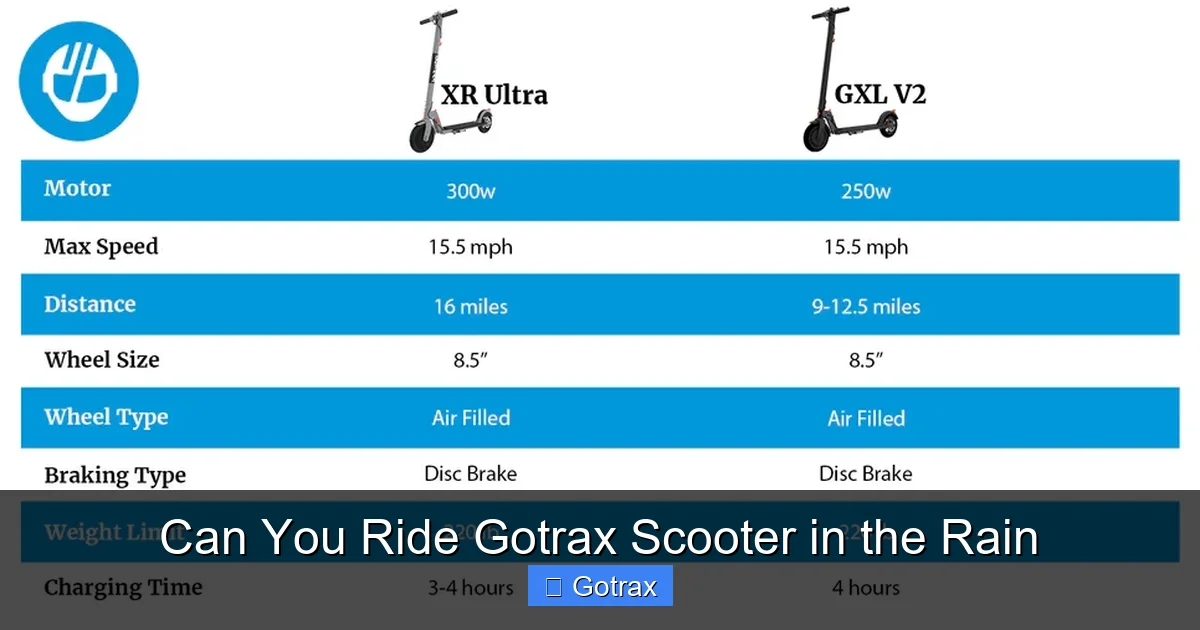
Visual guide about Can You Ride Gotrax Scooter in the Rain
Image source: cdn.shopify.com
To answer whether you can ride a Gotrax scooter in the rain, you first need to understand what “water resistance” really means. Gotrax doesn’t advertise its scooters as waterproof, and for good reason. Most models, including the popular GXL, G2, and G4, carry an IP54 rating. Let’s break that down.
The IP (Ingress Protection) rating system tells you how well a device resists dust and water. The first digit (5) means the scooter is protected against dust to some degree—enough to prevent harmful buildup. The second digit (4) means it’s protected against water splashes from any direction. That’s it. It does not mean the scooter can handle being ridden through heavy rain, submerged in puddles, or hosed down.
For example, if you’re caught in a light drizzle and your scooter gets a few drops on the deck or handlebars, it’s probably fine. But if you’re riding through a downpour, splashing through deep puddles, or getting water into the charging port or motor area, you’re asking for trouble.
Some newer models, like the Gotrax GXL V2, may offer slightly better protection, but they still fall short of true waterproofing. There’s no Gotrax scooter with an IP67 or IP68 rating, which would be needed for safe submersion or heavy rain exposure. So while your scooter might survive a brief shower, it’s not designed for wet weather riding.
What the IP54 Rating Really Means
Let’s get specific. An IP54 rating means your scooter can handle:
– Light rain or mist
– Splashes from puddles or wet roads
– Occasional water droplets on the deck or display
But it does NOT protect against:
– Heavy rain or storms
– Submersion in water (even shallow puddles)
– High-pressure water (like from a hose or jet spray)
– Water entering the battery compartment, motor, or charging port
Think of it like wearing a light windbreaker in a storm. It might keep you dry for a minute, but you’ll be soaked and uncomfortable soon after. The same goes for your scooter. A little moisture? Probably okay. A soaking? Risky.
Why Water Resistance Matters
You might be thinking, “It’s just a little rain. What’s the worst that could happen?” Plenty. Water can cause short circuits in the motor, corrode wiring, damage the battery, or ruin the display screen. Even if your scooter seems fine after a wet ride, internal damage might not show up until days or weeks later.
For instance, moisture can seep into the battery compartment and cause corrosion on the terminals. Over time, this reduces battery efficiency and can lead to sudden power loss. Similarly, water in the motor can cause it to overheat or fail prematurely. And if water gets into the control board, your scooter might stop responding altogether.
So while you might get away with a quick ride in light rain, repeated exposure increases the risk of costly repairs or even complete failure.
The Risks of Riding in the Rain
Now that we know Gotrax scooters aren’t built for rain, let’s talk about the real dangers of riding in wet conditions. It’s not just about the scooter—it’s about your safety too.
Reduced Traction and Slippery Surfaces
Rain makes everything slippery. Roads, sidewalks, bike lanes—even painted lines become slick when wet. Gotrax scooters have small, solid rubber tires that don’t grip as well as larger, treaded tires. On a dry road, they’re fine. On a wet one? Not so much.
Imagine you’re cruising down a hill and suddenly hit a patch of wet leaves or a puddle. Your tires lose grip, and you start to skid. Without proper traction, you could lose control, fall, or collide with something. Even gentle braking can become dangerous in the rain because stopping distances increase significantly.
For example, on a dry surface, your Gotrax might stop in 10 feet from 15 mph. On a wet road, that distance could double. That’s a big difference when you’re sharing the road with cars or pedestrians.
Increased Risk of Accidents
Wet conditions don’t just affect your scooter—they affect visibility, reaction time, and road hazards. Rain reduces visibility for both you and drivers. Puddles can hide potholes, cracks, or debris. And if you’re wearing a hood or helmet, your peripheral vision might be limited.
Plus, other road users might not see you as easily in the rain. Cars may not expect a scooter to appear suddenly from a side street, especially if you’re moving quickly. And if you’re riding at night in the rain, the combination of low light and wet surfaces makes accidents even more likely.
One Gotrax rider shared a story online about skidding on a wet metal manhole cover. The scooter slid out from under him, and he ended up with scrapes and a bruised ego. “I thought I was being careful,” he said, “but the rain made everything unpredictable.”
Electrical and Mechanical Damage
Even if you don’t crash, riding in the rain can damage your scooter’s internal components. Water is a conductor of electricity, and your scooter’s motor, battery, and wiring are all electrical. If water gets into the wrong places, it can cause short circuits, corrosion, or permanent damage.
For example, if rainwater seeps into the charging port, it could cause a short when you plug in the charger. Or if water gets into the motor housing, it might rust the internal parts and reduce performance. Over time, even small amounts of moisture can lead to bigger problems.
And don’t forget the battery. Lithium-ion batteries, like the ones in Gotrax scooters, don’t like moisture. Water exposure can cause the battery to degrade faster, reducing its lifespan and capacity. In extreme cases, it could even lead to a fire or explosion—though this is rare, it’s not impossible.
Voiding the Warranty
Here’s something many riders don’t realize: riding your Gotrax scooter in the rain could void your warranty. Gotrax’s warranty typically covers manufacturing defects but excludes damage caused by misuse, including water exposure.
If you take your scooter out in a storm and later find that the motor isn’t working, Gotrax might refuse to repair or replace it—even if it’s still under warranty. They’ll likely claim the damage was due to water ingress, which is considered user error.
So not only are you risking your safety and your scooter’s health, but you might also be throwing away your warranty protection. That’s a costly mistake.
When Is It Safe to Ride in Light Rain?
Okay, so riding in heavy rain is a no-go. But what about a light drizzle or a quick shower? Is there ever a safe time to ride your Gotrax scooter in the rain?
The answer is: maybe—but only under the right conditions.
Assessing the Weather Conditions
First, ask yourself: How heavy is the rain? If it’s a light mist or a brief shower, and the roads aren’t flooded, you might be able to ride safely—if you’re careful. But if it’s pouring, there’s thunder and lightning, or the roads are covered in puddles, it’s best to wait it out.
Also consider the temperature. Cold rain can make surfaces even more slippery and increase the risk of hypothermia if you’re riding for a long time. And if the rain is mixed with wind, it can make steering more difficult.
Preparing Your Scooter and Yourself
If you decide to ride in light rain, preparation is key. Here are some tips to reduce risk:
– **Check your tires:** Make sure they’re properly inflated and have no cracks or wear. Better traction means better control.
– **Install fenders:** Gotrax sells optional fenders that help block water and debris from splashing onto you and the scooter.
– **Use lights:** Turn on your front and rear lights to increase visibility. Rain reduces visibility, so being seen is crucial.
– **Wear waterproof gear:** A waterproof jacket, pants, and gloves will keep you dry and comfortable. Avoid cotton—it absorbs water and makes you colder.
– **Wear a helmet with a visor:** This protects your face from rain and improves visibility.
– **Avoid puddles and standing water:** These can hide hazards and increase the risk of water entering the scooter.
Riding Tips for Wet Conditions
If you’re riding in light rain, adjust your riding style:
– **Slow down:** Reduce your speed to improve control and reduce stopping distance.
– **Brake gently:** Sudden braking can cause skidding. Use both brakes evenly and gradually.
– **Avoid sharp turns:** Take corners slowly and lean gently to maintain balance.
– **Stay on smooth surfaces:** Avoid gravel, leaves, or metal grates, which are extra slippery when wet.
– **Keep both hands on the handlebars:** This gives you better control in case of a slip.
Remember: even in light rain, the risk is higher than in dry conditions. Only ride if it’s necessary and you feel confident in your ability to handle the scooter safely.
How to Protect Your Gotrax Scooter from Water Damage
Even if you avoid riding in the rain, your scooter might still get wet—from morning dew, a spilled drink, or a quick dash to the store in a drizzle. Here’s how to protect it and keep it running smoothly.
Drying Your Scooter After Exposure
If your scooter gets wet, dry it as soon as possible. Use a soft, dry cloth to wipe down the deck, handlebars, and display. Pay special attention to the charging port, battery compartment, and motor area.
Don’t use a hairdryer or heat source to dry it—this can damage components. Instead, let it air dry in a warm, dry place. If you suspect water got inside, leave the battery out and let everything dry for at least 24 hours before reassembling.
Using Protective Accessories
Invest in accessories that help protect your scooter:
– **Fenders:** Block water and mud from splashing onto the deck and motor.
– **Deck covers:** Waterproof covers can shield the scooter when parked outside.
– **Charging port covers:** These prevent water from entering the port when not in use.
– **Waterproof bags:** If you carry items on your scooter, use a waterproof bag to keep them dry.
Regular Maintenance Checks
After any wet exposure, inspect your scooter for signs of damage:
– Check for rust or corrosion on screws, bolts, and connectors.
– Listen for unusual noises from the motor or wheels.
– Test the brakes and lights to make sure they’re working properly.
– Monitor battery performance—if it drains faster than usual, moisture might be affecting it.
Regular maintenance can catch problems early and extend the life of your scooter.
Alternatives to Riding in the Rain
If the weather isn’t cooperating, consider these alternatives instead of risking a wet ride:
– **Wait it out:** If it’s just a short shower, wait until it passes.
– **Use public transit:** Buses, trains, or subways can get you where you need to go without exposure.
– **Call a rideshare:** Uber or Lyft might be worth the cost for a safe, dry trip.
– **Walk with an umbrella:** For short distances, walking might be safer and just as fast.
– **Reschedule your trip:** If it’s not urgent, plan to go out when the weather improves.
Your safety and your scooter’s longevity are more important than a few minutes of convenience.
Conclusion: Should You Ride Your Gotrax Scooter in the Rain?
So, can you ride a Gotrax scooter in the rain? Technically, yes—but it’s not recommended. Most Gotrax models are only splash-resistant, not waterproof, and riding in wet conditions increases the risk of accidents, electrical damage, and warranty voidance.
Light drizzle might be manageable with proper preparation and caution, but heavy rain, puddles, or storms are a hard no. The small convenience of riding in the rain isn’t worth the potential cost of repairs, injuries, or a dead scooter.
Instead, protect your investment by avoiding wet weather riding when possible, using protective gear, and drying your scooter thoroughly after any exposure. And if you must ride in light rain, slow down, stay visible, and avoid hazards.
At the end of the day, your Gotrax scooter is designed for fun, convenient travel—not for battling the elements. Treat it well, and it’ll keep you moving for years to come.
Frequently Asked Questions
Can I ride my Gotrax scooter in light rain?
You can ride in light drizzle if you’re careful, but it’s not recommended. Most Gotrax models are only splash-resistant (IP54), not waterproof. Reduce speed, avoid puddles, and dry the scooter afterward.
Will riding in the rain damage my Gotrax scooter?
Yes, it can. Water can damage the motor, battery, and electronics, leading to corrosion, short circuits, or failure. Even light exposure can cause long-term issues if not dried properly.
Does riding in the rain void the Gotrax warranty?
Yes, it can. Gotrax warranties typically exclude water damage. If moisture causes a malfunction, the company may refuse repairs or replacements, even under warranty.
What should I do if my Gotrax scooter gets wet?
Wipe it down immediately with a dry cloth, especially the charging port and battery area. Let it air dry completely before reassembling or charging. Avoid using heat to dry it.
Are there Gotrax models that are waterproof?
No, Gotrax does not make waterproof scooters. All current models have an IP54 rating, which protects against splashes but not submersion or heavy rain.
Can I install fenders to protect my scooter from rain?
Yes, Gotrax offers optional fenders that help block water and debris. While they won’t make your scooter waterproof, they reduce splash and protect key components.