
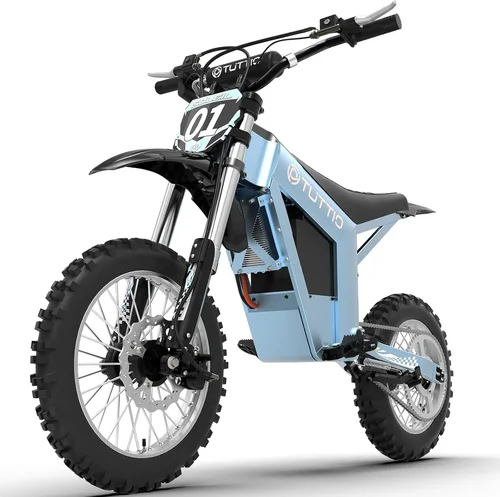
Electric dirt bikes—or eDirtbikes—have revolutionized off-road riding, offering silent power, instant torque, and eco-friendly performance without sacrificing the thrill of trail riding. Whether you’re a weekend warrior hitting local trails, a competitive rider training for enduro events, or a parent looking for a safe yet exciting ride for your teen, choosing the right eDirtbike can feel overwhelming. With rapid advancements in battery technology, motor efficiency, and frame design, the market is flooded with options ranging from budget-friendly beginner models to high-performance machines rivaling traditional gas-powered bikes. That’s why this comprehensive guide exists: to cut through the noise, clarify your priorities, and help you make a confident, informed decision.
In this expert-level buying guide, you’ll learn exactly what to look for when selecting an eDirtbike in 2026. We’ll break down the most critical factors—from motor power and battery life to suspension quality and brand reliability—so you understand how each component impacts real-world performance. You’ll also discover the different categories of eDirtbikes available today, common pitfalls to avoid, smart budgeting strategies, and insider tips to get the best value. By the end, you’ll have a clear roadmap tailored to your riding style, skill level, and financial goals—ensuring your next eDirtbike isn’t just fun, but truly built for you.
The eDirtbike market has matured significantly over the past few years. What once consisted of niche prototypes and underpowered toys now includes serious contenders from established motorcycle brands like KTM, Husqvarna, and Yamaha, as well as innovative startups such as Cake, Sur Ron, and Talaria. These machines are no longer just alternatives—they’re becoming preferred choices for many riders due to lower maintenance, quieter operation, and instant throttle response. As battery densities improve and charging infrastructure expands, range anxiety is fading fast. Whether you’re tackling rocky singletrack, cruising fire roads, or teaching a young rider the basics, there’s never been a better time to go electric. Let’s dive into what matters most.

What to Look for When Buying an eDirtbike
1. Motor Power & Torque Output
The heart of any eDirtbike is its electric motor. Unlike gas engines that build power gradually, electric motors deliver 100% of their torque instantly—meaning you get explosive acceleration the moment you twist the throttle. When evaluating motor specs, focus on two key numbers: peak power (measured in kilowatts or horsepower) and torque (measured in Newton-meters or lb-ft). For casual trail riding, a motor producing 5–10 kW (roughly 7–13 hp) is sufficient. However, if you plan on aggressive off-roading, hill climbing, or carrying extra weight (like gear or a passenger), aim for 15 kW or more. Torque is even more critical than raw horsepower for dirt riding—it determines how well your bike pulls from a stop, climbs steep inclines, and powers through mud or sand. Look for motors with at least 80–100 Nm of torque for serious performance. Also consider motor placement: mid-drive motors (mounted near the crankset) offer better weight distribution and leverage the bike’s gears, while hub motors (in the rear wheel) are simpler but can feel unbalanced on technical terrain.
2. Battery Capacity & Range
Battery technology is the biggest game-changer in eDirtbikes. Modern lithium-ion packs are lighter, more energy-dense, and longer-lasting than ever. Battery capacity is measured in watt-hours (Wh)—a 3,000Wh battery stores twice as much energy as a 1,500Wh one. Real-world range depends on terrain, rider weight, speed, and riding style, but as a rule of thumb: a 2,000–2,500Wh battery delivers 1–2 hours of moderate trail riding; 3,000–4,000Wh gives 2–3 hours; and premium models with 5,000Wh+ can last 3–4 hours or more. Always check whether the battery is removable—this allows you to carry a spare for extended adventures. Charging time is another factor: most bikes charge fully in 2–4 hours with a standard charger, but fast-charging options (30–60 minutes) are becoming more common on higher-end models. Be wary of brands that only quote “up to” range figures without specifying test conditions—realistic estimates matter more than marketing claims.
3. Build Quality & Frame Durability
An eDirtbike takes a beating. Rocks, roots, jumps, and crashes demand a robust chassis. Look for frames made from high-strength aluminum alloy (like 6061 or 7075) rather than cheaper steel or plastic composites. Weld quality, gusseting at stress points, and suspension mounting hardware all contribute to longevity. Pay attention to weight too: a heavier bike may feel more stable at speed but becomes exhausting on long climbs or when you need to pick it up after a fall. Ideal dry weights range from 80–120 lbs for adult models—anything over 130 lbs starts to compromise maneuverability. Suspension components are equally vital: quality forks and rear shocks (preferably adjustable for compression and rebound) absorb impacts and maintain traction. Brands like Öhlins, WP Suspension, and Marzocchi are trusted names in the motocross world—if they’re spec’d on an eDirtbike, you know it’s built to handle abuse.
4. Features & Functionality
Modern eDirtbikes come packed with tech that enhances both performance and usability. Regenerative braking, for example, recovers energy during deceleration and feeds it back into the battery—extending range slightly while reducing brake wear. Multiple ride modes (Eco, Trail, Sport, Race) let you tailor power delivery to conditions: Eco mode conserves battery for long rides, while Race mode unleashes full throttle for competition. Some models include Bluetooth connectivity, allowing you to monitor battery health, adjust settings, or track ride data via a smartphone app. LED lighting, USB charging ports, and digital dashboards add convenience without adding bulk. Don’t overlook practical details like footpeg size, handlebar ergonomics, and seat height—these affect comfort and control, especially on longer rides. For younger or newer riders, features like speed limiters, parental controls, and beginner-friendly throttle mapping are invaluable safety tools.
5. Brand Reputation & Ecosystem
Not all eDirtbike brands are created equal. Established players like KTM (with its Freeride E-XC) and Husqvarna (Vitpilen 701-based electric prototypes) bring decades of off-road expertise and global dealer networks. Startups like Sur Ron (Light Bee series) and Talaria (MX3, Sting) have earned cult followings for their performance-to-price ratio and active rider communities. Research how long the company has been in business, whether they offer firmware updates, and if they have a track record of supporting older models. A strong ecosystem matters: can you easily buy replacement parts, upgrade components, or find local technicians? Brands with active forums, YouTube channels, and third-party accessory markets (like custom seats, skid plates, or battery upgrades) tend to provide better long-term ownership experiences. Avoid obscure brands with no service history—your dream bike could become a paperweight if something breaks and no one can fix it.
6. Warranty & Customer Support
A solid warranty is your safety net. Most reputable eDirtbike manufacturers offer 1–2 years of coverage on the frame and motor, and 6–12 months on the battery (since batteries degrade over time). Look for warranties that cover both parts and labor, and check if they’re honored internationally if you travel. Read the fine print: some brands void warranties if you modify the bike or use non-approved chargers. Customer support responsiveness is just as important—can you reach a human quickly? Do they stock spare parts? Brands with U.S.-based service centers (like Cake in California or Zero Motorcycles in California) typically offer faster turnaround than those relying on overseas shipping. Before buying, search online for user reports about warranty claims: a smooth process speaks volumes about a company’s integrity.
7. Size, Weight & Ergonomics
Fit is everything on a dirt bike. A machine that’s too tall, too short, or too wide can ruin your ride—and even lead to injury. Seat height is the most obvious metric: beginners and shorter riders should look for sub-34-inch seat heights, while taller riders may prefer 35–37 inches. However, don’t rely solely on seat height—wheelbase, handlebar width, and footpeg position also affect control. Weight distribution plays a role too: a low center of gravity (thanks to a well-placed battery) makes the bike feel planted and easier to balance. Test rides are ideal, but if that’s not possible, check detailed geometry charts and watch video reviews showing riders of similar stature. For kids or teens, consider youth-specific models with scaled-down frames, reduced power output, and lower weight limits—they’re safer and more confidence-inspiring than adult bikes modified with restrictors.
8. User Reviews & Real-World Feedback
Specs on a spec sheet don’t tell the whole story. Real riders reveal truths that marketing materials hide: how the bike handles in deep mud, whether the battery swells after a year, if the throttle feels jerky in cold weather, or how easy it is to swap batteries in the field. Dive into forums like ThumperTalk, Reddit’s r/electricmotorcycles, or YouTube channels dedicated to eDirtbike reviews. Pay attention to patterns: if multiple users report the same issue (e.g., loose wiring harnesses or poor waterproofing), it’s likely a design flaw. Conversely, consistent praise for reliability, customer service, or fun factor is a strong endorsement. Also consider professional reviews from outlets like Cycle World, Dirt Rider, or Electrek—they often test bikes in controlled conditions and compare them head-to-head, giving you apples-to-apples insights you won’t find elsewhere.
Different Types of eDirtbikes
Common Buying Mistakes to Avoid
❌ Mistake: Prioritizing Price Over Performance Needs
Why it’s bad: Buying the cheapest eDirtbike available often leads to frustration. A $1,500 model might look tempting, but if it lacks sufficient torque, has a weak frame, or offers only 30 minutes of runtime, it won’t handle real trails—and could even be unsafe. Conversely, overspending on a race-spec bike when you only ride weekends wastes money and adds unnecessary complexity.
What to do instead: Match your budget to your actual usage. If you’re a beginner, a mid-tier trail bike ($3,500–$5,000) offers the best balance. Save up if needed—your safety and enjoyment depend on it.
❌ Mistake: Ignoring Battery Realism
Why it’s bad: Many brands advertise “up to 4 hours” of range, but that’s often under ideal conditions (flat terrain, light rider, Eco mode). In reality, aggressive riding cuts range by 30–50%. Running out of juice mid-trail means a long walk home.
What to do instead: Always assume 60–70% of the quoted range. If you need 2 hours of ride time, buy a bike rated for at least 3 hours. Consider models with swappable batteries or fast-charging capability.
❌ Mistake: Overlooking Service & Parts Availability
Why it’s bad: An eDirtbike with no local dealer support or scarce spare parts becomes expensive to maintain. Waiting weeks for a replacement controller or fork seal ruins your riding season.
What to do instead: Choose brands with established distribution networks. Check if your local motorcycle shop services electric bikes. Join owner forums to see how easy it is to source parts.
❌ Mistake: Skipping the Test Ride
Why it’s bad: eDirtbikes vary wildly in feel—some have spongy throttles, others jerk unexpectedly. What looks good on paper might feel awful in practice.
What to do instead: Attend demo days, rent before you buy, or purchase from retailers with generous return policies (e.g., 14–30 days). Your body knows best.
❌ Mistake: Neglecting Safety Gear Compatibility
Why it’s bad: Some eDirtbikes have unusual geometries that make wearing full motocross gear awkward. Others lack mounting points for lights or luggage.
What to do instead: Ensure the bike accommodates your helmet, boots, chest protector, and any accessories you plan to use. Check clearance for knee braces and elbow guards.
❌ Mistake: Assuming All “Electric” Bikes Are Equal
Why it’s bad: There’s a huge gap between toy-grade e-bikes and true eDirtbikes. Toys often use lead-acid batteries, plastic frames, and hub motors—unsuitable for off-road abuse.
What to do instead: Stick to brands that market specifically to off-road riders. Look for features like knobby tires, long-travel suspension, and water-resistant electronics.
❌ Mistake: Forgetting About Resale Value
Why it’s bad: Some eDirtbikes depreciate rapidly due to battery degradation or lack of demand. You could lose 50% of value in a year.
What to do instead: Research resale markets. Brands like Sur Ron and Talaria hold value well due to strong communities and aftermarket support. Avoid obscure models with no secondary market.
Budget Guidelines: How Much Should You Spend?
Entry-Level ($1,500–$3,500): This tier is ideal for beginners, kids, or casual riders sticking to mild trails. Expect modest power (5–8 kW), basic suspension, and batteries lasting 1–1.5 hours. Brands like Razor (for youth), Segway, and entry-level Sur Ron models fit here. While not built for extreme conditions, they’re perfect for learning basics and building confidence. Just don’t expect race-day performance.
Mid-Range ($3,500–$7,000): The sweet spot for most riders. These bikes offer 10–15 kW motors, quality suspension (often adjustable), removable 3,000–4,000Wh batteries, and robust aluminum frames. Models like the Sur Ron LBX Pro, Talaria MX3, and Cake Kalk OR dominate this space. They handle technical terrain, provide 2–3 hours of runtime, and come with decent warranties. Great for weekend warriors, trail explorers, and intermediate riders.
Premium ($7,000–$12,000): For serious enthusiasts and competitive riders. Think 15–20 kW peak power, race-spec suspension (Öhlins/WP), carbon fiber components, and 4,000–5,000Wh+ batteries. KTM Freeride E-XC, Husqvarna EE 5, and Zero FXE fall here. These machines rival gas bikes in performance, offer advanced electronics (ride modes, regen braking), and are built to endure seasons of hard use. Ideal for enduro racing, long adventures, or riders who demand the best.
Luxury ($12,000+): The bleeding edge of eDirtbike tech. Limited-edition models, custom builds, or prototypes with cutting-edge materials (titanium, magnesium), ultra-fast charging, and AI-assisted traction control. These are for collectors, pros, or those who want bragging rights. Realistically, most riders won’t need this tier—but if money is no object, you’ll get unmatched innovation and exclusivity.
Expert Tips for Getting the Best Deal
1. Buy During Off-Season (Late Fall to Early Spring): Most dealers discount eDirtbikes in winter when demand dips. You can save 10–20% compared to spring/summer peaks. Manufacturers also often release new models in Q1, clearing out previous-year inventory at reduced prices.
2. Shop Direct vs. Dealers: Buying directly from the manufacturer (e.g., Cake, Sur Ron) often includes perks like extended warranties, free shipping, or bundled accessories. However, local dealers may offer better service, test rides, and trade-in options. Compare both before deciding.
3. Look for Demo or Used Models: Many shops sell lightly used demo bikes at 15–30% off retail. These are typically well-maintained and still under warranty. Certified pre-owned programs (like Zero’s) add peace of mind.
4. Negotiate Extras, Not Just Price: If a seller won’t budge on price, ask for free upgrades: a second battery, fast charger, skid plate, or helmet. These add real value without hurting their margin.
5. Check Return & Exchange Policies: Ensure you have at least 14 days to return the bike if it doesn’t fit or perform as expected. Some online retailers offer 30-day trials—use them wisely.
6. Join Owner Groups Before Buying: Facebook groups, Discord servers, and Reddit communities often share exclusive discount codes, group buys, or flash sales. Members also warn about known issues or upcoming model refreshes.
7. Consider Total Cost of Ownership: Factor in maintenance, insurance, charging costs, and potential upgrades. eDirtbikes cost less to maintain than gas bikes (no oil changes, air filters, or exhaust systems), but battery replacement every 3–5 years can run $1,000–$2,000.
8. Verify Road-Legal Status If Needed: If you plan to ride on public roads or trails requiring registration, confirm the bike meets local regulations (headlight, taillight, VIN, emissions compliance). Some states require specific certifications.

Frequently Asked Questions
Q: How long do eDirtbike batteries last?
A: Most lithium-ion batteries retain 80% of their original capacity after 500–800 full charge cycles, which translates to roughly 3–5 years of regular use. Proper care—avoiding deep discharges, storing at 50% charge in cool temps, and using the correct charger—can extend lifespan significantly.
Q: Can I ride an eDirtbike in the rain?
A: Yes, but with caution. Reputable eDirtbikes are IP67-rated (dustproof and waterproof up to 1 meter for 30 minutes). However, avoid submerging the bike or riding through deep water. Always dry connectors and check for moisture after wet rides.
Q: Are eDirtbikes street-legal?
A: It depends on your location and the bike. Some models (like the Zero FXE or Cake Kalk&) are DOT-compliant and can be registered for road use. Others are strictly off-road. Check your state’s DMV requirements—you may need lights, mirrors, a horn, and a license plate.
Q: Do eDirtbikes require less maintenance than gas bikes?
A: Absolutely. No oil changes, spark plugs, carburetors, or exhaust systems. Main maintenance includes tire pressure, chain lubrication, brake pads, and suspension servicing. Battery health monitoring is the new “oil check.”
Q: What’s the difference between hub and mid-drive motors?
A: Hub motors are built into the wheel—simple, cheap, but heavier and less efficient on hills. Mid-drive motors sit near the pedals (or crank), use the bike’s gears, and offer better weight distribution and climbing ability. For serious off-roading, mid-drive is preferred.
Q: Can I upgrade my eDirtbike’s battery later?
A: Sometimes. Some brands (like Sur Ron) support aftermarket battery upgrades, while others lock you into proprietary systems. Check compatibility before buying if future-proofing matters to you.
Q: Are eDirtbikes safe for kids?
A: Yes, when properly matched to age and skill. Youth models have lower power limits, smaller frames, and safety features like speed governors. Always supervise young riders and enforce helmet use.
Q: How fast do eDirtbikes go?
A: Speeds vary widely. Entry-level models top out at 25–35 mph, while performance bikes can exceed 70 mph. Most trail-focused eDirtbikes cruise comfortably at 40–50 mph—plenty fast for off-road fun without excessive risk.
Q: What happens if the battery dies mid-ride?
A: Unlike gas bikes, you can’t “push-start” an eDirtbike. You’ll need to carry a spare battery, use a portable charger, or arrange a tow. Always plan routes with bailout options and monitor battery levels closely.
Q: Do I need a special license to ride an eDirtbike?
A: For off-road use on private land, usually not. But if riding on public trails or roads, requirements vary by state. Some classify eDirtbikes as motorcycles requiring a motorcycle endorsement; others treat them like mopeds. Check local laws.
Our Final Recommendations
Best for Budget-Conscious Buyers: Sur Ron Light Bee LBX Pro ($4,500)
A phenomenal value with 12 kW peak power, 3,200Wh removable battery, and race-inspired geometry. Handles everything from beginner trails to advanced singletrack. Huge aftermarket support keeps costs low long-term.
Best Overall Value: Talaria MX3 ($6,500)
Punching above its weight class, the MX3 delivers 18 kW of power, 4,200Wh battery, and WP suspension normally found on $10k+ bikes. Perfect blend of performance, range, and reliability for serious riders.
Best Premium Option: KTM Freeride E-XC ($11,999)
The gold standard for electric enduro. Built by a legendary motocross brand, it features a 16 kW motor, 5,300Wh battery, and championship-winning suspension. Ideal for competitive riders and long-distance explorers.
Best for Beginners: Cake Kalk OR ($7,500)
Swedish design meets user-friendly engineering. Smooth power delivery, intuitive controls, and excellent build quality make it perfect for new riders transitioning from gas or starting fresh. Also street-legal in many areas.
Best for Advanced Users: Zero FXE ($12,495)
Zero’s flagship dirt bike combines 27 hp, 144 lb-ft of torque, and 5.5 kWh of battery capacity with street-legal versatility. Advanced electronics, regenerative braking, and modular design cater to tech-savvy riders who want it all.
Conclusion: Making the Right Choice
Choosing the best eDirtbike isn’t just about specs—it’s about aligning technology with your lifestyle, skill level, and riding dreams. Whether you’re seeking silent stealth on forest trails, adrenaline-pumping speed on motocross tracks, or a safe introduction to off-roading for your child, the 2026 market offers unprecedented options. Remember: prioritize motor torque and battery realism over flashy marketing, invest in quality build and brand support, and always test before you commit. Avoid common pitfalls like underspending or ignoring service networks, and use seasonal timing to your advantage. Most importantly, ride within your limits and gear up properly—no bike can replace good judgment and protective equipment.
Your perfect eDirtbike is out there. With the insights from this guide, you’re now equipped to find it confidently. Don’t rush the process. Talk to owners, read real reviews, and envision your ideal ride. When the time comes, you’ll know exactly what to look for—and you’ll hit the trails with a machine that’s not just powerful, but truly yours. Now go charge up, twist the throttle, and feel the future of dirt riding.