
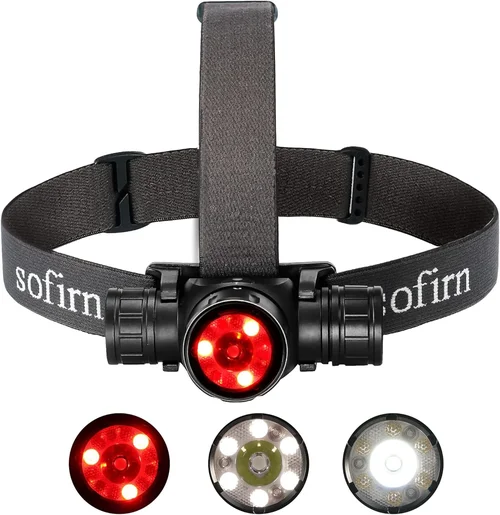
Hunting doesn’t always happen during daylight hours. Whether you’re tracking game at dawn, navigating dense woods under a new moon, or field-dressing an animal after sunset, reliable lighting is non-negotiable. A high-quality hunting headlight isn’t just a convenience—it’s a critical piece of gear that can mean the difference between a successful hunt and a dangerous misstep. In low-light conditions, your hands need to stay free for your rifle, bow, or calls, and fumbling with a handheld flashlight compromises both safety and stealth. That’s where a purpose-built hunting headlight comes in: hands-free, weather-resistant, and designed for the unique demands of the outdoors.
This comprehensive buying guide is crafted for hunters of all experience levels—from weekend enthusiasts to seasoned backcountry guides. Whether you’re gearing up for your first turkey hunt or prepping for a multi-day elk expedition in rugged terrain, we’ll walk you through everything you need to know to choose the right headlight. You’ll learn how to evaluate performance specs like lumens and beam distance, understand the importance of red or green light modes for preserving night vision, and avoid common pitfalls that lead to buyer’s remorse. We’ll also break down budget tiers, compare top models, and share expert tips to help you get the best value for your investment.
The market for hunting headlights has exploded in recent years, with dozens of brands offering everything from ultra-cheap no-name options to high-end tactical lights with military-grade durability. While this variety gives you more choices, it also makes decision fatigue real. Some lights claim “1000 lumens” but die after 30 minutes. Others are waterproof in name only. And many lack the subtle features—like adjustable straps or silent switches—that matter most when you’re deep in the field. Our goal is to cut through the noise and give you a clear, actionable roadmap so you can buy with confidence, knowing your headlight will perform when it counts.

What to Look for When Buying a Hunting Headlight
1. Brightness & Light Output (Lumens)
Brightness is the most obvious spec, but it’s also one of the most misunderstood. Measured in lumens, this number tells you how much total light the headlight emits. However, more lumens don’t always mean better performance—especially for hunting. A light that’s too bright can spook game, ruin your night vision, or create harsh glare in foggy or rainy conditions.
For most hunting scenarios, a range of 200–600 lumens is ideal. Lower settings (50–100 lumens) are perfect for close-range tasks like reading maps or checking your gear, while higher outputs (500+ lumens) are useful for long-distance spotting or signaling. Look for models with multiple brightness levels so you can adjust based on the situation. Also, pay attention to beam type: a focused spotlight is great for scanning distant terrain, while a flood beam illuminates a wider area close to you—ideal for camp chores or tracking blood trails.
2. Runtime & Battery Life
A headlight is useless if it dies when you need it most. Runtime—how long the light lasts on a single charge or set of batteries—is just as important as brightness. Most quality hunting headlights offer 4–12 hours of continuous use on high settings, with much longer life on low modes.
Consider your typical hunt duration. A weekend trip might require 8–10 hours of total light use, so look for a model that delivers at least that much. Rechargeable lithium-ion batteries are convenient and eco-friendly, but they can lose charge over time if not used regularly. Disposable alkaline or lithium batteries (like AA or AAA) are reliable in cold weather and easy to replace in the field, but they add ongoing cost and waste.
Some premium models feature USB-C charging, battery level indicators, or even solar compatibility—great for extended backcountry trips. Others include spare battery packs or dual-power options (e.g., rechargeable main battery + backup AAA slot). Always check whether the runtime specs are based on high or low settings, as manufacturers often quote the longest possible time.
3. Beam Color & Night Vision Preservation
This is where many hunters go wrong. White light is fine for general tasks, but it obliterates your natural night vision within seconds. Once your eyes adapt to darkness, a bright white beam can leave you temporarily blind—a serious safety risk when navigating uneven terrain or handling firearms.
That’s why red and green LEDs are essential for serious hunters. Red light preserves night vision best and is less likely to spook wildlife, making it ideal for stalking, calling, or reading GPS units in the dark. Green light is slightly brighter and better for illuminating blood trails or reading detailed maps, though it may be more visible to animals at close range.
Look for headlights with dedicated red/green modes—not just a filter you slide over the lens. Integrated colored LEDs provide consistent output and won’t fall off during movement. Some advanced models even offer amber or blue modes for specific applications like tracking scat or enhancing contrast in snow.
4. Build Quality & Durability
Hunting environments are brutal. Your headlight will face rain, snow, dust, drops, and temperature swings from -10°F to 90°F. A flimsy plastic housing or weak strap won’t cut it. Prioritize lights made from aircraft-grade aluminum or reinforced polymer, with IPX ratings indicating water and dust resistance.
An IPX4 rating means splash-proof—fine for light rain. IPX7 means it can survive immersion in water up to 1 meter deep for 30 minutes—ideal for stream crossings or sudden downpours. For extreme conditions, look for IPX8 (submersible beyond 1 meter) or MIL-STD-810G certification, which tests for shock, vibration, and temperature extremes.
The headband should be silicone-lined, adjustable, and breathable. Avoid cheap elastic straps that stretch out or slip. Also, check the pivot mechanism: can you tilt the light up/down without it flopping? Is the switch recessed to prevent accidental activation in your pack?
5. Weight & Comfort
You’ll be wearing this light for hours—sometimes overnight. Even a few extra ounces can cause neck strain or headaches on long hikes. Aim for a headlight under 6 ounces (including batteries). Lighter models often use smaller batteries, which may reduce runtime, so find a balance.
Comfort also depends on weight distribution. A well-designed light positions the battery pack at the back of the headband, counterbalancing the front LED module. This prevents the front from pulling down and keeps the light stable during movement. Padded straps and moisture-wicking materials help too, especially in humid or sweaty conditions.
Try it on if possible. Does it feel secure when you jog or duck under branches? Does the strap dig into your temples? Comfort is subjective, so don’t skip the fit test.
6. Switch Type & Ease of Use
In the dark, with cold, gloved hands, you need a switch that’s intuitive and reliable. Push-button switches are common but can be stiff or slippery. Toggle switches offer distinct on/off positions but may accidentally flip. The best hunting headlights use tactile, rubberized buttons with positive feedback—you’ll feel and hear the click even with gloves on.
Look for models with lockout modes to prevent accidental activation in your pack. Some feature dual switches: one for white light, one for red/green. Others have a “momentary on” function—press and hold for quick bursts without leaving the light on.
Avoid lights with complex menus or touch-sensitive controls. Simplicity is key when you’re focused on the hunt, not navigating settings.
7. Mounting & Adjustability
Your headlight should stay put—no matter how rough the terrain. Most use elastic or silicone headbands, but some offer helmet-compatible mounts or clip-on options for hats or packs. If you wear a beanie or balaclava, ensure the strap can accommodate extra layers.
Adjustability matters too. Can you angle the beam precisely? Some lights offer 90°+ tilt, letting you shine light down while keeping your head level. Others have swivel joints for fine-tuning. For bowhunters or tree-stand users, a light that points straight ahead without tilting your head is a game-changer.
8. Brand Reputation & Warranty
Not all headlight brands are created equal. Established outdoor companies like Black Diamond, Petzl, Nitecore, and Streamlight have decades of field testing and customer feedback behind them. They invest in R&D, use quality components, and stand by their products.
Check the warranty: a 1-year limited warranty is standard, but some offer 2–5 years or even lifetime coverage. Read the fine print—does it cover battery failure? Water damage? Accidental drops? Also, consider customer service: can you easily get replacements or repairs? Brands with U.S.-based support are usually faster and more responsive.
Avoid no-name brands sold exclusively on Amazon with vague descriptions and fake reviews. If the price seems too good to be true, it probably is.
Different Types of Hunting Headlights

Common Buying Mistakes to Avoid
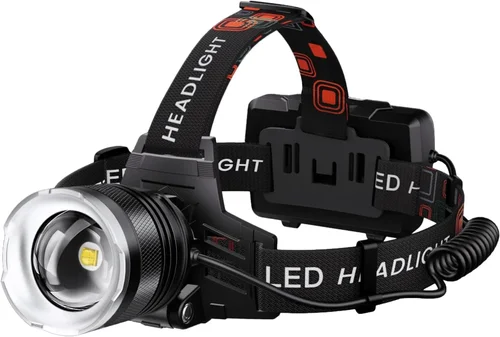
❌ Mistake: Prioritizing Max Lumens Over Practicality
Why it’s bad: A 2000-lumen blast might look impressive on paper, but it drains batteries fast, creates blinding glare, and scares off skittish game like deer or coyotes. Most hunting tasks don’t require more than 300–500 lumens.
What to do instead: Focus on balanced output with multiple brightness levels. Choose a light that offers 100–600 lumens with smooth transitions between modes.
❌ Mistake: Ignoring Red/Green Light Options
Why it’s bad: Using only white light destroys your night vision and increases the risk of detection. You’ll struggle to see details in shadows and may miss subtle signs like tracks or droppings.
What to do instead: Always choose a headlight with dedicated red and green LEDs. Use red for general night movement and green for tracking or map reading.
❌ Mistake: Choosing Based on Price Alone
Why it’s bad: Cheap headlights often use low-quality LEDs, weak straps, and non-waterproof seals. They fail when you need them most—like during a rainy night hike back to camp.
What to do instead: Invest in a mid-range model ($50–$100) from a reputable brand. The extra cost pays off in reliability and longevity.
❌ Mistake: Overlooking Battery Type and Runtime
Why it’s bad: A light that dies after 2 hours on high won’t last through a full night hunt. Rechargeable batteries can lose charge if stored too long, leaving you stranded.
What to do instead: Check real-world runtime specs and consider hybrid models that accept both rechargeable and disposable batteries. Carry spares for critical trips.
❌ Mistake: Skipping the Fit Test
Why it’s bad: An ill-fitting headlight slips, causes discomfort, or shifts during movement—distracting you from the hunt and potentially causing injury.
What to do instead: Try the headlight on with your typical hunting gear (hat, glasses, layers). Ensure it stays secure during head tilts and light jogging.
❌ Mistake: Assuming All “Waterproof” Lights Are Equal
Why it’s bad: IPX4 only protects against splashes—not submersion or heavy rain. Many lights claim “waterproof” without certification.
What to do instead: Look for IPX7 or higher ratings. Test the seal by submerging it briefly (if the manual allows) before your trip.
❌ Mistake: Buying Without Checking Warranty and Support
Why it’s bad: If your light fails in the field, you’re out of luck with no-name brands that offer no customer service or replacement parts.
What to do instead: Choose brands with at least a 2-year warranty and responsive U.S.-based support. Read user forums for real-world reliability reports.
Budget Guidelines: How Much Should You Spend?
Entry-Level ($20–$40): These are basic LED headlights suitable for casual use or short evening hunts. Expect 100–300 lumens, limited runtime (2–4 hours on high), and minimal weather resistance (IPX4). Brands like Energizer or Coast offer decent entry models, but avoid ultra-cheap generics. Great for beginners or as a backup light.
Mid-Range ($50–$90): This is the sweet spot for most hunters. You’ll get 300–600 lumens, multiple color modes (red/green), IPX7 waterproofing, and 6–10 hours of runtime. Rechargeable options with USB-C are common here. Models from Black Diamond, Petzl, and Nitecore dominate this tier—excellent balance of performance, durability, and value.
Premium ($100–$150): Designed for serious hunters and professionals. Expect military-grade materials, advanced optics (spot/flood combos), 8–12+ hour runtimes, and features like battery indicators, lockout modes, and helmet compatibility. Brands like Streamlight and Fenix offer top-tier reliability. Ideal for multi-day expeditions or extreme conditions.
Luxury ($160+): These are niche, high-performance lights with cutting-edge tech—think solar charging, Bluetooth connectivity, or integrated GPS beacons. While impressive, they’re often overkill for typical hunting. Only consider if you’re a guide, survivalist, or tech enthusiast who values innovation over practicality.
Expert Tips for Getting the Best Deal
1. Buy During Off-Season Sales: Retailers discount hunting gear heavily in late winter and early spring (February–April). You can save 20–40% on last year’s models without sacrificing quality.
2. Shop at Specialty Outdoor Retailers: Stores like REI, Cabela’s, or Bass Pro Shops often have knowledgeable staff and in-person demos. Online-only sellers may offer lower prices, but you can’t test the fit or switch feel.
3. Check Manufacturer Refurbished Programs: Brands like Petzl and Black Diamond sell certified refurbished headlights at 30–50% off. These come with full warranties and are indistinguishable from new units.
4. Bundle with Other Gear: Some retailers offer discounts when you buy a headlight with a backpack, headlamp case, or extra batteries. Look for “hunting starter kits” during holiday sales.
5. Read Verified Purchase Reviews: Focus on reviews from hunters, not campers or runners. Look for comments about real-world performance: “held up in a snowstorm,” “red light preserved my night vision,” or “died after 3 hours on high.”
6. Test Before You Commit: If buying in-store, ask to try the headlight with your gloves on. Can you operate the switch? Does the beam angle suit your needs? Comfort is key.
7. Understand Return Policies: Ensure the retailer allows returns if the light doesn’t meet expectations. Some online sellers have restocking fees or short windows (7 days), so read the fine print.
8. Consider Total Cost of Ownership: A $60 rechargeable light may cost more upfront but saves money over time vs. a $30 model requiring constant battery replacements. Factor in battery costs for disposables.

Frequently Asked Questions
Q: Can I use a regular camping headlight for hunting?
A: Technically yes, but most camping lights lack red/green modes and aren’t built for stealth or rugged terrain. Hunting-specific models offer better night vision preservation, quieter switches, and more durable construction.
Q: How important is IPX rating for hunting?
A: Very important. Rain, snow, and stream crossings are common. IPX7 (submersible to 1m) is the minimum recommended for serious hunters. IPX4 is only suitable for dry conditions.
Q: Do I really need red and green lights?
A: Absolutely. Red preserves night vision and is less visible to animals. Green enhances contrast for tracking blood or reading maps. Both are essential tools for ethical, effective hunting.
Q: Are rechargeable headlights reliable in cold weather?
A: Lithium-ion batteries lose capacity below freezing, but many modern lights use cold-optimized cells. For sub-zero hunts, carry spare disposables or choose a hybrid model.
Q: How do I clean and maintain my headlight?
A: Wipe the lens with a microfiber cloth. Rinse the housing with fresh water if exposed to salt or mud. Store in a dry place with batteries removed (if disposable). Avoid harsh chemicals.
Q: Can I wear glasses with a headlight?
A: Yes—most designs accommodate glasses. Look for low-profile models or those with adjustable straps that sit above or below your frames comfortably.
Q: What’s the difference between spot and flood beams?
A: Spot beams focus light in a narrow, long-range beam (great for scanning). Flood beams spread light widely for close-up tasks. Many lights offer both via dual LEDs or adjustable optics.
Q: How long should a hunting headlight last?
A: With proper care, a quality headlight should last 5–10 years. LED lifespan is typically 50,000+ hours, so failure is usually due to physical damage or battery issues—not the light itself.
Q: Is it worth buying a headlight with a battery indicator?
A: Yes, especially for multi-day trips. A low-battery warning prevents unexpected failure. Some models even flash when power is critically low.
Q: Can I use my headlight for other outdoor activities?
A: Definitely. Hunting headlights work great for camping, hiking, fishing, or emergency preparedness. Their durability and hands-free design make them versatile.
Our Final Recommendations
Best for Budget-Conscious Buyers: Black Diamond Spot 400-R – At around $50, it offers 400 lumens, red LED, IPX8 waterproofing, and 8-hour runtime. Reliable, lightweight, and from a trusted brand.
Best Overall Value: Nitecore HC65 – Packed with features: 1000 lumens (adjustable), red/green/white LEDs, USB-C rechargeable, IPX8 rating, and 12-hour runtime. Priced under $90, it’s a hunter’s dream.
Best Premium Option: Streamlight Siege Headlamp – Built like a tank with 650 lumens, dual-fuel capability (rechargeable + AA), and a 5-year warranty. Ideal for extreme conditions and professional use.
Best for Beginners: Petzl Tikkina – Simple, intuitive, and affordable ($35). Offers 300 lumens, 6-hour runtime, and a comfortable fit. Perfect for first-time hunters.
Best for Advanced Users: Fenix HM65R – Dual LEDs (spot + flood), 1400 lumens max, red/green modes, magnetic charging, and a 10,000mAh power bank function. For tech-savvy hunters who demand versatility.
Conclusion: Making the Right Choice
Choosing the right hunting headlight isn’t just about brightness—it’s about matching the tool to your specific needs, environment, and hunting style. A well-chosen light enhances safety, preserves stealth, and extends your operational window into the critical low-light hours when game is most active. By focusing on key factors like runtime, beam color, durability, and comfort, you’ll avoid common pitfalls and invest in gear that performs reliably season after season.
Remember, the best headlight is the one you’ll actually wear and trust in the field. Don’t let flashy specs or low prices cloud your judgment. Prioritize functionality, build quality, and real-world performance. Whether you’re a weekend warrior or a backcountry veteran, the right light will become one of your most indispensable hunting companions.
Take the time to assess your typical hunt scenarios, read honest reviews, and test the fit. And when in doubt, lean toward mid-range models from reputable brands—they offer the best balance of performance, durability, and value. Your next successful hunt might just depend on the beam of light on your forehead.