
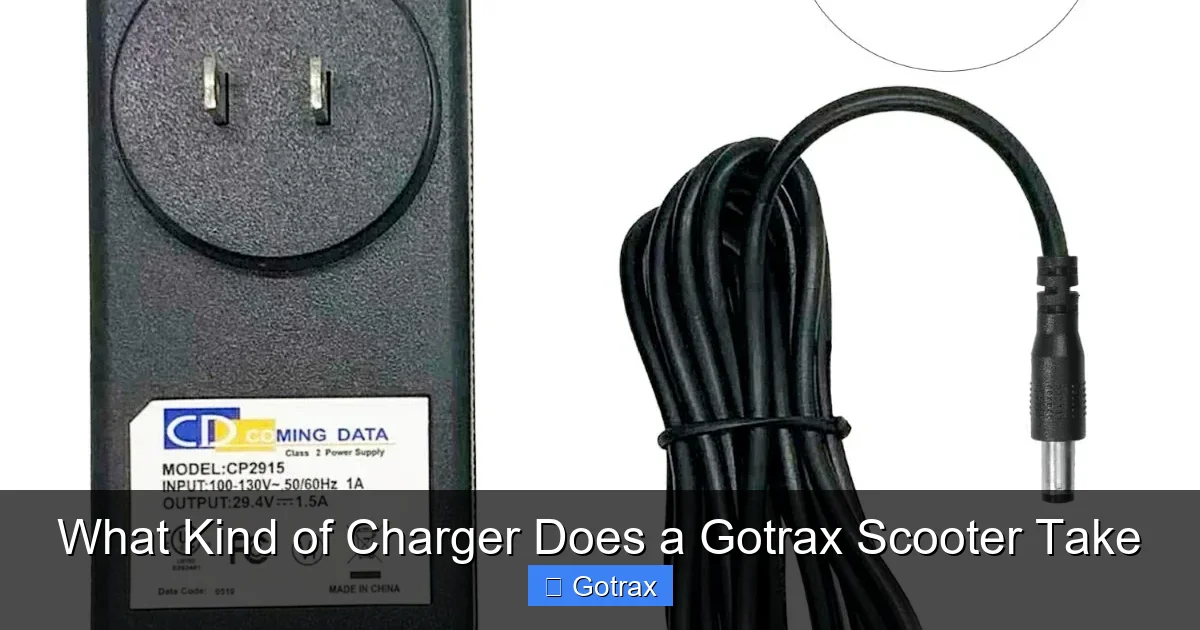
Gotrax scooters use specific chargers designed for their battery voltage and connector type—typically 36V or 48V lithium-ion systems with a 3-pin or 4-pin DC plug. Using the correct charger ensures safe, efficient charging and extends battery life.
If you’ve recently bought a Gotrax electric scooter—or you’re thinking about it—you’ve probably asked yourself: *What kind of charger does a Gotrax scooter take?* It’s a great question, and one that every new (and even experienced) rider should know the answer to. After all, your scooter is only as good as its battery, and the battery is only as reliable as the charger you use to power it up.
Gotrax has become one of the most popular brands in the affordable electric scooter market, offering models like the GXL, G2, G3, G4, and the newer GMAX series. These scooters are known for their sleek design, solid build quality, and user-friendly features. But like any electric vehicle, they rely on a specific charging system to function properly. Using the wrong charger isn’t just inconvenient—it can damage your scooter’s battery, reduce its lifespan, or even create a safety hazard.
In this guide, we’ll walk you through everything you need to know about Gotrax scooter chargers. From identifying the right plug type and voltage to understanding compatibility across models, we’ll cover it all. Whether you’ve lost your original charger, need a backup, or are just curious about how these scooters charge, this article will give you the clarity and confidence to keep your Gotrax running smoothly.
Key Takeaways
- Gotrax scooters use proprietary chargers matched to their battery voltage (commonly 36V or 48V) and connector design.
- Charger compatibility varies by model—always check your scooter’s manual or label to confirm the correct input specs.
- Using the wrong charger can damage the battery or pose fire risks—never substitute with generic or third-party chargers unless verified safe.
- Look for a 3-pin or 4-pin DC barrel connector—most Gotrax models use one of these two plug types.
- Charge in a cool, dry place and avoid overcharging to maintain battery health and safety.
- Original Gotrax chargers are recommended for optimal performance and warranty compliance.
- Third-party chargers may work if specs match exactly, but quality and safety aren’t guaranteed—proceed with caution.
📑 Table of Contents
Understanding Gotrax Scooter Battery Systems
Before we dive into the specifics of chargers, it’s important to understand the battery systems that power Gotrax scooters. Most Gotrax models use lithium-ion (Li-ion) batteries, which are lightweight, energy-dense, and rechargeable. These batteries are typically housed in the deck of the scooter and connected to a charging port—usually located near the rear wheel or under a protective cover.
The voltage of the battery is a key factor in determining what kind of charger your scooter needs. Gotrax scooters generally fall into two voltage categories: 36V and 48V. For example, the Gotrax GXL V2 and G2 models usually run on a 36V battery, while higher-performance models like the G4 and GMAX often use a 48V system. The voltage directly affects the charger’s output—so a 36V scooter must use a 36V charger, and a 48V scooter needs a 48V charger. Mixing voltages can lead to undercharging, overheating, or permanent battery damage.
Another important detail is the battery’s capacity, measured in ampere-hours (Ah). A higher Ah rating means longer ride time, but it also means longer charging times. Most Gotrax scooters have batteries ranging from 7.5Ah to 12Ah. While the charger doesn’t need to match the Ah exactly, it should be compatible with the battery’s charging profile to avoid stressing the cells.
Lithium-ion batteries are sensitive to overcharging and extreme temperatures. That’s why Gotrax designs its chargers with built-in protection circuits that monitor voltage, current, and temperature. These safeguards help prevent overcharging, short circuits, and thermal runaway—a dangerous condition where the battery overheats and can catch fire.
Why Battery Chemistry Matters
Lithium-ion batteries are the gold standard for electric scooters because they offer a great balance of energy density, weight, and recharge cycles. Unlike older battery types like lead-acid or nickel-cadmium, Li-ion batteries don’t suffer from the “memory effect,” meaning you don’t have to fully discharge them before recharging. You can plug in your Gotrax after a short ride without harming the battery.
However, Li-ion batteries do degrade over time. Factors like frequent fast charging, exposure to high heat, and using incompatible chargers can accelerate this degradation. That’s why using the correct charger isn’t just about convenience—it’s about preserving your scooter’s performance and longevity.
How to Identify Your Scooter’s Battery Specs
If you’re unsure about your scooter’s battery voltage or capacity, there are a few ways to find out. First, check the label on the scooter itself—usually located near the charging port or under the deck. It will list the battery voltage (e.g., 36V) and sometimes the Ah rating. You can also refer to the user manual that came with your scooter, or visit the Gotrax website and look up your model’s specifications.
For example, the Gotrax G2 has a 36V 7.5Ah battery, while the G4 features a 48V 10Ah battery. Knowing these numbers will help you choose the right charger and avoid compatibility issues.
Gotrax Charger Types and Connector Designs
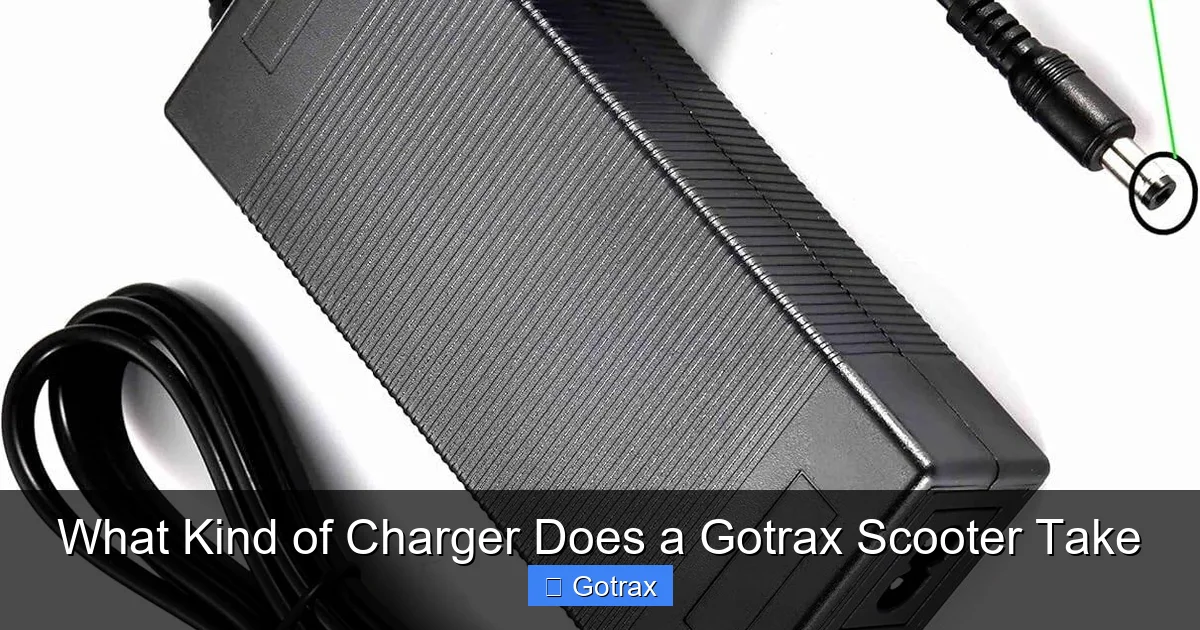
Visual guide about What Kind of Charger Does a Gotrax Scooter Take
Image source: microless.com
Now that we’ve covered the basics of Gotrax battery systems, let’s talk about the chargers themselves. Gotrax scooters use proprietary chargers that are specifically designed to match their battery voltage and charging requirements. These chargers are not universal—meaning a charger for a 36V model won’t work with a 48V scooter, and vice versa.
The most common charger types for Gotrax scooters feature a DC barrel connector with either 3 pins or 4 pins. The plug is inserted into the charging port on the scooter, and the other end connects to a standard wall outlet via an AC adapter. The charger converts AC power from the wall into the DC power needed to charge the battery.
3-Pin vs. 4-Pin Connectors
The difference between 3-pin and 4-pin connectors lies in the number of electrical contacts inside the plug. A 3-pin connector typically has two power pins (positive and negative) and one communication or grounding pin. A 4-pin connector adds an extra pin, often used for battery management system (BMS) communication or temperature monitoring.
Most entry-level Gotrax models, like the G2 and GXL, use a 3-pin charger. Higher-end models, such as the G4 and GMAX, often use a 4-pin connector to support more advanced charging protocols. While the physical size of the plug may look similar, the internal wiring and pin configuration are different—so you can’t swap chargers between models without risking damage.
Charger Output Specifications
Gotrax chargers are labeled with their output voltage and current. For example, a typical 36V Gotrax charger might output 42V at 2A, while a 48V charger could output 54.6V at 2A. These numbers might seem confusing at first, but they’re based on how lithium-ion batteries charge.
Lithium-ion batteries charge in two stages: constant current (CC) and constant voltage (CV). During the CC stage, the charger delivers a steady current (like 2A) to quickly fill the battery. Once the battery reaches a certain voltage (e.g., 42V for a 36V pack), the charger switches to CV mode, maintaining that voltage while gradually reducing the current until the battery is fully charged.
The charger’s output voltage is slightly higher than the battery’s nominal voltage to ensure efficient charging. That’s why a 36V battery uses a 42V charger—it’s normal and necessary.
How to Identify a Genuine Gotrax Charger
When shopping for a replacement charger, it’s important to make sure you’re getting a genuine Gotrax product. Counterfeit or low-quality chargers may look similar but lack the safety features and precise output needed for your scooter.
A real Gotrax charger will have the Gotrax logo, model number, and output specifications clearly printed on the casing. It should also feel solid and well-built, with a sturdy plug and cable. If the charger feels flimsy, has blurry printing, or doesn’t include safety certifications (like UL or CE), it’s likely a fake.
You can purchase authentic Gotrax chargers directly from the Gotrax website or authorized retailers like Amazon, Best Buy, or Walmart. Always verify the seller’s reputation and check for customer reviews before buying.
Gotrax Model-Specific Charger Compatibility
One of the most common questions Gotrax owners ask is: *Can I use the same charger for different models?* The short answer is: it depends. While some Gotrax scooters share similar charging systems, others require unique chargers due to differences in voltage, connector type, or charging protocols.
Let’s break it down by popular models:
Gotrax G2 and GXL V2
The Gotrax G2 and GXL V2 are among the brand’s most popular entry-level scooters. Both use a 36V lithium-ion battery and typically come with a 3-pin DC charger that outputs 42V at 2A. These chargers are often interchangeable between the two models, but it’s still best to use the one that came with your scooter to ensure compatibility.
The charging port on these models is usually located near the rear fender, protected by a rubber flap. The charger plug fits snugly into the port, and a small LED light on the charger turns red while charging and green when complete.
Gotrax G3 and G4
The Gotrax G3 and G4 are mid-range models with more power and longer range. The G3 uses a 36V battery, while the G4 steps up to a 48V system. As a result, their chargers are not compatible with each other.
The G3 uses a 3-pin 42V/2A charger, similar to the G2. The G4, however, requires a 4-pin charger that outputs 54.6V at 2A. The 4-pin design allows for better communication with the battery’s BMS, ensuring safer and more efficient charging.
If you own both a G3 and a G4, you’ll need two separate chargers. Mixing them could damage the battery or charger.
Gotrax GMAX and XR Series
The Gotrax GMAX and XR series are designed for higher performance, with 48V batteries and more powerful motors. These models use 4-pin chargers with 54.6V output, similar to the G4. However, some GMAX models may have slightly different charging profiles or connector orientations, so always check the model number before substituting chargers.
For example, the GMAX Ultra uses a 48V 12Ah battery and requires a charger that can handle the higher capacity. While the voltage matches other 48V models, the charging current and timing may differ, so using the correct charger is essential.
Older Models and Discontinued Chargers
If you own an older Gotrax scooter, such as the original GXL or G1, you may find that replacement chargers are harder to come by. These models often used slightly different connectors or charging systems that aren’t compatible with newer scooters.
In such cases, your best bet is to contact Gotrax customer support or search for refurbished or used chargers from reputable sellers. Be cautious with third-party options—many are not designed for older battery configurations and could cause problems.
Can You Use Third-Party or Universal Chargers?
With so many universal and third-party chargers on the market, it’s tempting to think you can save money by buying a generic alternative. But when it comes to Gotrax scooters, this can be a risky move.
The Risks of Using Non-Gotrax Chargers
Third-party chargers may claim to be compatible with Gotrax scooters, but they often lack the precise voltage regulation, current control, and safety features of genuine Gotrax chargers. Even small deviations in output can stress the battery, leading to reduced performance, shorter lifespan, or even fire hazards.
For example, a charger that outputs 44V instead of 42V might seem close enough, but it can overcharge a 36V battery, causing it to overheat. Similarly, a charger with too high a current (like 3A instead of 2A) can force too much power into the battery too quickly, damaging the cells.
Additionally, many third-party chargers don’t include proper BMS communication, which means they can’t monitor the battery’s state of charge or temperature. This increases the risk of overcharging, especially if you leave the scooter plugged in overnight.
When Third-Party Chargers Might Work
There are rare cases where a third-party charger could work—if it matches the exact voltage, current, connector type, and charging profile of your Gotrax model. For example, some high-quality universal Li-ion chargers allow you to set the output voltage and current manually. If you’re experienced with electronics and understand battery charging principles, you might be able to configure such a charger safely.
However, for most users, the risks outweigh the benefits. The cost of a genuine Gotrax charger is relatively low compared to the potential damage a faulty charger could cause. Plus, using an unauthorized charger may void your warranty.
Tips for Safe Charging Practices
Whether you’re using an original or third-party charger, follow these best practices to keep your scooter safe:
– Always charge in a cool, dry place away from flammable materials.
– Don’t charge immediately after a long ride—let the battery cool down first.
– Avoid charging in extreme temperatures (below 32°F or above 104°F).
– Unplug the charger once the battery is fully charged (usually indicated by a green light).
– Inspect the charger and cable regularly for damage, such as fraying or exposed wires.
– Never leave your scooter charging unattended for long periods.
How to Charge Your Gotrax Scooter Properly
Charging your Gotrax scooter correctly is just as important as using the right charger. Proper charging habits can extend battery life, improve performance, and reduce the risk of accidents.
Step-by-Step Charging Guide
1. **Locate the charging port** – Usually found near the rear wheel, under a rubber flap.
2. **Plug in the charger** – Insert the DC plug into the port until it clicks or fits snugly.
3. **Connect to power** – Plug the AC adapter into a wall outlet.
4. **Monitor the LED** – The charger’s light should turn red, indicating charging has started.
5. **Wait for completion** – Most Gotrax scooters take 4–6 hours to fully charge.
6. **Unplug when done** – Once the light turns green, disconnect the charger.
How Long Does It Take to Charge?
Charging time depends on the battery capacity and charger output. For example:
– A 36V 7.5Ah battery with a 2A charger takes about 4 hours.
– A 48V 10Ah battery with a 2A charger takes about 5 hours.
– A 48V 12Ah battery may take up to 6 hours.
Charging time can vary based on the battery’s current state of charge. A nearly empty battery will charge faster initially and slow down as it approaches full capacity.
Can You Overcharge a Gotrax Scooter?
Modern Gotrax scooters are designed with overcharge protection, so leaving them plugged in after they’re fully charged is generally safe. The charger will stop delivering current once the battery reaches 100%, and the BMS will prevent overcharging.
However, it’s still a good habit to unplug the charger once charging is complete. Prolonged connection can cause minor heat buildup and may reduce long-term battery health.
Troubleshooting Common Charging Issues
Even with the right charger, you might run into charging problems from time to time. Here are some common issues and how to fix them.
Charger Light Won’t Turn On
If the charger’s LED doesn’t light up when plugged in, check the following:
– Is the wall outlet working? Try plugging in another device.
– Is the charger cable damaged? Look for cuts or bends.
– Is the plug fully inserted into the scooter? Sometimes it needs a firm push.
If none of these work, the charger may be faulty and need replacement.
Battery Won’t Charge
If the scooter doesn’t charge at all, the issue could be:
– A dead battery that needs a jump start (rare but possible).
– A faulty charging port on the scooter.
– A damaged battery or BMS.
Try using a different charger first. If that doesn’t work, contact Gotrax support.
Charger Gets Hot
Some heat is normal during charging, but if the charger becomes too hot to touch, unplug it immediately. This could indicate a short circuit, overloaded circuit, or defective charger.
Slow Charging
If your scooter takes much longer to charge than usual, the battery may be aging or the charger may be underpowered. Check the charger’s output rating and compare it to the scooter’s requirements.
Conclusion
Knowing what kind of charger a Gotrax scooter takes is essential for safe, efficient, and long-lasting performance. Most Gotrax models use either a 36V or 48V lithium-ion battery with a 3-pin or 4-pin DC charger. Using the correct charger ensures your battery charges properly, avoids damage, and maintains its lifespan.
While third-party chargers may seem like a cost-saving option, they often lack the precision and safety features of genuine Gotrax chargers. For peace of mind and optimal performance, stick with the original charger or a verified replacement from an authorized seller.
By understanding your scooter’s battery system, following proper charging practices, and troubleshooting issues early, you can enjoy many miles of smooth, reliable rides. Whether you’re commuting to work, cruising around the neighborhood, or exploring new trails, your Gotrax scooter will be ready when you are—thanks to the right charger.
Frequently Asked Questions
Can I use a different brand’s charger for my Gotrax scooter?
No, it’s not recommended. Other brands’ chargers may have different voltage, current, or connector types that can damage your Gotrax battery or pose safety risks. Always use a charger designed for your specific model.
What happens if I use a 48V charger on a 36V Gotrax scooter?
Using a higher-voltage charger can overcharge the battery, causing overheating, swelling, or even fire. The battery and charger must match in voltage to function safely.
How do I know if my Gotrax charger is working?
When plugged in, the charger’s LED should light up—red while charging, green when complete. If it doesn’t light up or the scooter doesn’t charge, the charger may be faulty.
Can I charge my Gotrax scooter overnight?
Yes, but it’s better to unplug once fully charged. While modern chargers have overcharge protection, prolonged connection can generate heat and reduce battery longevity.
Where can I buy a replacement Gotrax charger?
You can purchase genuine Gotrax chargers from the official Gotrax website, Amazon, Best Buy, or other authorized retailers. Always verify the model compatibility before buying.
Is it safe to charge my Gotrax scooter in the rain?
No, never charge your scooter in wet conditions. Water can damage the charger, cause short circuits, or create electrical hazards. Always charge in a dry, indoor location.