
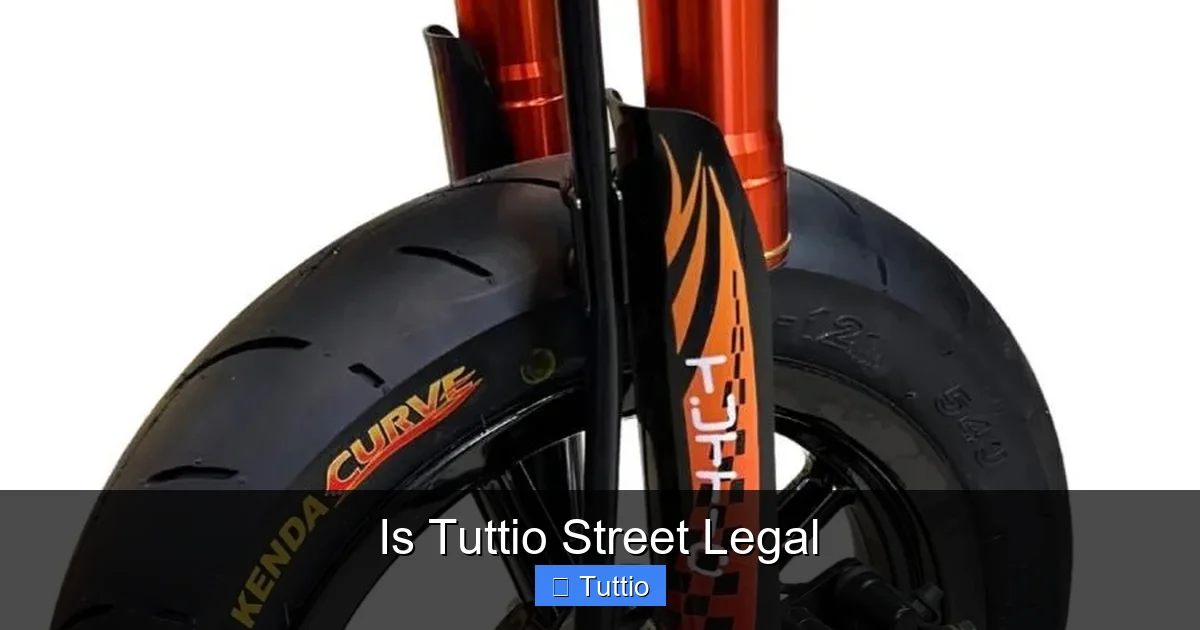
Wondering if your Tuttio scooter is street legal? The answer depends on your location, model specifications, and local laws. While some Tuttio models meet requirements for road use, others are designed only for private property or off-road riding—making it crucial to verify before hitting the pavement.
If you’ve recently bought—or are eyeing—a sleek Tuttio electric scooter, you’re probably excited to zip around town with style and efficiency. But before you hit the sidewalks or streets, there’s one critical question you need answered: *Is Tuttio street legal?* The short answer? It depends. And that “it depends” hinges on a mix of factors including your scooter’s model, where you live, and how you plan to use it.
Tuttio is a brand known for producing stylish, high-performance electric scooters that blend urban mobility with modern design. From compact commuter models to more rugged off-road variants, their lineup appeals to a wide range of riders. But not all scooters are created equal when it comes to road legality. While some Tuttio models come equipped with the necessary safety features and certifications to legally ride on public roads, others are strictly intended for private property, parks, or off-road trails. Riding an illegal scooter on the street can result in fines, confiscation of your vehicle, or even legal trouble—so it’s essential to do your homework.
In this guide, we’ll walk you through everything you need to know about Tuttio street legality. We’ll break down the key requirements for road use, explain how local laws impact your ride, and give you practical tips to ensure you’re riding safely and legally. Whether you’re commuting to work, running errands, or just enjoying a weekend cruise, understanding the rules will help you avoid headaches and keep you on the right side of the law.
Key Takeaways
- Street legality varies by model: Not all Tuttio scooters are built to meet road safety standards—check your specific model’s specs.
- Local laws matter most: Regulations differ widely between states, countries, and even cities—always consult your local DMV or transportation authority.
- Required equipment includes lights, mirrors, and brakes: To be street legal, a scooter must have functional headlights, taillights, turn signals, mirrors, and reliable braking systems.
- Speed and engine size restrictions apply: Many jurisdictions limit motorized scooters to under 30 mph and engines below 50cc for road use.
- Registration and insurance may be required: Some areas demand registration, license plates, and liability insurance—even for small electric scooters.
- Off-road models are not street legal: Tuttio scooters labeled as “off-road only” lack necessary certifications and should never be ridden on public roads.
- Modifications can void legality: Altering speed limits or removing safety features may make your Tuttio illegal—even if it was originally compliant.
📑 Table of Contents
- Understanding What Makes a Scooter Street Legal
- Tuttio Scooter Models and Their Legal Status
- Required Equipment for Street Legal Tuttio Scooters
- Registration, Licensing, and Insurance Requirements
- How to Verify Your Tuttio’s Street Legality
- Practical Tips for Riding Your Tuttio Legally and Safely
- Conclusion
Understanding What Makes a Scooter Street Legal
Before we dive into Tuttio-specific details, let’s clarify what “street legal” actually means. In simple terms, a street-legal vehicle is one that meets the safety, equipment, and performance standards set by government authorities for use on public roads. For motorized scooters—including electric ones like Tuttio models—this typically involves a checklist of mandatory features and compliance with local traffic laws.
At the core of street legality are safety standards. These aren’t arbitrary rules—they’re designed to protect both the rider and others on the road. For example, headlights and taillights ensure visibility during low-light conditions, while turn signals communicate your intentions to drivers and pedestrians. Brakes must be responsive enough to stop the scooter safely within a reasonable distance, and mirrors help you monitor traffic behind you. Without these essentials, a scooter simply isn’t safe—or legal—for public road use.
Another key factor is speed and power. Most jurisdictions classify motorized scooters based on their maximum speed and motor output. In the U.S., for instance, the Department of Transportation (DOT) defines a “low-speed electric bicycle” or “e-scooter” as one that travels no faster than 20 mph on level ground and has a motor under 750 watts (about 1 horsepower). Scooters that exceed these limits may be classified as motorcycles, requiring additional licensing, registration, and insurance.
Federal vs. State Regulations in the U.S.
In the United States, scooter regulations are a patchwork of federal guidelines and state-specific laws. At the federal level, the National Highway Traffic Safety Administration (NHTSA) sets baseline standards for vehicle safety, but enforcement and additional requirements fall to individual states. This means that a Tuttio scooter that’s street legal in California might not be in Texas—or vice versa.
For example, California allows electric scooters on roads with speed limits up to 25 mph, provided they have working lights, brakes, and a maximum speed of 20 mph. Riders must be at least 16 years old and wear a helmet. In contrast, New York City permits e-scooters only in certain zones and requires registration with the Department of Transportation. Meanwhile, some rural areas have no specific e-scooter laws at all, leaving riders in a legal gray area.
This patchwork system means you can’t assume your Tuttio is street legal just because it works fine in your neighbor’s town. Always check your state’s Department of Motor Vehicles (DMV) website or contact local law enforcement for the most accurate and up-to-date information.
International Considerations
If you’re outside the U.S., the rules can be even more varied. In the European Union, for example, electric scooters are generally allowed on public roads if they meet CE certification standards and have a maximum speed of 25 km/h (about 15.5 mph). Countries like Germany and the Netherlands have embraced e-scooters as part of their sustainable transportation networks, with dedicated lanes and clear regulations.
In contrast, some countries—like Japan—require all motorized scooters to be registered, insured, and operated by licensed riders, regardless of speed. Australia has a mix of state laws, with some regions allowing e-scooters on bike paths and others banning them entirely from public roads.
The bottom line? No matter where you live, don’t assume your Tuttio is automatically street legal. Research your local laws thoroughly, and when in doubt, consult an official source.
Tuttio Scooter Models and Their Legal Status
Now that we’ve covered the general rules, let’s look at Tuttio’s product lineup and how each model stacks up in terms of street legality. Tuttio offers a range of electric scooters, from lightweight urban commuters to more powerful off-road machines. Understanding the differences between these models is key to determining whether your scooter can legally ride on public roads.
Urban Commuter Models
Tuttio’s urban-focused scooters—such as the Tuttio City and Tuttio Urban—are designed with city riding in mind. These models typically feature a top speed of around 15–20 mph, compact frames, and integrated lighting systems. Many come equipped with front and rear LED lights, reflectors, and responsive disc or regenerative brakes.
Because they’re built for city use, these scooters are more likely to meet the basic requirements for street legality in many jurisdictions. However, even among commuter models, there can be variations. For example, some versions may lack turn signals or mirrors—features that are mandatory in certain states or countries. Always check the exact specifications of your model before assuming it’s road-ready.
One practical tip: If your Tuttio commuter scooter doesn’t come with turn signals, consider adding aftermarket ones. Many riders install small, battery-powered LED indicators that clip onto the handlebars or frame. While this won’t automatically make your scooter legal everywhere, it can help you meet safety standards in areas that require them.
Off-Road and High-Performance Models
On the other end of the spectrum are Tuttio’s off-road and high-performance scooters, such as the Tuttio Trail or Tuttio Max. These models are built for rugged terrain, with larger wheels, suspension systems, and more powerful motors that can exceed 30 mph. While they’re incredibly fun and capable on dirt trails or private property, they’re generally not street legal.
Why? Because they often lack essential road safety features like headlights, taillights, turn signals, and mirrors. Additionally, their higher speeds and motor outputs may classify them as motorcycles under local laws, requiring registration, licensing, and insurance. Even if you modify an off-road Tuttio to include lights and brakes, it may still fail to meet certification standards for road use.
If you own an off-road Tuttio, it’s best to reserve it for private land, designated trails, or closed courses. Riding it on public roads not only risks legal penalties but also poses serious safety hazards due to its design and speed capabilities.
Hybrid and Convertible Models
Some Tuttio scooters blur the line between commuter and off-road use. These hybrid models may offer adjustable suspension, dual-purpose tires, and moderate top speeds. While they’re more versatile, their legal status still depends on specific features and local laws.
For instance, a Tuttio hybrid with a 25 mph top speed, working lights, and brakes might be street legal in a country that allows e-scooters up to 25 km/h—but illegal in a U.S. state that caps speeds at 20 mph. Always verify the exact specs and compare them to your local regulations.
Required Equipment for Street Legal Tuttio Scooters
Even if your Tuttio model is designed for road use, it must be properly equipped to be street legal. Missing just one required component can make your scooter illegal—and unsafe. Here’s a breakdown of the essential equipment you’ll need.
Lights and Reflectors
Visibility is critical when riding on public roads, especially at night or in poor weather. A street-legal Tuttio must have:
– A white front headlight visible from at least 500 feet
– A red rear taillight and brake light
– Amber turn signals (front and rear)
– Reflectors on the wheels, pedals, and sides
Many modern Tuttio models come with built-in LED lighting, but older or off-road versions may not. If your scooter lacks these features, you’ll need to install them before riding on the street. Look for DOT-approved lights and ensure they’re securely mounted and functional.
Braking System
Reliable brakes are non-negotiable. A street-legal scooter must have at least one braking system—preferably two (front and rear)—that can bring the scooter to a complete stop within a safe distance. Most Tuttio models use disc brakes or regenerative braking systems, which are generally effective.
However, brake performance can degrade over time due to wear or moisture. Regular maintenance—like checking brake pads and fluid levels—is essential. If your brakes feel spongy or unresponsive, have them inspected immediately.
Mirrors and Horn
While not always required, mirrors and a horn are strongly recommended for street riding. Mirrors help you monitor traffic behind you, reducing the need to turn your head—a safety hazard at higher speeds. A horn or audible warning device allows you to alert pedestrians and drivers of your presence.
Some jurisdictions mandate at least one mirror and a working horn. Even if they’re not required where you live, adding them can significantly improve your safety.
Speed Governor and Throttle Control
To comply with speed limits, many street-legal scooters include a speed governor that caps the maximum speed. If your Tuttio can exceed the legal limit for your area, you may need to install a governor or use a riding mode that limits speed.
Additionally, the throttle should be responsive but not overly sensitive. Sudden acceleration can be dangerous in traffic, so ensure your scooter’s throttle is smooth and controllable.
Registration, Licensing, and Insurance Requirements
Beyond equipment, street legality often involves administrative steps like registration, licensing, and insurance. These requirements vary widely, so let’s break them down.
Do You Need a License?
In most U.S. states, you do not need a motorcycle license to operate a low-speed electric scooter like a Tuttio—provided it meets the legal definition (under 20 mph, under 750 watts). However, some states require a standard driver’s license or a special permit. For example, Florida requires riders to have at least a learner’s permit, while Illinois mandates a valid driver’s license.
Internationally, the rules are stricter. In the UK, for instance, privately owned e-scooters are not street legal at all—only rental scooters in approved trial zones are permitted. In France, riders must be at least 12 years old and wear a helmet, but no license is required for scooters under 25 km/h.
Registration and License Plates
Some jurisdictions require e-scooters to be registered and display a license plate. This is more common for higher-powered models or in countries with strict vehicle regulations. For example, in parts of Australia, all motorized scooters must be registered with the state transport authority.
In the U.S., registration is rare for low-speed e-scooters, but it’s not unheard of. Always check your local DMV to see if your Tuttio needs to be registered.
Insurance Requirements
Liability insurance is another potential requirement. While most U.S. states don’t mandate insurance for e-scooters, some cities and countries do. In Germany, for example, all motorized vehicles—including e-scooters—must have third-party liability insurance.
Even if insurance isn’t required, it’s a smart idea. Accidents can happen, and medical bills or property damage can be costly. Consider adding your Tuttio to a homeowner’s or renter’s insurance policy, or look into specialized e-scooter insurance plans.
How to Verify Your Tuttio’s Street Legality
With so many variables, how can you be sure your Tuttio is street legal? Here’s a step-by-step guide to help you verify its status.
Step 1: Check the Owner’s Manual
Start by reviewing your scooter’s owner’s manual. Tuttio typically includes information about intended use, maximum speed, and safety features. Look for phrases like “for road use” or “compliant with DOT standards.” If the manual says “off-road only” or “not for public roads,” your scooter is not street legal.
Step 2: Inspect the Scooter’s Features
Go through the equipment checklist:
– Are there working headlights and taillights?
– Do turn signals function?
– Are mirrors present?
– Are brakes responsive?
– Is the speed within legal limits?
If any item is missing or malfunctioning, address it before riding.
Step 3: Research Local Laws
Visit your state or country’s transportation authority website. Look for sections on electric scooters, micromobility, or low-speed vehicles. Pay attention to:
– Maximum speed limits
– Required equipment
– Age restrictions
– Licensing and registration rules
You can also call your local DMV or police non-emergency line for clarification.
Step 4: Consult a Professional
If you’re still unsure, consider taking your Tuttio to a certified mechanic or scooter dealer. They can inspect the scooter and confirm whether it meets local standards. Some shops even offer “street legal conversion” services for off-road models—though this may not be sufficient in all areas.
Practical Tips for Riding Your Tuttio Legally and Safely
Once you’ve confirmed your Tuttio is street legal, it’s time to ride—responsibly. Here are some tips to keep you safe and compliant.
Wear Protective Gear
Always wear a helmet, even if it’s not legally required. Consider adding knee and elbow pads, especially if you’re riding at higher speeds or in traffic.
Follow Traffic Laws
Treat your scooter like any other vehicle. Obey traffic signals, ride in the correct direction, and use hand signals if your scooter lacks turn indicators.
Stay Visible
Wear bright or reflective clothing, especially at night. Use your lights consistently, and avoid riding in blind spots.
Maintain Your Scooter
Regular maintenance prevents breakdowns and ensures safety. Check tires, brakes, lights, and battery health weekly.
Know Your Limits
Don’t push your scooter beyond its capabilities. Avoid high-speed roads, heavy traffic, and adverse weather conditions unless you’re experienced.
Conclusion
So, is Tuttio street legal? The answer isn’t a simple yes or no—it depends on your model, your location, and how you prepare your scooter for the road. While many Tuttio commuter models can be street legal with the right equipment and compliance, off-road variants are generally not suitable for public roads. The key is to do your research, equip your scooter properly, and follow local laws to the letter.
Riding a Tuttio can be a fun, eco-friendly way to get around—but only if you do it legally and safely. By understanding the requirements and taking the necessary steps, you can enjoy your scooter with confidence, knowing you’re riding within the bounds of the law. Whether you’re commuting to work or exploring your city, a little preparation goes a long way in keeping you—and others—safe on the road.
🎥 Related Video: Its street legal guys 😭😭😭 #surron #automobile #tuttio
📺 tuttiofam
Don’t worry its street legal!! !#surron #automobile #electricbike #tuttio #ebike #electricbicycle #talaria #dirtbike #dirtbike #dirtbike …
Frequently Asked Questions
Is every Tuttio scooter street legal?
No, not every Tuttio scooter is street legal. Only models designed for road use with proper safety features like lights, brakes, and mirrors may qualify. Off-road models are typically not legal for public roads.
Can I make my off-road Tuttio street legal?
You can modify an off-road Tuttio by adding lights, brakes, and mirrors, but it may still fail to meet certification standards. Check with local authorities before attempting any conversions.
Do I need a license to ride a Tuttio on the street?
In most U.S. states, no license is required for low-speed e-scooters under 20 mph. However, some states or countries may require a permit or driver’s license—always verify local rules.
What happens if I ride a non-street-legal Tuttio on public roads?
You could face fines, have your scooter impounded, or receive a citation. In some cases, riding an illegal vehicle may result in criminal charges, especially if an accident occurs.
Are Tuttio scooters allowed on bike lanes?
In many areas, yes—if the scooter is street legal and meets local speed and equipment requirements. However, some cities restrict e-scooters to roads or specific zones.
How can I find out if my Tuttio model is street legal in my area?
Check your owner’s manual, inspect the scooter’s features, and consult your local DMV or transportation authority website for up-to-date regulations.