

Securing your eBike isn’t just a precaution—it’s a necessity. With the average electric bicycle costing anywhere from $1,500 to over $5,000, and high-end models easily exceeding $10,000, losing your ride to theft can feel like a financial and emotional gut punch. In fact, according to recent urban crime reports, eBike theft has surged by more than 40% in major cities over the past two years, with thieves increasingly targeting high-value electric models due to their portability, resale value, and lack of built-in security features. Unlike traditional bikes, many eBikes come with integrated batteries, motors, and smart systems that make them especially attractive—and vulnerable—targets.
That’s why choosing the right lock isn’t just about peace of mind; it’s about protecting a significant investment. But with so many options on the market—from basic U-locks to GPS-enabled smart locks—it’s easy to feel overwhelmed. Some locks promise military-grade protection but weigh as much as a small dumbbell, while others offer sleek designs but minimal resistance to bolt cutters or angle grinders. This guide cuts through the noise to help you make an informed decision based on real-world performance, durability, convenience, and value. Whether you’re commuting daily through downtown traffic, leaving your eBike at a train station, or simply storing it overnight in your apartment building, we’ll show you exactly what to look for—and what to avoid.
By the end of this comprehensive buying guide, you’ll understand not only which types of locks offer the best protection for different scenarios but also how to balance security with practicality. We’ll break down key factors like material strength, locking mechanisms, portability, and smart features, compare popular lock categories side by side, and share expert-backed tips to help you get the most bang for your buck. You’ll also learn how to avoid common pitfalls that even seasoned riders fall into—like underestimating local theft risks or over-relying on flimsy cable locks. Our goal is simple: equip you with the knowledge to choose a lock that keeps your eBike safe without weighing down your ride—or your wallet.
What to Look for When Buying an eBike Lock
1. Security Rating & Resistance to Attack
When it comes to eBike locks, the first and most critical factor is how well they resist common theft methods. Thieves typically use three main tools: bolt cutters (for cables and weak chains), angle grinders (for hardened steel), and leverage attacks (prying U-locks open with car jacks or crowbars). A good lock should be rated by independent testing organizations like Sold Secure (UK-based) or ART (Netherlands-based), which assign ratings from Bronze (basic) to Diamond (maximum security). For eBikes, always aim for at least a Sold Secure Silver rating—anything less is essentially an invitation to thieves.
Look for locks made from hardened boron or manganese steel, which are significantly more resistant to cutting and drilling than standard steel. The shackle thickness matters too: a 14mm or thicker shackle offers far better protection than a 10mm one. Also consider the locking mechanism itself—disc detainer cylinders (like those used in Abus Granit models) are harder to pick than traditional pin tumbler locks. And don’t forget about the lock’s design: a closed shackle (where the ends meet fully) reduces leverage attack vulnerability compared to open-shackle designs.
2. Lock Type & Physical Design
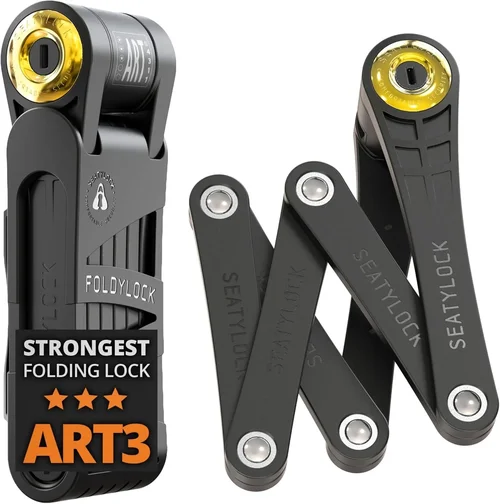
Not all locks are created equal—and the type you choose will dramatically impact both security and convenience. The four main categories are U-locks (or D-locks), chain locks, folding locks, and cable locks. U-locks are compact, rigid, and excellent for securing the frame and rear wheel to a fixed object, but they offer limited flexibility. Chain locks, especially those with thick, fabric-covered links, provide superior versatility—you can loop them around larger objects like trees or bike racks—but they’re heavier. Folding locks strike a balance: they’re more flexible than U-locks and often lighter than chains, though some models sacrifice strength for portability.
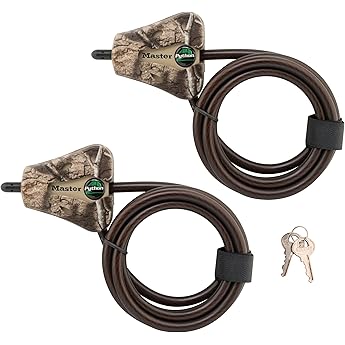
Cable locks, while lightweight and easy to carry, should never be your primary lock for an eBike. They’re easily severed with handheld bolt cutters and are best used only as secondary reinforcements. When evaluating design, also consider how the lock attaches to your bike. Some come with mounting brackets that let you carry them on the downtube or seat post, while others require a backpack or pannier. A poorly mounted lock can rattle, scratch your frame, or even fall off during rides—so test the fit before committing.
3. Portability & Weight
An eBike already adds extra weight compared to a standard bicycle, so adding a heavy lock can make your ride noticeably less enjoyable—especially on long commutes or hilly terrain. However, don’t let portability tempt you into choosing a flimsy lock. The sweet spot is usually between 2.5 and 4 pounds (1.1–1.8 kg). U-locks tend to be the lightest (often under 3 lbs), while high-security chain locks can weigh 5–7 lbs or more. Folding locks vary widely: some premium models like the Abus Bordo Granit XPlus 6500 weigh just 2.8 lbs but offer Diamond-level security.
Consider how you’ll carry the lock. If you ride daily and park frequently, a compact U-lock that mounts neatly to your frame is ideal. But if you need to secure both wheels and the frame, a longer chain or folding lock may be necessary—even if it means stowing it in a backpack. Some riders opt for a dual-lock system: a lightweight U-lock for quick stops and a heavy-duty chain for overnight parking. Whatever you choose, make sure it doesn’t interfere with pedaling, steering, or battery access.
4. Smart Features & Connectivity
The rise of smart locks has transformed eBike security. These locks use Bluetooth, Wi-Fi, or cellular connectivity to offer features like remote locking/unlocking via smartphone app, tamper alerts, GPS tracking, and geofencing. For example, the Litelok X1 includes a built-in alarm that triggers if someone tries to cut or move the lock, while the VanMoof Lock+ integrates directly with the bike’s onboard system and sends real-time location updates if stolen.
However, smart features come with trade-offs. Battery life is a major concern—most smart locks need recharging every 1–3 months, and if the battery dies, you might be locked out unless there’s a physical key backup (which many now omit for sleekness). Connectivity can also fail in areas with poor signal, and software bugs have been reported in early-generation models. Additionally, smart locks are generally more expensive and may require subscription fees for advanced tracking services. Only invest in smart tech if you truly need remote monitoring or live in a high-theft area where every advantage counts.
5. Weather Resistance & Durability
Your lock will face rain, snow, salt, mud, and UV exposure—especially if you ride year-round. Look for locks with corrosion-resistant coatings (like zinc plating or powder coating) and sealed mechanisms to prevent internal rust. The shackle should be coated or shrouded to protect against moisture ingress, and the keyway should have a dust cover or rubber seal. Avoid locks with exposed springs or plastic components that can crack in cold weather.
Durability also extends to long-term wear. A lock that squeaks, sticks, or becomes hard to turn after a few months is not only annoying but potentially dangerous if you can’t secure your bike quickly in an emergency. Read user reviews specifically mentioning performance after 6–12 months of use. Brands like Kryptonite and Abus are known for rigorous testing under extreme conditions, including freeze-thaw cycles and salt spray tests.
6. Ease of Use & Convenience
A lock is only effective if you actually use it—and that means it has to be convenient. If a lock is too bulky, hard to maneuver, or takes forever to secure, you’re more likely to skip locking up for “just a quick stop.” Test how easily the lock opens and closes, whether the key turns smoothly, and if the shackle fits snugly around your bike and anchor point without excessive slack. Some locks feature one-handed operation or auto-locking mechanisms that engage when you push the shackle in.
Also consider the key itself. Does it have a reversible design (so you don’t have to fumble for the right orientation)? Is it comfortable to hold? Are spare keys included? Losing a key can be catastrophic—especially with high-security locks that aren’t easily rekeyed. Many premium locks now offer key replacement services, but they often require proof of ownership and can take weeks.
7. Brand Reputation & Customer Support
Not all lock brands are equal when it comes to reliability and post-purchase support. Established names like Kryptonite, Abus, OnGuard, and Litelok have decades of experience and transparent warranty policies. Kryptonite, for instance, offers a $3,500 anti-theft protection offer for certain models—if your bike is stolen while properly locked with their product, they’ll reimburse you (terms apply). Abus provides free replacement keys and detailed installation guides.
Avoid no-name brands sold exclusively on Amazon or eBay with vague descriptions and no customer service contact. These often use substandard materials and disappear after a few months. Check forums like Reddit’s r/ebikes or BikeForums.net for real user experiences. A brand that stands behind its product with responsive support and clear documentation is worth the slight premium.
8. Warranty & Anti-Theft Guarantees
A strong warranty isn’t just about defects—it’s a sign of confidence in the product’s longevity. Most reputable locks come with 2–5 year warranties covering manufacturing flaws. More importantly, look for anti-theft guarantees. These programs reimburse you if your bike is stolen while using the lock correctly. Kryptonite’s program is one of the most generous, but read the fine print: you’ll typically need to register the lock online, use it as the primary lock, and provide police reports and purchase receipts.
Keep in mind that these guarantees rarely cover negligence—like leaving your bike unlocked or using a cable as your main lock. They also often exclude certain high-risk areas or require specific anchoring methods. Still, having that financial safety net can make a huge difference if the worst happens.
Different Types of eBike Locks

Common Buying Mistakes to Avoid

❌ Mistake: Relying Solely on a Cable Lock
Why it’s bad: Cable locks are the weakest link in bike security. Even thick, braided cables can be cut in under 10 seconds with basic bolt cutters. Using one as your primary lock is like locking your front door with a shoelace—it might deter casual opportunists, but any determined thief will laugh their way through it.
What to do instead: Use cable locks only as secondary reinforcements to secure wheels or accessories. Always pair them with a high-quality U-lock or chain. If you must use a cable alone, choose a Sold Secure Silver-rated model with a minimum 12mm diameter—and never leave your eBike unattended for more than a few minutes.
❌ Mistake: Ignoring Local Theft Patterns
Why it’s bad: Security needs vary drastically by location. A U-lock might suffice in a low-crime suburb, but in cities like San Francisco, London, or Berlin—where eBike theft is rampant—you need maximum protection. Assuming “one lock fits all” leaves you vulnerable where it matters most.
What to do instead: Research local crime stats (many police departments publish bike theft maps) and talk to fellow riders. If your area sees frequent angle grinder attacks, invest in a lock specifically rated against power tools, like the Litelok Core+ or Abus Granit XPlus 6000.
❌ Mistake: Choosing Based on Price Alone
Why it’s bad: The cheapest lock is often the most expensive in the long run—because it fails when you need it most. A $20 U-lock might save you money upfront, but if it gets cut and your $3,000 eBike is stolen, you’ve lost big.
What to do instead: Think of your lock as insurance. Spend at least 10% of your eBike’s value on security. For a $2,000 bike, that’s $200—enough for a top-tier chain or smart lock with anti-theft guarantees.
❌ Mistake: Overlooking Mounting Compatibility
Why it’s bad: A great lock is useless if you can’t carry it comfortably. Many riders buy a heavy chain lock only to leave it at home because it doesn’t fit their frame or rattles annoyingly. Others mount U-locks incorrectly, causing scratches or interference with water bottles.
What to do instead: Before buying, measure your downtube and seat tube. Test mounting options in-store if possible. Some locks include multiple bracket sizes or vibration-dampening mounts—opt for these if available.
❌ Mistake: Skipping Registration and Documentation
Why it’s bad: Without proof of ownership, even the best anti-theft guarantee won’t help you. Many riders forget to register their lock online or lose the receipt, making claims impossible.
What to do instead: Register your lock immediately after purchase, take photos of the serial number, and store digital copies of receipts. Keep a note in your phone with the lock model, key code (if applicable), and warranty details.
❌ Mistake: Using the Lock Incorrectly
Why it’s bad: Even the strongest lock fails if used improperly. Common errors include leaving slack in the chain, locking only the wheel (not the frame), or anchoring to flimsy objects like wooden signs or thin poles that can be broken or uprooted.
What to do instead: Always lock the frame and at least one wheel to a solid, immovable object like a certified bike rack or street signpost. Fill the lock’s interior space as much as possible to prevent leverage attacks. When in doubt, use two locks: one for the frame/wheel and another for the second wheel.
Budget Guidelines: How Much Should You Spend?
– Entry-Level ($25–$50): This range includes basic U-locks and cable locks, often with Sold Secure Bronze ratings. While acceptable for very low-risk areas or short indoor stops, these should never be your sole protection for an eBike. Expect thinner shackles (10–12mm), basic key mechanisms, and minimal weather sealing. Examples: Kryptonite Keeper 785, Master Lock Python.
– Mid-Range ($50–$120): The sweet spot for most riders. Here you’ll find Silver-rated U-locks and folding locks with 13–14mm shackles, disc detainer cylinders, and decent mounting systems. These offer strong resistance to bolt cutters and prying, suitable for urban commuting and moderate theft areas. Top picks: Abus Granit XPlus 540, Kryptonite New York Fahgettaboudit Mini.
– Premium ($120–$250): For high-value eBikes and high-risk environments. This tier includes Diamond-rated chain locks, heavy-duty folding locks, and early-generation smart locks. Materials are top-grade (boron steel, titanium reinforcements), and many come with anti-theft guarantees. Ideal for overnight parking or leaving your bike in transit hubs. Examples: Litelok Core+, Abus Granit Extreme 65.
– Luxury ($250+): Reserved for enthusiasts and professionals who demand the absolute best. These include advanced smart locks with cellular GPS, integrated alarms, and app ecosystems, as well as custom-fitted chain locks with armored sleeves. While overkill for casual riders, they’re worth considering if your eBike exceeds $5,000 or you live in a theft hotspot. Examples: VanMoof Lock+, Bitlock Smart Lock Pro.
Expert Tips for Getting the Best Deal
– Buy during off-season sales: Retailers often discount bike accessories in late winter (February–March) to clear inventory before spring. Black Friday and Cyber Monday also offer solid deals, but selection may be limited.
– Check manufacturer refurbished programs: Brands like Kryptonite and Abus sell certified refurbished locks at 20–30% off with full warranties. These are tested and repackaged, not used returns.
– Bundle with your eBike purchase: Many eBike dealers offer discounted or free locks when you buy a new bike. Even if not advertised, it never hurts to ask—especially for high-end models.
– Read return policies carefully: Some retailers won’t accept returns on opened locks due to security concerns. Buy from stores with generous trial periods (e.g., REI’s 1-year return window).
– Test before committing: If buying in-store, try opening/closing the lock, fitting it around a rack, and mounting it on a demo bike. Online, watch unboxing videos to see real-world handling.
– Consider used—but cautiously: Pre-owned locks can be risky (unknown history, worn mechanisms), but if you buy from a trusted seller with photos of the key and serial number, it’s possible to score a deal. Avoid anything without original packaging or documentation.
– Register immediately: Don’t wait! Most anti-theft guarantees require registration within 30 days of purchase.
– Combine locks strategically: Instead of buying one ultra-expensive lock, consider pairing a mid-range U-lock ($80) with a heavy chain ($100) for different scenarios—saving money while maximizing flexibility.

Frequently Asked Questions
Q: Can I use a regular bike lock for my eBike?
A: Technically yes—but it’s not recommended. eBikes are higher-value targets, so they require higher-grade locks. A standard bike lock rated for a $300 bicycle won’t cut it for a $2,500 eBike. Always choose a lock with at least a Sold Secure Silver rating for electric bikes.
Q: Do I really need two locks?
A: It depends on your risk level. In high-theft areas or for long stops (over 2 hours), using two locks—one U-lock for the frame/rear wheel and a chain or cable for the front wheel—significantly increases security. Thieves are far less likely to carry multiple tools.
Q: Are smart locks worth the extra cost?
A: Only if you value remote monitoring, GPS tracking, or live in a high-theft zone. For most riders, a high-quality mechanical lock with an anti-theft guarantee provides better value and reliability. Smart locks add complexity and potential failure points.
Q: How do I know if a lock is truly “angle grinder resistant”?
A: Look for specific certifications. Litelok’s Core+ is independently tested to resist angle grinders for over 6 minutes—the current industry benchmark. Generic claims like “cut-resistant” without test data are red flags.
Q: What should I do if my eBike is stolen despite using a lock?
A: First, report it to police immediately and get a case number. Then contact your lock manufacturer if you have an anti-theft guarantee—they’ll require the police report, proof of purchase, and photos. Also check if your homeowner’s or renter’s insurance covers eBike theft.
Q: Can I carry a chain lock on my eBike?
A: Yes, but it’s tricky. Most chain locks don’t include bike mounts, so you’ll need a backpack, pannier, or custom strap system. Some riders attach chains to rear racks using bungee cords—but ensure it doesn’t interfere with the motor or battery.
Q: Are combination locks safe for eBikes?
A: Generally no. Most combination locks use weak mechanisms prone to shimming or decoding. If you must use one, choose a high-security model like the Kryptonite Combo Chain—but even then, a keyed lock is safer.
Q: How often should I maintain my lock?
A: Clean and lightly lubricate the keyway and shackle every 3–6 months, especially if you ride in wet or salty conditions. Use a silicone-based lubricant—never oil, which attracts dirt.
Q: Do insurance companies require specific locks?
A: Some do. Check your policy—many require a Sold Secure Silver or higher lock for coverage. Using a substandard lock could void your claim.
Q: Is it safe to leave my eBike locked overnight?
A: Only in very low-risk areas and with a top-tier lock (Diamond-rated chain or equivalent). Even then, consider bringing the battery indoors—it’s a prime target for theft and can’t be locked.
Our Final Recommendations
– Best for Budget-Conscious Buyers: Kryptonite Keeper 785 Mini – At under $50, this U-lock offers surprising strength with a 13mm hardened steel shackle and Sold Secure Silver rating. Great for low-risk commutes.
– Best Overall Value: Abus Granit XPlus 540 – Priced around $90, it combines a 13.5mm shackle, disc detainer lock, and excellent mounting system. Reliable, portable, and trusted by commuters worldwide.
– Best Premium Option: Litelok Core+ – At $180, it’s one of the few locks proven to resist angle grinders for over 6 minutes. Lightweight, flexible, and perfect for high-theft cities.
– Best for Beginners: OnGuard Brute STD – A sturdy 14mm U-lock with a simple key system and included frame mount. Easy to use and highly resistant to common attacks.
– Best for Advanced Users: VanMoof Lock+ – Seamlessly integrates with VanMoof eBikes, offering GPS tracking, remote locking, and automatic alerts. Ideal for tech-forward riders willing to pay a premium ($350).
Conclusion: Making the Right Choice
Choosing the right eBike lock isn’t just about picking the strongest or cheapest option—it’s about matching your security needs to your lifestyle, budget, and environment. A commuter in Amsterdam will have vastly different requirements than a weekend rider in rural Colorado. By understanding the core factors—security ratings, lock types, smart features, and real-world usability—you can make a decision that truly protects your investment without compromising convenience.
Remember, no lock is 100% theft-proof, but the right one can turn your eBike from an easy target into a hard one. Thieves prefer low-effort opportunities; if your setup looks tougher than the next bike, they’ll move on. Invest wisely, use your lock correctly every single time, and consider it an essential part of your riding gear—not an afterthought.
Your eBike is more than transportation; it’s freedom, fitness, and fun. Don’t let a preventable theft steal that from you. Take the time to choose wisely, register your lock, and lock it right. Safe riding!