
Scooters—whether electric or manual—are more popular than ever. From urban commuters zipping through city streets to students navigating campus sidewalks, scooters offer convenience, speed, and eco-friendly transportation. But with that convenience comes a major concern: security. A scooter left unattended, even for just a few minutes, can become an easy target for thieves. That’s where a high-quality lock becomes not just a smart investment, but an essential one.
This comprehensive buying guide is designed to help you navigate the crowded world of scooter locks in 2026. Whether you’re a daily commuter, a weekend rider, or someone who just wants peace of mind when parking at the grocery store, we’ll walk you through everything you need to know. You’ll learn how to evaluate lock types, understand security ratings, compare materials and designs, and avoid common pitfalls that leave your scooter vulnerable. By the end of this guide, you’ll be equipped with expert-level knowledge to choose the best lock for your specific needs—without overspending or compromising on safety.
The scooter lock market has evolved significantly in recent years. Gone are the days when a flimsy cable lock was considered sufficient. Today’s locks feature hardened steel shackles, anti-pick mechanisms, weather resistance, and even smart technology like GPS tracking and smartphone alerts. Brands like Kryptonite, Abus, OnGuard, and Seatylock have raised the bar, offering products tailored to different use cases and budgets. With so many options available, it’s easy to feel overwhelmed. But don’t worry—we’ve done the research so you don’t have to. Let’s dive into the key factors that separate a good lock from a great one.

What to Look for When Buying a Scooter Lock
1. Security Rating & Certification
One of the most critical factors in choosing a scooter lock is its security rating. Independent testing organizations like Sold Secure (UK) and ART (Netherlands) evaluate locks based on resistance to cutting, picking, prying, and drilling. These ratings—ranging from Bronze to Diamond (Sold Secure) or 1 to 5 stars (ART)—give you a reliable benchmark for comparing products.
For example, a Sold Secure Diamond-rated lock has passed rigorous tests against power tools, bolt cutters, and angle grinders, making it ideal for high-theft areas. In contrast, a Bronze-rated lock might only resist basic hand tools and is better suited for low-risk environments. Always check for these certifications before purchasing. A lock without a recognized rating is essentially a guess—and your scooter isn’t worth gambling on.
2. Lock Type & Design
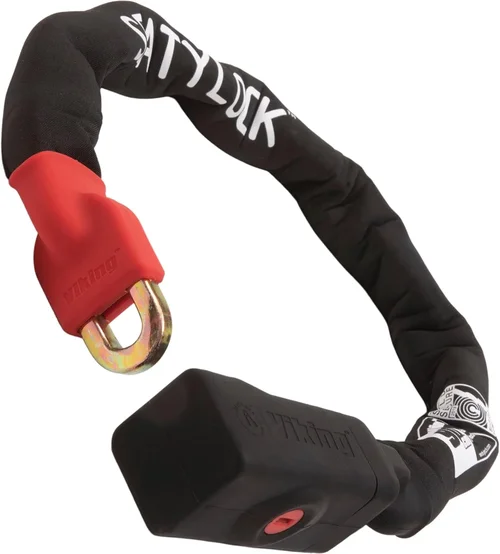
Scooter locks come in several main types, each with distinct advantages and limitations. The three most common are U-locks (also called D-locks), chain locks, and folding locks. U-locks are compact and highly resistant to cutting, but their rigid shape can limit where you can secure your scooter. Chain locks offer flexibility and can wrap around larger objects like bike racks or lampposts, but they’re heavier and can be vulnerable if the chain links aren’t thick enough.
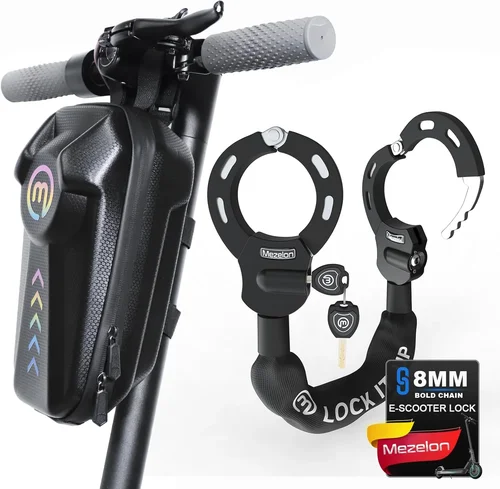
Folding locks strike a balance—they’re more portable than chains and more versatile than U-locks, with interlocking steel plates that resist sawing and prying. Some newer models even include integrated alarms or smart features. Consider your typical parking scenario: if you often lock to irregularly shaped objects, a chain or folding lock may be better. If you prioritize speed and portability, a compact U-lock could be ideal.
3. Material & Build Quality
The materials used in a lock directly impact its durability and resistance to attack. High-quality locks use hardened boron or manganese steel for the shackle and body, which are extremely difficult to cut with standard tools. Avoid locks made from mild steel or aluminum—they can be severed with basic bolt cutters in seconds.
Also pay attention to the locking mechanism itself. Disc detainer locks (like those used in Kryptonite’s Evolution series) are more resistant to picking and drilling than traditional pin tumbler systems. Weather resistance is another key factor: look for locks with rubberized coatings, sealed keyways, and corrosion-resistant finishes, especially if you ride in rainy or coastal climates. A lock that rusts shut after a few months is worse than no lock at all.
4. Size & Portability
A lock’s size affects both its security and convenience. A larger shackle opening allows you to secure your scooter to bigger objects, but it also gives thieves more room to insert tools. Conversely, a smaller U-lock may be harder to cut but could limit your locking options. Most riders find a shackle width between 13mm and 16mm offers the best balance.
Portability matters too. If you carry your lock daily, weight and bulk become important. U-locks are generally the lightest and easiest to attach to your scooter frame or backpack. Chain locks can weigh 5–10 pounds, making them cumbersome for regular use unless you have a dedicated storage compartment. Folding locks vary widely—some are as light as 2 pounds, while others approach chain-lock weights. Consider how and where you’ll carry it: under the seat, in a backpack, or mounted to the deck?
5. Key vs. Combination vs. Smart Locks
The locking mechanism isn’t just about convenience—it’s about security. Traditional keyed locks are reliable and widely trusted, especially those with anti-drill and anti-pick features. However, losing your keys can be a major hassle, and some cheaper keys can be easily duplicated.
Combination locks eliminate the need for keys, but many use weak 4-digit codes that can be guessed or decoded with practice. Avoid combination locks unless they feature high-security mechanisms like Abus’s Twin Locking system. Smart locks are the newest trend, offering Bluetooth connectivity, app control, and tamper alerts. While innovative, they rely on batteries and software, which can fail or be hacked. For most users, a high-quality keyed lock remains the safest bet—but if you value tech integration, ensure the smart lock has offline backup options and strong encryption.
6. Brand Reputation & Warranty
Not all locks are created equal, and brand reputation matters. Established companies like Kryptonite, Abus, and OnGuard have decades of experience and rigorous quality control. They also typically offer robust warranties—some even include theft reimbursement programs if your scooter is stolen while properly locked.
For instance, Kryptonite’s “Anti-Theft Protection Offer” provides up to $4,000 in coverage for certain models. Abus offers a lifetime warranty on many of its locks. Cheaper, no-name brands might save you $20 upfront, but they rarely offer meaningful support or guarantees. When your scooter’s value exceeds $500 (and most e-scooters do), investing in a reputable brand is a no-brainer.
7. Price vs. Value
It’s tempting to go for the cheapest lock available, but remember: you’re protecting an asset that likely cost hundreds—or even thousands—of dollars. A $15 cable lock might seem like a bargain, but it can be cut in under 10 seconds with basic tools. In contrast, a $60–$100 U-lock from a trusted brand can deter all but the most determined thieves.
Think of your lock as insurance. The cost should be proportional to your scooter’s value and the risk level of your environment. If you live in a high-theft urban area or own a premium e-scooter like a Dualtron or Segway, spending $80–$150 on a top-tier lock is justified. For occasional use in low-risk areas, a mid-range option may suffice—but never skip security entirely.
8. User Reviews & Real-World Performance
Spec sheets and marketing claims don’t tell the whole story. User reviews reveal how a lock performs in real-world conditions: Does it rust? Does the key jam? Is it easy to mount? Look for detailed reviews on platforms like Amazon, Reddit (r/scooters, r/bicycles), and specialized forums.
Pay special attention to comments about longevity, ease of use, and customer service. A lock that works perfectly for six months but then fails due to poor construction isn’t worth buying. Also note whether reviewers mention specific theft attempts—successful or failed—as these provide valuable insights into actual security performance.
Different Types of Scooter Locks

Common Buying Mistakes to Avoid
❌ Mistake: Choosing a Cable Lock as Your Primary Security
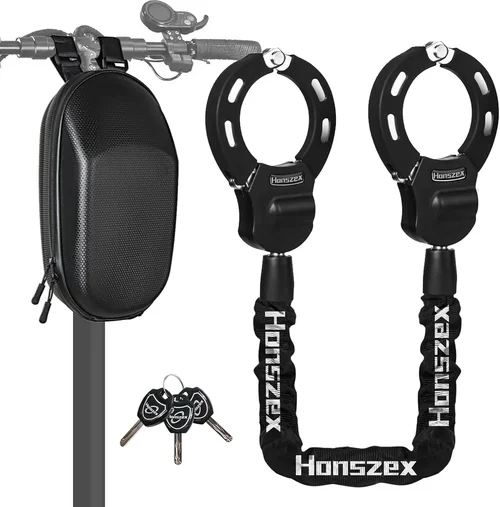
Why it’s bad: Cable locks are notoriously weak. Even thick cables can be cut with handheld bolt cutters in seconds. They offer minimal resistance to theft and are often used by thieves as a signal that a scooter is an easy target.
What to do instead: Use a cable lock only as a secondary measure—for example, to secure your helmet or as an extra layer with a U-lock. For primary protection, always choose a hardened steel U-lock, chain, or folding lock.
❌ Mistake: Ignoring the Locking Point
Why it’s bad: A high-security lock is useless if you’re attaching it to a flimsy post, wooden fence, or removable bike rack. Thieves can simply remove the entire object and walk away with your scooter.
What to do instead: Always lock to immovable, anchored objects like steel bike racks, street signs bolted to concrete, or designated scooter parking zones. If no secure anchor exists, consider carrying a portable ground anchor or using a lock with a built-in alarm.
❌ Mistake: Buying Based Solely on Price
Why it’s bad: The cheapest lock often provides the least protection. A $20 lock might save money upfront but could result in a total loss if your scooter is stolen.
What to do instead: Calculate the cost of your scooter and any accessories (helmet, phone mount, etc.). Spend at least 10–15% of that total on a quality lock. For a $1,000 e-scooter, that means $100–$150—well worth it for peace of mind.
❌ Mistake: Overlooking Weather Resistance
Why it’s bad: Locks exposed to rain, snow, or salt (in coastal areas) can corrode, jam, or seize over time. A rusted lock may not open when you need it most.
What to do instead: Choose locks with weatherproof coatings, sealed keyholes, and rust-resistant materials. Store your lock in a dry place when not in use, and apply a light lubricant to the keyway periodically.
❌ Mistake: Not Testing the Lock Before Committing
Why it’s bad: Some locks are difficult to mount, have stiff mechanisms, or don’t fit your scooter’s frame. Buying online without testing can lead to frustration or returns.
What to do instead: If possible, visit a local bike or scooter shop to handle different models. Check return policies before ordering online, and read reviews that mention ease of use and mounting options.
❌ Mistake: Relying on a Single Lock
Why it’s bad: Even the best lock can be defeated given enough time and tools. Using only one lock gives thieves a single point of failure.
What to do instead: Use a dual-lock strategy: combine a U-lock through the rear wheel and frame with a cable or second lock securing the front wheel. This significantly increases the time and effort required for theft.
Budget Guidelines: How Much Should You Spend?
Your budget should align with your scooter’s value, usage frequency, and local theft risk. Here’s a practical breakdown:
- Entry-Level ($15–$40): Suitable for low-value manual scooters or temporary use in safe neighborhoods. Expect basic U-locks or cables with minimal security ratings. Avoid for e-scooters.
- Mid-Range ($40–$80): The sweet spot for most riders. Includes Sold Secure Bronze or Silver-rated U-locks and folding locks from reputable brands. Ideal for daily commuters with mid-tier e-scooters ($500–$1,500).
- Premium ($80–$150): Best for high-value e-scooters ($1,500+) or high-theft urban environments. Features Diamond-rated locks, hardened steel chains, and advanced locking mechanisms. Often includes theft protection offers.
- Luxury ($150+): For enthusiasts and professionals. Includes smart locks with GPS, heavy-duty chain locks with integrated alarms, and custom solutions. Justified only if your scooter is a significant investment or you frequently park in risky areas.
Expert Tips for Getting the Best Deal
- Buy during off-seasons: Scooter and bike accessory sales often peak in spring and summer. Shop in late fall or winter for discounts on last year’s models.
- Compare retailers: Prices vary widely between Amazon, REI, local bike shops, and brand websites. Use price-tracking tools like Honey or CamelCamelCamel to catch deals.
- Look for bundle deals: Some brands offer locks with mounts, lights, or helmets at a discount. These can save you 15–20% compared to buying separately.
- Check warranty terms: A longer warranty often indicates higher confidence in product quality. Prioritize brands that offer theft reimbursement or free replacements.
- Read the fine print: Some “lifetime” warranties exclude wear and tear or require registration within 30 days. Understand what’s covered before you buy.
- Test before you commit: If buying in-store, ask to try mounting the lock on a demo scooter. For online purchases, choose retailers with hassle-free return policies.
- Consider refurbished or open-box: Certified pre-owned locks from reputable sellers can offer significant savings with minimal risk.
- Join loyalty programs: Brands like Abus and Kryptonite offer member discounts, early access to sales, and exclusive promotions.

Frequently Asked Questions
Q: Can I use a bike lock for my scooter?
A: Yes—most bike locks work perfectly for scooters, especially U-locks and chains. Just ensure the lock is long enough to secure both the frame and wheel to a fixed object. Many scooter riders actually prefer bike locks due to their proven security and wide availability.
Q: How do I prevent my lock from being picked?
A: Choose locks with disc detainer or tubular key systems, which are far more resistant to picking than standard pin tumblers. Avoid combination locks with simple dials, and always buy from brands that disclose their locking mechanism type.
Q: Should I lock my scooter indoors or outdoors?
A: Indoors is always safer—garages, bike rooms, or secure storage areas reduce theft risk dramatically. If you must park outside, choose well-lit, high-traffic areas and use multiple locks.
Q: What’s the difference between Sold Secure and ART ratings?
A: Both are independent testing bodies. Sold Secure (UK) uses Bronze, Silver, Gold, and Diamond ratings, while ART (Netherlands) uses 1–5 stars. Diamond and 5-star are equivalent and represent the highest level of security.
Q: Can smart locks be hacked?
A: Like any connected device, smart locks have potential vulnerabilities. However, reputable brands use encryption, secure pairing, and offline fallbacks. Always keep firmware updated and avoid sharing access codes publicly.
Q: How tight should my U-lock be?
A: The shackle should fit snugly around the object and your scooter’s frame with minimal gap—ideally less than 1 inch. A tighter fit reduces leverage for prying tools.
Q: Is a heavier lock always more secure?
A: Not necessarily. While weight often correlates with thicker materials, some lightweight folding locks offer excellent security. Focus on certifications and build quality rather than weight alone.
Q: Can I get reimbursed if my scooter is stolen despite using a lock?
A: Some brands (like Kryptonite) offer anti-theft protection programs that provide cash reimbursement if your scooter is stolen while properly locked with their product. Check the terms—most require registration and proof of purchase.
Q: Do I need to lock both wheels?
A: Ideally, yes. Locking only the frame leaves wheels vulnerable to removal. Use a U-lock for the rear wheel/frame and a cable for the front, or invest in a dual-lock system.
Q: How often should I replace my lock?
A: There’s no fixed timeline, but inspect your lock regularly for rust, stiffness, or wear. Replace it if the mechanism feels loose, the key jams, or you notice visible damage.
Our Final Recommendations
- Best for Budget-Conscious Buyers: Kryptonite Keeper 785 – A compact U-lock with Sold Secure Bronze rating, hardened steel shackle, and reliable disc detainer lock. Priced under $50, it’s an excellent entry point for casual riders.
- Best Overall Value: Abus Granit XPlus 540 – Sold Secure Gold-rated, weatherproof, and featuring a patented double-locking mechanism. At around $80, it offers premium security without the premium price tag.
- Best Premium Option: OnGuard Brute STD Chain Lock – A 13mm hardened steel chain with a disc detainer lock and Sold Secure Diamond rating. Ideal for high-value e-scooters in urban environments. Priced around $130.
- Best for Beginners: Seatylock Maestro Folding Lock – Easy to carry, versatile, and rated Sold Secure Silver. Its intuitive design and included mounting bracket make it perfect for new riders.
- Best for Advanced Users: Kryptonite New York Fahgettaboudit Chain – The ultimate in security. This 14mm chain lock is nearly impervious to cutting and comes with a $4,000 theft protection offer. For serious riders who refuse to compromise.
Conclusion: Making the Right Choice
Choosing the right scooter lock isn’t just about picking the strongest or most expensive option—it’s about matching the lock to your lifestyle, environment, and scooter value. A thoughtful investment in security today can save you thousands in replacement costs and emotional stress tomorrow. Remember: the best lock is the one you actually use. No matter how robust a lock is, it’s useless if it’s left at home because it’s too heavy or inconvenient.
Prioritize certified security ratings, reputable brands, and real-world usability. Don’t fall for marketing gimmicks or ultra-cheap alternatives that offer false reassurance. And always use proper locking technique—secure both the frame and wheel to an immovable object whenever possible.
Your scooter is more than just a mode of transport; it’s freedom, efficiency, and joy. Protect it wisely. With the insights from this guide, you’re now equipped to make a confident, informed decision. Ride safe, lock smart, and enjoy every mile.