
Electric mountain bikes (eMTBs) have revolutionized off-road cycling, making challenging trails accessible to riders of all fitness levels and experience. Whether you’re tackling steep climbs, navigating technical descents, or simply exploring remote backcountry routes, an electric mountain bike can extend your range, reduce fatigue, and amplify the joy of outdoor adventure. With advancements in battery technology, motor efficiency, and frame design, eMTBs under $2,000 have become surprisingly capable—offering performance and durability that rival much pricier models just a few years ago.
This comprehensive buying guide is designed to help you navigate the crowded and fast-evolving market of affordable electric mountain bikes. We’ll walk you through everything you need to know to make a smart, informed decision—from understanding key performance specs to avoiding common pitfalls. Whether you’re a weekend warrior, a daily commuter who loves trail detours, or a beginner looking to dip your toes into the world of e-mountain biking, this guide will equip you with the knowledge to find the best electric mountain bike under $2,000 for your needs. You’ll learn how to evaluate motor power, battery life, suspension quality, and build materials, all while staying within budget.
The market for sub-$2,000 eMTBs has exploded in recent years, with brands like Rad Power Bikes, Aventon, Juiced, and even traditional bike manufacturers like Trek and Specialized offering compelling entry-level and mid-tier models. These bikes now feature mid-drive or high-torque hub motors, hydraulic disc brakes, full or front suspension, and integrated batteries that blend seamlessly into the frame. While you won’t get the ultra-light carbon frames or top-tier components found on $5,000+ models, you can get a rugged, reliable, and fun-to-ride eMTB that handles real mountain terrain—without breaking the bank. This guide cuts through the marketing noise to deliver honest, expert-backed insights so you can ride confidently, knowing you’ve made the right choice.

What to Look for When Buying an Electric Mountain Bike Under $2000
1. Motor Type and Power Output
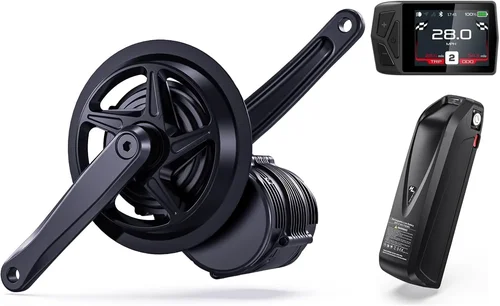
The motor is the heart of any electric mountain bike, and its type and power output directly affect performance, especially on steep or technical terrain. Most eMTBs under $2,000 use either a hub motor (located in the front or rear wheel) or a mid-drive motor (mounted near the pedals, integrated with the drivetrain). Hub motors are common in this price range due to their lower cost and simplicity. Rear hub motors, in particular, offer better weight distribution and traction, making them ideal for off-road use. Mid-drive motors, while less common under $2,000, provide superior balance, efficiency, and hill-climbing ability because they leverage the bike’s gears.
Power is measured in watts (W), with most budget eMTBs offering between 500W and 750W. In the U.S., motors over 750W are often classified as speed pedelecs or mopeds and may require registration. A 500W to 750W motor is more than sufficient for trail riding, climbing, and moderate off-road use. Look for motors with high torque ratings (measured in Newton-meters or Nm)—ideally 60Nm or higher—as this determines how well the bike accelerates and climbs steep inclines. For example, a 750W motor with 80Nm of torque will feel significantly stronger on hills than a 500W motor with only 50Nm, even if both are technically legal for Class 1 or Class 3 e-bikes.
2. Battery Capacity and Range
Battery capacity, measured in watt-hours (Wh), determines how far you can ride on a single charge. Most eMTBs under $2,000 come with batteries ranging from 400Wh to 700Wh. A 500Wh battery is a sweet spot for this price range, offering a balance of weight, cost, and range. On average, a 500Wh battery provides 25–50 miles of range, depending on terrain, rider weight, assist level, and riding style. For mountain biking—where you’ll likely use higher assist levels and encounter steep climbs—expect closer to 20–35 miles per charge.
Battery placement is also important. Integrated batteries (built into the downtube) offer a sleek look and better weight distribution, while removable batteries allow for easy charging and replacement. Lithium-ion (Li-ion) batteries are standard and offer good energy density and longevity. Avoid older or lower-quality chemistries like lead-acid or nickel-metal hydride. Also, check the charger specs: a 3A or 4A fast charger can recharge a 500Wh battery in 2–3 hours, while a 2A charger may take 5–6 hours.
Consider your typical ride length. If you plan on multi-hour adventures or backcountry trips, look for a bike with a 600Wh+ battery or the option to add a second battery (some models support dual-battery setups). Also, note that cold weather reduces battery efficiency—expect 20–30% less range in temperatures below 40°F (4°C).
3. Suspension System and Travel
Suspension is critical for comfort and control on rough terrain. Most eMTBs under $2,000 feature either front suspension (hardtail) or full suspension (front and rear). Hardtails are more common in this price range due to cost and weight savings. A quality front suspension fork with 100–140mm of travel is sufficient for most trail riding, absorbing bumps, roots, and small drops. Look for air-sprung forks (like those from SR Suntour or RockShox) over coil springs, as they’re lighter and more tunable.
Full-suspension eMTBs under $2,000 are rare but not impossible to find—especially during sales or from direct-to-consumer brands. If you can find one with 120–150mm of rear travel and a well-tuned shock, it’s worth considering for aggressive trail riding. However, full-suspension bikes in this range often compromise on component quality or battery capacity to stay under budget. For beginners or casual riders, a well-spec’d hardtail is often the better value.
Pay attention to lockout features. A suspension lockout allows you to stiffen the fork for efficient climbing or pavement riding. This is especially useful on mixed-terrain rides. Also, check for rebound damping adjustments—these help control how quickly the fork returns after compressing, improving stability on descents.
4. Frame Material and Build Quality
The frame is the foundation of your eMTB, and its material affects weight, durability, and ride quality. Most bikes under $2,000 use aluminum alloy frames, which offer a great balance of strength, stiffness, and affordability. Look for 6061 or 7005 aluminum, which are common in quality e-bikes. Avoid “hi-ten” steel frames unless you’re on a very tight budget—they’re heavier and less responsive.
Frame geometry is just as important as material. Modern eMTBs feature slack head angles (65–67°), long wheelbases, and low bottom brackets—all designed to improve stability at speed and on steep descents. A dropper seatpost (which allows you to lower the saddle with a lever) is a highly desirable feature for technical riding, though it’s often an upgrade on budget models. Some bikes include one stock, while others require an aftermarket purchase.
Welding quality matters. Look for smooth, clean welds without cracks or uneven seams. Check for internal cable routing, which protects wires and gives a cleaner look. Also, inspect the motor and battery mounting points—these should be reinforced and securely fastened. A well-built frame will handle the extra weight and stress of an electric system without flexing or creaking.
5. Drivetrain and Gearing
The drivetrain determines how smoothly and efficiently you can shift gears, which is crucial for managing power and cadence on varied terrain. Most eMTBs under $2,000 use 7- to 9-speed drivetrains from brands like Shimano (Tourney, Altus, Acera, or Deore) or MicroShift. Shimano Deore is the gold standard in this range, offering reliable shifting and durability. Avoid entry-level groups like Tourney for serious trail use—they’re heavier and less precise.
Look for a wide-range cassette (e.g., 11-42T or 11-51T) to give you low gears for climbing and high gears for speed. A 1x (single chainring) drivetrain is common and simplifies shifting while reducing weight and maintenance. Chainrings typically range from 32T to 38T—smaller for climbing, larger for speed. Some bikes include a clutch mechanism in the rear derailleur, which reduces chain slap on rough trails.
Consider the crankset and bottom bracket. A sturdy, sealed cartridge bottom bracket will last longer and require less maintenance than a loose-ball type. Also, check if the bike uses a standard or proprietary motor interface—this affects future upgradeability.
6. Braking System
Reliable brakes are non-negotiable for mountain biking, especially with the added speed and weight of an e-bike. Hydraulic disc brakes are the standard in this price range and offer superior stopping power, modulation, and consistency compared to mechanical discs or rim brakes. Look for 160mm or 180mm rotors—larger rotors provide more braking force and better heat dissipation.
Brands like Shimano, Tektro, and Zoom offer reliable hydraulic systems in budget eMTBs. Shimano MT200 or MT400 brakes are common and perform well for the price. Avoid bikes with mechanical disc brakes or V-brakes—they lack the power and control needed for off-road use. Also, check for brake lever reach adjustment, which allows smaller hands to operate the brakes comfortably.
Test the brakes if possible. Squeeze the levers—they should engage smoothly without excessive travel. Listen for squealing or grinding, which could indicate poor bedding or contamination. Properly maintained hydraulic brakes should last thousands of miles with occasional pad and fluid changes.
7. Tires and Wheel Size
Tires are your bike’s only contact with the ground, so they play a huge role in traction, comfort, and handling. Most eMTBs under $2,000 come with 27.5” or 29” wheels. 29ers roll faster and smoother over obstacles, making them ideal for cross-country and trail riding. 27.5” wheels are more agile and better for tight, technical terrain. Some bikes offer “mullet” setups (29” front, 27.5” rear) for a balance of speed and maneuverability.
Tire width typically ranges from 2.2” to 2.6”. Wider tires (2.4”+) provide better grip and cushioning on rough trails. Look for aggressive tread patterns with large knobs for off-road traction. Tubeless-ready wheels are a plus—they allow you to run lower tire pressures without pinch flats, improving comfort and control. Some bikes include tubeless valves and sealant, while others require a conversion kit.
Check the tire brand and model. Maxxis, Schwalbe, and Continental offer high-quality eMTB tires even in budget builds. Avoid generic or no-name tires—they often lack durability and puncture resistance. Also, ensure the rims are double-walled and rated for e-bike use, as the extra weight and torque can stress standard rims.
8. Display and Connectivity Features
The display is your interface with the bike’s electric system. Most eMTBs under $2,000 come with LCD or LED displays that show speed, battery level, assist mode, and distance. Look for a backlit screen for visibility in low light. Some displays offer Bluetooth connectivity, allowing you to sync with smartphone apps for ride tracking, navigation, and firmware updates.
Assist modes typically range from Eco (low power, long range) to Turbo (high power, short range). A good display lets you switch modes easily, often with a handlebar-mounted remote. Some bikes include a walk-assist mode, which helps push the bike uphill or over obstacles. Also, check for regenerative braking—though rare in this price range, it can slightly extend battery life.
Consider ease of use. Buttons should be intuitive and responsive. Avoid overly complex menus or tiny text. If you plan to ride in wet conditions, ensure the display is water-resistant (IP65 or higher). Some premium displays include GPS, anti-theft tracking, or integration with Strava, but these are uncommon under $2,000.
9. Weight and Portability
Electric mountain bikes are inherently heavier than traditional bikes due to the motor, battery, and reinforced frame. Most eMTBs under $2,000 weigh between 45 and 60 pounds. While you won’t be carrying it far, weight affects handling, especially on steep climbs or technical sections. Lighter bikes (under 50 lbs) are easier to maneuver and lift over obstacles.
If you need to transport the bike, consider foldable models or those with removable batteries. Some bikes include integrated rear racks or mounts for panniers, which can be useful for commuting or bikepacking. Also, check the standover height—the distance from the ground to the top tube—to ensure you can comfortably stand over the bike.
For storage, measure your garage, shed, or apartment space. Some eMTBs have long wheelbases or wide handlebars that make them difficult to store in tight areas. Wall mounts or ceiling hoists can help save space. Also, consider the bike’s center of gravity—rear-hub motors can make the back end feel heavy when lifting.
10. Warranty and Customer Support
A solid warranty is a sign of a manufacturer’s confidence in their product. Most reputable brands offer at least a 1-year warranty on the frame and electrical components, with some extending to 2 years. Look for coverage on the motor, battery, and display—these are the most expensive parts to replace. Avoid brands with no warranty or vague terms.
Customer support matters. Check if the company offers phone, email, or chat support. Read reviews about their responsiveness and repair process. Some brands have local service centers or partnerships with bike shops, while others require you to ship the bike back for repairs. Direct-to-consumer brands (like Rad Power Bikes or Aventon) often have better online support but limited in-person service.
Also, consider the availability of replacement parts. Can you easily buy a new battery, charger, or brake pads? Are there third-party repair options? A bike with good parts availability will be easier and cheaper to maintain long-term.
Different Types of Electric Mountain Bikes Under $2000

Common Buying Mistakes to Avoid
❌ Mistake: Prioritizing Wattage Over Torque
Why it’s bad: Many buyers assume a higher wattage motor means better performance, but torque is what determines climbing ability and acceleration. A 750W motor with low torque will struggle on hills compared to a 500W motor with high torque.
What to do instead: Focus on torque (Nm) and motor placement. Look for at least 60Nm of torque and a rear hub or mid-drive motor for the best off-road performance.
❌ Mistake: Ignoring Battery Real-World Range
Why it’s bad: Manufacturers often quote range under ideal conditions (flat terrain, low assist). In reality, mountain biking drains the battery much faster due to climbs and high assist usage.
What to do instead: Divide the advertised range by 1.5 to 2 for a realistic estimate. Choose a bike with a 500Wh+ battery if you plan on long or hilly rides.
❌ Mistake: Overlooking Suspension Quality
Why it’s bad: Cheap suspension forks can bottom out easily, offer poor damping, and reduce control on descents. This leads to a harsh, uncomfortable ride.
What to do instead: Look for air-sprung forks with at least 100mm of travel and rebound adjustment. Avoid coil-only forks unless you’re on a very tight budget.
❌ Mistake: Buying Based on Looks Alone
Why it’s bad: A sleek design or flashy color doesn’t guarantee performance. Some bikes look great but have weak motors, poor brakes, or low-quality components.
What to do instead: Prioritize specs over aesthetics. Read reviews, check component brands, and compare performance metrics.
❌ Mistake: Skipping the Test Ride
Why it’s bad: Fit and feel are subjective. A bike that looks good on paper might feel uncomfortable or unstable in real-world conditions.
What to do instead: Test ride whenever possible. Pay attention to handling, braking, and how the motor responds to pedaling.
❌ Mistake: Neglecting Warranty and Support
Why it’s bad: E-bikes are complex machines. Without proper support, repairs can be costly and time-consuming.
What to do instead: Choose a brand with a solid warranty (at least 1 year) and good customer service reviews.
❌ Mistake: Forgetting About Maintenance Costs
Why it’s bad: E-bikes require regular maintenance—brake pads, chain, tires, and battery care. Ignoring this can lead to premature wear or failure.
What to do instead: Budget for annual maintenance. Learn basic repairs or find a local e-bike shop you trust.
Budget Guidelines: How Much Should You Spend?
When shopping for an electric mountain bike under $2,000, it’s helpful to break the market into tiers based on price and features. Each tier offers a different balance of performance, durability, and value.
Entry-Level ($1,000 – $1,400): These bikes are ideal for casual riders, beginners, or those on a tight budget. Expect basic components—mechanical disc brakes, entry-level drivetrains (Shimano Tourney), and lower-capacity batteries (400–500Wh). Suspension is usually limited to a basic front fork with minimal travel. Motor power ranges from 500W to 750W, often with moderate torque. While they can handle light trails and commuting, they may struggle on steep or technical terrain. Brands like Ancheer, Ecotric, and Swagtron dominate this space. These bikes are great for getting started but may require upgrades sooner.
Mid-Range ($1,400 – $1,700): This is the sweet spot for most buyers. Bikes in this range offer significant upgrades: hydraulic disc brakes, better suspension (100–120mm travel), and higher-quality drivetrains (Shimano Altus or Acera). Batteries are typically 500–625Wh, providing 30–45 miles of real-world range. Motors are more refined, with better torque and smoother power delivery. You’ll find models from Rad Power Bikes, Aventon, and Juiced that excel in this category. These bikes handle moderate trails, long rides, and daily commuting with ease. They’re durable, reliable, and offer the best value for the money.
Premium ($1,700 – $2,000): At the top of the budget, you’ll find near-pro-level performance. Expect full suspension options, high-torque motors (70Nm+), and advanced features like dropper posts, tubeless-ready wheels, and Bluetooth-connected displays. Drivetrains often include Shimano Deore or equivalent, and batteries reach 625–700Wh. Brands like Trek (with their lower-end eMTBs), Specialized (via sales), and direct-to-consumer leaders offer compelling models here. These bikes are suitable for aggressive trail riding, multi-day adventures, and riders who want minimal compromise. While not as light or high-end as $3,000+ models, they deliver exceptional performance for the price.
Luxury ($2,000+): While this guide focuses on sub-$2,000 options, it’s worth noting that crossing the $2,000 threshold opens up even more possibilities. You’ll find carbon frames, top-tier suspension (RockShox or Fox), and premium motors (like Bosch or Shimano STEPS). However, for most riders, the best value remains just under $2,000, where you get 90% of the performance at a fraction of the cost.
Expert Tips for Getting the Best Deal
- Buy During Off-Season Sales: The best time to buy an eMTB is in late fall or winter (October–February), when demand is low and retailers clear inventory. Look for holiday sales (Black Friday, Cyber Monday) or end-of-year promotions. Many brands offer $200–$500 discounts during these periods.
- Shop Direct-to-Consumer Brands: Companies like Rad Power Bikes, Aventon, and Juiced sell online, cutting out the middleman and passing savings to you. They often include free shipping, extended warranties, and better customer support than big-box retailers.
- Check for Refurbished or Open-Box Deals: Many manufacturers sell certified refurbished eMTBs at 15–30% off. These bikes are inspected, tested, and come with warranties. Open-box models (returned but unused) are another great way to save.
- Compare Total Cost of Ownership: Don’t just look at the sticker price. Factor in shipping, assembly, and potential upgrades (like a dropper post or tubeless conversion). Some bikes require professional assembly, which can cost $100–$200.
- Read User Reviews and Watch Video Tests: Look beyond manufacturer specs. Real-world reviews from riders who’ve used the bike on trails will reveal strengths and weaknesses. YouTube channels like “Electric Bike Report” or “Ride with Tom” offer in-depth comparisons.
- Test Ride Before You Buy: If possible, visit a local dealer or attend a demo event. Pay attention to how the bike feels on climbs, descents, and technical sections. Comfort and handling are just as important as specs.
- Negotiate or Bundle: Some retailers offer discounts if you buy accessories (helmet, lock, lights) with your bike. Others may price-match competitors. Don’t be afraid to ask.
- Consider Financing Options: Many brands offer 0% APR financing for 6–12 months. This lets you spread the cost without interest, making a $1,800 bike more manageable.
Frequently Asked Questions
Q: Can I ride an electric mountain bike on regular trails?
A: Yes, most eMTBs are designed for off-road use and can handle dirt paths, singletrack, and moderate technical terrain. However, always check local regulations—some trails restrict e-bike use or require specific classifications (Class 1 or 2).
Q: How long does the battery last before needing replacement?
A: Most lithium-ion batteries last 500–1,000 charge cycles, which translates to 3–5 years of regular use. Proper care (avoiding full discharges, storing at 50% charge in winter) can extend lifespan.
Q: Are electric mountain bikes allowed on bike paths?
A: It depends on local laws. In the U.S., Class 1 and Class 2 e-bikes (pedal-assist only, under 20 mph) are generally allowed on bike paths. Class 3 (up to 28 mph) may be restricted. Always check local rules.
Q: Do I need a special license or insurance?
A: In most U.S. states, no license or insurance is required for Class 1–3 e-bikes. However, some states have age restrictions or helmet laws. Check your local DMV or transportation authority.
Q: Can I upgrade components later?
A: Yes, most eMTBs allow upgrades like tires, suspension, drivetrain, and dropper posts. However, motor and battery upgrades are limited by compatibility and warranty terms.
Q: How do I maintain my eMTB?
A: Regular maintenance includes cleaning the chain, checking tire pressure, inspecting brakes, and keeping the battery charged. Service the suspension annually and replace brake pads as needed.
Q: What’s the difference between Class 1, 2, and 3 e-bikes?
A: Class 1: Pedal-assist only, up to 20 mph. Class 2: Throttle-assisted, up to 20 mph. Class 3: Pedal-assist only, up to 28 mph. Most eMTBs are Class 1 or 3.
Q: Can I ride in the rain?
A: Yes, most eMTBs are water-resistant (IP65 or higher). Avoid submerging the battery or motor, and dry the bike after wet rides to prevent corrosion.
Q: How fast can an electric mountain bike go?
A: Most eMTBs are limited to 20 mph (Class 1/2) or 28 mph (Class 3). Off-road, speeds are typically lower due to terrain, but the motor helps maintain momentum on climbs.
Q: Is it worth buying a full-suspension eMTB under $2,000?
A: It can be, if you prioritize comfort and control on rough trails. However, full-suspension bikes in this range often have compromises—lighter batteries, lower-tier components—so weigh the trade-offs carefully.
Our Final Recommendations
Best for Budget-Conscious Buyers: Rad Power Bikes RadRover 6 Plus – At around $1,699, this fat-tire hardtail offers a 750W motor, 672Wh battery, hydraulic brakes, and excellent build quality. It’s versatile, durable, and perfect for beginners or casual trail riders.
Best Overall Value: Aventon Aventure.2 – Priced at $1,799, this bike features a 750W rear hub motor, 720Wh battery, 120mm front suspension, and a sleek integrated design. It’s a great all-rounder for commuting and light off-road use.
Best Premium Option: Juiced RipCurrent S – At $1,999, this full-suspension eMTB boasts a 1,000W peak motor, 960Wh battery, and 150mm travel. It’s one of the most capable bikes under $2,000, ideal for aggressive trail riding.
Best for Beginners: Rad Power Bikes RadRunner 2 – While not a traditional mountain bike, this versatile model ($1,499) handles light trails and offers a step-through frame, making it accessible and easy to ride.
Best for Advanced Users: Specialized Turbo Levo SL Comp (on sale) – Occasionally available under $2,000 during promotions, this lightweight eMTB features a mid-drive motor, full suspension, and high-end components. It’s a rare find but worth watching for.
Conclusion: Making the Right Choice
Choosing the best electric mountain bike under $2,000 doesn’t have to be overwhelming. By focusing on key factors like motor torque, battery capacity, suspension quality, and build materials, you can find a bike that delivers real performance without overspending. Remember, the “best” bike is the one that matches your riding style, terrain, and budget—not the one with the flashiest specs or highest price tag.
Take your time, do your research, and don’t rush into a purchase. Test ride when possible, read real user reviews, and consider long-term value over short-term savings. With the right eMTB, you’ll unlock new trails, extend your adventures, and rediscover the joy of riding—all while staying under $2,000. Whether you’re climbing mountain passes, exploring forest trails, or commuting with a side of off-road fun, the perfect electric mountain bike is out there waiting for you.