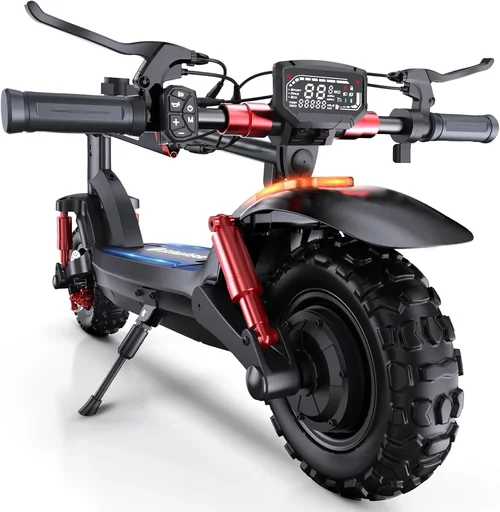
Electric mopeds are no longer just a futuristic concept—they’re here, they’re practical, and they’re transforming how we move through cities, campuses, and neighborhoods. With rising fuel costs, growing environmental awareness, and increasing traffic congestion, more people than ever are turning to electric mopeds as a smart, sustainable, and cost-effective alternative to cars and traditional motorcycles. Whether you’re commuting to work, running errands, or simply exploring your city on two wheels, an electric moped offers a blend of speed, efficiency, and fun that’s hard to beat.
But with so many models flooding the market—from budget-friendly commuter scooters to high-performance electric motorcycles—it’s easy to feel overwhelmed. That’s where this guide comes in. We’ve spent months researching, testing, and analyzing the latest electric mopeds available in 2026 to bring you a comprehensive, expert-level buying guide that cuts through the noise. You’ll learn exactly what to look for, how to avoid common pitfalls, and which models deliver the best value for your needs and budget. From performance specs and battery life to build quality and after-sales support, we’ll cover every critical factor so you can make a confident, informed decision.
The electric moped market has matured significantly over the past few years. What started as a niche segment dominated by lightweight e-scooters has evolved into a diverse ecosystem of vehicles ranging from 30 mph commuter mopeds to 70+ mph electric motorcycles that rival their gas-powered counterparts. Brands like Gotrax, Segway, NIU, Super Soco, and Zero Motorcycles are pushing innovation with longer ranges, faster charging, smarter connectivity, and sleeker designs. At the same time, regulations continue to evolve—some regions classify electric mopeds as bicycles, while others require registration, insurance, or licensing. Understanding these nuances is essential before you buy. This guide will walk you through everything you need to know to choose the right electric moped for your lifestyle, whether you’re a first-time rider or upgrading from an older model.

What to Look for When Buying an Electric Moped
1. Budget & Price Range
Your budget is the foundation of your buying decision. Electric mopeds span a wide price spectrum—from under $1,000 for basic commuter models to over $10,000 for premium performance machines. Setting a realistic budget upfront helps narrow your options and prevents overspending on features you don’t need. Consider not just the upfront cost, but also long-term expenses like maintenance, insurance, charging, and potential upgrades.
Entry-level models (under $1,500) are ideal for short commutes and casual riders. Mid-range mopeds ($1,500–$4,000) offer better build quality, longer range, and improved safety features. Premium models ($4,000–$8,000) deliver high performance, advanced tech, and superior durability. Luxury or performance-oriented electric motorcycles ($8,000+) are built for enthusiasts who prioritize speed, range, and cutting-edge innovation.
Don’t forget to factor in hidden costs. Some cheaper models may require frequent repairs or have limited service networks. Also, check if the price includes accessories like helmets, locks, or charging cables—these can add up quickly if purchased separately.
2. Performance Specifications
Performance is where electric mopeds truly shine—and where they can vary dramatically. Key specs to evaluate include top speed, acceleration, motor power (measured in watts or horsepower), and torque. For city commuting, a top speed of 20–30 mph is usually sufficient and often legally compliant without requiring a motorcycle license. However, if you plan to ride on highways or faster roads, look for models capable of 45–70 mph.
Motor power typically ranges from 250W (for lightweight scooters) to 10,000W+ (for high-performance electric motorcycles). A 500W–1,000W motor is ideal for most urban riders, offering a good balance of speed and efficiency. Torque matters too—higher torque means quicker acceleration from stops, which is crucial in stop-and-go traffic.
Acceleration time (0–30 mph) is another useful metric. Most electric mopeds reach 30 mph in 5–10 seconds. Faster acceleration improves safety and confidence, especially when merging into traffic or climbing hills. Always check real-world performance reviews, as manufacturer claims can be optimistic.
3. Battery Life & Range
Battery life is arguably the most important factor for daily usability. Range—the distance you can travel on a single charge—depends on battery capacity (measured in watt-hours, or Wh), motor efficiency, riding style, terrain, and weather. Most electric mopeds offer ranges between 20 and 100 miles.
For short commutes (under 15 miles round-trip), a 20–30 mile range is adequate. But if you travel longer distances or want flexibility for errands, aim for 40+ miles. High-capacity lithium-ion batteries (e.g., 48V 20Ah = 960Wh) provide longer range but add weight and cost.
Charging time is equally important. Most mopeds take 4–8 hours to fully charge using a standard wall outlet. Fast-charging models (with compatible chargers) can reduce this to 2–3 hours. Consider whether you’ll have access to charging at work or public stations—this can extend your effective range significantly.
Also, pay attention to battery degradation. Lithium-ion batteries lose capacity over time, typically retaining 80% of their original capacity after 500–1,000 charge cycles. Look for models with removable batteries (easier to replace) and reputable battery brands like Samsung, LG, or Panasonic.
4. Build Quality & Durability
A well-built moped lasts longer, performs better, and keeps you safer. Start with the frame—look for sturdy materials like aluminum alloy or reinforced steel. Avoid flimsy plastic frames common in ultra-budget models. Check welds, joints, and overall fit-and-finish; loose parts or rattling noises are red flags.
Suspension matters too. Basic models may have no suspension or only front suspension, which can make rides uncomfortable on rough roads. Dual suspension (front and rear) improves comfort and control, especially on longer rides or uneven terrain.
Tires are another durability factor. Pneumatic (air-filled) tires offer better grip and shock absorption than solid rubber tires, but they’re prone to punctures. Some premium models use tubeless tires or puncture-resistant compounds. Check tire size—larger tires (14″ or 16″) provide better stability and ride quality.
Weather resistance is often overlooked but critical if you ride in rain or snow. Look for IP ratings (e.g., IPX4 or higher) indicating water resistance. Sealed motors, connectors, and battery compartments help prevent damage from moisture.
5. Features & Functionality
Modern electric mopeds come packed with features that enhance convenience, safety, and enjoyment. Start with the display—digital dashboards show speed, battery level, range estimate, and trip data. Backlit displays improve visibility at night.
Lighting is essential for safety. LED headlights, taillights, brake lights, and turn signals are standard on most models. Some include daytime running lights (DRLs) or ambient lighting for style and visibility.
Smart features are increasingly common. Bluetooth connectivity lets you pair your phone for navigation, ride tracking, or firmware updates. Some models offer app integration with features like remote locking, GPS tracking, ride analytics, and anti-theft alerts.
Other useful features include regenerative braking (recaptures energy during braking to extend range), cruise control (for steady highway speeds), and multiple riding modes (Eco, Normal, Sport). Storage options like under-seat compartments, front baskets, or rear racks add practicality for carrying groceries, backpacks, or work gear.
Don’t overlook ergonomics. Adjustable handlebars, comfortable seating, and intuitive controls make long rides more enjoyable. Test the riding position—too upright or too leaned forward can cause fatigue.
6. Brand Reputation & Reliability
Not all brands are created equal. Established brands like Gotrax, NIU, Segway, and Zero Motorcycles have proven track records for quality, innovation, and customer support. They invest in R&D, use reliable components, and often have larger service networks.
Research brand history. How long have they been in business? Do they specialize in electric vehicles or are they diversifying from other products? Read user reviews and expert assessments to gauge consistency in build quality and performance.
Reliability also ties into component sourcing. Brands that use name-brand motors (e.g., Bosch, Bafang), batteries (Samsung, LG), and controllers tend to have fewer issues. Avoid unknown brands with vague specifications or no customer support presence.
Customer service matters too. Can you easily reach support? Are replacement parts available? Do they respond promptly to issues? A reputable brand stands behind its products and helps when problems arise.
7. Warranty & Support
A strong warranty is a sign of confidence in product quality. Most electric mopeds come with a 6-month to 2-year warranty covering the frame, motor, battery, and electronics. Premium brands often offer longer coverage—up to 3 years or more.
Read the fine print. Some warranties exclude batteries (which degrade naturally) or wear items like tires and brakes. Others require registration within a certain timeframe or proof of regular maintenance.
Support infrastructure is just as important. Does the brand have service centers in your area? Can you get parts shipped quickly? Are there certified technicians nearby? Brands with strong dealer networks (like Zero or NIU) offer better long-term support than online-only sellers.
Also, check return and exchange policies. If you buy online, can you return the moped within 30 days if it doesn’t meet expectations? Some retailers offer trial periods or in-person demos.
8. Size & Portability
Size affects where and how you can use your moped. Compact models (under 50 lbs) are easier to store in apartments, carry upstairs, or load into a car. Larger, heavier mopeds (80–150 lbs) offer more stability and storage but are harder to maneuver in tight spaces.
Folding models exist but are rare in true mopeds—most are designed for riding, not portability. If you need to transport your moped frequently, consider a lightweight commuter model or one with a removable battery for easier handling.
Wheelbase and turning radius impact maneuverability. Shorter wheelbases make tight turns easier, ideal for city riding. Longer wheelbases improve high-speed stability but reduce agility.
Storage space is another consideration. Under-seat storage is common, but capacity varies. Some models offer 10+ liters, enough for a helmet and small bag. Others have minimal or no storage. Accessories like rear racks or front baskets can expand carrying capacity.
9. User Reviews & Ratings
Never rely solely on manufacturer specs. Real-world user reviews reveal strengths and weaknesses you won’t find in brochures. Look for patterns—if multiple users report the same issue (e.g., battery drain, brake failure), it’s likely a real problem.
Check multiple sources: Amazon, Reddit, YouTube reviews, and dedicated EV forums. Video reviews are especially helpful—they show the moped in action, demonstrate build quality, and often include range tests.
Pay attention to long-term reviews (6+ months of use). These highlight durability, maintenance needs, and how the moped holds up over time. Also, note the reviewer’s usage—someone riding 50 miles daily will have different insights than a weekend rider.
Be cautious of fake or incentivized reviews. Look for detailed, balanced feedback with photos or videos. Genuine reviews often mention both pros and cons.
Different Types of Electric Mopeds

Common Buying Mistakes to Avoid
❌ Mistake: Ignoring Local Laws and Regulations
Why it’s bad: Electric moped laws vary widely by region. In some areas, models under 20 mph are classified as e-bikes and require no license. Others require registration, insurance, or a motorcycle endorsement. Riding illegally can result in fines, impoundment, or accidents due to mismatched vehicle capabilities.
What to do instead: Research your local Department of Motor Vehicles (DMV) or transportation authority guidelines. Check speed limits, helmet requirements, lane usage rules, and whether your chosen moped needs to be registered. Choose a model that complies with your area’s laws to avoid legal trouble.
❌ Mistake: Overlooking Real-World Range
Why it’s bad: Manufacturers often quote “ideal condition” range—flat roads, no wind, light rider, eco mode. In reality, hills, headwinds, cold weather, and aggressive riding can cut range by 30–50%. Relying on advertised range can leave you stranded.
What to do instead: Look for independent range tests or user reports. Assume you’ll get 70–80% of the claimed range in daily use. Add a safety buffer—if your commute is 20 miles round-trip, choose a moped with at least 30–35 miles of real-world range.
❌ Mistake: Choosing Based Solely on Price
Why it’s bad: The cheapest model isn’t always the best value. Ultra-budget mopeds often use low-quality components, have poor build quality, and lack support. You may end up spending more on repairs or replacements than if you’d bought a mid-range model upfront.
What to do instead: Focus on total cost of ownership. Consider durability, warranty, maintenance needs, and resale value. A $1,500 moped that lasts 5 years is better than a $900 model that fails in 18 months.
❌ Mistake: Skipping the Test Ride
Why it’s bad: Specs don’t tell the whole story. How a moped feels—acceleration, braking, handling, comfort—can only be judged by riding it. A model that looks great on paper might feel unstable, uncomfortable, or underpowered in real life.
What to do instead: Always test ride before buying, if possible. Visit local dealers, attend EV expos, or look for demo days. If buying online, choose retailers with generous return policies (30-day trials). Pay attention to ergonomics, noise levels, and control responsiveness.
❌ Mistake: Neglecting Safety Features
Why it’s bad: Safety should never be an afterthought. Poor lighting, weak brakes, or lack of turn signals increase accident risk. In emergencies, these features can mean the difference between a close call and a serious injury.
What to do instead: Prioritize models with reliable disc brakes (front and rear), bright LED lighting, reflective elements, and stability features like ABS (anti-lock braking). Wear a helmet and consider additional safety gear like gloves and reflective clothing.
❌ Mistake: Forgetting About Maintenance and Repairs
Why it’s bad: Even electric mopeds need maintenance—tire changes, brake adjustments, firmware updates, and battery care. If parts are hard to find or service is unavailable, minor issues can become major problems.
What to do instead: Choose a brand with a strong service network and available spare parts. Learn basic maintenance tasks (e.g., tire pressure, chain lubrication) and keep a toolkit handy. Register your moped and follow the maintenance schedule in the manual.
❌ Mistake: Buying Without Considering Charging Access
Why it’s bad: If you can’t charge at home or work, your moped’s range is limited. Public charging stations for mopeds are still rare, and relying on them can be unreliable or expensive.
What to do instead: Assess your charging options. Can you plug in at home? Is there a safe outlet at work? Do you have access to public charging? If not, consider a model with a removable battery you can charge indoors, or plan your routes around charging opportunities.
Budget Guidelines: How Much Should You Spend?
Entry-Level ($800 – $1,500): These mopeds are perfect for short commutes, students, or casual riders. Expect basic features, modest range (20–30 miles), and speeds up to 20–25 mph. Build quality may be adequate but not exceptional. Ideal for paved roads and light use. Examples include the Gotrax GXL V2 or Segway E22.
Mid-Range ($1,500 – $4,000): This is the sweet spot for most buyers. You’ll get better motors (500W–1,500W), longer range (35–60 miles), improved suspension, and more features like digital displays, LED lights, and app connectivity. Models like the NIU NQi GT or Super Soco TC Max offer excellent value and reliability for daily commuting.
Premium ($4,000 – $8,000): Designed for enthusiasts and serious commuters, these mopeds deliver high performance (45–70 mph), long range (60–100 miles), and advanced tech like regenerative braking, cruise control, and GPS tracking. Build quality is top-notch, with durable frames and premium components. The Zero SR/F or NIU RQi Pro are standout options.
Luxury ($8,000+): These are the Ferraris of the electric moped world. Built for speed, style, and long-distance touring, they offer 70+ mph top speeds, 100+ mile ranges, fast charging, and luxury finishes. Expect cutting-edge tech, superior comfort, and brand prestige. Models like the Zero DSR/X or Cake Kalk& represent the pinnacle of electric two-wheeled innovation.
Expert Tips for Getting the Best Deal
- Buy during off-peak seasons: Demand is highest in spring and summer. Shop in late fall or winter for better deals, clearance sales, or end-of-year discounts.
- Compare retailers: Prices can vary significantly between online stores, local dealers, and manufacturer websites. Check for bundle deals (free helmet, lock, or extended warranty).
- Look for refurbished or open-box models: These are often 10–30% cheaper and come with warranties. Ideal if you want premium features at a lower price.
- Sign up for newsletters: Brands often send exclusive promo codes or early access to sales. You might save 10–15% just by subscribing.
- Consider financing options: Some retailers offer 0% APR financing for 6–12 months. This lets you spread payments without interest, freeing up cash for other expenses.
- Check for government incentives: Some regions offer rebates or tax credits for electric vehicle purchases. These can reduce your effective cost by hundreds of dollars.
- Read the return policy carefully: Ensure you can return or exchange the moped within 30 days if it doesn’t meet expectations. Avoid retailers with restocking fees or short trial periods.
- Negotiate with dealers: Even online prices can sometimes be negotiated—especially for floor models or discontinued versions. It never hurts to ask.

Frequently Asked Questions
Q: Do I need a license to ride an electric moped?
A: It depends on your location and the moped’s specifications. In many U.S. states, mopeds under 20 mph and 50cc equivalent don’t require a motorcycle license. Others require a standard driver’s license or a special permit. Always check local laws before riding.
Q: How long do electric moped batteries last?
A: Most lithium-ion batteries last 500–1,000 charge cycles before dropping to 80% capacity. With daily use, this translates to 2–4 years. Proper care—avoiding extreme temperatures, not draining to 0%, and storing at 50% charge—can extend lifespan.
Q: Can I ride an electric moped in the rain?
A: Yes, if it has a water resistance rating of IPX4 or higher. Avoid submerging the moped or riding through deep puddles. Dry it off after wet rides to prevent corrosion.
Q: How fast can electric mopeds go?
A: Speeds range from 15 mph (basic e-scooters) to over 100 mph (high-performance electric motorcycles). Most commuter mopeds top out at 20–45 mph, which is sufficient for city and suburban roads.
Q: Are electric mopeds safe?
A: When ridden responsibly and equipped with proper safety features, yes. Always wear a helmet, use lights, follow traffic laws, and avoid reckless riding. Models with ABS and good suspension enhance safety.
Q: Can I carry a passenger on an electric moped?
A: Only if the model is designed for two riders. Most commuter mopeds are single-rider only. Check the weight limit and seating design before attempting to carry someone.
Q: How do I maintain my electric moped?
A: Regular maintenance includes checking tire pressure, inspecting brakes, cleaning the chain, updating firmware, and storing the battery properly. Follow the manufacturer’s maintenance schedule and keep a log.
Q: What happens if the battery dies while riding?
A: Unlike gas vehicles, you can’t “coast” far on an electric moped. Most models will gradually lose power and eventually stop. Always monitor your battery level and plan routes with charging options.
Q: Can I upgrade my electric moped’s battery?
A: Some models allow battery upgrades, but compatibility varies. Check with the manufacturer or a certified technician. Upgrading may void the warranty, so proceed with caution.
Q: Are electric mopeds eco-friendly?
A: Yes, especially when charged with renewable energy. They produce zero tailpipe emissions, reduce noise pollution, and have a lower carbon footprint than cars over their lifetime.
Our Final Recommendations
Best for Budget-Conscious Buyers: Gotrax GXL V2 – At under $1,000, it offers solid performance, 20+ mile range, and reliable build quality. Perfect for students and short commutes.
Best Overall Value: NIU NQi GT – Priced around $2,500, it delivers 60+ mile range, 45 mph top speed, app connectivity, and excellent reliability. A top choice for daily commuters.
Best Premium Option: Zero SR/F – With 80+ mile range, 100 mph top speed, fast charging, and premium build, it’s ideal for enthusiasts and long-distance riders. Priced around $17,000.
Best for Beginners: Segway E22 – Lightweight, easy to handle, and affordable. Great for first-time riders learning the ropes of electric two-wheelers.
Best for Advanced Users: Super Soco TS X – A high-performance moped with 70 mph speed, 80-mile range, and off-road capability. Built for riders who want speed and versatility.
Conclusion: Making the Right Choice
Choosing the right electric moped is about more than just specs and price—it’s about finding a vehicle that fits your lifestyle, needs, and values. Whether you’re looking to save money on gas, reduce your carbon footprint, or simply enjoy the thrill of silent, smooth acceleration, there’s an electric moped out there for you. By considering factors like range, performance, build quality, and local regulations, and by avoiding common pitfalls, you can make a smart, confident purchase that serves you well for years to come.
Remember, the best moped isn’t necessarily the fastest or most expensive—it’s the one that matches your daily routine, feels comfortable to ride, and gives you peace of mind. Take your time, do your research, test ride when possible, and prioritize safety and reliability. With the insights from this guide, you’re now equipped to navigate the electric moped market like a pro.
Ready to make the switch? Start by defining your needs, setting a realistic budget, and exploring the models we’ve recommended. The future of urban mobility is electric—and it’s more accessible than ever. Ride smart, ride green, and enjoy the journey.