
Electric bikes have revolutionized personal transportation, offering a sustainable, efficient, and enjoyable way to commute, explore, or simply get around town without breaking a sweat. Whether you’re dodging traffic in the city, cruising through suburban neighborhoods, or tackling hilly terrain on weekend adventures, e-bikes provide an accessible alternative to cars and traditional bicycles. But with so many models flooding the market—ranging from sleek urban commuters to rugged off-road machines—it’s easy to feel overwhelmed, especially when you’re working within a budget.
That’s where this guide comes in. We’ve spent months researching, testing, and comparing dozens of affordable e-bikes to help you make a smart, informed decision. Our goal isn’t to push the most expensive model or the flashiest brand—it’s to help you find the best value for your money. You’ll learn what truly matters when shopping for an e-bike under $2,000, how to avoid common pitfalls, and which features deliver real-world benefits. From battery life and motor power to build quality and after-sales support, we’ll break down every critical factor so you can ride away confident in your purchase.
The affordable e-bike market has matured significantly over the past few years. What once meant compromising on performance or durability now offers surprisingly capable machines that rival mid-tier models from just a few years ago. Brands like Rad Power Bikes, Aventon, Lectric, and Himiway have disrupted the industry by offering high-spec components at accessible price points. Meanwhile, established names like Trek and Specialized have introduced entry-level models to compete. This means more choice, better technology, and stronger warranties—all without requiring a four-figure investment. Whether you’re a first-time buyer or upgrading from a basic model, there’s never been a better time to go electric.

What to Look for When Buying Affordable E-Bikes
1. Budget & Price Range
Setting a realistic budget is the first and most important step in your e-bike journey. Affordable e-bikes typically range from $800 to $2,000, with the sweet spot for most buyers falling between $1,200 and $1,600. At this price, you can expect solid components, reliable motors, and decent battery life—without paying for luxury branding or over-engineered features.
Be wary of models priced below $700. While tempting, these often cut corners on critical components like brakes, drivetrains, or battery management systems. A cheap e-bike might save you money upfront but could cost more in repairs, replacements, or safety risks down the line. Conversely, don’t assume that spending more automatically means better quality—some brands inflate prices due to marketing or distribution costs rather than superior engineering.
When setting your budget, also consider hidden costs: helmets, locks, lights, fenders, and potential maintenance. Some retailers offer bundle deals that include these accessories, which can save you $100–$200. Additionally, check if your employer offers commuter benefits or if your state provides e-bike purchase incentives—some programs reimburse up to 30% of the cost.
2. Performance Specifications
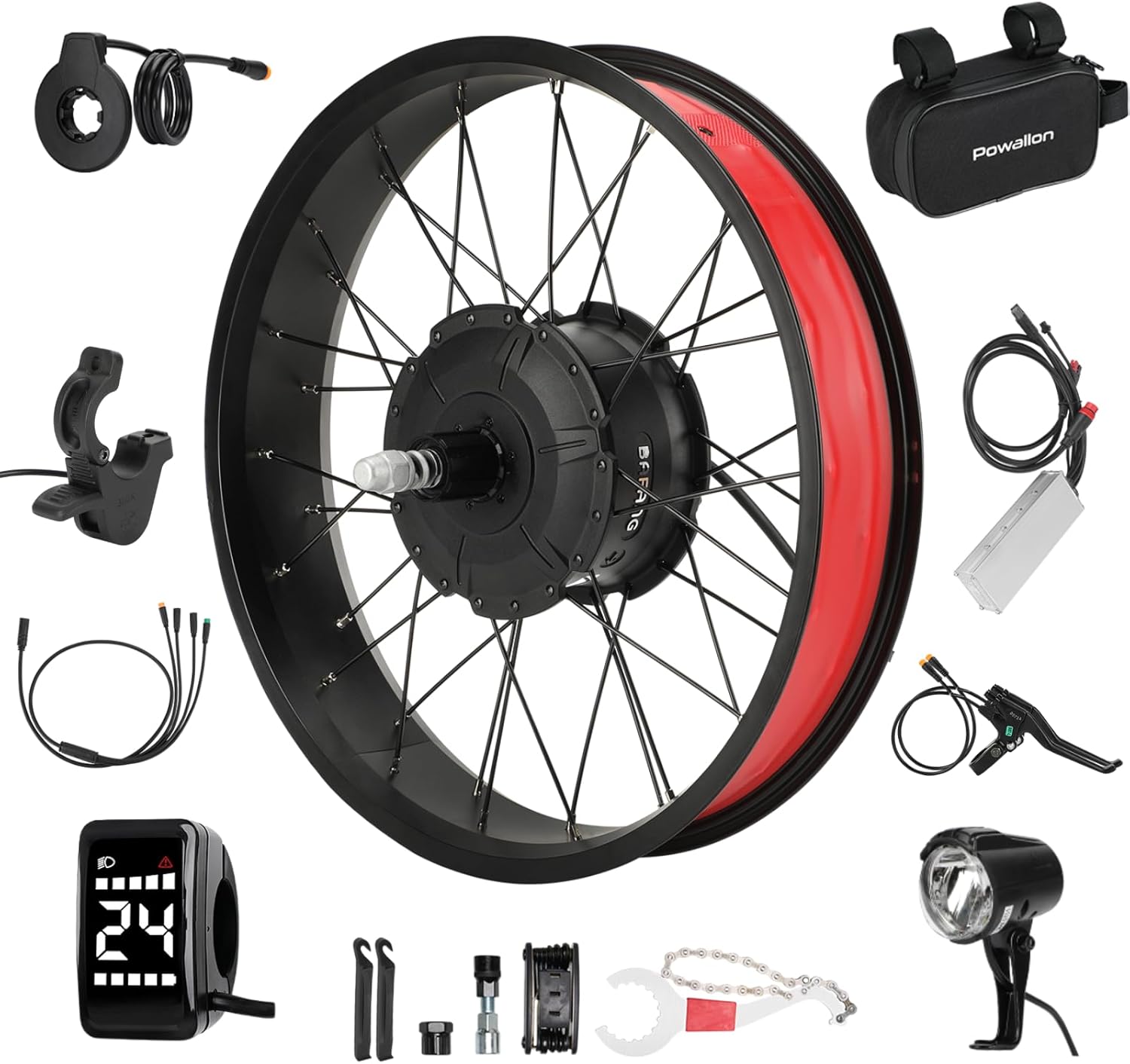
Performance boils down to three core specs: motor power, battery capacity, and range. Most affordable e-bikes use hub motors (located in the front or rear wheel) rated between 250W and 750W. In the U.S., 750W is the legal limit for Class 3 e-bikes, which can reach speeds up to 28 mph with pedal assist. Higher wattage generally means better hill-climbing ability and faster acceleration, but it also drains the battery quicker.
Battery capacity is measured in watt-hours (Wh). A 400Wh battery is common in budget models and provides 20–40 miles of range, depending on terrain, rider weight, and assist level. For longer commutes or hilly areas, aim for 500Wh or higher. Lithium-ion batteries are standard and should last 500–1,000 charge cycles before significant degradation. Look for removable batteries—they’re easier to charge indoors and replace if needed.
Range anxiety is real, but often overblown. Most daily commutes are under 15 miles round-trip, well within the reach of even modest e-bikes. However, if you plan to ride in cold weather (which reduces battery efficiency) or carry heavy loads, prioritize models with larger batteries or dual-battery compatibility.
3. Build Quality & Durability
An e-bike is a mechanical device subjected to constant stress—vibrations, weather, weight, and repeated use. Build quality directly impacts longevity and safety. Start with the frame: aluminum alloy is the standard for affordable e-bikes because it’s lightweight, rust-resistant, and strong enough for daily use. Avoid steel frames unless you need extreme durability—they’re heavier and can corrode.
Check the welds on the frame—clean, consistent welds indicate careful manufacturing. Look for internal cable routing, which protects wires from snags and weather. Suspension matters too: front suspension forks absorb bumps on rough roads, while full suspension (rare under $2,000) is overkill for city riding but useful for trails.
Brakes are non-negotiable. Mechanical disc brakes are common in budget models, but hydraulic discs offer superior stopping power and require less hand force—especially important when riding at higher speeds or in wet conditions. Rim brakes should be avoided entirely on e-bikes due to poor performance under load and wet weather.
4. Features & Functionality
Modern affordable e-bikes come packed with features that enhance comfort, safety, and usability. A clear, backlit LCD display shows speed, battery level, assist mode, and trip data—essential for monitoring your ride. Some models include Bluetooth connectivity for app integration, allowing you to track rides, lock the bike remotely, or update firmware.
Lighting is crucial for safety. Integrated front and rear LED lights powered by the main battery are a huge plus—they’re always charged and legally required in many areas. Fenders and rear racks are practical additions for commuters carrying bags or riding in rain. Puncture-resistant tires (like Schwalbe or Kenda) reduce flat risks, while wider tires (2.0”–2.4”) offer better grip and comfort on uneven surfaces.
Pedal assist levels vary from 3 to 7 modes. More isn’t always better—five well-calibrated levels are sufficient for most riders. Throttle functionality (twist-grip or thumb lever) lets you ride without pedaling, useful for starting from stops or climbing steep hills. Note: Class 2 e-bikes have throttles; Class 3 do not, per U.S. regulations.
5. Brand Reputation & Reliability
Not all e-bike brands are created equal. Established companies like Rad Power Bikes, Aventon, and Lectric have built strong reputations for delivering consistent quality, transparent specs, and responsive customer service. They also invest in R&D, resulting in better-integrated systems and longer product lifecycles.
Be cautious with unknown brands sold exclusively through Amazon or eBay. While some offer decent value, many lack proper certifications (like UL 2849 for electrical safety), have poor documentation, or disappear after a few years—leaving you without support. Look for brands that provide detailed spec sheets, user manuals, and clear warranty terms.
Community feedback matters. Check forums like Reddit’s r/ebikes or Electric Bike Report for real user experiences. A brand might look great on paper, but if owners report frequent motor failures or unresponsive support, it’s a red flag. Also, consider availability of replacement parts—can you easily find a new brake pad or charger?
6. Warranty & Support
A good warranty is your safety net. Most reputable affordable e-bike brands offer at least a 1-year comprehensive warranty covering the motor, battery, and frame. Some, like Rad Power Bikes, extend this to 2 years. The battery often has a separate warranty (typically 1–2 years), with coverage for capacity loss below 70%.
Read the fine print: many warranties exclude “wear and tear” items like tires, chains, or brake pads. Also, check if the warranty is voided by modifications, improper charging, or use in extreme conditions. Customer support responsiveness is just as important—can you reach a human quickly? Do they offer repair guides or video tutorials?
Local service matters too. If your e-bike breaks down, can a nearby bike shop fix it? Some brands partner with local dealers, while others require shipping the entire bike back—a costly and time-consuming process. Brands with strong dealer networks (like Trek or Giant) offer better long-term support, even on entry-level models.
7. Size & Portability
E-bikes are heavier than regular bikes—typically 45–70 lbs—due to the motor and battery. This affects handling, storage, and transport. If you live in an apartment or need to carry your bike upstairs, consider a step-through frame design, which lowers the top tube for easier mounting.
Folding e-bikes are gaining popularity for their compact storage and portability. Models like the Lectric XP or Himiway Zebra fold down to fit in car trunks or under desks. However, they often sacrifice battery size and ride quality for convenience. Non-folding models generally offer better stability and longer range.
Frame size matters for comfort. Most brands offer S, M, L, and XL options based on rider height. A poorly sized bike leads to back pain, numb hands, or inefficient pedaling. Test ride if possible, or use online fit calculators. Adjustable stems and seat posts help fine-tune fit, but can’t compensate for a fundamentally wrong frame size.
8. User Reviews & Ratings
User reviews provide unfiltered insights that specs alone can’t reveal. Look beyond star ratings—read detailed reviews that discuss real-world performance, reliability, and customer service experiences. Pay attention to patterns: if multiple users report the same issue (e.g., battery draining overnight or display freezing), it’s likely a design flaw.
Be skeptical of overly positive reviews posted shortly after launch—they may be incentivized or fake. Instead, focus on reviews from verified purchasers 3–6 months after buying. Video reviews on YouTube are especially valuable—you can see the bike in action, hear the motor noise, and observe build quality.
Also check return rates and complaint trends on platforms like the Better Business Bureau or Consumer Affairs. A high number of unresolved complaints is a major red flag, even if the bike has great specs on paper.
Different Types of Affordable E-Bikes
Common Buying Mistakes to Avoid
❌ Mistake: Prioritizing Price Over Safety
Why it’s bad: The cheapest e-bikes often use substandard brakes, uncertified batteries, or weak frames that can fail under stress. A malfunction at 20 mph can lead to serious injury.
What to do instead: Invest in certified components—look for UL 2849 certification for electrical systems and ISO 4210 for frame safety. Spend a little more on reliable brakes and a sturdy frame—it’s worth the peace of mind.
❌ Mistake: Ignoring Local Laws and Classifications
Why it’s bad: E-bike laws vary by state and city. Riding a Class 3 e-bike on a trail that only allows Class 1 can result in fines or bans. Some areas restrict throttle use or require helmets.
What to do instead: Check your local regulations before buying. Choose a bike that matches your intended use—Class 1 for bike paths, Class 2 for casual riding with throttle, Class 3 for speed on roads.
❌ Mistake: Overlooking Battery Replacement Costs
Why it’s bad: Batteries degrade over time and typically need replacement every 3–5 years. Some brands charge $500+ for a new battery, which can exceed half the bike’s original value.
What to do instead: Choose a model with a removable, widely available battery from a reputable supplier. Avoid proprietary batteries that can only be sourced from the manufacturer.
❌ Mistake: Skipping the Test Ride
Why it’s bad: E-bikes handle differently than regular bikes due to their weight and motor assist. A bike that looks great online might feel unstable, too heavy, or uncomfortable in person.
What to do instead: Visit a local dealer or attend an e-bike demo event. If buying online, choose retailers with generous return policies (30 days or more) and free return shipping.
❌ Mistake: Assuming All “750W” Motors Are Equal
Why it’s bad: Some brands advertise “750W peak” motors that only deliver that power in short bursts. Continuous power output is what matters for sustained climbing and speed.
What to do instead: Look for specs that list “continuous power” (e.g., 500W continuous, 750W peak). Real-world performance matters more than marketing numbers.
❌ Mistake: Neglecting Maintenance Requirements
Why it’s bad: E-bikes require regular maintenance—chain lubrication, brake adjustments, tire pressure checks. Ignoring this leads to premature wear and costly repairs.
What to do instead: Learn basic maintenance or find a local shop familiar with e-bikes. Budget $100–$200 annually for tune-ups and parts.
❌ Mistake: Buying Based on Looks Alone
Why it’s bad: A stylish bike with poor ergonomics or weak components will quickly become frustrating to ride. Form should follow function.
What to do instead: Prioritize comfort, fit, and component quality. Choose a color or design you like, but never sacrifice performance for aesthetics.
Budget Guidelines: How Much Should You Spend?
Entry-Level ($800–$1,200): This tier includes basic commuter and folding e-bikes with 250W–500W motors, 300–400Wh batteries, and mechanical disc brakes. Expect simpler displays, fewer assist levels, and minimal accessories. Ideal for short, flat commutes under 10 miles. Models like the Swagtron EB5 Pro or Ancheer AN-EB003 fit here—functional but limited in capability.
Mid-Range ($1,200–$1,600): The sweet spot for most buyers. These bikes offer 500W–750W motors, 48V 13Ah (624Wh) batteries, hydraulic disc brakes, and full-featured displays. You’ll find integrated lights, fenders, racks, and better suspension. Brands like Rad Power Bikes (RadCity), Aventon (Level.2), and Lectric (XP 3.0) dominate this space with excellent value and reliability.
Premium ($1,600–$2,000): For enthusiasts and serious commuters. Expect higher-end components: Shimano drivetrains, torque sensors (for smoother pedal assist), larger batteries (700Wh+), and advanced displays with GPS or app connectivity. Fat tire models like the Himiway Cruiser or Aventon Aventure fall here—capable of off-road adventures and long-range rides.
Luxury ($2,000+): While beyond our “affordable” scope, some buyers stretch into this range for top-tier performance. These bikes feature carbon frames, dual batteries, full suspension, and smart integration. However, the diminishing returns are steep—most riders won’t notice the difference beyond $2,000 unless they’re racing or hauling extreme loads.
Expert Tips for Getting the Best Deal
- Buy Direct from Manufacturers: Brands like Rad Power Bikes, Lectric, and Himiway sell directly online, cutting out retailer markups. You often get better prices, exclusive colors, and direct customer support.
- Check for Refurbished or Open-Box Models: Many companies sell certified refurbished e-bikes at 15–30% off. These are tested, cleaned, and come with full warranties—essentially new bikes at a discount.
- Leverage Employer or Government Incentives: Some cities offer e-bike rebates (e.g., $500 in Denver, $1,000 in California). Employers may reimburse commuting costs through pre-tax programs.
- Compare Total Cost of Ownership: Factor in battery life, maintenance needs, and resale value. A $1,400 bike with a 5-year battery may cost less long-term than a $1,000 bike needing a $500 battery replacement in 2 years.
- Read the Return Policy Carefully: Ensure you have at least 14–30 days to return the bike if it doesn’t meet expectations. Some retailers charge restocking fees or require you to cover return shipping.
- Join Online Communities: Forums and Facebook groups often share exclusive discount codes, flash sales, or group buy opportunities.
- Consider Used E-Bikes: Well-maintained used models can offer huge savings. Check local classifieds, but always verify battery health and frame condition before buying.
- Negotiate Accessories: Some dealers will throw in helmets, locks, or lights for free if you ask—especially during slow sales periods.

Frequently Asked Questions
Q: How far can an affordable e-bike really go on one charge?
A: Most affordable e-bikes with 400–600Wh batteries offer 25–50 miles of range. Real-world range depends on terrain, rider weight, assist level, and weather. For example, a 160-lb rider using low assist on flat ground might get 50 miles, while the same rider climbing hills on high assist may only get 25.
Q: Are affordable e-bikes safe?
A: Yes, if they meet safety certifications and are properly maintained. Look for UL 2849 certification for electrical systems and ISO 4210 for frame integrity. Avoid no-name brands with no safety documentation.
Q: Can I ride an e-bike in the rain?
A: Most e-bikes are water-resistant but not waterproof. Avoid submerging the battery or motor. Riding in light rain is fine, but dry and store the bike afterward to prevent corrosion.
Q: Do I need a license or insurance for an e-bike?
A: In most U.S. states, no license or insurance is required for Class 1, 2, or 3 e-bikes. However, some cities have specific rules—check local regulations.
Q: How often should I charge the battery?
A: Charge when the battery drops to 20–30%. Avoid letting it drain completely. Store the battery at 50–70% charge if not using the bike for weeks.
Q: Can I upgrade components on an affordable e-bike?
A: Yes, but with limits. You can upgrade tires, saddles, or lights easily. Motor and battery upgrades are complex and often not cost-effective—better to buy a higher-spec model upfront.
Q: What’s the difference between hub motors and mid-drive motors?
A: Hub motors are in the wheel—simpler, cheaper, and common in affordable e-bikes. Mid-drive motors sit near the pedals, offering better weight distribution and efficiency, but are rare under $2,000.
Q: How heavy is too heavy for an e-bike?
A: Most riders can handle bikes up to 60 lbs. Over 65 lbs becomes difficult to lift or maneuver without motor assist. Consider weight if you need to carry the bike upstairs.
Q: Will an e-bike help me lose weight?
A: Yes! Even with pedal assist, you’re still pedaling and burning calories. Regular e-bike use improves cardiovascular health and encourages more outdoor activity.
Q: Can I take my e-bike on public transportation?
A: Many buses and trains allow e-bikes, but policies vary. Folding e-bikes are usually permitted; full-size bikes may require off-peak hours or special racks.
Our Final Recommendations
Best for Budget-Conscious Buyers: Lectric XP 3.0 ($999) – A folding fat-tire e-bike with 500W motor, 48V 13Ah battery, and hydraulic brakes. Perfect for apartment dwellers or multi-modal commuters who need portability without sacrificing performance.
Best Overall Value: Rad Power Bikes RadCity 5 Plus ($1,499) – Combines a powerful 750W motor, 672Wh battery, full suspension, and premium components like Shimano drivetrain and integrated lights. Ideal for daily commuting and weekend rides.
Best Premium Option (Under $2,000): Aventon Aventure ($1,799) – A fat-tire adventure e-bike with torque sensor, 750W motor, 720Wh battery, and sleek design. Excellent for off-road exploration and long-distance touring.
Best for Beginners: Aventon Level.2 ($1,399) – User-friendly with step-through frame, intuitive display, and reliable performance. Great for new riders transitioning from traditional bikes.
Best for Advanced Users: Himiway Cruiser ($1,699) – Built for endurance with a 750W motor, 720Wh battery, and rugged fat tires. Includes a rear rack and fenders, making it ideal for heavy loads and rough terrain.
Conclusion: Making the Right Choice
Choosing the best affordable e-bike isn’t about finding the cheapest option or the most features—it’s about matching the right machine to your lifestyle, needs, and budget. Whether you’re commuting to work, exploring local trails, or simply reducing your carbon footprint, there’s an e-bike under $2,000 that can deliver exceptional value and enjoyment.
Remember to prioritize safety, build quality, and real-world performance over flashy specs or low prices. Take advantage of test rides, read user reviews, and don’t hesitate to invest a little more for better components and support. With the right e-bike, you’re not just buying a vehicle—you’re investing in freedom, health, and sustainability.
So take the leap. Charge up, hop on, and feel the wind in your hair as you glide effortlessly through your day. The perfect affordable e-bike is out there—and now you know exactly how to find it.