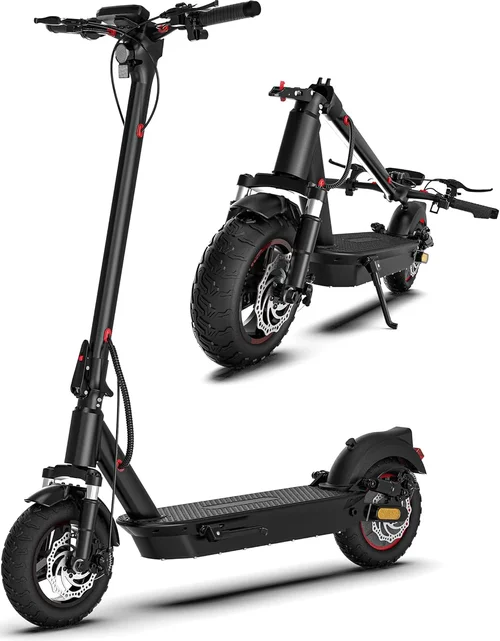
Electric scooters have evolved far beyond their urban commuter roots. Once relegated to smooth sidewalks and bike lanes, today’s off-road electric scooters are built to conquer dirt trails, gravel paths, rocky inclines, and even muddy backcountry terrain. Whether you’re an adrenaline junkie seeking weekend trail thrills, a weekend warrior exploring forest paths, or simply someone who refuses to let rough terrain stand between you and your destination, the right off-road e-scooter can transform your ride experience.
This comprehensive guide is designed for anyone serious about buying a high-performance off-road electric scooter in 2026. We’ve tested dozens of models, analyzed thousands of user reviews, and consulted with industry experts to bring you the most up-to-date, practical advice. You’ll learn exactly what separates a capable off-road scooter from a flimsy urban model, how to match your needs to the right specs, and where to find the best value without compromising safety or durability. From budget-friendly entry points to premium beasts with dual suspension and all-terrain tires, we cover it all.
The off-road e-scooter market has exploded in recent years, driven by advances in battery tech, motor power, and ruggedized design. Brands like Segway-Ninebot, Dualtron, Kaabo, and Apollo have pushed the boundaries of what’s possible, while newer players bring innovation at lower price points. With so many options flooding the market—and so many misleading claims—it’s easy to make a costly mistake. This guide cuts through the noise, giving you the tools to choose wisely based on real-world performance, not marketing hype.

What to Look for When Buying Off-Road Electric Scooters
1. Motor Power & Performance
The heart of any off-road electric scooter is its motor—or motors. Unlike city scooters that typically use 250W–500W hub motors, true off-road models start at 800W and often feature dual-motor setups delivering 1,500W to 3,000W combined. Why does this matter? Off-road terrain demands torque, not just speed. Climbing steep hills, powering through loose gravel, or accelerating from a stop on uneven ground requires serious pulling power.
Look for continuous power ratings (not peak or “burst” power), which indicate sustained performance under load. A scooter rated at 1,200W continuous will outperform one claiming 2,000W peak but only 600W continuous. Also consider motor placement: rear-wheel drive offers better traction on climbs, while dual motors provide balanced handling and redundancy. For serious trail riding, aim for at least 1,000W total continuous power.
2. Tire Type & Size
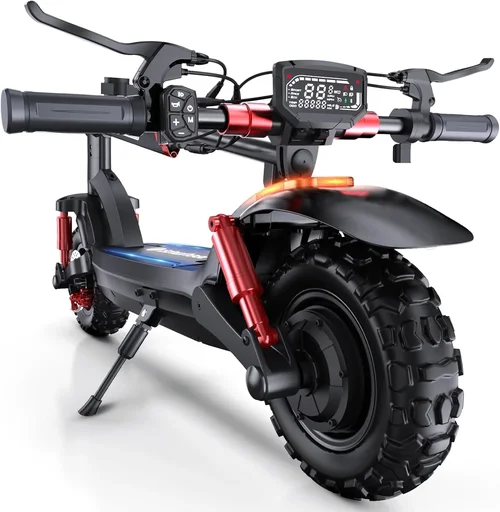
Tires are your scooter’s only contact with the ground—and on rough terrain, they make or break your ride. Off-road scooters must use pneumatic (air-filled) tires, preferably 10 inches or larger, with aggressive tread patterns. Solid or honeycomb tires may be puncture-proof, but they offer zero shock absorption and become dangerously slippery on wet or loose surfaces.
Wider tires (4–6 inches) provide better stability and floatation over soft ground like sand or mud. Knobby treads grip dirt and rocks, while reinforced sidewalls resist cuts. Some premium models even feature tubeless tires for reduced rolling resistance and fewer flats. Avoid anything under 8 inches or with slick, commuter-style tread—it simply won’t handle real off-road conditions.
3. Suspension System
Without proper suspension, every bump, root, and rock sends jolts directly through your wrists and spine. Quality off-road scooters feature dual suspension—front and rear—using hydraulic or spring-based systems. Entry-level models might have basic spring forks, but serious riders should look for adjustable hydraulic shocks with at least 2–3 inches of travel.
Suspension isn’t just about comfort; it’s critical for control. On uneven trails, locked wheels lose traction, increasing the risk of skidding or wiping out. A well-tuned suspension keeps tires grounded, improving braking, cornering, and overall safety. Test rides are essential here—what feels smooth on pavement may feel mushy or harsh on dirt.
4. Battery Capacity & Range
Battery life determines how far you can go before needing a recharge—and off-road riding drains batteries faster due to constant acceleration, climbing, and regenerative braking inefficiencies. Look for lithium-ion batteries with capacities of at least 15Ah (amp-hours) and voltages of 48V or higher. Higher voltage improves efficiency and motor response.
Real-world range varies wildly based on terrain, rider weight, and speed. A scooter claiming “50 miles” on flat pavement might only deliver 20–25 miles off-road. Always check independent test results or user reports. Removable batteries are a huge plus for long expeditions, allowing you to carry spares. Also verify charging time—some high-capacity packs take 8+ hours to recharge.
5. Build Quality & Frame Material
Off-road scooters endure abuse that would destroy a typical commuter model. The frame must be constructed from aircraft-grade aluminum (6061 or 7075) or reinforced steel, with welded joints rather than bolted assemblies. Check for IP ratings—IPX4 is minimum for water resistance, but IPX5 or higher is ideal for muddy or rainy conditions.
Pay attention to细节: Are the handlebars reinforced? Is the deck non-slip and wide enough for stable footing? Are all cables internally routed to prevent snagging? Rust-proof hardware and sealed bearings are non-negotiable. A poorly built scooter might survive a few weekend rides, but it won’t last a season of serious trail use.
6. Braking System
Stopping power is as important as going power—especially when descending steep, rocky trails. Mechanical disc brakes (front and rear) are standard on decent off-road models, but hydraulic discs offer superior modulation and stopping force with less hand effort. Regenerative braking can supplement physical brakes but shouldn’t replace them.
Look for scooters with ABS or electronic brake force distribution to prevent wheel lockup on loose surfaces. Drum brakes are outdated for off-road use—they overheat quickly and lack precision. Always test braking performance during a demo ride, particularly on downhill sections.
7. Weight Capacity & Rider Fit
Most off-road scooters support 220–330 lbs, but always verify the manufacturer’s stated limit. Exceeding it risks motor burnout, frame stress, and reduced range. Taller riders should check deck length and handlebar height—cramped ergonomics lead to fatigue and poor control.
Consider your own weight plus gear (backpack, water, tools). If you’re near the upper limit, opt for a model with a reinforced deck and dual motors for extra safety margin. Some premium scooters offer adjustable stems or extended decks for better fit.
8. Portability & Foldability
While off-road scooters prioritize durability over portability, many riders still need to transport them in cars or store them at home. Look for scooters with secure folding mechanisms that lock tightly when deployed. Weight matters—anything over 70 lbs becomes unwieldy for frequent lifting.
Some models include wheels on the deck for easier dragging, or quick-release levers for partial disassembly. However, don’t sacrifice structural integrity for foldability. A scooter that feels wobbly when unfolded is unsafe on trails.
Different Types of Off-Road Electric Scooters

Common Buying Mistakes to Avoid
❌ Mistake: Prioritizing Top Speed Over Torque
Why it’s bad: Many buyers get seduced by “40 mph” claims, but off-road riding rarely involves sustained high speeds. What matters more is low-end torque for climbing and acceleration from stops. A scooter that hits 40 mph on pavement may struggle to climb a 15% grade off-road.
What to do instead: Focus on motor wattage, voltage, and real-world hill-climbing ability. Read reviews that mention incline performance, not just top speed.
❌ Mistake: Ignoring Tire Quality
Why it’s bad: Cheap pneumatic tires puncture easily, lose air in cold weather, and offer poor grip. Some brands use thin, low-quality rubber that wears out in weeks.
What to do instead: Choose scooters with name-brand tires (like CST or Maxxis) or at least reinforced, knobby treads. Consider upgrading to puncture-resistant tubes or sealant.
❌ Mistake: Overlooking Suspension
Why it’s bad: Riding without suspension on rocky trails leads to hand fatigue, loss of control, and long-term joint pain. It also increases wear on the scooter’s frame.
What to do instead: Never buy an off-road scooter without front suspension, and prefer dual suspension for anything beyond mild trails.
❌ Mistake: Believing Marketing Range Claims
Why it’s bad: Manufacturers often quote range based on ideal conditions: flat pavement, light rider, low speed. Off-road range is typically 40–60% lower.
What to do instead: Divide advertised range by 2 for a realistic off-road estimate. Look for scooters with removable batteries if you plan long rides.
❌ Mistake: Skipping the Test Ride
Why it’s bad: Specs don’t tell the whole story. A scooter might look powerful on paper but feel unstable, jerky, or poorly balanced in real use.
What to do instead: Always test ride before buying, especially on uneven ground. If buying online, check return policies and look for retailers offering demo units.
❌ Mistake: Neglecting After-Sales Support
Why it’s bad: Off-road scooters break more often than commuters. Without reliable warranty service, a $2,000 scooter can become a paperweight after a minor crash.
What to do instead: Research brand reputation for customer service. Brands like Kaabo and Apollo have strong US support networks; unknown brands may leave you stranded.
Budget Guidelines: How Much Should You Spend?
Entry-Level ($500–$800): These scooters offer basic off-road capability with single motors (800W–1,000W), small pneumatic tires (8–10″), and minimal suspension. Ideal for light trails, gravel paths, or occasional weekend use. Expect shorter range (15–20 miles) and lower build quality. Great for beginners or casual riders, but not suited for technical terrain.
Mid-Range ($800–$1,500): The sweet spot for most buyers. Models in this range feature dual motors (1,200W–2,000W total), 10″ knobby tires, dual suspension, and improved batteries (48V, 15–20Ah). You’ll get 25–35 miles of real off-road range, better braking, and sturdier frames. Perfect for regular trail riding, hill climbing, and mixed terrain.
Premium ($1,500–$3,000): Built for enthusiasts and serious riders. Expect high-output dual motors (2,000W–3,000W), 11–13″ wide tires, hydraulic suspension, and advanced features like app connectivity, ride modes, and regenerative braking. Range exceeds 40 miles, and build quality is top-tier. These scooters handle steep inclines, rocky descents, and long expeditions with ease.
Luxury ($3,000+): For professionals, extreme adventurers, or those who demand the absolute best. Think Dualtron Thunder 2, Kaabo Wolf King GT, or Apollo Pro Ludicrous. These machines boast 3,000W+ power, full hydraulic suspension, tubeless tires, carbon fiber components, and military-grade durability. They’re overkill for casual use but unmatched for performance and longevity.

Expert Tips for Getting the Best Deal
- Buy during off-season: Prices drop significantly in late fall and winter (October–February) as retailers clear inventory. Many brands offer holiday sales or “end-of-year” discounts.
- Shop authorized dealers: Avoid third-party Amazon sellers with no service history. Authorized dealers provide genuine warranties, firmware updates, and repair parts.
- Check for bundle deals: Some retailers include free accessories like helmets, phone mounts, or spare tires—worth $100+ in value.
- Negotiate gently: Especially at local shops, asking for a small discount or free shipping can work, particularly on display models.
- Read the fine print on warranties: Many cover only 6–12 months on motors and batteries. Look for brands offering 18–24 months, and avoid “limited” warranties that exclude common failures.
- Consider refurbished units: Certified refurbished scooters from reputable brands often come with full warranties at 20–30% off retail.
- Join owner forums: Communities like Reddit’s r/ElectricScooters or ScooterGrid share exclusive promo codes, flash sales, and insider deals.
- Test before you commit: Attend local e-scooter expos or demo days. Feeling the scooter in action is the best way to avoid buyer’s remorse.

Frequently Asked Questions
Q: Can off-road scooters be used on pavement?
A: Absolutely! Most off-road scooters perform excellently on paved roads, often better than commuter models due to their superior suspension and stability. Just be mindful of local laws—some high-speed models may require registration or helmets.
Q: Are off-road scooters legal on trails?
A: It depends on local regulations. Many public trails allow e-scooters, but some restrict motorized vehicles to designated paths. Always check with park authorities before riding. Private trails or OHV areas are usually more permissive.
Q: How often do off-road scooters need maintenance?
A: More than commuter scooters. Expect to check tire pressure weekly, lubricate suspension monthly, and inspect brakes and bolts after every few rides. Clean the scooter thoroughly after muddy or sandy outings to prevent corrosion.
Q: What’s the lifespan of an off-road electric scooter?
A: With proper care, 3–5 years is typical. Motors and batteries degrade over time—lithium batteries lose capacity after 500–800 charge cycles. High-end models with replaceable parts can last much longer.
Q: Can I upgrade my scooter’s battery or motor?
A: Some brands support upgrades, but most don’t. Modifying voids warranties and can cause safety issues. If you want more power or range, it’s usually better to buy a higher-spec model upfront.
Q: Are off-road scooters safe for beginners?
A: They can be, but start with a mid-power model (1,000W–1,500W) and practice on easy trails. Always wear full protective gear—helmet, gloves, knee/elbow pads—and learn braking and balance techniques before tackling technical terrain.
Q: Do I need insurance for an off-road scooter?
A: Not typically required, but recommended for high-value models. Some homeowners’ policies cover personal injury or damage, or you can purchase specialized e-scooter insurance.
Q: How do I store my scooter in winter?
A: Store in a dry, temperature-controlled space. Charge the battery to 50–60% before long-term storage, and top it up every 2–3 months to prevent deep discharge.
Q: Can off-road scooters handle snow?
A: Light snow is manageable with knobby tires, but deep or icy conditions are dangerous. Avoid riding in winter unless you have studded tires and experience—most off-road scooters aren’t designed for snow.
Our Final Recommendations
Best for Budget-Conscious Buyers: Segway X260 – At around $1,200, it delivers surprising off-road performance with dual 800W motors, 10″ pneumatic tires, and decent suspension. Great for light trails and first-time off-roaders.
Best Overall Value: Apollo Explore – Priced at $1,499, it offers dual 1,000W motors, 10″ tubeless tires, hydraulic suspension, and a 48V 21Ah battery for 40+ miles of range. Reliable, well-supported, and built to last.
Best Premium Option: Dualtron Ultra 2 – With 5,400W peak power, 13″ tires, and full hydraulic suspension, this $3,500 beast dominates any terrain. Ideal for serious riders who demand maximum performance.
Best for Beginners: Kaabo Mantis 8 – A user-friendly entry at $1,199, featuring 800W dual motors, 8″ tires, and smooth handling. Easy to learn on, yet capable enough for moderate off-road use.
Best for Advanced Users: Kaabo Wolf King GT Pro – This $4,299 powerhouse boasts 6,720W peak, dual hydraulic suspension, and a top speed of 62 mph. Built for experts who ride hard and expect perfection.
Conclusion: Making the Right Choice
Choosing the best off-road electric scooter isn’t just about picking the fastest or most expensive model—it’s about matching your riding style, terrain, and budget to a scooter that delivers reliable, safe, and thrilling performance. Throughout this guide, we’ve emphasized the importance of motor power, tire quality, suspension, battery life, and build integrity. These aren’t luxuries; they’re necessities for anyone venturing beyond paved roads.
Remember, the “best” scooter is the one that fits your needs, not the one with the flashiest specs. A weekend explorer doesn’t need a 6,000W monster, just as a trail conqueror shouldn’t settle for a weak commuter. Take the time to test ride, read real user reviews, and prioritize durability over gimmicks. And always invest in safety gear—your adventures are only as good as your last safe landing.
As the off-road e-scooter market continues to innovate in 2026, one thing remains constant: preparation pays off. Use this guide as your roadmap, ask questions, compare options, and don’t rush the decision. The right scooter will open up a world of adventure, turning every trail into a new opportunity for exploration. So gear up, charge up, and hit the dirt with confidence—your perfect off-road ride is out there, waiting.