
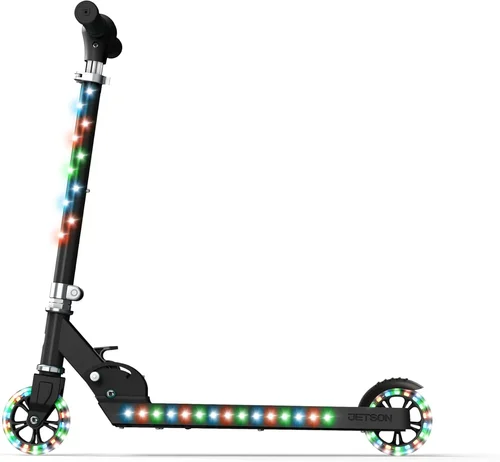
Electric scooters have come a long way since their humble beginnings as lightweight urban commuters. While early models were designed primarily for smooth city sidewalks and bike lanes, today’s market offers a thrilling alternative: off-road electric scooters built to conquer dirt trails, gravel paths, grassy hills, and even rocky terrain. Whether you’re an adventure seeker looking to explore nature trails, a weekend warrior who loves outdoor recreation, or simply someone tired of being limited by pavement-only mobility, an off-road electric scooter can open up a whole new world of possibilities.
This comprehensive buying guide is designed to help you navigate the rapidly evolving landscape of rugged electric scooters in 2026. With dozens of models flooding the market—from budget-friendly entry-level options to high-performance beasts capable of 40+ mph speeds—it’s easy to feel overwhelmed. Our goal is to cut through the noise and deliver expert-level insights that empower you to make a smart, informed decision based on your specific needs, riding style, and budget. You’ll learn how to evaluate critical performance specs, understand build quality differences, avoid common pitfalls, and ultimately choose the best off-road electric scooter for your adventures.
The off-road e-scooter segment has matured significantly over the past few years. What once was a niche category dominated by a handful of experimental models now features refined designs from established brands like Segway-Ninebot, Dualtron, Kaabo, and emerging innovators such as Apollo and Nanrobot. These scooters boast beefier frames, suspension systems, all-terrain tires, and powerful motors that can handle inclines and uneven surfaces with ease. As battery technology improves and manufacturing costs decrease, even mid-range models now offer impressive range and durability. This guide will walk you through every essential consideration, from motor power and tire type to waterproof ratings and warranty coverage, so you can ride confidently—no matter where the trail leads.

What to Look for When Buying an Off-Road Electric Scooter
1. Motor Power and Performance
Motor power is arguably the most critical factor when selecting an off-road electric scooter. Unlike city scooters that prioritize efficiency and quiet operation, off-road models need raw torque and sustained power to climb steep hills, accelerate quickly on loose terrain, and maintain speed over long distances. Most off-road scooters feature dual motors (one for each wheel), with total power outputs ranging from 1,000W to over 8,000W in extreme cases.
Look for scooters with at least 1,500W combined motor power if you plan to tackle moderate trails or carry heavier loads. For serious off-roading—think mountain trails, deep sand, or muddy paths—you’ll want 3,000W or more. Pay attention not just to peak wattage but also continuous power ratings, as some manufacturers inflate numbers by quoting short bursts rather than sustained output. Additionally, consider motor placement: hub motors (integrated into wheels) are common and reliable, while mid-drive motors offer better weight distribution but are rarer in e-scooters.
2. Battery Capacity and Range
Battery capacity directly impacts how far you can ride before needing a recharge—a crucial consideration for off-road adventures where charging stations are nonexistent. Measured in watt-hours (Wh), battery capacity determines both range and power delivery. Off-road scooters typically use high-discharge lithium-ion (Li-ion) or lithium polymer (LiPo) batteries, often in the 600Wh to 3,000Wh range.
For casual trail riding within a 10–15 mile radius, a 700–1,000Wh battery should suffice. However, if you’re planning multi-hour expeditions or live in hilly areas, aim for 1,500Wh or higher. Keep in mind that aggressive riding, heavy loads, and cold weather can reduce actual range by 20–40% compared to manufacturer claims. Also, verify the battery’s discharge rate (C-rating)—higher rates support stronger motor output without voltage sag.
Charging time matters too. Fast-charging capabilities (e.g., 3–5 hours for a full charge) are convenient, but ensure your home electrical setup can handle the amperage. Some premium models even support regenerative braking, which recaptures energy during deceleration—though this adds minimal range in practice.
3. Tire Type and Size
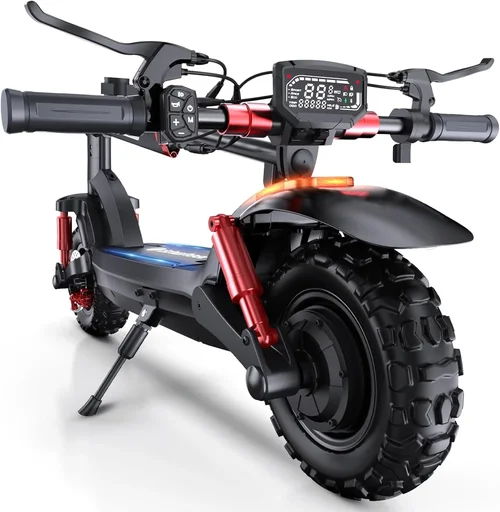
Off-road capability hinges largely on tire design. Pneumatic (air-filled) tires are the gold standard for rugged terrain because they absorb shocks, provide excellent grip, and conform to uneven surfaces. Look for tires at least 10 inches in diameter—12″ to 14″ is ideal for serious off-roading. Wider treads (2.5″ to 4″ wide) with aggressive knobby patterns offer superior traction on dirt, mud, and gravel.
Solid or honeycomb tires may seem appealing due to their puncture-proof nature, but they sacrifice comfort and grip on rough trails. They’re better suited for urban environments with occasional potholes. If you choose pneumatic tires, invest in a portable tire inflator and patch kit—flat tires are the number one complaint among off-road scooter riders.
Tubeless tires are another emerging trend, reducing the risk of pinch flats and allowing lower pressures for better traction. However, they require compatible rims and may be harder to repair in the field.
4. Suspension System
A robust suspension system is non-negotiable for off-road riding. Without it, every bump, root, and rock transmits jarring vibrations directly to your body, leading to fatigue, discomfort, and even injury over time. Most quality off-road scooters feature dual suspension: front forks (spring, hydraulic, or air) and rear shock absorbers (coil-over or hydraulic).
Look for adjustable suspension if you plan to ride varied terrain or share the scooter with others of different weights. High-end models may include inverted forks (common in motorcycles) for improved stiffness and responsiveness. Avoid scooters with only minimal rubber dampeners or no suspension at all—they’re fine for sidewalks but disastrous on trails.
5. Build Quality and Frame Material
Durability separates true off-road scooters from flimsy imitations. The frame must withstand constant stress from uneven terrain, heavy loads, and repeated impacts. High-quality models use aircraft-grade aluminum alloys (like 6061-T6) or reinforced steel for critical components. Check weld quality—clean, consistent welds indicate better manufacturing standards.
Pay attention to weight capacity ratings. Most off-road scooters support 220–330 lbs, but heavier riders should verify structural integrity. Look for reinforced decks, double-sided dropouts (for wheel security), and sealed bearings. Rust-resistant hardware and powder-coated finishes also extend lifespan, especially in wet or humid climates.
Avoid scooters with plastic fenders, thin decks, or exposed wiring—these are red flags for poor build quality.
6. Water and Dust Resistance (IP Rating)
Off-road riding often means exposure to rain, puddles, mud, and dust. An Ingress Protection (IP) rating tells you how well the scooter resists these elements. For serious trail use, aim for at least IP54 (protected against splashing water and limited dust ingress). IP65 or higher is ideal—it means the scooter can handle jets of water and is dust-tight.
Note that IP ratings apply to the entire unit, not just the battery or motor. Some brands advertise “water-resistant” motors but neglect controller or display sealing. Always check detailed specs, not marketing buzzwords. And remember: no electric scooter is truly “waterproof”—avoid submerging it or riding through deep water.
7. Braking System
Reliable brakes are essential for safety, especially when descending steep trails at high speeds. Off-road scooters should feature a combination of mechanical and electronic braking systems. Disc brakes (hydraulic or mechanical) offer superior stopping power and heat dissipation compared to drum or foot brakes.
Look for scooters with regenerative braking (which also recharges the battery slightly) paired with front and rear disc brakes. ABS (anti-lock braking systems) are rare but appearing in premium models—they prevent wheel lockup on loose surfaces. Test braking responsiveness during a demo ride: you should stop confidently without skidding or fishtailing.
8. Portability and Weight
While off-road scooters are inherently heavier than urban models (typically 50–90 lbs), portability still matters—especially if you need to load it into a car, carry it upstairs, or store it in tight spaces. Folding mechanisms should be sturdy and easy to operate with one hand. Check fold dimensions: some scooters become surprisingly compact when folded.
Consider whether you’ll need to transport the scooter frequently. If so, look for models under 60 lbs with ergonomic handles or wheels on the deck for dragging. Heavier scooters (>75 lbs) may require a ramp or assistance to lift.
9. Display, Controls, and Smart Features
A clear, backlit display is vital for monitoring speed, battery level, mode, and error codes—especially in bright sunlight or low light. Look for intuitive controls with tactile buttons or responsive touchscreens. Some advanced models include Bluetooth connectivity, GPS tracking, ride analytics, and app integration for firmware updates and customization.
While smart features are nice-to-have, prioritize core functionality. A complex interface that distracts you while riding is a liability. Ensure essential info (speed, battery %) is always visible without tapping through menus.
10. Brand Reputation and Community Support
Not all brands are created equal. Established manufacturers like Segway-Ninebot, Kaabo, and Dualtron have proven track records, global service networks, and active user communities. These communities are invaluable for troubleshooting, mods, and real-world feedback.
Newer or lesser-known brands may offer tempting prices, but they often lack reliable customer support, spare parts availability, or long-term software updates. Research forums like Reddit’s r/ElectricScooters or Facebook groups to see how responsive a brand is to issues.
Different Types of Off-Road Electric Scooters

Common Buying Mistakes to Avoid
❌ Mistake: Prioritizing Top Speed Over Torque
Why it’s bad: Many buyers fixate on maximum speed (e.g., “45 mph!”) but ignore torque, which determines how well the scooter climbs hills and accelerates from stops—critical for off-road use. A scooter that hits 40 mph on flat pavement may crawl up a 15% grade.
What to do instead: Focus on motor configuration (dual motors > single), continuous wattage, and real-world hill-climbing tests. Look for scooters with high torque ratings or “hill climb” modes.
❌ Mistake: Ignoring Weight Capacity
Why it’s bad: Exceeding the rated weight limit strains the motor, drains the battery faster, and can cause frame failure or brake fade—especially dangerous on descents.
What to do instead: Add your weight plus gear (backpack, water, etc.) and choose a scooter rated for at least 20–30 lbs above that total. Heavier riders should consider reinforced frames and larger tires.
❌ Mistake: Overlooking Tire Maintenance
Why it’s bad: Pneumatic tires require regular pressure checks and occasional patches. Neglecting them leads to flats, poor handling, and reduced range.
What to do instead: Invest in a portable pump, tire levers, and a patch kit. Check tire pressure before every long ride—ideal PSI is usually 25–35 for off-road tires.
❌ Mistake: Buying Based Solely on Price
Why it’s bad: The cheapest scooter often cuts corners on safety, durability, and support. You’ll likely replace it within a year, costing more long-term.
What to do instead: Set a realistic budget based on usage frequency and terrain. Mid-range scooters ($1,200–$2,000) often offer the best value for serious riders.
❌ Mistake: Skipping the Test Ride
Why it’s bad: Specs don’t tell the whole story. A scooter might look great on paper but feel unstable, jerky, or uncomfortable in person.
What to do instead: Visit local dealers or attend e-scooter expos. If unavailable, buy from retailers with generous return policies (30+ days).
❌ Mistake: Ignoring Warranty and Support
Why it’s bad: Off-road scooters endure harsh conditions. Without warranty coverage, a failed controller or motor could cost hundreds to repair.
What to do instead: Choose brands offering at least 12 months of comprehensive warranty (including electronics). Check if service centers exist in your region.
❌ Mistake: Assuming All “Off-Road” Scooters Are Equal
Why it’s bad: Some scooters are merely “all-terrain” with slightly knobby tires but no suspension or robust motors—useless on real trails.
What to do instead: Verify that the scooter has true off-road features: suspension, pneumatic tires, dual motors, and high ground clearance.
Budget Guidelines: How Much Should You Spend?
Entry-Level ($600 – $1,200): These scooters are ideal for beginners or casual riders sticking to light gravel paths and park trails. Expect single motors (800W–1,200W), basic spring suspension, 10″ pneumatic tires, and 10–15 mile range. Build quality may be adequate but not rugged. Brands like Gotrax, Razor, and entry-level Segway models fit here. Great for testing the waters before upgrading.
Mid-Range ($1,200 – $2,500): This is the sweet spot for most off-road enthusiasts. You’ll find dual motors (1,500W–3,000W), hydraulic or air suspension, 12″–14″ knobby tires, and 20–35 mile range. Models like the Apollo Explore, Nanrobot D6+, and Kaabo Mantis offer excellent balance of performance, durability, and value. Suitable for weekend adventures and varied terrain.
Premium ($2,500 – $5,000): Built for serious riders who demand top-tier performance. Expect 3,000W–8,000W dual motors, full suspension with adjustable damping, tubeless tires, 40+ mph speeds, and 30–60 mile range. Brands like Dualtron (Thunder, Ultra), Kaabo (Wolf Warrior), and Apollo (Ghost) dominate this space. Ideal for mountain trails, long-distance touring, and speed junkies.
Luxury ($5,000+): These are the Ferraris of e-scooters—hand-built, limited-edition, or hyper-customized machines. Think Dualtron X, Kaabo Wolf King GT, or custom builds with carbon fiber decks and race-grade components. Only recommended for professionals, collectors, or those who treat scooters as a lifestyle investment.
Expert Tips for Getting the Best Deal
– Buy during off-season sales: Late fall and winter (October–February) often see discounts as retailers clear inventory for new models. Black Friday and Cyber Monday are prime times.
– Check manufacturer refurbished programs: Many brands sell certified pre-owned scooters at 20–30% off with full warranties. These are often as good as new.
– Compare total cost of ownership: Factor in accessories (helmet, lights, locks), maintenance, and potential upgrades. A cheaper scooter may cost more long-term.
– Use price-tracking tools: Websites like CamelCamelCamel (for Amazon) or Honey can alert you to price drops on specific models.
– Negotiate with local dealers: Independent shops may offer free accessories (phone mounts, bags) or extended warranties if you ask.
– Read the fine print on returns: Ensure the retailer allows returns even if the scooter has been ridden. Some exclude “used” items.
– Join loyalty programs: Brands like Segway and Apollo offer member discounts, early access to sales, and exclusive content.
– Consider financing options: Some retailers offer 0% APR plans for 6–12 months, making premium scooters more accessible.

Frequently Asked Questions
Q: Can off-road electric scooters handle snow or ice?
A: Most off-road scooters can handle light snow if equipped with studded or winter-specific tires, but ice remains extremely hazardous due to low traction. Avoid riding on icy surfaces—even with knobby tires, braking distances increase dramatically, and loss of control is likely. If you must ride in winter, stick to packed snow and reduce speed significantly.
Q: How do I maintain my off-road scooter after muddy rides?
A: Rinse the scooter with low-pressure water (never a pressure washer near bearings or electronics), dry thoroughly, and lubricate the chain (if applicable), pivot points, and brake cables. Check tire pressure and inspect for debris lodged in the motor or suspension. Store in a dry place to prevent rust.
Q: Are off-road scooters legal on public trails?
A: Laws vary widely by region. In many U.S. states and European countries, electric scooters are restricted to roads, bike lanes, or designated paths—not natural trails. Always check local regulations before heading out. Some national parks and forest services prohibit motorized vehicles entirely.
Q: Can I upgrade my scooter’s battery for more range?
A: It depends on the model. Some scooters (especially modular ones) allow battery swaps or parallel connections, but this often voids the warranty and requires technical expertise. High-voltage upgrades can also damage controllers. Consult the manufacturer or a certified technician before attempting modifications.
Q: What safety gear is essential for off-road riding?
A: At minimum, wear a DOT/ECE-certified full-face helmet, gloves, knee and elbow pads, and bright clothing. Consider goggles for dust protection and a chest protector for aggressive riding. Always carry a first-aid kit and let someone know your route.
Q: How long do off-road scooter batteries last?
A: With proper care (avoiding deep discharges, storing at 50% charge in cool temps), lithium batteries typically last 500–800 charge cycles—roughly 2–4 years of regular use. Capacity gradually declines, so expect reduced range over time.
Q: Can I ride my off-road scooter in the rain?
A: Yes, if it has an IP54 rating or higher. Avoid deep puddles, streams, or heavy downpours. Dry the scooter thoroughly afterward and check for water ingress in connectors or the battery compartment.
Q: What’s the difference between hub motors and mid-drive motors?
A: Hub motors are built into the wheel hub—simple, reliable, and common in e-scooters. Mid-drive motors sit near the center of the frame and drive the wheel via a belt or chain, offering better weight balance and efficiency but are rare in scooters due to complexity and cost.
Q: Do I need insurance for my off-road scooter?
A: In most places, no—but it’s wise to check. Some homeowners’ policies cover liability for motorized vehicles, while others exclude them. Consider specialized e-scooter insurance if you ride frequently in public areas.
Q: How do I transport my scooter to trailheads?
A: Use a sturdy bike rack designed for heavy loads, or fold it and place it in your vehicle. For cars with small trunks, consider a hitch-mounted cargo carrier. Never leave the scooter exposed to extreme heat or direct sunlight for long periods.
Our Final Recommendations
Best for Budget-Conscious Buyers: Apollo City 2024 (Off-Road Kit) – At around $1,100, this scooter offers surprising off-road capability with its optional knobby tires, dual suspension, and 1,600W dual motors. Perfect for beginners wanting to explore without breaking the bank.
Best Overall Value: Nanrobot D6+ 2.0 – Priced at $1,899, it delivers 3,200W power, 12″ pneumatic tires, hydraulic suspension, and 35-mile range. Reliable, well-supported, and capable of handling everything from city streets to mountain trails.
Best Premium Option: Dualtron Thunder 3 – At $3,999, this beast boasts 5,400W dual motors, 11″ tubeless tires, adjustable suspension, and 75-mile range. Ideal for serious adventurers who refuse to compromise on performance.
Best for Beginners: Segway X260 – With its intuitive controls, stable platform, and 1,500W motor, the X260 ($1,499) is forgiving yet capable. Great for learning off-road techniques before stepping up to more powerful models.
Best for Advanced Users: Kaabo Wolf Warrior 11 – A legend in the community, this $3,299 scooter features 5,400W power, 11″ tires, and race-inspired geometry. Built for speed, agility, and conquering the toughest terrain.
Conclusion: Making the Right Choice
Choosing the best off-road electric scooter isn’t just about picking the fastest or most expensive model—it’s about aligning your purchase with your riding goals, terrain, budget, and lifestyle. By focusing on critical factors like motor power, suspension, tire quality, and build durability, you’ll avoid costly mistakes and invest in a scooter that grows with your skills and ambitions.
Remember, the “best” scooter is the one that fits your needs today while leaving room for tomorrow’s adventures. Don’t rush the decision. Research thoroughly, test when possible, and prioritize safety and reliability over flashy specs. Whether you’re cruising forest trails, exploring coastal dunes, or simply escaping the city grind, the right off-road electric scooter can transform your outdoor experience.
Now that you’re armed with expert knowledge, it’s time to hit the trails with confidence. Ride smart, stay safe, and enjoy the freedom that only an off-road e-scooter can deliver.