Electric dirt bikes for kids have exploded in popularity over the past few years, and for good reason. They offer a thrilling, eco-friendly alternative to traditional gas-powered mini bikes—without the noise, fumes, or complex maintenance. Whether your child is a curious beginner eager to explore the backyard trails or a more confident rider looking to build skills for motocross, an electric dirt bike can be a fantastic investment in their confidence, coordination, and outdoor fun.
But with so many models flooding the market—from ultra-cheap knockoffs to high-performance machines—it’s easy to feel overwhelmed. That’s exactly why this guide exists. We’ve tested, researched, and compared dozens of kids’ electric dirt bikes to help you cut through the noise and make a smart, safe, and satisfying purchase. In this comprehensive buying guide, you’ll learn what truly matters when choosing a bike, how to avoid common pitfalls, and which models deliver the best value for your budget. From performance specs and safety features to brand reliability and long-term durability, we’ll walk you through every critical decision point.
The kids’ electric dirt bike market has matured significantly, with brands now offering purpose-built designs that prioritize safety, age-appropriate power delivery, and rugged construction. Unlike generic electric scooters or adult-sized bikes scaled down, today’s top models are engineered specifically for young riders—with features like adjustable speed limits, responsive throttles, and suspension systems that absorb bumps without overwhelming small frames. As we move into 2026, expect even more innovation: longer battery life, smarter connectivity (like Bluetooth app controls), and improved materials that balance weight and strength. Whether you’re shopping for a 5-year-old’s first ride or a 12-year-old ready for serious off-road adventures, this guide will equip you with the knowledge to choose wisely.
What to Look for When Buying a Kids Electric Dirt Bike
1. Age and Skill Level Appropriateness
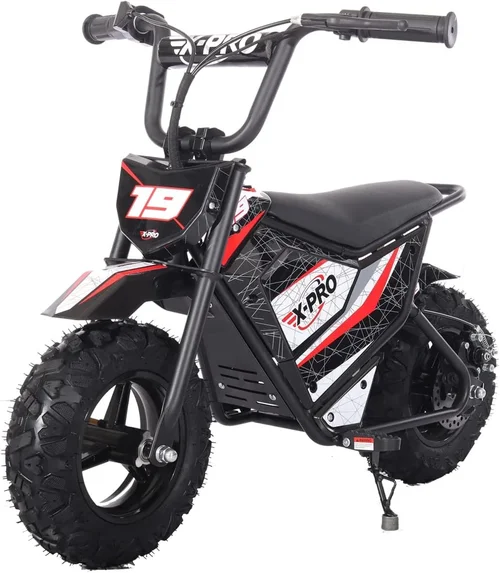
One of the most critical—and often overlooked—factors is matching the bike to your child’s age, size, and riding experience. A bike that’s too powerful or too large can be dangerous, while one that’s too small or underpowered may frustrate a growing rider. Most manufacturers specify an ideal age range (e.g., 3–8 years, 8–14 years), but don’t stop there. Consider your child’s height, weight, and coordination. For example, a 6-year-old who’s tall for their age might handle a slightly larger bike better than a shorter peer. Beginners benefit from bikes with low starting speeds (under 8 mph) and gradual acceleration, while more experienced kids can handle higher top speeds (15–20+ mph) and responsive controls. Always prioritize control over raw power—especially for first-time riders.
2. Motor Power and Performance
The motor is the heart of any electric dirt bike, and its wattage directly impacts speed, torque, and hill-climbing ability. For younger or lighter riders (under 70 lbs), a 250W to 500W motor is usually sufficient—providing smooth acceleration and speeds up to 10–12 mph. Older or more advanced kids (80+ lbs) will appreciate 800W to 1000W motors that deliver 15–20 mph speeds and better performance on inclines. Avoid the temptation to go overboard: a 1500W+ motor might seem impressive, but it can be too aggressive for most children and may exceed legal limits in some areas. Also, look for brushless motors—they’re more efficient, quieter, and last longer than brushed alternatives. Pay attention not just to peak power, but how that power is delivered: linear throttle response and adjustable speed modes make a huge difference in rideability.
3. Battery Life and Charging Time
Nothing kills the fun faster than a dead battery mid-ride. Battery capacity, measured in watt-hours (Wh) or amp-hours (Ah), determines how long your child can ride before needing a recharge. Most kids’ electric dirt bikes offer 30–90 minutes of continuous use, depending on terrain, rider weight, and speed. For casual backyard use, 45–60 minutes is plenty. But if you plan on trail riding or extended sessions, aim for models with 70+ minutes of runtime. Lithium-ion batteries are standard now—they’re lightweight, recharge quickly, and hold their charge well over time. Charging times typically range from 2 to 6 hours; some premium models include fast-charging capabilities (under 3 hours). Always check whether the charger is included and if spare batteries are available—swappable packs can double your riding time with minimal downtime.
4. Build Quality and Durability
Kids are tough on gear, and dirt bikes take a beating—from jumps and drops to muddy trails and accidental crashes. That’s why build quality matters more than flashy colors or branding. Look for frames made from high-tensile steel or reinforced aluminum—these materials offer strength without excessive weight. Check weld points, handlebar mounts, and footpeg attachments for solid construction. Suspension is another key indicator: front forks and rear shocks should be sturdy enough to absorb impacts without bottoming out. Tires matter too—pneumatic (air-filled) tires provide better grip and cushioning than solid rubber, though they require occasional maintenance. Finally, inspect the overall fit and finish: loose bolts, wobbly parts, or flimsy plastics are red flags. A well-built bike not only lasts longer but also performs more predictably and safely.
5. Safety Features and Controls
Safety should never be an afterthought. The best kids’ electric dirt bikes come equipped with multiple layers of protection. Key features include a kill switch (also called a tether or lanyard) that instantly cuts power if the rider falls off, adjustable speed limiters that let parents set max speeds (e.g., 5 mph for beginners, 15 mph for advanced), and soft-start acceleration that prevents jerky takeoffs. Disc brakes (front and rear) are essential for reliable stopping power, especially at higher speeds—avoid models with only coaster or foot brakes. Some newer bikes even include LED headlights for low-light visibility and reflective decals for added safety. Always ensure the throttle is responsive but not overly sensitive, and that the bike has a stable center of gravity to prevent tipping during sharp turns or sudden stops.
6. Weight and Portability
A heavy bike is hard to maneuver, difficult to transport, and potentially dangerous if it tips over. Most kids’ electric dirt bikes weigh between 40 and 80 pounds—light enough for an adult to lift but manageable for older kids to push or walk with. Consider where and how you’ll store and transport the bike: if you need to load it into a car trunk or carry it up stairs, look for models under 60 lbs with foldable handlebars or removable batteries. Wheel size also affects portability—smaller wheels (12–14 inches) are lighter and easier to handle, while larger wheels (16–20 inches) offer better stability and off-road capability. Balance is key: a lightweight bike that feels unstable isn’t ideal, nor is a heavy bike that’s hard to control. Test the weight yourself before buying—if it feels cumbersome to you, it will be even harder for your child.
7. Brand Reputation and Customer Support
Not all electric dirt bike brands are created equal. Established names like Razor, Kuberg, Sur Ron (via their youth line), and Gotrax have proven track records for quality, safety, and customer service. Research how responsive a brand is to warranty claims, whether they offer replacement parts, and if their support team is knowledgeable and accessible. Read real customer reviews—not just the glowing 5-star ones, but the critical feedback about durability, battery issues, or assembly problems. A reputable brand often means better quality control, clearer manuals, and longer product lifespans. Avoid no-name brands sold exclusively through third-party marketplaces unless they have extensive verified reviews and transparent contact information. Remember: a cheaper price upfront can cost you more in repairs, replacements, or safety risks down the line.
8. Warranty and Return Policy
A solid warranty is a strong indicator of a manufacturer’s confidence in their product. Most reputable brands offer at least a 90-day to 1-year warranty covering defects in materials and workmanship. Some extend coverage to batteries and motors—critical components that can fail prematurely. Always read the fine print: does the warranty require professional assembly? Are there exclusions for “normal wear and tear” or “improper use”? Also, check the return policy: can you return the bike within 30 days if it doesn’t meet expectations? Is there a restocking fee? Buying from retailers with generous return windows (like Amazon, REI, or Backcountry) adds an extra layer of protection. If a brand offers only a 30-day warranty or none at all, proceed with caution—it may signal lower-quality components or limited long-term support.
Different Types of Kids Electric Dirt Bikes

Common Buying Mistakes to Avoid
❌ Mistake: Prioritizing Price Over Safety
Why it’s bad: Ultra-cheap bikes often cut corners on critical safety components—like weak brakes, flimsy frames, or lack of speed limiters—putting your child at risk. A $150 bike might save money upfront but could fail catastrophically during a fall or high-speed maneuver.
What to do instead: Set a realistic budget that includes safety as a non-negotiable. Spend at least $300–$400 for a reliable entry-level model with proper brakes, suspension, and parental controls.
❌ Mistake: Ignoring Weight Limits and Rider Size
Why it’s bad: Overloading a bike beyond its weight capacity strains the motor, drains the battery faster, and compromises stability. Similarly, a bike too small for your child can cause discomfort and poor control.
What to do instead: Check the manufacturer’s recommended weight limit and compare it to your child’s current weight (plus gear). Measure your child’s inseam to ensure they can comfortably reach the ground when seated.
❌ Mistake: Overlooking Battery Real-World Performance
Why it’s bad: Advertised “up to 90 minutes” of runtime often assumes ideal conditions—light rider, flat ground, low speed. In reality, heavy use on hills or rough terrain can cut that in half.
What to do instead: Look for independent reviews that test real-world battery life. Consider buying a spare battery if extended rides are important.
❌ Mistake: Skipping the Test Ride (When Possible)
Why it’s bad: Online photos don’t reveal how a bike handles—its balance, throttle sensitivity, or brake responsiveness. A bike that looks great might feel awkward or unsafe in practice.
What to do instead: If buying locally, insist on a demo ride. For online purchases, watch detailed video reviews that show the bike in motion, especially on uneven terrain.
❌ Mistake: Neglecting Maintenance Requirements
Why it’s bad: Electric bikes still need care—tire pressure checks, chain lubrication (if applicable), bolt tightening, and battery storage. Assuming they’re “maintenance-free” leads to premature wear.
What to do instead: Read the manual before riding. Set a simple maintenance schedule: check tires weekly, inspect bolts monthly, and store the battery properly in winter.
❌ Mistake: Buying Based Solely on Looks or Brand Hype
Why it’s bad: Flashy designs or celebrity endorsements don’t guarantee performance or durability. Some trendy brands prioritize aesthetics over engineering.
What to do instead: Focus on specs, user reviews, and expert testing. A plain-looking bike with solid construction and safety features is far better than a stylish lemon.
❌ Mistake: Forgetting About Local Laws and Regulations
Why it’s bad: Some areas restrict electric bike use by age, speed, or location (e.g., sidewalks, parks, public trails). Riding illegally could result in fines or confiscation.
What to do instead: Check your city, county, and state regulations. Many places require helmets, limit speeds to 20 mph or less, and prohibit use on certain paths.
Budget Guidelines: How Much Should You Spend?
Kids’ electric dirt bikes span a wide price spectrum, and understanding what you get at each tier helps set realistic expectations.
Entry-Level ($200–$400): These bikes are ideal for young beginners (ages 3–7) riding on flat, smooth surfaces like driveways or paved trails. Expect basic 250W–500W motors, 30–45 minute battery life, minimal suspension, and simple twist-grip throttles. Brands like Razor and Gotrax dominate this space. While not built for serious off-roading, they’re perfect for building confidence and basic skills. Just ensure they include essential safety features like a kill switch and disc brakes.
Mid-Range ($400–$800): This is the sweet spot for most families. Bikes in this range offer 500W–1000W motors, 60–90 minutes of runtime, better suspension (front and sometimes rear), and adjustable speed settings. They’re suitable for ages 8–12 and can handle light trails, grass, and gentle hills. Models like the Razor MX650 or Kuberg Freerider Junior fall here. You’ll also find improved build quality, more responsive brakes, and often swappable batteries.
Premium ($800–$1,500): Designed for serious young riders or those progressing toward motocross, these bikes deliver pro-level performance. Expect 1000W+ brushless motors, lithium batteries with 90+ minutes of runtime, full suspension systems, and lightweight aluminum frames. They often include advanced features like regenerative braking, app connectivity, and modular designs that grow with your child. Brands like Kuberg, Sur Ron Youth, and Oset are leaders here.
Luxury ($1,500+): At this tier, you’re paying for cutting-edge technology, race-ready components, and exceptional craftsmanship. These bikes rival entry-level adult models in performance and are built for competition or extreme terrain. They feature carbon fiber elements, high-capacity battery packs, precision suspension tuning, and extensive customization options. Only consider this level if your child is highly skilled, rides frequently, or competes in events.

Expert Tips for Getting the Best Deal
- Shop during off-season sales: Late fall and winter (October–February) are prime times for discounts as retailers clear inventory before spring launches. Black Friday and Cyber Monday often feature deep cuts on last year’s models.
- Compare retailers strategically: Amazon offers convenience and fast shipping, but specialty stores like REI, Backcountry, or electric bike dealers may provide better warranties, assembly services, or expert advice. Check if price matching is available.
- Look for bundle deals: Some sellers include helmets, gloves, or spare batteries at a discount when purchased together. These can save $50–$100 versus buying separately.
- Consider refurbished or open-box units: Reputable sellers (like manufacturer-certified refurbished programs) offer near-new bikes at 20–40% off, often with full warranties.
- Read the return policy carefully: Ensure you can return the bike within 30 days if it doesn’t fit or perform as expected. Avoid retailers with restocking fees or short windows.
- Test ride when possible: If a local dealer carries the model, ask for a demo. Even a short ride reveals a lot about handling, comfort, and throttle response.
- Join online communities: Forums like Reddit’s r/ElectricBikes or Facebook groups for parents of young riders often share exclusive promo codes, flash sales, or insider tips.
- Negotiate add-ons: If buying from a local shop, ask if they’ll throw in free assembly, a helmet, or a battery upgrade—many will to close the sale.

Frequently Asked Questions
Q: Are kids’ electric dirt bikes safe?
A: Yes—when chosen appropriately and used with proper safety gear. Look for bikes with speed limiters, kill switches, disc brakes, and sturdy construction. Always supervise young riders and enforce helmet use.
Q: How fast do kids’ electric dirt bikes go?
A: Speeds vary widely: entry-level models max out at 8–10 mph, mid-range bikes reach 15–18 mph, and high-performance models can hit 20–25 mph. Adjustable speed settings let parents control top speed based on skill level.
Q: Do electric dirt bikes require maintenance?
A: Yes, but far less than gas bikes. Basic upkeep includes checking tire pressure, tightening bolts, cleaning the chain (if present), and storing the battery properly. Most issues are preventable with routine checks.
Q: Can my child ride in the rain or mud?
A: Most kids’ electric dirt bikes are water-resistant (IPX4 rating), meaning they can handle light rain and splashes—but not submersion or heavy downpours. Avoid deep mud, as it can clog motors and damage electronics. Always dry and inspect after wet rides.
Q: How long do the batteries last?
A: Lithium-ion batteries typically last 300–500 charge cycles before capacity drops significantly—roughly 2–4 years with regular use. Proper storage (keep at 50% charge in cool, dry places) extends lifespan.
Q: Are replacement parts easy to find?
A: It depends on the brand. Established manufacturers (Razor, Kuberg, Gotrax) offer spare parts online. Avoid obscure brands with no parts support—you may need to replace the entire bike if something breaks.
Q: Can adults ride kids’ electric dirt bikes?
A: Generally no. Most are designed for riders under 120–150 lbs. Exceeding weight limits voids warranties and risks mechanical failure. Adult-sized electric dirt bikes are available separately.
Q: Do I need to assemble the bike?
A: Most require partial assembly—typically attaching handlebars, wheels, and pedals (if applicable). Kits usually include tools and instructions. If you’re not handy, pay for professional assembly ($50–$100).
Q: Are there age restrictions for riding?
A: While no federal law mandates age limits, many states recommend or require riders to be at least 8–10 years old. Always check local regulations and use parental discretion based on maturity and skill.
Q: What’s the difference between hub motors and mid-drive motors?
A: Hub motors (built into the wheel) are common in kids’ bikes—they’re simple, reliable, and cost-effective. Mid-drive motors (near the pedals) offer better weight distribution and efficiency but are rare in youth models due to complexity and cost.
Our Final Recommendations
Best for Budget-Conscious Buyers: Gotrax SX3 – At under $400, this bike delivers surprising value with a 500W motor, 12 mph top speed, adjustable speed modes, and a sturdy steel frame. Perfect for ages 6–10, it includes a kill switch and disc brakes—rare at this price.
Best Overall Value: Razor MX650 – A proven favorite, the MX650 offers 1000W power, 17 mph speed, dual suspension, and a 40-minute runtime. Its robust build and reliable performance make it ideal for ages 8–14 who want trail capability without breaking the bank ($600–$700).
Best Premium Option: Kuberg Freerider 24 – Engineered for serious young riders, this Czech-made bike features a 2000W brushless motor, 25+ mph speed, full suspension, and a swappable 720Wh battery. With a modular design and app connectivity, it’s built to grow with your child ($1,400–$1,600).
Best for Beginners: Razor MX350 – Lightweight (59 lbs), quiet, and easy to control, the MX350 has a 350W motor and 14 mph top speed. Its low seat height and gentle acceleration make it perfect for first-time riders ages 5–9 ($350–$400).
Best for Advanced Users: Sur Ron Youth Storm – Borrowing tech from Sur Ron’s adult lineup, this bike packs a 3000W motor, 30+ mph speed, and race-inspired geometry. With regenerative braking and a 2-hour runtime, it’s built for competitive young riders ready to dominate the track ($1,800+).
Conclusion: Making the Right Choice
Choosing the best kids’ electric dirt bike isn’t just about picking the fastest or flashiest model—it’s about finding the right balance of safety, performance, durability, and value for your child’s unique needs. By focusing on age-appropriate power, solid build quality, essential safety features, and reputable brands, you’ll set your young rider up for years of confident, joyful adventures. Remember: the goal isn’t to buy the most expensive bike, but the most suitable one.
Take your time, do your research, and involve your child in the decision when possible. Let them test ride (safely!) and share their preferences. And never compromise on safety gear—it’s the most important part of the equation. With the insights from this guide, you’re now equipped to navigate the market wisely, avoid costly mistakes, and invest in a bike that will bring smiles, build skills, and create lasting memories. Happy riding!