
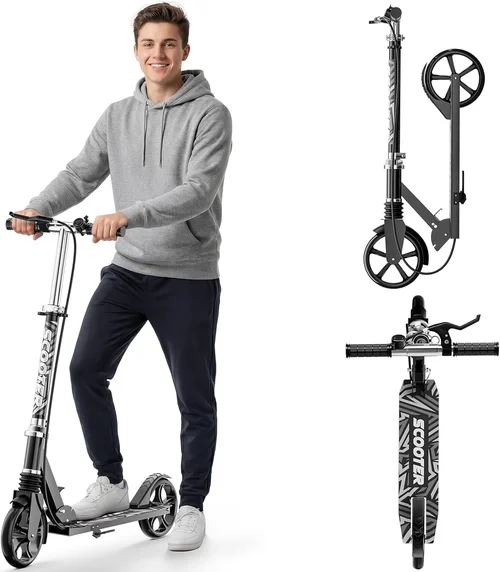
Electric scooters have exploded in popularity over the past decade, transforming from niche urban curiosities into mainstream transportation solutions. Whether you’re commuting to work, running errands around town, or simply enjoying a weekend joyride, the right scooter can make your journey faster, more affordable, and surprisingly fun. But with hundreds of models flooding the market—ranging from $200 budget options to $2,000+ performance machines—choosing the best scooter for your money has never been more confusing. That’s exactly why this guide exists: to cut through the noise, eliminate marketing hype, and give you a clear, expert-backed roadmap to finding the perfect balance of performance, reliability, and value.
In this comprehensive buying guide, you’ll learn how to evaluate scooters based on real-world needs rather than flashy specs. We’ll walk you through the most critical factors—from battery life and motor power to build quality and warranty coverage—so you can confidently compare models across brands like Gotrax, Xiaomi, Segway-Ninebot, Apollo, and more. You’ll also discover common pitfalls that trap first-time buyers, learn how to stretch your budget without sacrificing safety or durability, and get actionable tips for scoring the best deals in 2026. By the end, you won’t just know which scooter to buy—you’ll understand why it’s the right choice for your lifestyle.
The electric scooter market today is more diverse and competitive than ever. Entry-level models now offer respectable range and solid construction, while mid-tier scooters deliver near-premium performance at accessible prices. Even premium brands are introducing “value” lines to capture cost-conscious riders. This means there’s genuinely a great scooter for every budget—but only if you know what to prioritize. Whether you’re a student needing a lightweight commuter, a parent looking for a safe ride for your teen, or a tech enthusiast craving speed and smart features, this guide will help you navigate the landscape with confidence and clarity.

What to Look for When Buying Gotrax
1. Budget & Price Range
Your budget is the single most important starting point when shopping for an electric scooter. It sets the boundaries for what’s realistic and helps you avoid overspending on features you don’t need—or underspending on a flimsy model that breaks within months. Gotrax, known for offering affordable entry-level and mid-range scooters, typically prices its models between $200 and $600. This makes them a strong contender for budget-conscious buyers, but it’s crucial to understand what that price tag actually gets you.
At the lower end ($200–$350), expect basic functionality: modest motors (250W–350W), limited range (8–15 miles), smaller wheels, and minimal suspension. These are ideal for short commutes on smooth pavement but struggle on hills or rough terrain. In the $350–$500 range, you’ll find improved batteries, better braking systems, brighter lights, and sturdier frames—often with app connectivity and regenerative braking. Above $500, Gotrax starts blending into premium territory with dual motors, larger air-filled tires, and advanced safety features.
Don’t fall into the trap of thinking “cheaper is always better.” A $250 scooter might save you money upfront, but if it requires frequent repairs or replacement within a year, it’s not a good value. Conversely, splurging on a $600 model with dual suspension and a 40-mile range may be overkill if you only ride 2 miles to work. Align your budget with your usage: daily commuters should lean toward the $400–$500 sweet spot, while occasional riders can safely opt for sub-$300 options.
2. Performance Specifications
Performance isn’t just about top speed—it’s a combination of motor power, battery capacity, range, and hill-climbing ability. Gotrax scooters generally feature brushless hub motors ranging from 250W to 500W. A 250W motor is sufficient for flat city streets and light riders (under 160 lbs), but anything over 350W is recommended for consistent performance, especially if you encounter inclines.
Battery type and capacity directly impact range and longevity. Most Gotrax models use lithium-ion (Li-ion) batteries, which are lightweight, recharge quickly, and last 300–500 charge cycles. Look for batteries rated in watt-hours (Wh)—a higher Wh means longer range. For example, a 280Wh battery typically delivers 12–18 miles, while a 432Wh unit can push 20–25 miles under ideal conditions. Real-world range is always less than advertised due to wind, terrain, rider weight, and speed, so factor in a 20–30% buffer.
Top speed is another key metric. Gotrax scooters usually max out between 15–20 mph. While 15 mph is adequate for casual riding, 18–20 mph offers a more responsive commute and better merging ability in traffic. However, higher speeds drain the battery faster and may require more frequent charging. Always check the scooter’s torque and acceleration—smooth, responsive power delivery matters more than raw top speed for daily usability.
3. Build Quality & Durability
A scooter’s lifespan hinges on its build quality. Gotrax has made significant strides in recent years, moving away from the “disposable e-scooter” reputation of earlier models. Still, not all Gotrax scooters are created equal. Pay close attention to frame material, wheel type, and component sourcing.
Look for aircraft-grade aluminum frames—lightweight yet strong enough to handle daily abuse. Avoid plastic-heavy constructions, especially in the deck and stem, as these crack under stress. Weld quality matters too: clean, even welds indicate better manufacturing standards. Gotrax’s newer models, like the GXL V2 or G4, use reinforced joints and thicker tubing, resulting in noticeably sturdier rides.
Wheels are another durability checkpoint. Solid rubber tires are puncture-proof and low-maintenance but offer a harsher ride on uneven surfaces. Air-filled (pneumatic) tires provide superior shock absorption and grip but require occasional inflation and are vulnerable to flats. Gotrax often uses hybrid or honeycomb tires—a middle ground that balances comfort and reliability. For city riding with potholes and curbs, air-filled or honeycomb tires are worth the slight maintenance trade-off.
Finally, check the IP rating for water and dust resistance. Gotrax scooters typically carry IPX4 ratings, meaning they can handle light splashes and rain—but not submersion or heavy downpours. If you live in a rainy climate, consider adding fenders or upgrading to a model with better sealing.
4. Features & Functionality
Modern scooters pack a surprising array of features, and Gotrax isn’t shy about including tech-forward elements even in budget models. The key is identifying which features actually enhance your experience versus those that are just marketing fluff.
Essential features include bright LED headlights and taillights (with brake activation), a clear digital display showing speed, battery level, and mode, and reliable braking systems. Gotrax scooters usually come with electronic + mechanical (disc or drum) brakes—dual braking is safer and more responsive, especially at higher speeds.
App connectivity is increasingly common. Gotrax’s app allows you to lock the scooter, track rides, adjust speed modes, and monitor battery health. While convenient, it’s not essential—many riders never use it. Still, it adds peace of mind and can help diagnose issues early.
Other useful features include cruise control (reduces hand fatigue on long rides), regenerative braking (recovers a bit of battery during deceleration), and foldability for storage. Gotrax scooters fold easily, but check the locking mechanism—some older models have wobbly stems when folded. Also consider deck size: a wider, non-slip deck improves comfort and stability, especially for taller riders.
5. Brand Reputation
Gotrax is owned by Razor, a well-established name in personal electric vehicles. This gives Gotrax a leg up in terms of distribution, customer service infrastructure, and parts availability compared to lesser-known brands. However, reputation isn’t just about corporate backing—it’s also about consistency, transparency, and how they handle issues.
Gotrax has faced criticism in the past for inconsistent quality control and slow customer support. But recent reviews (2023–2025) show marked improvement, particularly with the G4 and GXL V2 series. Independent testing sites and user forums report fewer defects, better battery management, and more responsive warranties. That said, always buy from authorized retailers (like Amazon, Best Buy, or Gotrax’s official site) to ensure full warranty coverage and avoid counterfeit units.
Compare Gotrax to competitors: Xiaomi offers similar specs at slightly higher prices but with sleeker designs; Segway-Ninebot leans premium with better suspension and app ecosystems; Apollo and Unagi target performance riders with higher price tags. Gotrax’s strength lies in delivering 80% of the experience at 60% of the cost—making it a smart choice for value seekers.
6. Warranty & Support
A solid warranty is your safety net against manufacturing defects and premature failures. Gotrax offers a standard 1-year limited warranty covering the motor, battery, and controller—but not wear items like tires, brakes, or the stem. This is fairly typical for the industry, though some brands (like Segway) offer 18–24 months.
Read the fine print: many warranties become void if you modify the scooter, use it off-road, or exceed the weight limit (usually 220–260 lbs for Gotrax). Also, note that battery degradation below 70% capacity within the warranty period may qualify for replacement—but you’ll need to provide proof of proper charging habits.
Customer support quality varies. Gotrax provides email and phone support, but response times can lag during peak seasons. Check recent user reports on Reddit or Trustpilot before buying. For faster resolution, register your scooter online immediately after purchase and keep all receipts. If you’re concerned about long-term support, consider extended warranty plans from retailers like Amazon or Best Buy.
7. Size & Portability
How and where you’ll store your scooter matters almost as much as how you’ll ride it. Gotrax scooters are designed to be portable, but “portable” means different things to different people. Weight, folded dimensions, and carry comfort all play a role.
Most Gotrax models weigh between 26–35 lbs. The GXL V2 clocks in at 28 lbs—light enough for most adults to carry upstairs or onto public transit, but still substantial for kids or seniors. If portability is a top priority, look for scooters under 25 lbs, though these often sacrifice battery size or motor power.
Folded size is another consideration. Gotrax scooters typically fold down to roughly 42” x 17” x 18”—compact enough for car trunks or under office desks, but bulky for small apartments. The stem should lock securely when folded to prevent accidental unfolding. Some models include a carry handle or strap, which makes a big difference during long walks.
Finally, think about your daily routine. If you’ll be taking the scooter on buses or trains, check local regulations—some transit systems restrict scooters over 30 lbs or with certain battery types. For apartment dwellers, a scooter that stands upright when folded saves floor space.
8. User Reviews & Ratings
Never rely solely on manufacturer specs or flashy ads. Real user feedback reveals quirks, failures, and hidden strengths that specs sheets miss. Gotrax scooters generally score 4.0–4.5 stars on major retail sites, with praise for affordability and ease of use—but recurring complaints include short real-world range, squeaky brakes, and occasional app glitches.
Dig deeper than aggregate ratings. Look for detailed reviews from riders with similar needs: commuters, students, or parents. Pay attention to comments about long-term reliability (6+ months of use), customer service experiences, and how the scooter handles real terrain (not just test tracks). YouTube reviews are especially valuable—they show the scooter in action, including folding, braking, and hill performance.
Be wary of fake reviews. Patterns like overly generic praise (“Great scooter! Love it!”) or repetitive phrasing across multiple accounts are red flags. Trust platforms with verified purchase badges and detailed Q&A sections. If a model has dozens of 1-star reviews citing the same issue (e.g., “battery died after 3 months”), take note—it might indicate a design flaw.
Different Types of Gotrax

Common Buying Mistakes to Avoid
❌ Mistake: Prioritizing Top Speed Over Real-World Usability
Why it’s bad: A scooter advertised as “25 mph!” might sound thrilling, but if it can’t maintain that speed with a 180-lb rider or climbs hills at a crawl, it’s misleading. High-speed claims often come from lab tests with lightweight dummies on flat surfaces—not real streets.
What to do instead: Focus on consistent performance. Look for torque ratings, hill-climbing ability (e.g., “handles 15% grades”), and user reports of real-world speed. For most city riders, 15–18 mph is plenty—and safer.
❌ Mistake: Ignoring Weight Limits and Rider Compatibility
Why it’s bad: Exceeding the scooter’s weight limit strains the motor, drains the battery faster, and can cause structural failure. Gotrax scooters typically support up to 220–260 lbs—but performance drops significantly near the max.
What to do instead: Choose a scooter rated for at least 20–30 lbs above your weight. If you’re 200 lbs, don’t buy a 220-lb limit model—opt for 250+ lbs capacity for better longevity and safety.
❌ Mistake: Skipping the Test Ride (When Possible)
Why it’s bad: Scooters feel different in person. A model that looks great online might have a wobbly stem, stiff throttle, or uncomfortable deck. Buying blind increases return risk.
What to do instead: Visit local retailers that stock Gotrax (like Best Buy or Walmart). Even a 2-minute test ride reveals a lot. If in-person testing isn’t possible, watch multiple video reviews showing throttle response, braking, and folding.
❌ Mistake: Overlooking Maintenance Needs
Why it’s bad: All scooters require upkeep—tire pressure checks, brake adjustments, bolt tightening. Neglect leads to premature wear, safety hazards, and voided warranties.
What to do instead: Factor in time and cost for maintenance. Air tires need monthly pressure checks; brakes may need adjustment every few months. Choose models with accessible parts and clear service guides.
❌ Mistake: Buying Based Solely on Price
Why it’s bad: The cheapest scooter often costs more long-term due to repairs, replacements, or frustration. Conversely, the most expensive isn’t always the best fit.
What to do instead: Calculate total cost of ownership: initial price + estimated maintenance + expected lifespan. A $400 scooter lasting 3 years is better value than a $250 one lasting 8 months.
❌ Mistake: Ignoring Local Laws and Regulations
Why it’s bad: Many cities restrict e-scooter speed, require helmets, or ban riding on sidewalks. Getting fined or having your scooter confiscated ruins the experience.
What to do instead: Check your city’s micromobility laws before buying. Some areas require lights, bells, or registration. Gotrax scooters are generally street-legal in most U.S. cities, but rules vary globally.
Budget Guidelines: How Much Should You Spend?
Entry-Level ($200–$350): Ideal for teens, students, or occasional riders. Expect 8–15 mile range, 15 mph top speed, and basic features. Models like the Gotrax GXL or G2 fit here. Great for smooth pavements and short trips—but not built for daily abuse or hills.
Mid-Range ($350–$500): The sweet spot for most buyers. Offers 15–25 mile range, 18–20 mph speeds, better brakes, app connectivity, and improved durability. The Gotrax GXL V2 and G4 shine here, balancing cost and capability for daily commuters.
Premium ($500–$700): For enthusiasts and serious commuters. Features larger batteries, dual motors, pneumatic tires, and advanced safety systems. Gotrax’s higher-end models approach this tier, though competitors like Apollo offer more performance at this price.
Luxury ($700+): Top-tier scooters with premium materials, ultra-long range (30+ miles), high-speed capabilities (25+ mph), and smart features like GPS tracking and suspension. Gotrax doesn’t currently compete here, but it’s worth noting for comparison.
Expert Tips for Getting the Best Deal
- Shop during seasonal sales: Black Friday, Cyber Monday, and back-to-school periods (July–September) offer the deepest discounts. Gotrax often runs promotions with free shipping or bundled accessories.
- Buy from authorized retailers: Amazon, Best Buy, and Gotrax’s official site guarantee warranty coverage and return policies. Avoid third-party sellers with unclear origins.
- Check refurbished or open-box deals: Certified pre-owned Gotrax scooters can save 20–30% and come with warranties. Just verify battery health and cosmetic condition.
- Read return policies carefully: Some retailers charge restocking fees or only accept returns within 14 days. Aim for 30-day windows with free return shipping.
- Register immediately: Activate your warranty the day you receive the scooter. Keep all packaging and documentation for potential claims.
- Join rider communities: Reddit’s r/ElectricScooters and Facebook groups often share exclusive promo codes or flash sales.
- Consider total value, not just price: A scooter with free maintenance kits, extended warranty, or included helmet offers better long-term value than a slightly cheaper bare-bones model.

Frequently Asked Questions
Q: Are Gotrax scooters reliable for daily commuting?
A: Yes—especially the GXL V2 and G4 models. Recent iterations show improved build quality, battery management, and customer support. With proper maintenance, they can reliably handle daily 5–10 mile commutes for 2–3 years.
Q: How long does a Gotrax battery last?
A: The battery itself can last 300–500 full charge cycles (roughly 1.5–3 years with daily use). Capacity gradually degrades—expect 10–20% less range after the first year. Avoid draining to 0% regularly to prolong life.
Q: Can I ride a Gotrax scooter in the rain?
A: Light rain is generally fine thanks to the IPX4 rating, but avoid heavy downpours, puddles, or wet grass. Water can seep into connectors and damage electronics. Dry the scooter thoroughly after wet rides.
Q: Do I need a helmet?
A: Absolutely. Even at 15 mph, a fall can cause serious injury. Many states require helmets for riders under 18, but safety experts recommend them for all ages. Pair your scooter with a CPSC-certified helmet.
Q: How fast do Gotrax scooters go?
A: Most models top out at 15–20 mph. The GXL V2 reaches 18 mph, while the G4 hits 20 mph. Speed depends on rider weight, terrain, and battery level—real-world speeds are often 1–2 mph lower than advertised.
Q: Can I upgrade my Gotrax scooter?
A: Limited upgrades are possible—like adding phone mounts, lights, or phone chargers—but modifying the motor, battery, or controller voids the warranty and may be illegal in some areas. Stick to cosmetic or accessory upgrades.
Q: What’s the difference between Gotrax and Xiaomi scooters?
A: Xiaomi offers sleeker designs, slightly better app integration, and often higher build quality—but at a 20–30% premium. Gotrax wins on affordability and parts availability. Choose Xiaomi for style and polish; Gotrax for value and practicality.
Q: How do I maintain my Gotrax scooter?
A: Monthly checks: tire pressure (if pneumatic), brake function, bolt tightness, and battery charging. Clean the deck and stem regularly. Store indoors when not in use to protect the battery from extreme temperatures.
Q: Is Gotrax good for kids?
A: Yes, models like the Gotrax GKS (ages 6+) and GXL (ages 13+) are designed with lower speed limits (12–15 mph), lighter frames, and safety features. Always supervise young riders and enforce helmet use.
Our Final Recommendations
Best for Budget-Conscious Buyers: Gotrax GXL – At under $300, it delivers solid 15-mile range, 15 mph speed, and reliable braking. Perfect for students or casual riders who want affordability without total compromise.
Best Overall Value: Gotrax GXL V2 – Priced around $400, it adds app connectivity, improved battery, and better suspension over the original GXL. The sweet spot for daily commuters seeking durability and features.
Best Premium Option: Gotrax G4 – At $550, it offers 20 mph speed, 25-mile range, pneumatic tires, and dual braking. Ideal for riders who want near-premium performance without leaving the Gotrax ecosystem.
Best for Beginners: Gotrax G2 – Simple controls, lightweight (26 lbs), and easy folding make it perfect for first-time riders. Great for short trips and learning the basics.
Best for Advanced Users: While Gotrax doesn’t offer true high-performance models, the G4 is the closest—handling hills, longer distances, and varied terrain better than other Gotrax options. For serious performance, consider stepping up to Apollo or Unagi.
Conclusion: Making the Right Choice
Choosing the best scooter for your money isn’t about finding the cheapest or fastest model—it’s about matching your real-world needs with a scooter that delivers consistent, reliable performance within your budget. Gotrax has evolved into a trustworthy brand offering exceptional value, especially in the $350–$500 range. By focusing on key factors like battery life, build quality, and warranty coverage—and avoiding common pitfalls like ignoring weight limits or skipping test rides—you’ll set yourself up for years of safe, enjoyable riding.
Remember: the “best” scooter is the one that fits your lifestyle, not the one with the flashiest specs. Whether you’re zipping to class, commuting to work, or exploring your neighborhood, prioritize safety, comfort, and durability. Use this guide as your compass, trust user reviews, and don’t rush the decision. With the right scooter, every ride becomes a little adventure—and a smart investment in your mobility future.