
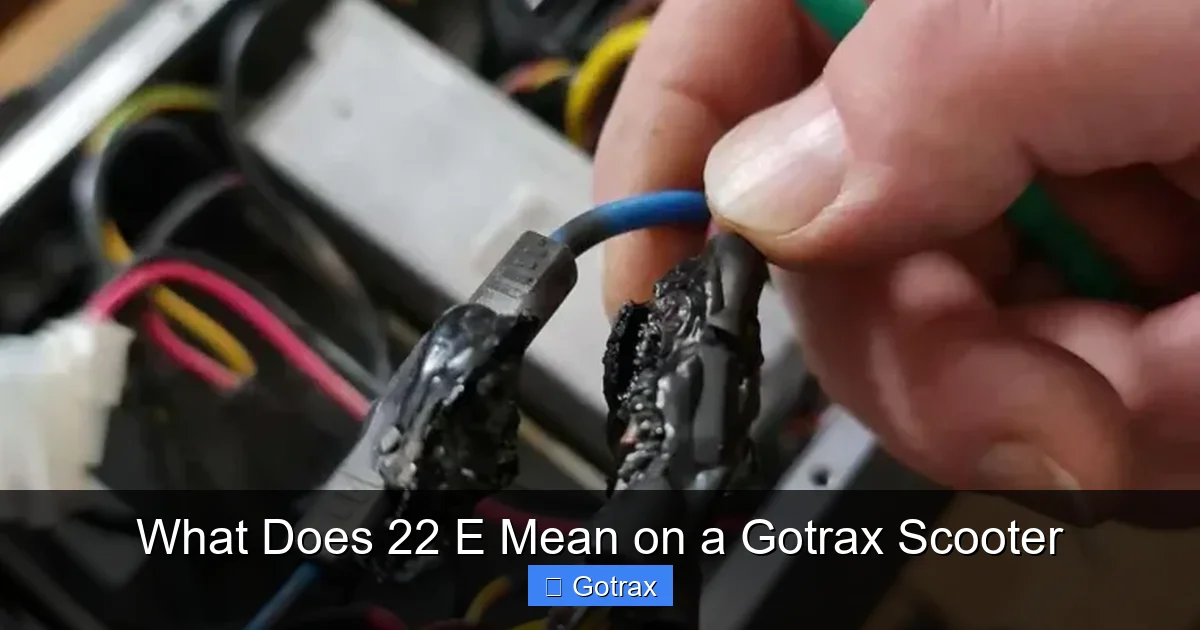
If you’ve seen “22 E” on your Gotrax scooter’s display, don’t panic—it’s an error code, not a death sentence for your ride. This code typically points to a motor or electrical issue, and in most cases, it can be resolved with simple troubleshooting steps like checking connections, rebooting the scooter, or inspecting the motor.
Key Takeaways
- 22 E is an error code: It indicates a motor or electrical fault in your Gotrax scooter, often related to overheating, wiring issues, or sensor problems.
- Common causes include: Overheating motor, loose or damaged wiring, faulty hall sensors, or water damage.
- Try a reset first: Turn off the scooter, wait 10–15 minutes, then restart it—this often clears temporary glitches.
- Check connections: Inspect the motor wires and controller connections for looseness, corrosion, or damage.
- Prevent future errors: Avoid overloading, riding in extreme heat, or exposing the scooter to moisture.
- Contact support if needed: If the error persists after troubleshooting, reach out to Gotrax customer service for professional help.
- Regular maintenance helps: Keeping your scooter clean and storing it properly reduces the risk of electrical issues.
📑 Table of Contents
What Does 22 E Mean on a Gotrax Scooter?
You’re cruising down the sidewalk, enjoying the breeze, when suddenly—your Gotrax scooter’s display flashes “22 E.” Your ride stops responding. Your heart sinks. What does this mean? Is your scooter broken? Can you fix it?
Don’t worry—you’re not alone. The “22 E” error code is one of the most common issues reported by Gotrax scooter owners. While it can be alarming the first time it appears, it’s usually not a sign of permanent damage. In fact, with a little know-how and some basic troubleshooting, you can often get your scooter back on the road in no time.
In this guide, we’ll break down exactly what “22 E” means, why it happens, and how you can fix it. We’ll also share tips to prevent it from happening again. Whether you’re a daily commuter or a weekend rider, understanding this error code can save you time, money, and frustration.
Understanding Gotrax Error Codes
Visual guide about What Does 22 E Mean on a Gotrax Scooter
Image source: motoped.com
Gotrax scooters are equipped with smart onboard diagnostics that monitor the health of key components like the motor, battery, controller, and sensors. When something goes wrong, the scooter displays an error code to help you identify the issue. These codes are designed to make troubleshooting easier—both for users and technicians.
The “22 E” code specifically falls under the category of motor-related errors. It’s part of a broader system that includes other codes like “11 E” (battery issues), “13 E” (throttle problems), and “21 E” (controller faults). Each number corresponds to a different subsystem, and the letter “E” stands for “Error.”
So when you see “22 E,” your scooter is telling you: “There’s a problem with the motor or its electrical connections.” This could mean the motor is overheating, a wire has come loose, or a sensor isn’t sending the right signal. The good news? Most of these issues are fixable at home with a few simple steps.
How Gotrax Diagnostics Work
Gotrax scooters use a combination of sensors and microprocessors to monitor performance in real time. The motor has hall sensors that detect rotor position and speed. The controller uses this data to deliver power efficiently. If the sensors detect an anomaly—like a sudden drop in signal or excessive heat—the system triggers an error code.
The “22 E” code is usually triggered when:
– The motor temperature exceeds safe limits.
– Hall sensors fail to send proper signals.
– There’s a short circuit or open circuit in the motor wiring.
– The controller detects inconsistent power delivery to the motor.
These safeguards are there to protect your scooter from damage. For example, if the motor overheats, continuing to ride could warp internal components or even cause a fire. By shutting down and displaying “22 E,” the scooter prevents further harm.
Why Error Codes Matter
Ignoring error codes like “22 E” can lead to bigger problems down the line. What starts as a minor wiring issue could escalate into a blown controller or a seized motor. Plus, riding with a persistent error can void your warranty or make future repairs more expensive.
That’s why it’s important to treat “22 E” seriously—even if your scooter seems to work after a restart. The error is a warning sign, not just a glitch. Addressing it early can save you from costly repairs and keep your scooter running smoothly for years.
Common Causes of the 22 E Error
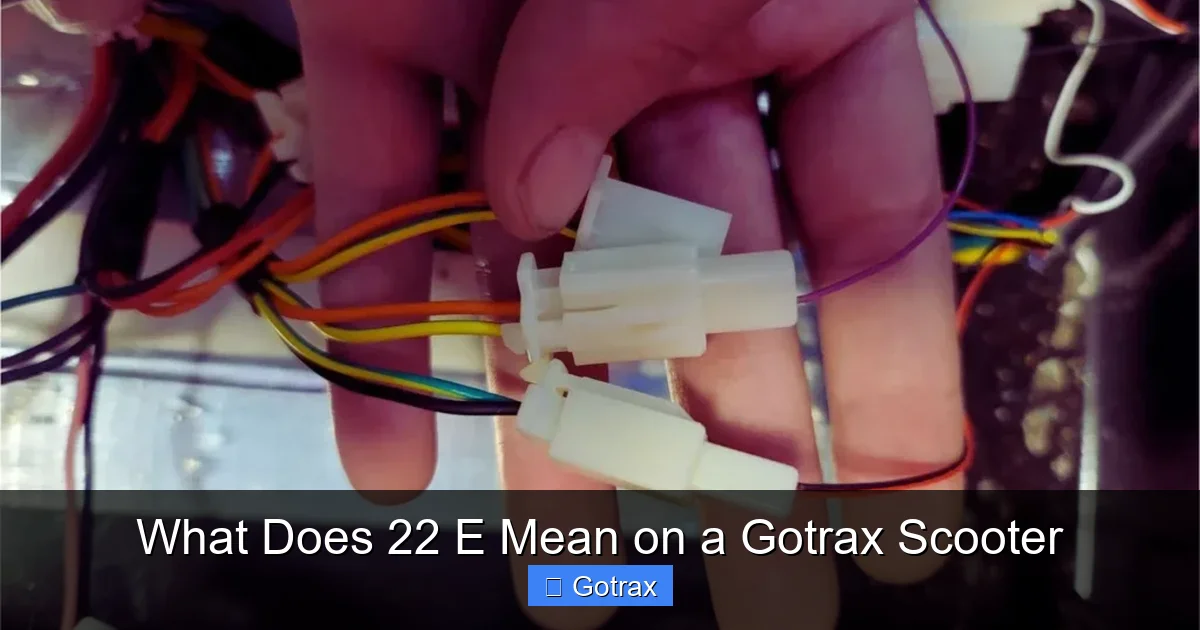
Visual guide about What Does 22 E Mean on a Gotrax Scooter
Image source: scooterinsights.com
Now that you know what “22 E” means, let’s look at the most common reasons it appears. Understanding the root cause is the first step toward fixing the problem.
Motor Overheating
One of the top causes of “22 E” is motor overheating. Gotrax scooters are built for urban commuting, not high-speed racing or steep hill climbing. If you push the motor too hard—especially in hot weather or on inclines—it can overheat and trigger the error.
For example, if you’re riding up a long hill in 90°F (32°C) weather, the motor has to work extra hard. Without proper cooling, the internal temperature rises quickly. Once it hits a certain threshold, the scooter shuts down to prevent damage.
Signs of overheating include:
– The motor feels hot to the touch.
– The scooter slows down before the error appears.
– The error clears after cooling down.
Faulty or Loose Wiring
The motor is connected to the controller via a bundle of wires that pass through the scooter’s stem and deck. Over time, these wires can become loose, frayed, or disconnected—especially if the scooter is frequently folded or subjected to rough handling.
A loose connection can interrupt the signal between the motor and controller, causing the “22 E” error. In some cases, the wires may look fine but have internal damage that’s not visible.
Common wiring issues include:
– Wires pinched during folding.
– Corrosion at connection points.
– Broken insulation exposing copper strands.
Hall Sensor Problems
Hall sensors are small devices inside the motor that detect the position of the rotor. They send signals to the controller, which uses this information to time the power delivery. If a hall sensor fails or sends incorrect data, the motor can’t run properly—leading to the “22 E” error.
Hall sensor issues are often caused by:
– Wear and tear over time.
– Moisture or dirt entering the motor.
– Physical damage from drops or impacts.
You might notice jerky movement or loss of power before the error appears. In severe cases, the scooter may not move at all.
Water or Moisture Damage
Gotrax scooters are water-resistant, not waterproof. Riding in heavy rain, through puddles, or washing the scooter with a hose can allow water to seep into the motor or controller. Moisture can cause short circuits, corrosion, or sensor malfunctions—all of which can trigger “22 E.”
Signs of water damage include:
– Rust or white residue on connectors.
– Intermittent power loss.
– Error codes appearing after rainy rides.
Even if your scooter seems fine after drying, internal moisture can linger and cause problems days or weeks later.
Controller or Battery Issues
While “22 E” is primarily a motor error, it can sometimes be caused by problems with the controller or battery. If the controller isn’t sending the right signals, or if the battery voltage is unstable, the motor may not function correctly.
For example, a weak battery might not deliver enough power, causing the motor to struggle and overheat. Similarly, a failing controller could misinterpret sensor data and shut down the motor unnecessarily.
These issues are less common but still worth considering if other fixes don’t work.
How to Fix the 22 E Error
Now for the good part: how to get your scooter working again. Most “22 E” errors can be resolved with simple troubleshooting steps. Here’s a step-by-step guide to help you diagnose and fix the problem.
Step 1: Turn Off and Restart the Scooter
The first thing to try is a simple reset. Turn off your scooter completely, wait 10–15 minutes, then turn it back on. This allows the motor and electronics to cool down and resets the onboard computer.
Why this works: Many “22 E” errors are caused by temporary overheating or software glitches. A restart clears the error and gives the system a fresh start.
Tip: If the error returns immediately after restarting, the problem is likely more serious than a simple overheat.
Step 2: Check for Obvious Damage
Inspect your scooter for visible signs of damage. Look at the motor, wires, and connectors. Are any wires loose, frayed, or disconnected? Is there dirt, debris, or moisture around the motor housing?
Pay special attention to the wire bundle that runs from the handlebars down to the motor. This is a common failure point, especially if the scooter is folded frequently.
If you see damaged wires, avoid riding the scooter until they’re repaired. Continuing to use it could worsen the problem or create a safety hazard.
Step 3: Test the Motor and Connections
If the scooter still shows “22 E” after a restart, it’s time to dig deeper. You’ll need to access the motor and controller connections. This usually involves removing the deck plate or side cover, depending on your model.
Once you have access:
– Check that all motor wires are securely plugged in.
– Look for signs of burning, melting, or corrosion.
– Gently wiggle the connectors to see if the error changes or clears.
If a connector feels loose, unplug it and plug it back in firmly. Sometimes, a poor connection is all it takes to trigger the error.
Step 4: Inspect the Hall Sensors
Hall sensors are tricky to test without specialized tools, but you can look for physical signs of damage. If the motor has been exposed to water or impact, the sensors may be compromised.
Some advanced users use a multimeter to test hall sensor resistance, but this requires technical knowledge. If you’re not comfortable doing this, it’s best to contact Gotrax support or a qualified technician.
Step 5: Let the Motor Cool Down
If you suspect overheating, give the motor time to cool. Place the scooter in a shaded, well-ventilated area and wait at least 30 minutes. Avoid covering the motor or placing it in direct sunlight.
After cooling, try riding again—but avoid steep hills or high speeds. If the error returns, overheating is likely the culprit.
Step 6: Update Firmware (If Available)
Gotrax occasionally releases firmware updates that fix bugs and improve error handling. Check the Gotrax website or app (if your model supports it) to see if an update is available.
Updating firmware can resolve software-related issues that cause false error codes. However, not all models support over-the-air updates, so this may not be an option for older scooters.
Step 7: Contact Gotrax Support
If none of the above steps work, it’s time to reach out to Gotrax customer service. Provide them with:
– Your scooter’s model and serial number.
– A description of the error and when it occurs.
– Photos of any visible damage.
Gotrax offers warranty support for manufacturing defects, and they may be able to repair or replace faulty components. Even if your scooter is out of warranty, their technicians can often diagnose the issue and recommend repairs.
Preventing the 22 E Error in the Future
An ounce of prevention is worth a pound of cure. While you can’t eliminate all risks, you can significantly reduce the chances of seeing “22 E” again by following these best practices.
Avoid Overloading the Motor
Gotrax scooters have weight limits—typically around 220–260 pounds, depending on the model. Exceeding this limit puts extra strain on the motor, increasing the risk of overheating and errors.
Also, avoid riding up steep hills for long periods. If you live in a hilly area, consider walking the scooter up or using a model with a more powerful motor.
Keep Your Scooter Clean and Dry
Dirt, dust, and moisture are enemies of electric scooters. After riding in wet or dirty conditions, wipe down your scooter with a dry cloth. Pay special attention to the motor, connectors, and charging port.
Never hose down your scooter or submerge it in water. If it gets wet, dry it thoroughly and let it sit for several hours before riding.
Store Properly
Store your scooter in a cool, dry place away from direct sunlight and extreme temperatures. Avoid leaving it in a hot car or garage during summer months.
If you won’t be using it for a while, charge the battery to about 50% and check it monthly. A fully discharged battery can damage the scooter’s electronics over time.
Perform Regular Maintenance
Check your scooter’s wires, tires, and brakes every few weeks. Tighten loose bolts, clean the deck, and inspect the motor for debris.
If you ride frequently, consider having a professional service your scooter once a year. They can check the motor, controller, and battery for hidden issues.
Use the Right Charger
Always use the charger that came with your scooter. Third-party chargers may not deliver the correct voltage, which can damage the battery or controller and lead to errors.
When to Seek Professional Help
While many “22 E” errors can be fixed at home, some issues require professional attention. Here’s when you should stop troubleshooting and call in the experts:
– The error persists after multiple restarts and inspections.
– You notice burning smells, smoke, or melted components.
– The motor makes unusual noises (grinding, clicking, or whining).
– You’re not comfortable working with electrical systems.
Attempting to repair complex electrical issues without experience can be dangerous and may void your warranty. When in doubt, it’s always safer to consult a professional.
Conclusion
Seeing “22 E” on your Gotrax scooter can be stressful, but it’s usually not a sign of permanent damage. This error code points to a motor or electrical issue—often something as simple as overheating or a loose wire. With the right troubleshooting steps, you can often fix the problem yourself and get back to riding in no time.
Remember to stay calm, follow the steps in this guide, and don’t ignore the warning signs. Regular maintenance and careful riding can prevent future errors and extend the life of your scooter.
If you’ve tried everything and the error won’t go away, don’t hesitate to contact Gotrax support. They’re there to help, and your scooter deserves to be in top condition.
Now that you know what “22 E” means and how to handle it, you can ride with confidence—knowing you’re prepared for whatever comes your way.
Frequently Asked Questions
What does 22 E mean on a Gotrax scooter?
The “22 E” error code on a Gotrax scooter indicates a motor or electrical fault. It’s usually triggered by overheating, loose wiring, or sensor issues. In most cases, it can be resolved with simple troubleshooting.
Can I still ride my scooter if it shows 22 E?
No, you should not ride your scooter when it displays “22 E.” Continuing to use it could cause further damage to the motor or controller. Turn it off, let it cool, and troubleshoot the issue first.
How long should I wait before restarting my scooter after 22 E appears?
Wait at least 10–15 minutes to allow the motor and electronics to cool down. This helps reset the system and may clear temporary errors caused by overheating.
Will water cause a 22 E error?
Yes, water or moisture can cause the “22 E” error by damaging the motor, sensors, or wiring. Gotrax scooters are water-resistant but not waterproof, so avoid riding in heavy rain or through deep puddles.
Can I fix a 22 E error myself?
Many “22 E” errors can be fixed at home by checking connections, restarting the scooter, or cleaning debris. However, if the problem persists or involves internal components, it’s best to contact Gotrax support.
Does the 22 E error void my warranty?
No, seeing the “22 E” error does not void your warranty. However, if the damage is caused by misuse—like water exposure or overloading—the repair may not be covered. Always follow the user manual and contact support for warranty claims.