
This guide walks you through everything you need to know to get your Gotrax scooter moving safely and efficiently. From charging the battery to mastering the throttle and troubleshooting common issues, you’ll be riding with confidence in no time.
Key Takeaways
- Always start with a fully charged battery: A dead or low battery is the most common reason a Gotrax scooter won’t move. Use the correct charger and allow 3–6 hours for a full charge.
- Use the throttle correctly: Gotrax scooters require a gentle push on the throttle lever to activate. Never force it—smooth, gradual pressure is key.
- Check the power switch and mode settings: Ensure the scooter is powered on and set to the correct riding mode (Eco, Normal, or Sport).
- Inspect tires and brakes: Flat tires or stuck brakes can prevent movement. Regular maintenance keeps your scooter running smoothly.
- Reset the scooter if it won’t start: A simple power cycle or reset can fix many electronic glitches. Turn it off, wait 10 seconds, then turn it back on.
- Follow safety guidelines: Always wear a helmet, ride in safe areas, and avoid wet or uneven terrain to prevent accidents and damage.
- Keep firmware updated: Some newer Gotrax models support app connectivity—check for updates to ensure optimal performance.
How to Make a Gotrax Scooter Go: A Complete Step-by-Step Guide
So you’ve got your Gotrax scooter—sleek, lightweight, and ready to roll. But when you press the throttle, nothing happens. Don’t worry. You’re not alone. Many new and even experienced riders face this issue. The good news? Most problems that prevent a Gotrax scooter from going are easy to fix with a little know-how.
In this guide, we’ll walk you through everything you need to do to get your Gotrax scooter moving—safely, smoothly, and reliably. Whether you’re a first-time rider or troubleshooting an older model, these steps will help you diagnose and resolve the most common issues. We’ll cover battery basics, throttle operation, safety checks, troubleshooting tips, and maintenance advice to keep your scooter running like new.
By the end of this guide, you’ll know exactly how to make your Gotrax scooter go—and keep it going for miles.
Step 1: Charge the Battery Fully

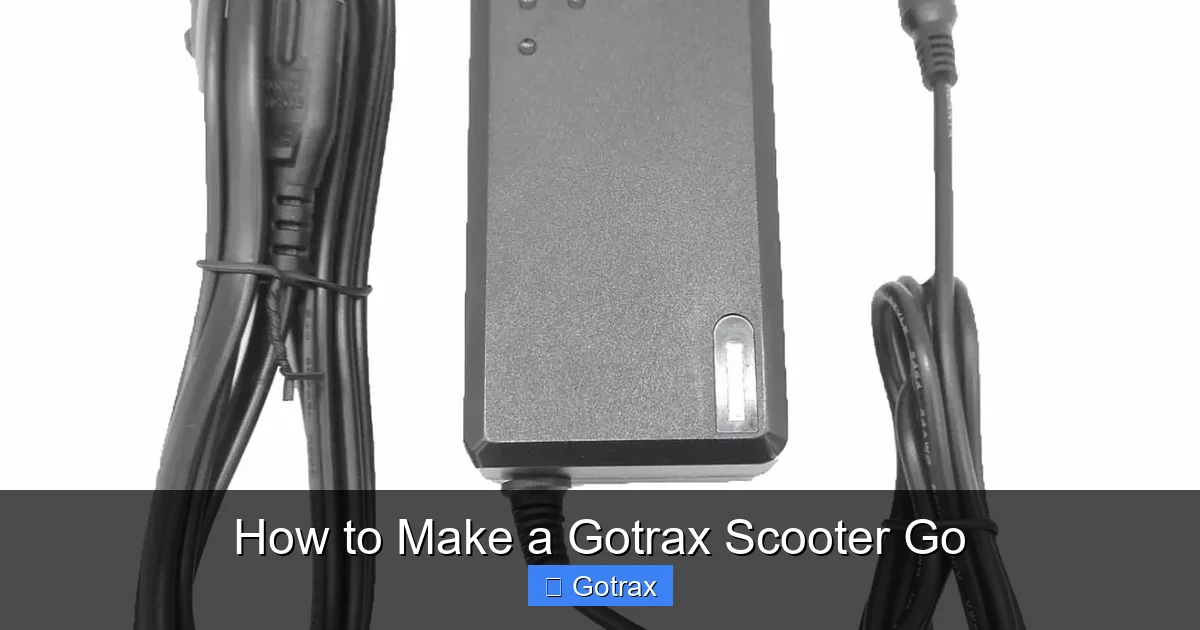
Visual guide about How to Make a Gotrax Scooter Go
Image source: scooterinsights.com
The number one reason a Gotrax scooter won’t go is a dead or low battery. Gotrax scooters are electric, which means they rely entirely on battery power to move. If the battery isn’t charged, the motor won’t engage—no matter how hard you press the throttle.
Check the Battery Level
Before doing anything else, check the battery indicator on your scooter’s display. Most Gotrax models have a small LED screen or a series of lights that show how much charge remains. A full battery usually shows four or five solid lights. If only one light is on—or none at all—your scooter likely won’t move.
Even if the lights show some charge, a partial charge might not be enough to activate the motor, especially on inclines or after long storage.
Use the Correct Charger
Always use the charger that came with your Gotrax scooter. Using a third-party or incompatible charger can damage the battery or cause it to charge improperly. Gotrax chargers are designed specifically for their lithium-ion batteries and include safety features like overcharge protection.
Plug the charger into a standard wall outlet, then connect the charging port on the scooter. The charging port is usually located near the base of the deck, protected by a rubber cover. Make sure the connection is secure.
Allow Enough Time to Charge
Gotrax scooters typically take between 3 and 6 hours to fully charge, depending on the model and how depleted the battery is. For example:
– The Gotrax GXL V2 takes about 4–5 hours.
– The Gotrax XR Elite may take up to 6 hours.
– Older models like the Gotrax G2 might charge in 3–4 hours.
Don’t rush the process. Even if the lights show full charge early, let it sit for the recommended time to ensure the battery reaches maximum capacity.
Watch for Charging Indicators
While charging, the LED light on the charger should be red. Once the battery is fully charged, it will turn green. If the light stays red for more than 6 hours, there may be an issue with the battery or charger.
Tip: Avoid charging your scooter in extreme temperatures. Charging in very cold or hot environments can reduce battery life and performance.
Step 2: Power On the Scooter
Once the battery is charged, the next step is to turn on the scooter. It sounds simple, but many riders forget this basic step—especially if they’re in a hurry.
Locate the Power Button
The power button is usually found on the handlebar display or near the base of the stem. On most Gotrax models, it’s a small round or rectangular button labeled with a power symbol (⚡ or ⭘).
Press and hold the power button for 2–3 seconds until the display lights up. You should see the battery level, speedometer, and mode indicators appear.
Check the Display
After powering on, look at the screen. If it’s blank or flickering, the battery may still be too low, or there could be a connection issue. Try recharging for another hour and test again.
Some models have a “sleep mode” that activates after inactivity. If the scooter was recently used, it might appear off but still have power. Press the power button once to wake it up.
Ensure It’s in Riding Mode
Gotrax scooters often have multiple riding modes: Eco, Normal, and Sport. These affect speed and battery usage. Make sure the scooter is set to a mode that allows movement.
To change modes, press the mode button (usually labeled “M” or “Mode”) on the handlebar. Each press cycles through the options. Eco mode limits speed to save battery, while Sport mode unlocks maximum performance.
If the scooter is in “Walk Mode” or “Park Mode,” it won’t respond to the throttle. Check your user manual to confirm how to exit these modes.
Step 3: Use the Throttle Correctly
The throttle is what makes your Gotrax scooter go. But it’s not like a gas pedal in a car—it’s electronic and requires a specific technique.
Find the Throttle Lever
On most Gotrax models, the throttle is a small lever on the right handlebar. It’s usually black or gray and moves slightly when pressed.
To activate it, gently squeeze the lever toward the handlebar grip. The scooter will begin to move forward as you apply pressure.
Apply Gentle, Gradual Pressure
Don’t yank or slam the throttle. Gotrax scooters are designed to respond to smooth, gradual input. Sudden movements can cause jerky acceleration or trigger safety cutoffs.
Start by pressing the throttle just enough to feel the motor engage. Once the scooter begins to move, you can increase pressure to go faster.
Tip: Practice in a safe, open area like a driveway or empty parking lot. This helps you get used to how the throttle responds.
Don’t Hold the Throttle While Stationary
Some riders press the throttle while the scooter is still, expecting it to “rev” like a motorcycle. But Gotrax scooters won’t move unless they’re in motion or you give them a slight push.
This is a safety feature to prevent accidental launches. To start moving:
1. Stand on the scooter with one foot.
2. Push off gently with your other foot (like a kick scooter).
3. Once you’re rolling slightly, squeeze the throttle to accelerate.
This “push-to-start” method is common on electric scooters and helps conserve battery.
Step 4: Check the Brakes and Tires
If your scooter still won’t go, the issue might be mechanical—not electrical.
Inspect the Brakes
Gotrax scooters have hand brakes (usually on the left handlebar) and sometimes foot brakes. If the brake is stuck or engaged, it can prevent the wheels from turning.
Check the brake lever: Is it loose or stuck in the “on” position? Try squeezing and releasing it a few times to see if it moves freely.
Also, look at the brake pads near the rear wheel. If they’re worn down or misaligned, they might be rubbing against the wheel, creating drag.
Tip: If the brake feels too tight, you may need to adjust it. Refer to your user manual or contact Gotrax support for guidance.
Check Tire Pressure
Gotrax scooters come with either air-filled (pneumatic) or solid (airless) tires. If you have pneumatic tires, low air pressure can make the scooter hard to move.
Use a tire pressure gauge to check the PSI. Most Gotrax models recommend 40–50 PSI. If the tires are soft, use a bike pump to inflate them.
Solid tires don’t need air, but they can still wear down over time. Look for cracks, flat spots, or excessive wear that might affect performance.
Look for Obstructions
Sometimes, debris like rocks, sticks, or gravel can get stuck in the wheels or under the fender. This can prevent the wheels from spinning freely.
Turn the scooter upside down (carefully!) and spin each wheel by hand. If it doesn’t turn smoothly, inspect for blockages.
Also, check the motor hub. If dirt or grime builds up around the motor, it can interfere with rotation. Use a soft brush or cloth to clean it gently.
Step 5: Reset the Scooter
If your Gotrax scooter still won’t go after checking the battery, power, throttle, and mechanics, a simple reset might do the trick.
Power Cycle the Scooter
Turn the scooter off completely by holding the power button for 3–5 seconds until the display shuts off. Wait 10–15 seconds, then turn it back on.
This clears temporary glitches in the electronic system and can restore normal function.
Perform a Hard Reset (If Supported)
Some Gotrax models allow a hard reset through a specific button sequence. For example:
1. Turn off the scooter.
2. Hold the power button and mode button simultaneously for 10 seconds.
3. Release and turn the scooter back on.
Check your user manual to see if your model supports this feature. A hard reset can clear error codes and restore factory settings.
Check for Error Codes
If the display shows a number or symbol (like “E1” or “E2”), your scooter may be displaying an error code. These codes indicate specific issues, such as:
– E1: Motor fault
– E2: Throttle error
– E3: Battery communication issue
Refer to the troubleshooting section of your manual or visit the Gotrax support website to decode the message.
Step 6: Update Firmware (For App-Connected Models)
Newer Gotrax scooters, like the XR Elite or G4, can connect to the Gotrax app via Bluetooth. This allows you to monitor battery life, adjust settings, and update firmware.
Download the Gotrax App
Search for “Gotrax” in the App Store (iOS) or Google Play (Android). Download and install the official app.
Pair Your Scooter
Turn on Bluetooth on your phone, open the app, and follow the pairing instructions. You’ll usually need to turn on the scooter and hold a button to enter pairing mode.
Check for Updates
Once connected, the app may notify you of a firmware update. These updates fix bugs, improve performance, and add new features.
Follow the on-screen instructions to install the update. Do not turn off the scooter during the process.
Tip: Firmware updates can resolve issues like unresponsive throttles or battery drain. Even if your scooter is working, updating regularly is a good practice.
Step 7: Perform Regular Maintenance
Keeping your Gotrax scooter in good condition prevents future problems and ensures it always goes when you need it to.
Clean the Scooter Weekly
Wipe down the deck, handlebars, and wheels with a damp cloth. Avoid spraying water directly into the motor, battery compartment, or charging port.
Use a mild soap solution for stubborn dirt, but never use high-pressure washers.
Lubricate Moving Parts
Apply a small amount of bike lubricant to the brake cables, folding mechanism, and wheel bearings every few months. This keeps everything moving smoothly.
Store Properly
When not in use, store your scooter in a dry, cool place. Avoid leaving it in direct sunlight or extreme cold, which can damage the battery.
If you won’t use it for more than a week, charge the battery to about 50% before storing. This helps preserve battery health.
Inspect Before Each Ride
Make it a habit to do a quick pre-ride check:
– Is the battery charged?
– Are the tires inflated?
– Do the brakes work?
– Is the throttle responsive?
This takes less than a minute but can prevent breakdowns and accidents.
Troubleshooting Common Issues
Even with proper care, problems can happen. Here’s how to fix the most common issues that prevent a Gotrax scooter from going.
Scooter Won’t Turn On
– Check the battery: Is it charged? Try a different outlet.
– Inspect the power button: Is it stuck or damaged?
– Look for loose connections: Open the battery compartment (if accessible) and check for disconnected wires.
Throttle Doesn’t Respond
– Ensure the scooter is powered on and in riding mode.
– Try a reset: Turn it off and on again.
– Check for throttle damage: If the lever is cracked or loose, it may need replacement.
Scooter Moves Slowly or Stutters
– Battery may be low: Recharge fully.
– Riding mode is set to Eco: Switch to Normal or Sport.
– Motor overheating: Let the scooter cool down for 15–20 minutes.
Scooter Makes Noise but Doesn’t Move
– Brakes may be engaged: Release the brake lever.
– Motor issue: Contact Gotrax support—this may require professional repair.
Scooter Turns Off While Riding
– Battery is overheating or depleted: Let it cool and recharge.
– Loose battery connection: Check internal connections (if comfortable doing so).
– Firmware glitch: Update via the app.
Safety Tips for Riding Your Gotrax Scooter
Getting your scooter to go is one thing—riding it safely is another. Follow these tips to protect yourself and your scooter.
Wear a Helmet
Always wear a certified helmet, even for short rides. Wrist guards and knee pads are also recommended, especially for beginners.
Ride in Safe Areas
Avoid busy streets, wet roads, and uneven terrain. Stick to bike lanes, sidewalks (where allowed), and smooth pavement.
Obey Speed Limits
Most Gotrax scooters have a top speed of 15–20 mph. Don’t exceed safe speeds, especially in crowded areas.
Don’t Ride at Night Without Lights
If you must ride after dark, ensure your scooter has working headlights and taillights. Wear reflective clothing.
Avoid Water and Mud
Gotrax scooters are not waterproof. Riding through puddles or wet grass can damage the motor and battery.
Conclusion
Making your Gotrax scooter go is easier than you think—once you know what to check. Start with the battery, power it on, use the throttle correctly, and inspect the brakes and tires. If it still won’t move, try a reset or check for error codes. Regular maintenance and firmware updates keep your scooter running smoothly for years.
Remember, safety comes first. Always wear protective gear, ride responsibly, and follow local laws. With these steps, you’ll be zipping around town on your Gotrax scooter in no time.
Got a question we didn’t answer? Check the FAQs below or reach out to Gotrax customer support for personalized help.