

Want to make your Gotrax scooter faster? This guide covers safe, effective ways to increase speed—from tire upgrades and firmware tweaks to motor enhancements—while keeping your ride reliable and safe. No advanced tools or engineering degree required!
Key Takeaways
- Upgrade your tires: Switching to high-performance, low-rolling-resistance tires can improve speed and efficiency without major modifications.
- Optimize battery performance: A higher-capacity or higher-voltage battery (if compatible) can deliver more power and extend range, boosting top speed.
- Reduce weight: Removing unnecessary accessories and using lightweight gear helps the motor work less, increasing acceleration and speed.
- Check firmware updates: Some Gotrax models allow speed limit adjustments via official or third-party firmware—always proceed with caution.
- Lubricate and maintain: Regular cleaning and lubrication of moving parts reduce friction, helping your scooter run smoother and faster.
- Avoid unsafe mods: Overclocking motors or using incompatible parts can damage your scooter or void the warranty—safety first!
- Know your model: Not all Gotrax scooters respond the same way to upgrades—research your specific model before making changes.
How to Make a Gotrax Scooter Faster: A Complete Guide
So you’ve got your Gotrax scooter, and it’s been zipping you around town—but maybe it feels a little slow. Maybe you’re late for work, or you just want that extra burst of speed on open roads. You’re not alone. Many Gotrax riders wonder: How can I make my scooter faster?
The good news? There are several safe, effective ways to boost your scooter’s speed without turning it into a DIY science project. This guide will walk you through practical upgrades, maintenance tips, and smart tuning techniques to help you get more speed out of your Gotrax—safely and reliably.
We’ll cover everything from simple tire swaps to battery upgrades, firmware tweaks, and even weight reduction. Whether you ride a Gotrax GXL, G4, G2, or another model, these tips apply. Just remember: speed isn’t everything. Safety, battery life, and scooter longevity matter too. Let’s dive in.
Understand Your Gotrax Scooter’s Limits
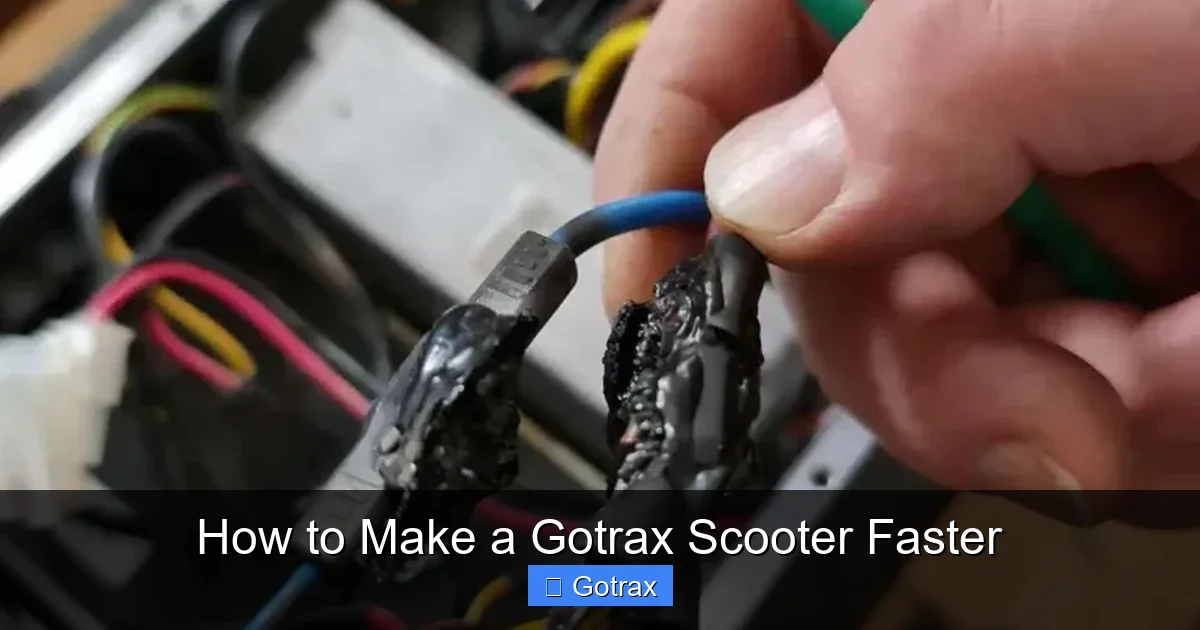
Visual guide about How to Make a Gotrax Scooter Faster
Image source: scooterinsights.com
Before you start modifying your scooter, it’s important to know what you’re working with. Gotrax scooters are designed for urban commuting—efficient, affordable, and safe. Most models top out between 15 and 20 mph, depending on the version.
For example:
– Gotrax G2: Up to 15 mph
– Gotrax GXL V2: Up to 15.5 mph
– Gotrax G4: Up to 20 mph (with Eco and Sport modes)
These speeds are limited by factory settings for safety and battery efficiency. But that doesn’t mean you can’t improve performance. Understanding your scooter’s motor power (usually 250W to 350W), battery voltage (36V is common), and weight capacity helps you choose the right upgrades.
Check Your Model Specifications
Start by looking up your exact model on the Gotrax website or in the user manual. Note:
– Motor wattage
– Battery type (lithium-ion, voltage, amp-hours)
– Max speed
– Weight limit
This info helps you avoid incompatible upgrades. For instance, a 250W motor won’t handle a 48V battery without risking damage.
Know the Risks of Modifying
Modifying your scooter can:
– Void the warranty
– Reduce battery life
– Increase wear on parts
– Pose safety risks (e.g., loss of control at high speeds)
Always prioritize safety. Wear a helmet, avoid busy roads during testing, and never exceed safe speed limits in your area.
Upgrade Your Tires for Better Speed
One of the easiest and safest ways to make your Gotrax scooter faster is by upgrading the tires. Stock tires are often designed for durability and grip, not speed. Switching to high-performance tires can reduce rolling resistance and improve acceleration.
Choose Low-Rolling-Resistance Tires
Look for tires labeled “low rolling resistance” or “high-efficiency.” These are typically made from harder rubber compounds and have smoother tread patterns. They don’t grip as aggressively, but they roll more freely—meaning your motor doesn’t have to work as hard.
For example, some riders swap Gotrax’s stock pneumatic (air-filled) tires for solid or honeycomb-style tires. While solid tires reduce puncture risk, they can make the ride rougher. A better option might be high-pressure pneumatic tires (inflated to the max PSI) for a smoother, faster ride.
Maintain Proper Tire Pressure
Even without upgrading, keeping your tires properly inflated can make a big difference. Underinflated tires increase rolling resistance, slowing you down and draining the battery faster.
Check your tire pressure weekly. Most Gotrax scooters recommend 40–50 PSI. Use a digital tire gauge for accuracy. Overinflating can reduce grip and comfort, so stay within the recommended range.
Consider Tire Size (If Compatible)
Some Gotrax models allow tire swaps to slightly larger diameters (e.g., from 8.5” to 9”). A larger tire covers more ground per rotation, which can increase top speed. However, this may require modifying the fender or fork clearance. Only attempt this if you’re confident in your mechanical skills.
Optimize Battery Performance
The battery is the heart of your electric scooter. A weak or aging battery can’t deliver full power, limiting speed and range. Upgrading or maintaining your battery can unlock hidden performance.
Upgrade to a Higher-Capacity Battery
If your Gotrax model supports it, consider upgrading to a higher-capacity (Ah) battery. For example, swapping a 7.8Ah battery for a 10.4Ah version increases energy storage, allowing longer rides and better power delivery.
Note: Not all Gotrax scooters have user-replaceable batteries. Some are sealed inside the deck. Check your model before attempting a swap.
Use a Higher-Voltage Battery (Advanced)
This is a more advanced mod and not recommended for beginners. Some riders replace the stock 36V battery with a 48V one to increase motor power and speed. However, this can:
– Overheat the motor
– Damage the controller
– Void the warranty
Only attempt this if you understand electrical systems and have compatible components. Even then, proceed with caution.
Keep Your Battery Healthy
A well-maintained battery performs better. Follow these tips:
– Charge regularly—don’t let it drop below 20%
– Avoid extreme temperatures (don’t charge in freezing or hot conditions)
– Store at 50–70% charge if not using for weeks
– Use the original charger
A healthy battery delivers consistent power, helping your scooter reach its max speed more easily.
Reduce Weight for Better Acceleration
The lighter your scooter and load, the faster it can accelerate and maintain speed. Gotrax scooters are already lightweight (around 25–30 lbs), but every pound counts.
Remove Unnecessary Accessories
Take off phone mounts, baskets, lights, or phone chargers you don’t need. These add weight and drag. If you’re trying to go faster, strip down to the essentials.
Wear Lightweight Gear
Your body weight affects performance too. Wearing heavy jackets, backpacks, or boots slows you down. Opt for lightweight clothing and a compact backpack if needed.
Check for Loose or Extra Parts
Sometimes, extra bolts, washers, or aftermarket parts add unnecessary weight. Do a quick inspection and remove anything not essential.
Even a 5-pound reduction can improve acceleration and top speed, especially on hills.
Improve Aerodynamics
At higher speeds, air resistance becomes a major factor. While you can’t turn your scooter into a race car, small tweaks can reduce drag.
Adopt a Streamlined Riding Position
Lean forward slightly and keep your arms close to your body. This reduces your frontal area and cuts through the air more efficiently. Avoid sitting upright like on a bike—this creates more drag.
Remove Wind-Catching Accessories
Large phone mounts, flags, or decorative stickers can catch wind. Remove them when speed is your goal.
Use a Small Fairing (Optional)
Some riders add a small front fairing or windscreen to reduce wind resistance. These are more common on high-speed scooters, but a lightweight, DIY version might help slightly. Just ensure it doesn’t block your view or interfere with steering.
Upgrade the Motor (Advanced Mod)
This is a serious modification and not for the faint of heart. Replacing the motor can significantly increase speed, but it’s complex and risky.
Understand the Risks
– High cost (motors can cost $100–$300)
– Requires rewiring and possibly a new controller
– May overheat or fail prematurely
– Likely voids warranty
Choose a Compatible High-Power Motor
If you proceed, look for a brushless DC motor with higher wattage (e.g., 500W or 800W) that fits your scooter’s hub. Ensure it matches the voltage and connector type.
Install with Care
This involves:
– Removing the wheel
– Disconnecting the old motor
– Installing the new one
– Rewiring to the controller
– Testing carefully
Unless you’re experienced, consider hiring a professional. A botched motor swap can ruin your scooter.
Adjust Firmware or Use Speed Unlockers
Some Gotrax models have speed limiters in their firmware. These can sometimes be bypassed to unlock higher speeds.
Check for Official Updates
Gotrax occasionally releases firmware updates that improve performance. Check their website or app (if available) for updates. Some updates may increase speed or improve throttle response.
Use Third-Party Speed Unlockers (Caution)
There are devices and apps that claim to “unlock” your scooter’s speed by overriding the controller. These plug into the scooter’s wiring and adjust speed limits.
Examples include:
– Speed unlocker dongles
– Bluetooth tuning apps (for compatible models)
⚠️ Warning: These can void your warranty and may cause instability or damage. Use only if you understand the risks.
Test Gradually
If you unlock higher speeds, test in a safe, open area. Start slow and gradually increase speed. Watch for overheating, wobbling, or loss of control.
Maintain Your Scooter for Peak Performance
Even the best upgrades won’t help if your scooter is poorly maintained. Regular upkeep keeps everything running smoothly.
Lubricate Moving Parts
Apply lubricant to:
– Brake levers
– Throttle grip
– Folding mechanism
– Wheel bearings (if accessible)
Use a light bike or scooter lubricant. Avoid oil on brakes or tires.
Clean the Deck and Wheels
Dirt, dust, and grime build up over time. Wipe down the deck and clean the wheels with a damp cloth. Remove debris from the motor area (if exposed).
Check Brakes and Alignment
Misaligned brakes can drag on the wheel, slowing you down. Adjust brake pads so they don’t rub when not in use. Also, ensure the wheels spin freely.
Tighten Bolts and Screws
Vibrations can loosen bolts. Regularly check:
– Handlebar clamp
– Stem bolts
– Deck screws
– Wheel nuts
Use a torque wrench if possible to avoid over-tightening.
Troubleshooting Common Speed Issues
Sometimes, your scooter feels slow even without mods. Here’s how to fix common problems.
Scooter Feels Sluggish on Hills
– Cause: Weak battery, underinflated tires, or heavy load
– Fix: Charge battery, inflate tires, reduce weight
Top Speed Lower Than Advertised
– Cause: Firmware limiter, low battery, or worn motor
– Fix: Check battery level, update firmware, or service motor
Throttle Responds Slowly
– Cause: Dirty throttle grip, loose connection, or low battery
– Fix: Clean throttle, check wiring, charge battery
Scooter Shuts Off at High Speed
– Cause: Overheating motor or battery protection
– Fix: Let it cool, avoid prolonged high-speed riding, check for blockages
Safety First: Ride Responsibly
Speed is fun, but safety is non-negotiable. Here’s how to stay safe while enjoying a faster ride.
Wear Protective Gear
– Helmet (mandatory)
– Knee and elbow pads
– Gloves
– Reflective clothing (for night riding)
Follow Traffic Laws
– Obey speed limits
– Use bike lanes when available
– Signal turns
– Don’t ride on sidewalks where prohibited
Avoid Wet or Icy Conditions
Higher speeds increase stopping distance. Wet roads reduce traction, raising the risk of skidding. Ride slower in rain or snow.
Test Upgrades in Safe Areas
When trying a new mod, test in a quiet parking lot or empty street. Start slow and build confidence.
Conclusion: Smart Upgrades for a Faster, Safer Ride
Making your Gotrax scooter faster doesn’t require extreme modifications. Simple changes—like upgrading tires, maintaining your battery, reducing weight, and keeping everything clean—can make a noticeable difference.
For most riders, the best approach is a combination of:
– High-pressure, low-resistance tires
– A well-maintained, fully charged battery
– Lightweight riding gear
– Regular cleaning and lubrication
Advanced mods like motor swaps or firmware hacks can boost speed further, but they come with risks. Only attempt them if you’re experienced and willing to accept the consequences.
Remember: a faster scooter is only better if it’s safe and reliable. Prioritize maintenance, ride responsibly, and enjoy the extra zip—without sacrificing control or safety.
With these tips, you’ll get the most out of your Gotrax scooter, whether you’re commuting, cruising, or just having fun.