

Gotrax electric scooters offer a range of 10 to 45 miles per charge, depending on the model, rider weight, terrain, and speed. With proper care and smart riding habits, you can maximize your scooter’s distance and enjoy longer, more reliable rides.
Key Takeaways
- Range varies by model: Entry-level Gotrax scooters like the GXL V2 go about 12–18 miles, while high-end models like the G4 can reach up to 45 miles.
- Battery capacity matters: Higher watt-hour (Wh) batteries store more energy, directly impacting how far you can travel.
- Rider weight affects distance: Heavier riders may see reduced range due to increased power demand.
- Terrain and speed play a role: Hills and high speeds drain the battery faster than flat roads and moderate pacing.
- Tire pressure and maintenance count: Properly inflated tires and regular upkeep improve efficiency and extend range.
- Eco mode boosts mileage: Using energy-saving settings can significantly increase your scooter’s travel distance.
- Weather impacts performance: Cold temperatures reduce battery efficiency, shortening your ride time.
📑 Table of Contents
- How Far Can a Gotrax Electric Scooter Go? A Complete Guide
- Understanding Gotrax Scooter Range: What the Numbers Really Mean
- Gotrax Models and Their Real-World Range
- Factors That Affect How Far Your Gotrax Scooter Can Go
- How to Maximize Your Gotrax Scooter’s Range
- Gotrax vs. Competitors: How Does Range Compare?
- Final Thoughts: Choosing the Right Gotrax for Your Range Needs
How Far Can a Gotrax Electric Scooter Go? A Complete Guide
So, you’re thinking about getting a Gotrax electric scooter—or maybe you already have one—and you’re wondering: just how far can it really go on a single charge? It’s a fair question. After all, range is one of the biggest factors when choosing an e-scooter. You don’t want to be stranded halfway to work or your favorite coffee shop because the battery died sooner than expected.
Gotrax is one of the most popular brands in the affordable electric scooter market, known for offering reliable, stylish, and budget-friendly options. But with so many models available—from the compact G2 to the long-range G4—it can be confusing to figure out which one fits your needs. The truth is, the distance a Gotrax scooter can travel depends on a mix of factors: the model you choose, your weight, the terrain you ride on, how fast you go, and even the weather.
In this guide, we’ll break down everything you need to know about Gotrax scooter range. We’ll look at official specs, real-world performance, and practical tips to help you get the most miles out of every charge. Whether you’re commuting, running errands, or just cruising around town, understanding your scooter’s range will help you ride smarter and farther.
Understanding Gotrax Scooter Range: What the Numbers Really Mean
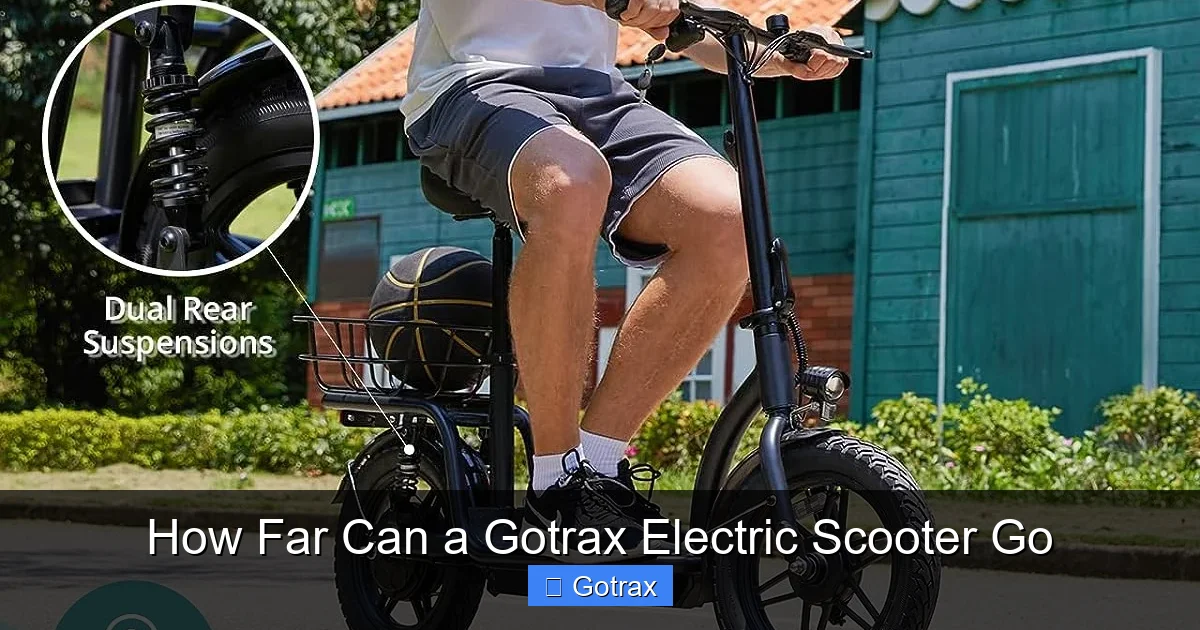
Visual guide about How Far Can a Gotrax Electric Scooter Go
Image source: thebike.review
When you check out a Gotrax scooter online, you’ll see a number like “up to 18 miles” or “45-mile range” listed in the product description. But what does that really mean? Are those numbers accurate? And can you actually expect to go that far every time?
The short answer: those numbers are based on ideal conditions. Gotrax tests their scooters under controlled settings—light riders, flat surfaces, moderate speeds, and room temperature. In the real world, your experience might differ. That doesn’t mean the specs are misleading—it just means you need to understand the variables that affect range.
Let’s start with the basics. Range is how far your scooter can travel on a full battery charge. It’s measured in miles (or kilometers) and depends on the battery’s capacity, measured in watt-hours (Wh). The higher the Wh, the more energy the battery can store, and the farther you can go.
For example, the Gotrax GXL V2 has a 250-watt motor and a 288Wh battery. Gotrax claims it can go up to 18 miles. But in real-world use, many riders report getting closer to 12–15 miles, especially if they’re heavier or ride on hills. On the other hand, the Gotrax G4, with its 350-watt motor and 576Wh battery, boasts a 45-mile range. While that’s impressive, most users see around 30–35 miles under normal conditions.
So why the difference? Because range isn’t just about battery size. It’s about how that energy is used. And that’s where rider behavior, environment, and scooter design come into play.
Official vs. Real-World Range: Bridging the Gap
It’s important to distinguish between manufacturer claims and actual performance. Gotrax, like most brands, advertises the maximum possible range under optimal conditions. But real life isn’t optimal. You’re probably not riding on a perfectly smooth, flat road with no wind, at a steady 10 mph, with a 120-pound rider.
In reality, most riders weigh more than the test standard, encounter hills, stop and start frequently, and ride at varying speeds. All of these factors reduce efficiency. For instance, accelerating quickly uses more power than cruising at a steady pace. Similarly, climbing a hill can drain the battery much faster than riding on level ground.
That said, Gotrax scooters are generally reliable when it comes to range. Many users report getting close to the advertised distance—especially if they ride conservatively. The key is knowing your scooter’s limits and adjusting your expectations accordingly.
Why Range Matters for Different Riders
Range isn’t just a number—it’s a practical concern. If you’re using your scooter to commute 10 miles each way, you need a model that can handle at least 20–25 miles on a charge. Otherwise, you’ll be charging daily—or worse, running out of juice on the way home.
On the other hand, if you’re just using your scooter for short trips around the neighborhood or campus, a 12-mile range might be more than enough. The point is: your needs should guide your choice.
Gotrax offers a range of models to fit different lifestyles. The G2 and GXL V2 are great for casual riders and short commutes. The G3 and G4 are better suited for longer distances and more demanding use. By matching your riding habits to the right model, you’ll get the best balance of performance, range, and value.
Gotrax Models and Their Real-World Range
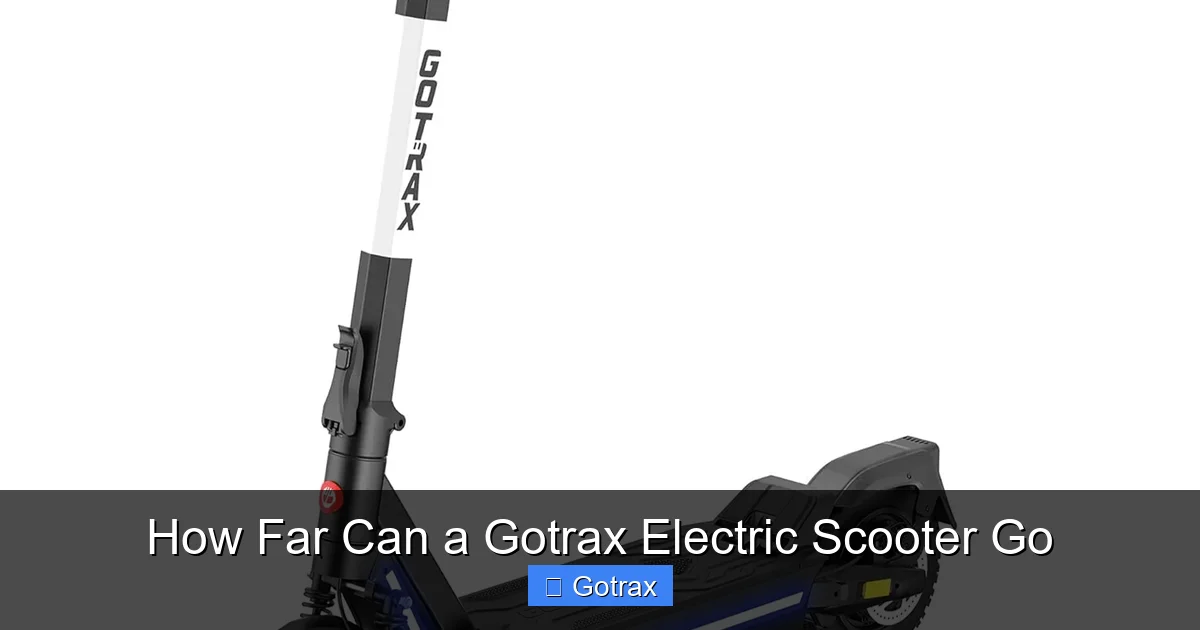
Visual guide about How Far Can a Gotrax Electric Scooter Go
Image source: gotrax.com
Now that we’ve covered the basics, let’s look at specific Gotrax models and how far they can actually go. We’ll compare official specs with user-reported range to give you a realistic picture.
Gotrax G2: The Budget-Friendly Commuter
The Gotrax G2 is one of the brand’s most popular entry-level scooters. It features a 250-watt motor, a 288Wh battery, and a top speed of 15 mph. Gotrax claims a range of up to 12 miles.
In real-world use, most riders get between 8 and 12 miles. Heavier riders (over 180 lbs) or those who ride on hills may see closer to 6–8 miles. The G2 is best for short trips, campus travel, or light commuting. It’s lightweight and portable, making it easy to carry on public transit or store in small spaces.
Gotrax GXL V2: A Step Up in Performance
The GXL V2 is a favorite among urban commuters. It has the same 250-watt motor and 288Wh battery as the G2, but with improved suspension and larger 8.5-inch tires. Gotrax advertises a range of up to 18 miles.
User reports suggest a more realistic range of 12–16 miles. Again, this depends on weight, terrain, and riding style. The GXL V2 handles bumps and cracks better than the G2, making it more comfortable for longer rides. It’s a solid choice if you need a bit more range and durability without breaking the bank.
Gotrax G3: Built for Longer Rides
The Gotrax G3 is where things start to get serious. It features a 350-watt motor, a 360Wh battery, and a top speed of 18 mph. Gotrax claims a range of up to 25 miles.
In practice, most riders report 18–22 miles per charge. The G3 is ideal for commuters who need to cover longer distances or ride on varied terrain. It also includes features like a digital display, LED lights, and a more robust frame. If you’re looking for a balance of power, range, and affordability, the G3 is a strong contender.
Gotrax G4: The Long-Range Champion
The Gotrax G4 is the brand’s flagship model, designed for maximum range and performance. It has a 350-watt motor, a massive 576Wh battery, and a top speed of 20 mph. Gotrax boasts an impressive 45-mile range.
Real-world performance? Most users get between 30 and 38 miles, depending on conditions. That’s still excellent—enough for a full day of commuting or weekend adventures. The G4 also includes premium features like a color display, app connectivity, and dual suspension. If you need serious range and don’t mind the higher price tag, the G4 is hard to beat.
Gotrax XR and XR Elite: Off-Road Capability
For riders who want to venture beyond city streets, the Gotrax XR and XR Elite offer off-road capability. Both feature 8.5-inch pneumatic tires, powerful motors, and enhanced suspension.
The XR has a 350-watt motor and 360Wh battery, with a claimed range of 25 miles. Users report 18–22 miles in real use. The XR Elite upgrades to a 500-watt motor and 576Wh battery, with a 40-mile claimed range. Expect 28–35 miles in practice.
These models are great for trails, parks, and rough terrain—but keep in mind that off-road riding uses more power, which can reduce range.
Factors That Affect How Far Your Gotrax Scooter Can Go
Now that we’ve looked at the models, let’s dive into the factors that influence range. Understanding these will help you get the most out of your scooter—and avoid surprises on the road.
Rider Weight: The Heavier You Are, the Shorter the Ride
One of the biggest factors affecting range is rider weight. Gotrax scooters are designed to support up to 220–260 lbs, depending on the model. But the closer you are to that limit, the more strain you put on the motor and battery.
For example, a 120-pound rider might get the full advertised range, while a 200-pound rider could see a 20–30% reduction. That means a scooter rated for 18 miles might only go 12–14 miles for a heavier user.
Why? Because the motor has to work harder to accelerate and maintain speed. More weight means more energy consumption. If you’re near the weight limit, consider a model with a higher-capacity battery, like the G4 or XR Elite.
Terrain: Hills, Bumps, and Inclines Drain the Battery
Flat, smooth roads are ideal for maximizing range. But if you live in a hilly area or ride on uneven surfaces, your scooter will use more power.
Climbing a hill requires extra torque, which drains the battery quickly. Even small inclines can reduce your range by 10–20%. Similarly, riding on gravel, grass, or cracked pavement increases rolling resistance, making the motor work harder.
If you frequently ride on hills, look for a scooter with a powerful motor (350 watts or more) and a large battery. The G3, G4, and XR models are better suited for hilly terrain than the G2 or GXL V2.
Speed and Riding Style: Faster Isn’t Always Farther
It might seem counterintuitive, but riding at top speed doesn’t always get you farther. In fact, high speeds significantly reduce range.
Electric scooters are most efficient at moderate speeds—around 10–15 mph. At higher speeds, air resistance increases, and the motor uses more power to maintain velocity. For example, riding at 20 mph might cut your range in half compared to 12 mph.
Aggressive acceleration and frequent braking also waste energy. Smooth, steady riding is the key to maximizing distance. Use cruise control if your model has it, and avoid sudden starts and stops.
Tire Pressure and Maintenance: Small Details, Big Impact
You might not think about your tires, but they play a huge role in efficiency. Underinflated tires increase rolling resistance, making the motor work harder and reducing range.
Gotrax scooters with pneumatic (air-filled) tires—like the GXL V2, G3, and XR—require regular inflation. Check the tire pressure weekly and keep it at the recommended PSI (usually 40–50 PSI). Flat or soft tires can reduce range by 10–15%.
Other maintenance tips:
– Keep the chain or belt lubricated (if applicable).
– Clean the deck and wheels to remove dirt and debris.
– Check the brakes to ensure they’re not dragging.
– Store the scooter in a dry, temperate place.
A well-maintained scooter runs more efficiently and lasts longer.
Weather Conditions: Cold Weather = Less Range
Temperature affects battery performance. Lithium-ion batteries—like the ones in Gotrax scooters—work best at room temperature (around 68–77°F or 20–25°C).
In cold weather, battery chemistry slows down, reducing capacity and range. Riding in 40°F (4°C) weather can cut your range by 20–30%. In extreme cold, the battery may even shut down temporarily.
To minimize the impact:
– Store your scooter indoors when not in use.
– Warm up the battery before riding (e.g., charge it inside).
– Avoid riding in freezing temperatures if possible.
Hot weather can also affect performance, though usually less dramatically. High heat can cause the battery to overheat, triggering safety shutdowns.
Battery Age and Health: Older Batteries Don’t Last as Long
Over time, lithium-ion batteries lose capacity. A brand-new Gotrax scooter might hit its full range, but after a year or two of regular use, you may notice a decline.
Most Gotrax batteries are rated for 300–500 charge cycles before significant degradation. That’s roughly 1–2 years of daily use. After that, you might see 10–20% less range.
To extend battery life:
– Avoid fully draining the battery; recharge when it drops to 20–30%.
– Don’t leave the scooter plugged in overnight.
– Store the battery at 50% charge if not using it for long periods.
If your range drops significantly, it might be time to replace the battery—though this can be costly.
How to Maximize Your Gotrax Scooter’s Range
Now that you know what affects range, let’s talk about how to get the most miles out of every charge. With a few smart habits, you can extend your scooter’s distance and enjoy longer, more reliable rides.
Use Eco Mode (If Available)
Many Gotrax models—like the G3, G4, and XR Elite—come with an Eco mode. This setting limits top speed and reduces power output to conserve battery.
While you won’t go as fast, Eco mode can increase your range by 15–25%. It’s perfect for flat terrain, light traffic, or when you’re not in a hurry. Use it on longer trips to stretch your battery life.
Ride Smoothly and Steadily
Aggressive riding wastes energy. Instead, aim for smooth acceleration and consistent speed. Here’s how:
– Start gently—don’t slam the throttle.
– Maintain a steady pace; avoid frequent speeding up and slowing down.
– Use cruise control to lock in a efficient speed.
– Anticipate stops and coast when possible.
Think of it like driving a car: smooth driving saves fuel. The same principle applies to e-scooters.
Reduce Weight and Drag
The lighter your load, the farther you’ll go. Avoid carrying heavy backpacks, groceries, or other gear unless necessary. Every extra pound increases energy demand.
Also, reduce wind resistance by riding in a low, aerodynamic position. Tuck your arms in and avoid riding with large bags or accessories that catch the wind.
Plan Your Route Wisely
Choose routes with minimal hills, smooth pavement, and fewer stops. Avoid busy streets with frequent traffic lights or stop signs.
Use apps like Google Maps or Komoot to find the most efficient path. Look for bike lanes, park paths, or quiet roads with gentle gradients.
Charge Smart
How you charge your scooter affects battery health and range. Follow these tips:
– Charge after each ride, but don’t leave it plugged in overnight.
– Use the original charger—third-party chargers can damage the battery.
– Avoid charging in extreme temperatures.
– Store the scooter with a 50% charge if not using it for weeks.
A healthy battery delivers more range and lasts longer.
Upgrade Tires (If Possible)
Some Gotrax models allow tire upgrades. Switching to high-quality, low-rolling-resistance tires can improve efficiency and extend range.
For example, replacing standard tires with puncture-resistant or performance tires can reduce drag and improve comfort. Just make sure they’re compatible with your scooter.
Gotrax vs. Competitors: How Does Range Compare?
Gotrax isn’t the only player in the e-scooter market. Brands like Xiaomi, Segway, and Ninebot also offer competitive models. So how does Gotrax stack up when it comes to range?
In the budget category, Gotrax holds its own. The GXL V2 offers similar range to the Xiaomi Mi Electric Scooter (18.6 miles claimed), though real-world performance is comparable. Gotrax scooters are often more affordable and come with better warranties.
In the mid-range, the G3 competes with the Segway Ninebot ES2 (28 miles claimed). The G3’s 25-mile claim is slightly lower, but it offers better suspension and build quality.
At the high end, the G4 rivals premium models like the Ninebot Max (40 miles claimed). With a 45-mile claim, the G4 offers excellent value, especially considering its lower price point.
Overall, Gotrax provides strong range for the price. While some competitors may offer slightly better specs, Gotrax balances performance, reliability, and affordability.
Final Thoughts: Choosing the Right Gotrax for Your Range Needs
So, how far can a Gotrax electric scooter go? The answer depends on the model, your riding habits, and the conditions you ride in. Entry-level models like the G2 and GXL V2 offer 8–16 miles, perfect for short commutes and casual use. Mid-range scooters like the G3 provide 18–22 miles, ideal for daily travel. And high-end models like the G4 can deliver 30–38 miles, making them great for long-distance riders.
To get the most out of your scooter, choose a model that matches your needs, maintain it properly, and ride efficiently. With the right approach, you can enjoy reliable, long-range performance from your Gotrax—no matter where your rides take you.
Whether you’re zipping to work, exploring the city, or just enjoying the freedom of two wheels, a Gotrax scooter can take you farther than you think.
Frequently Asked Questions
How far can a Gotrax scooter go on a single charge?
The range varies by model. Entry-level scooters like the G2 go 8–12 miles, while high-end models like the G4 can reach 30–38 miles in real-world use. Always consider rider weight, terrain, and speed.
Does rider weight affect how far a Gotrax scooter can go?
Yes, heavier riders reduce range because the motor uses more power to move the scooter. A 200-pound rider may see 20–30% less distance than a 120-pound rider on the same model.
Can I increase my Gotrax scooter’s range?
Absolutely. Use Eco mode, ride smoothly, keep tires inflated, avoid hills when possible, and maintain your battery. These habits can add 10–25% more distance per charge.
Why is my Gotrax scooter not going as far as advertised?
Advertised range is based on ideal conditions. Real-world factors like hills, wind, speed, and cold weather reduce efficiency. Most users get 70–85% of the claimed range.
How does cold weather affect Gotrax scooter range?
Cold temperatures slow down battery chemistry, reducing capacity. Riding in 40°F weather can cut range by 20–30%. Store and charge your scooter indoors to minimize the impact.
Is the Gotrax G4 worth it for long-range riding?
Yes, the G4 is one of the best long-range scooters in its price range. With a 576Wh battery and real-world range of 30–38 miles, it’s ideal for commuters and adventure riders.