
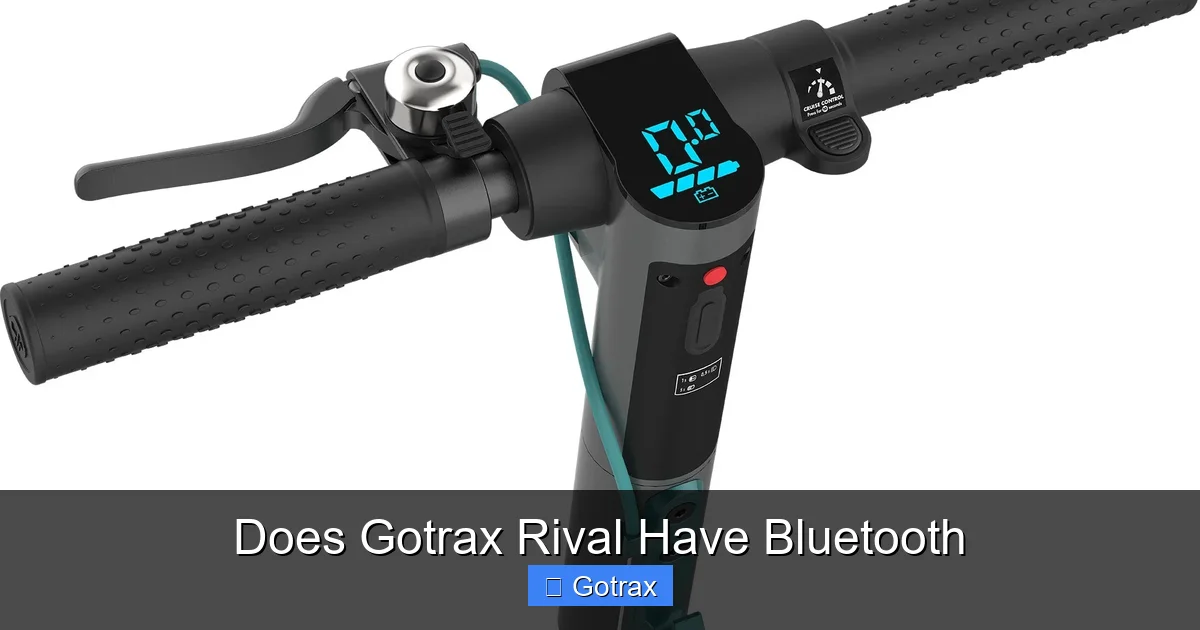
The Gotrax Rival does not have built-in Bluetooth connectivity. Unlike some higher-end e-scooters, it lacks app integration, wireless diagnostics, or smartphone control features. However, it remains a reliable, budget-friendly option for riders who prioritize performance and simplicity over smart tech.
When shopping for an electric scooter, especially in the mid-range price bracket, one of the first questions many riders ask is: “Does it have Bluetooth?” Bluetooth connectivity has become a standard feature in many modern e-scooters, offering everything from ride tracking and speed monitoring to anti-theft alerts and firmware updates. So, when Gotrax launched the Rival—a sleek, powerful, and surprisingly affordable scooter—many wondered if it joined the smart scooter revolution. The short answer? No, the Gotrax Rival does not have Bluetooth. But that doesn’t mean it’s outdated or lacking. In fact, the absence of Bluetooth is part of what makes the Rival a standout option for riders who value simplicity, reliability, and performance over high-tech gimmicks.
Gotrax has built a strong reputation for delivering dependable, user-friendly electric scooters that cater to everyday commuters, students, and casual riders. The Rival, in particular, was designed to offer a balance of power, portability, and price. With a top speed of 18 mph, a range of up to 16 miles on a single charge, and a sturdy aluminum frame, it’s built for real-world use. But unlike some of its siblings in the Gotrax lineup—like the G4 or the XR Elite—the Rival skips the smart features in favor of a more traditional, no-nonsense approach. This means no app, no Bluetooth pairing, and no digital dashboard beyond the basic LED display. For some, that’s a dealbreaker. For others, it’s a breath of fresh air.
Key Takeaways
- No Bluetooth Support: The Gotrax Rival does not include Bluetooth functionality, meaning you cannot connect it to a smartphone app for tracking or control.
- App-Free Operation: Unlike models such as the Gotrax G4 or Segway scooters, the Rival operates independently without app-based features like ride analytics or firmware updates.
- Focus on Core Performance: Gotrax designed the Rival for straightforward commuting—emphasizing speed, range, and durability over smart tech.
- Manual Controls Only: All functions, including speed modes and lights, are managed directly via the handlebar display and buttons.
- Affordable Price Point: The lack of Bluetooth helps keep the Rival competitively priced, making it ideal for budget-conscious riders.
- Aftermarket Solutions Possible: Tech-savvy users can add external Bluetooth trackers or GPS devices for basic connectivity.
- Ideal for Simplicity Lovers: If you prefer a no-frills ride without digital distractions, the Rival is a solid choice.
📑 Table of Contents
- Understanding Bluetooth in Electric Scooters
- Gotrax Rival: Design and Features Overview
- Does the Gotrax Rival Have Bluetooth? The Straight Answer
- Comparing the Rival to Bluetooth-Enabled Scooters
- Workarounds: Adding Bluetooth Functionality to the Rival
- Who Should Buy the Gotrax Rival?
- Final Verdict: Is the Gotrax Rival Worth It?
Understanding Bluetooth in Electric Scooters
Before diving deeper into whether the Gotrax Rival has Bluetooth, it’s helpful to understand what Bluetooth actually brings to an electric scooter. In recent years, Bluetooth connectivity has become a hallmark of “smart” e-scooters. When a scooter supports Bluetooth, it typically means you can pair it with a companion app on your smartphone. This app can unlock a range of features that go beyond basic riding.
For example, many Bluetooth-enabled scooters allow you to monitor your speed, track distance traveled, check battery life in real time, and even lock the scooter remotely to prevent theft. Some apps also offer ride history, calorie burn estimates, and the ability to customize speed modes or lighting settings. Brands like Segway-Ninebot, Xiaomi, and even Gotrax’s own G4 model have embraced this trend, integrating Bluetooth as a core part of the user experience.
Bluetooth also enables over-the-air (OTA) firmware updates. This means manufacturers can push software improvements or bug fixes directly to your scooter without requiring a physical connection or service visit. It’s a convenient feature that keeps your scooter up to date with the latest performance enhancements and security patches.
However, Bluetooth isn’t just about convenience—it’s also about data. Riders who enjoy tracking their commutes, analyzing their riding habits, or competing with friends on distance challenges often look for scooters with strong app integration. These features can turn a simple ride into a more engaging, gamified experience.
But here’s the catch: Bluetooth adds complexity. It requires additional hardware, software development, and ongoing app maintenance. This can increase the cost of the scooter and potentially introduce new points of failure—like app crashes, connectivity issues, or battery drain from constant Bluetooth signaling. For manufacturers like Gotrax, deciding whether to include Bluetooth involves balancing user demand, production costs, and overall product reliability.
Gotrax Rival: Design and Features Overview
Visual guide about Does Gotrax Rival Have Bluetooth
Image source: gotrax.com
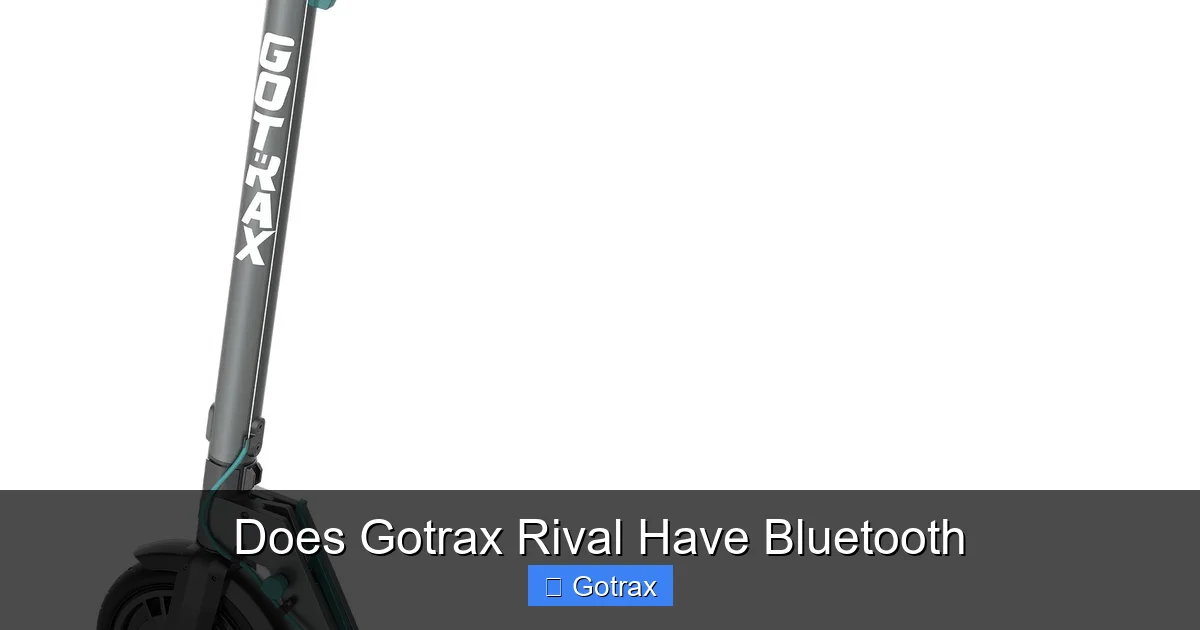
The Gotrax Rival is a compact, foldable electric scooter aimed at urban commuters and students. It features a minimalist design with a lightweight aluminum frame, 8.5-inch pneumatic tires, and a rear disc brake for reliable stopping power. The scooter weighs just 26.5 pounds, making it easy to carry up stairs or onto public transit. Its folding mechanism is quick and intuitive, allowing you to collapse the scooter in seconds.
Under the hood, the Rival is powered by a 350-watt rear hub motor, which delivers smooth acceleration and enough torque to handle moderate inclines. The 36V lithium-ion battery provides up to 16 miles of range, depending on rider weight, terrain, and riding style. Charging takes about 4–5 hours, which is standard for scooters in this class.
One of the Rival’s standout features is its LED display mounted on the handlebar. This screen shows essential information like speed, battery level, and current riding mode. The scooter offers three speed modes: Eco (up to 9 mph), Normal (up to 15 mph), and Sport (up to 18 mph). Switching between modes is done via a simple button on the handlebar, and the display updates instantly.
The Rival also includes front and rear LED lights for visibility at night, as well as a loud electronic horn for safety. The deck is spacious enough for comfortable foot placement, and the grip tape provides solid traction even in wet conditions. Overall, the Rival feels well-built and purposeful—designed for getting from point A to point B efficiently and reliably.
But when it comes to smart features, the Rival keeps things simple. There’s no USB charging port, no app integration, and—most notably—no Bluetooth. This might surprise some riders who are used to more tech-heavy models, but it’s a deliberate choice by Gotrax. The company seems to have prioritized durability, ease of use, and affordability over digital bells and whistles.
Does the Gotrax Rival Have Bluetooth? The Straight Answer
Visual guide about Does Gotrax Rival Have Bluetooth
Image source: gotrax.com
Let’s cut to the chase: the Gotrax Rival does not have Bluetooth connectivity. There is no built-in Bluetooth module, no companion app, and no way to pair the scooter with your smartphone. If you’re looking for a scooter that lets you track your rides, lock it remotely, or customize settings via an app, the Rival is not the right choice.
This might be disappointing if you’ve used other Gotrax models like the G4, which does support Bluetooth and the Gotrax app. The G4 allows you to monitor speed, battery, and location, and even receive anti-theft alerts. But the Rival was designed with a different philosophy in mind—one that emphasizes core performance and simplicity.
Gotrax has not officially stated why the Rival lacks Bluetooth, but several factors likely influenced the decision. First, cost. Adding Bluetooth hardware and developing a stable app ecosystem increases production expenses. By omitting these features, Gotrax can offer the Rival at a more competitive price point—typically under $400, which is significantly less than Bluetooth-equipped models.
Second, target audience. The Rival is marketed toward first-time e-scooter buyers, students, and commuters who want a reliable, no-fuss ride. These users may not need or want app-based features. In fact, some may prefer a scooter that doesn’t require a smartphone to operate. For them, the Rival’s manual controls and straightforward design are a plus, not a drawback.
Third, reliability. Bluetooth systems can be prone to connectivity issues, app bugs, or battery drain. By keeping the Rival analog, Gotrax reduces the risk of technical problems and ensures a consistent user experience. There’s no risk of the app crashing mid-ride or the scooter failing to connect after an update.
So while the lack of Bluetooth might seem like a limitation at first glance, it’s actually a reflection of the Rival’s design goals. It’s a scooter built for people who care more about how it rides than how it connects.
Comparing the Rival to Bluetooth-Enabled Scooters
To better understand the Rival’s position in the market, it’s helpful to compare it to scooters that do offer Bluetooth. Let’s look at a few popular models and see how they stack up.
The Gotrax G4, for example, is one of the brand’s flagship scooters and includes full Bluetooth support. It connects to the Gotrax app, which provides real-time speed and battery monitoring, ride history, and remote locking. The G4 also features a larger battery, longer range (up to 25 miles), and a more advanced display. However, it costs significantly more—often $200–$300 more than the Rival.
Similarly, the Segway Ninebot ES2 and Xiaomi Mi Electric Scooter series both offer Bluetooth connectivity and robust app ecosystems. These scooters allow for detailed ride analytics, firmware updates, and even integration with fitness apps like Apple Health or Google Fit. But again, they come at a premium price and may be overkill for casual riders.
On the other hand, the Rival competes more directly with budget-friendly models like the Razor E300 or the Swagtron Swagger 5. These scooters also lack Bluetooth and focus on basic functionality. The Rival stands out in this group thanks to its higher top speed, better build quality, and more responsive braking system.
So where does the Rival fit? It’s a middle-ground option—more capable than entry-level scooters but less feature-rich than premium models. It’s ideal for riders who want a step up in performance without paying for smart tech they may never use.
One practical example: imagine a college student who needs a scooter to get between classes. They don’t need ride tracking or anti-theft alerts—they just want something fast, reliable, and easy to carry. The Rival fits perfectly. Meanwhile, a tech enthusiast who enjoys analyzing their daily commute might prefer the G4 or a Segway model.
Ultimately, the choice comes down to priorities. If Bluetooth is a must-have, the Rival isn’t for you. But if you value performance, price, and simplicity, it’s a strong contender.
Workarounds: Adding Bluetooth Functionality to the Rival
Just because the Gotrax Rival doesn’t have built-in Bluetooth doesn’t mean you’re completely cut off from smart features. With a little creativity, you can add basic connectivity using aftermarket accessories.
One popular option is a Bluetooth GPS tracker, such as the Tile Pro or Apple AirTag. These small devices can be attached to the scooter’s frame or tucked into a compartment. If your scooter is ever stolen, you can use your smartphone to locate it via the tracker’s app. While this doesn’t provide ride data or remote control, it does offer peace of mind.
Another solution is a Bluetooth-enabled OBD-II scanner or scooter diagnostic tool. These devices plug into the scooter’s diagnostic port (if available) and can read battery health, motor performance, and error codes. However, the Rival doesn’t have a standard OBD port, so this option is limited. You’d need to consult Gotrax or a technician to see if any third-party tools are compatible.
For ride tracking, you can use a standalone fitness tracker or smartwatch. Devices like the Apple Watch, Fitbit, or Garmin can log distance, speed, and calories burned during your ride. While not as seamless as a scooter app, it’s a viable alternative for data-minded riders.
Some users have also experimented with Bluetooth speedometers or bike computers. These attach to the handlebar and use a wheel sensor to track speed and distance. They won’t integrate with the scooter’s systems, but they can provide real-time feedback during your ride.
Keep in mind that adding third-party devices may void your warranty or affect the scooter’s performance. Always check with Gotrax before making modifications. And while these workarounds can enhance functionality, they don’t replicate the full experience of a truly Bluetooth-enabled scooter.
Who Should Buy the Gotrax Rival?
The Gotrax Rival is best suited for a specific type of rider: someone who values performance, affordability, and simplicity over high-tech features. If you’re looking for a scooter that gets you where you need to go without requiring a smartphone or app, the Rival is an excellent choice.
It’s ideal for:
– Commuters who travel short to medium distances
– Students navigating campus
– First-time e-scooter buyers
– Riders who prefer manual controls
– Budget-conscious shoppers
The Rival shines in urban environments where quick acceleration, reliable braking, and portability matter most. Its 18 mph top speed is more than enough for city streets, and the 16-mile range covers most daily trips without needing a midday charge.
On the other hand, if you’re a tech enthusiast, a data-driven rider, or someone who wants remote locking and ride analytics, you might want to consider a Bluetooth-enabled model instead. The Rival won’t satisfy those needs out of the box.
But for everyone else—the everyday riders who just want a dependable, fun, and affordable way to get around—the Rival delivers in spades. It’s a scooter that proves you don’t need Bluetooth to have a great ride.
Final Verdict: Is the Gotrax Rival Worth It?
So, does the Gotrax Rival have Bluetooth? No—it doesn’t. And that’s okay. In a market increasingly dominated by smart features and app integrations, the Rival stands out by doing one thing exceptionally well: providing a high-quality, no-frills riding experience at an unbeatable price.
The absence of Bluetooth isn’t a flaw—it’s a feature for the right user. It keeps the scooter affordable, reliable, and easy to use. You won’t find yourself troubleshooting app connections or worrying about software updates. Instead, you’ll enjoy smooth acceleration, responsive handling, and a design built for real-world use.
If you’re someone who values simplicity, performance, and value, the Gotrax Rival is absolutely worth considering. It may not have the bells and whistles of more expensive models, but it delivers where it counts. And for many riders, that’s more than enough.
In the end, the best scooter isn’t the one with the most features—it’s the one that fits your lifestyle. And for a growing number of commuters, the Rival is a perfect match.
Frequently Asked Questions
Does the Gotrax Rival have Bluetooth?
No, the Gotrax Rival does not have Bluetooth connectivity. It cannot be paired with a smartphone app for tracking or control.
Can I add Bluetooth to my Gotrax Rival?
Not directly. The Rival lacks the hardware for built-in Bluetooth, but you can use aftermarket devices like GPS trackers or fitness watches for basic connectivity.
What features does the Gotrax Rival have instead of Bluetooth?
The Rival includes a handlebar LED display, three speed modes, front and rear lights, a horn, and a rear disc brake—all controlled manually without an app.
Is the Gotrax Rival a good scooter for commuting?
Yes, it’s ideal for short to medium commutes. With a top speed of 18 mph and a 16-mile range, it’s fast, reliable, and easy to carry.
How does the Rival compare to the Gotrax G4?
The G4 has Bluetooth, a longer range, and app integration, but it’s more expensive. The Rival offers better value for riders who don’t need smart features.
Can I track my rides on the Gotrax Rival?
Not through the scooter itself. However, you can use a fitness tracker or smartphone app to manually log distance and speed during your rides.