
Gotrax does not manufacture Lime scooters. While both brands offer electric scooters for urban commuting, they operate independently—Lime sources its fleet from various OEM manufacturers, not Gotrax. Understanding this distinction helps consumers make informed choices about quality, design, and support.
If you’ve ever zipped through a city on a bright green Lime scooter or cruised around your neighborhood on a sleek Gotrax model, you might have wondered: “Are these made by the same company?” It’s a fair question. Both brands are household names in the electric scooter world, and their products look somewhat similar at a glance—lightweight frames, handlebar controls, and electric motors. But despite the visual similarities and overlapping markets, Gotrax does not manufacture Lime scooters. In fact, the two companies operate in entirely different spheres of the micromobility ecosystem.
Gotrax is a consumer electronics brand that designs, markets, and sells personal electric scooters directly to individuals. You can buy a Gotrax scooter online or in stores, take it home, charge it, and use it whenever you want. Lime, on the other hand, is a shared mobility platform. It doesn’t sell scooters to the public. Instead, it deploys thousands of scooters in cities worldwide, allowing users to rent them via a smartphone app for short trips. These scooters are part of a fleet, not personal property. Because of this fundamental difference in business models, their manufacturing strategies, design priorities, and supply chains are also quite distinct.
Key Takeaways
- Gotrax and Lime are separate companies: Gotrax is a consumer-focused e-scooter brand, while Lime is a micromobility sharing service that partners with multiple manufacturers.
- Lime scooters are made by third-party OEMs: Lime contracts companies like Segway-Ninebot, Okai, and Unu to build its scooters—not Gotrax.
- Gotrax designs and sells its own scooters: Gotrax develops, markets, and distributes its line of personal electric scooters for individual purchase.
- Design and tech differ significantly: Lime scooters prioritize durability and fleet management, while Gotrax focuses on affordability and user-friendly features for daily riders.
- No official partnership exists: There is no evidence or announcement confirming any manufacturing or supply relationship between Gotrax and Lime.
- Consumers benefit from understanding the supply chain: Knowing who makes your scooter helps with warranty claims, repairs, and long-term reliability expectations.
📑 Table of Contents
Understanding the Gotrax Brand
Gotrax was founded with the goal of making electric mobility accessible, affordable, and fun for everyday riders. The company emerged in the mid-2010s as part of the growing trend toward personal electric transportation. Unlike shared mobility services, Gotrax targets individual consumers who want to own their scooter for daily commutes, campus travel, or weekend adventures. Their product lineup includes a range of models—from compact, lightweight scooters ideal for students to more powerful versions with longer battery life and higher top speeds for urban commuters.
One of Gotrax’s key selling points is affordability. While many electric scooters on the market can cost $1,000 or more, Gotrax offers reliable models starting under $300. This price point makes them especially popular among first-time e-scooter buyers, budget-conscious students, and casual riders. But low cost doesn’t mean low quality. Gotrax scooters are built with durable aluminum frames, puncture-resistant tires, and efficient brushless motors. Many models also feature LED headlights, digital displays, and app connectivity for tracking speed, battery life, and ride history.
Gotrax’s Manufacturing and Design Philosophy
Gotrax designs its scooters in-house, focusing on user experience, safety, and practicality. The company works with contract manufacturers—often based in China—to produce its scooters at scale. These manufacturers are typically original equipment manufacturers (OEMs) that specialize in producing electronics and mobility devices for multiple brands. This is a common practice in the consumer electronics industry, where brands retain control over design, branding, and marketing while outsourcing production to experienced factories.
Gotrax emphasizes ease of use and reliability. For example, many of its scooters feature a simple folding mechanism, making them easy to carry on public transit or store in small apartments. The company also prioritizes safety, equipping its models with dual braking systems (electronic and mechanical), bright LED lights, and non-slip decks. While Gotrax scooters may not have the high-end specs of premium brands like Dualtron or Kaabo, they strike a balance between performance and price that appeals to a broad audience.
Gotrax’s Market Position and Customer Base
Gotrax occupies a unique space in the e-scooter market. It’s not a luxury brand, nor is it a budget knockoff. Instead, it’s a value-driven brand that delivers solid performance without the premium price tag. This positioning has helped Gotrax build a loyal customer base, particularly in North America. The company sells its scooters through major retailers like Amazon, Walmart, and Best Buy, as well as its own website. This wide distribution network makes Gotrax scooters easily accessible to a large number of consumers.
Customer reviews often highlight the scooters’ ease of assembly, intuitive controls, and reliable performance for short to medium-distance travel. Many users appreciate the included accessories, such as phone mounts and carrying bags, which enhance the overall riding experience. Gotrax also offers customer support and warranty services, which adds to its credibility as a consumer-focused brand.
Lime: The Shared Mobility Giant
Visual guide about Does Gotrax Manufacture Lime Scooters
Image source: images.ctfassets.net
Lime, founded in 2017, revolutionized urban transportation by introducing dockless electric scooters to cities around the world. Unlike Gotrax, Lime doesn’t sell scooters—it rents them. Users download the Lime app, locate a nearby scooter using GPS, unlock it with a QR code, and pay by the minute. After the ride, the scooter is left in a designated area for the next user. This model has made short-distance travel more convenient, eco-friendly, and cost-effective for millions of people.
Lime operates in over 250 cities across North America, Europe, Asia, and the Middle East. Its fleet includes not only electric scooters but also e-bikes and mopeds. The company’s mission is to reduce car dependency and promote sustainable urban mobility. To achieve this, Lime invests heavily in technology, including real-time fleet tracking, predictive maintenance, and user behavior analytics.
How Lime Sources Its Scooters
Lime does not manufacture its own scooters. Instead, it partners with established OEMs to produce its fleet. Over the years, Lime has worked with several manufacturers, including Segway-Ninebot, Okai, and Unu. These companies design and build scooters to Lime’s specifications, which prioritize durability, battery efficiency, and ease of maintenance. Because Lime’s scooters are used by hundreds of riders each day, they must withstand heavy use, weather exposure, and frequent charging cycles.
For example, Lime’s Gen 4 scooters, introduced in 2021, were co-developed with Segway-Ninebot and feature swappable batteries, enhanced suspension, and improved water resistance. These scooters are built to last in a shared environment, where reliability and low maintenance costs are critical. Lime also integrates proprietary software into its scooters, allowing for remote diagnostics, firmware updates, and usage tracking.
Lime’s Design Priorities vs. Consumer Brands
The design goals for Lime scooters differ significantly from those of consumer brands like Gotrax. While Gotrax focuses on aesthetics, portability, and user comfort for individual riders, Lime prioritizes fleet efficiency and operational durability. Lime scooters are often heavier and bulkier than personal models because they need to endure constant use and rough handling. They also include features like reinforced frames, tamper-proof components, and advanced locking mechanisms to prevent theft and vandalism.
Another key difference is battery management. Lime scooters are designed for swappable batteries, allowing fleet operators to quickly replace depleted batteries with fully charged ones. This system minimizes downtime and keeps scooters available for users. In contrast, Gotrax scooters have built-in batteries that must be charged by the owner, typically overnight.
Why the Confusion Exists
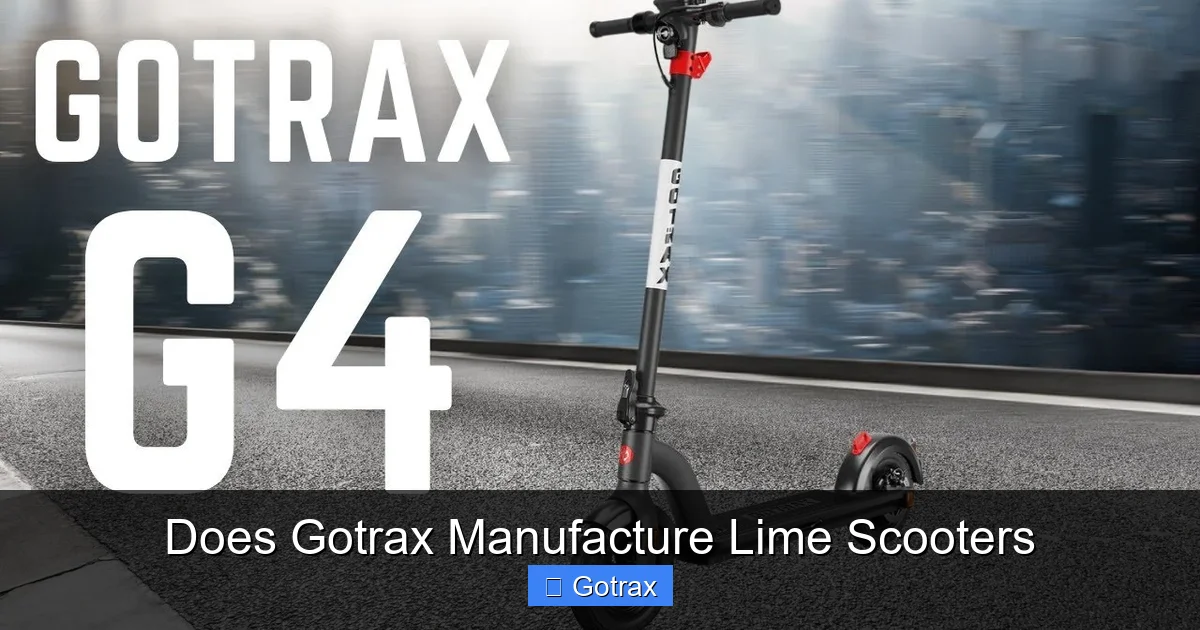
Visual guide about Does Gotrax Manufacture Lime Scooters
Image source: i.ytimg.com
So why do so many people assume Gotrax makes Lime scooters? The confusion likely stems from several factors. First, both brands are prominent in the e-scooter space, and their products share a similar visual language—upright handlebars, foot decks, and electric motors. Second, both companies target urban commuters and environmentally conscious riders, leading to overlapping customer demographics. Third, the rise of shared mobility has blurred the lines between personal and public transportation, making it harder for consumers to distinguish between ownership and rental models.
Additionally, some online forums and social media posts have spread misinformation, claiming that Gotrax supplies scooters to Lime. These claims are often based on speculation or outdated information. Without official confirmation from either company, such rumors can gain traction, especially when users see scooters with similar designs.
Examining the Supply Chain
To understand why Gotrax doesn’t make Lime scooters, it helps to look at the supply chain. Gotrax produces scooters for individual sale, while Lime sources scooters for fleet deployment. These are two different markets with different requirements. Gotrax’s manufacturing partners are optimized for producing consumer-grade electronics with a focus on cost-efficiency and design consistency. Lime’s partners, on the other hand, must meet stricter standards for durability, safety, and integration with fleet management systems.
Moreover, Lime frequently updates its scooter models to incorporate new technology and improve performance. This requires close collaboration with manufacturers who can rapidly prototype and scale production. Gotrax, while innovative, does not operate at the same scale or pace as Lime’s fleet operations.
No Evidence of a Partnership
Despite the rumors, there is no public evidence of a manufacturing or supply partnership between Gotrax and Lime. Neither company has issued a press release, statement, or product listing confirming such a relationship. Gotrax’s official website and product catalogs make no mention of Lime, and Lime’s fleet information pages list Segway-Ninebot, Okai, and Unu as key suppliers.
In the absence of concrete information, it’s important to rely on verified sources. Industry reports, company disclosures, and direct communication with customer support can help clarify these relationships. As of now, all available data indicates that Gotrax and Lime are independent entities with separate supply chains.
Comparing Gotrax and Lime Scooters Side by Side
To further illustrate the differences, let’s compare a typical Gotrax scooter with a Lime scooter used in shared fleets.
A Gotrax GXL V2, for example, is a popular consumer model priced around $350. It features a 250-watt motor, a top speed of 15.5 mph, and a range of up to 12 miles on a single charge. It weighs about 26 pounds, folds easily, and includes a digital display, LED headlight, and rear fender brake. It’s designed for personal use, with a focus on portability and ease of charging at home.
In contrast, a Lime Gen 4 scooter (produced by Segway-Ninebot) has a 350-watt motor, a top speed of 18 mph, and a range of up to 35 miles. It weighs around 40 pounds and includes swappable batteries, enhanced suspension, and a ruggedized frame. It also features GPS tracking, remote diagnostics, and a tamper-resistant design. These features are essential for a shared fleet but add weight and complexity that aren’t necessary for personal use.
Performance and Use Case Differences
The performance differences reflect the intended use cases. Gotrax scooters are ideal for short commutes, campus travel, or recreational rides. They’re lightweight and easy to store, making them perfect for apartment dwellers or students. Lime scooters, on the other hand, are built for high-frequency use in urban environments. They need to handle rough pavement, frequent starts and stops, and exposure to the elements.
Another key difference is maintenance. Gotrax scooters are maintained by the owner, who is responsible for charging, tire pressure, and brake adjustments. Lime scooters are maintained by fleet operators who perform regular inspections, battery swaps, and repairs. This centralized maintenance model ensures consistent performance across the fleet but isn’t practical for individual users.
Cost and Accessibility
Gotrax scooters are a one-time purchase, typically ranging from $250 to $600 depending on the model. This makes them a cost-effective option for regular riders who want to avoid rental fees. Lime scooters, by contrast, are rented by the minute, usually costing $1 to unlock plus $0.20 to $0.30 per minute. While this is convenient for occasional use, frequent riders can quickly spend more than the cost of owning a personal scooter.
For example, a 15-minute Lime ride costs around $4. If you take two such rides per day, that’s $8 per day or over $2,900 per year. A Gotrax scooter paid off in less than a year. This cost comparison highlights the different value propositions of ownership versus rental.
The Role of OEMs in the E-Scooter Industry
To fully understand why Gotrax doesn’t make Lime scooters, it’s helpful to explore the role of original equipment manufacturers (OEMs) in the e-scooter industry. OEMs are companies that design and produce products that are sold under another brand’s name. This model allows brands to focus on marketing, distribution, and customer experience while leveraging the manufacturing expertise of specialized factories.
Both Gotrax and Lime rely on OEMs, but they work with different partners based on their needs. Gotrax partners with manufacturers that can produce consumer-grade scooters at scale with consistent quality. These factories often produce scooters for multiple brands, allowing for cost efficiencies and faster time-to-market. Lime, meanwhile, works with OEMs that can meet its stringent requirements for durability, safety, and integration with fleet management systems.
Why OEMs Matter
OEMs play a crucial role in the global supply chain. They enable innovation by providing access to advanced manufacturing capabilities, such as precision machining, automated assembly, and quality control systems. They also help brands reduce costs by producing at scale and sourcing components globally.
For consumers, understanding the OEM landscape can provide insights into product quality and reliability. Scooters produced by reputable OEMs with a track record of safety and performance are more likely to meet expectations. However, OEM production also means that different brands may use similar components or even the same base models, which can contribute to the perception that they’re made by the same company.
Transparency and Consumer Awareness
As the e-scooter market grows, transparency about manufacturing origins becomes increasingly important. Consumers have a right to know who makes the products they use, especially when it comes to safety and warranty support. Brands that disclose their manufacturing partners and supply chain practices build trust and credibility.
Gotrax, for example, provides detailed product specifications and customer support information, helping users make informed decisions. Lime, while less transparent about its manufacturing partners, publishes fleet safety reports and sustainability goals, demonstrating a commitment to responsible operations.
Conclusion: Gotrax and Lime Are Separate Entities
In summary, Gotrax does not manufacture Lime scooters. The two companies operate in different segments of the micromobility industry—Gotrax as a consumer brand selling personal electric scooters, and Lime as a shared mobility platform deploying fleet scooters in cities worldwide. While both rely on OEMs for production, they work with different manufacturers and have distinct design priorities.
Understanding this distinction is important for consumers. It affects everything from cost and convenience to maintenance and long-term value. If you’re looking for a personal scooter to own and use daily, Gotrax offers affordable, reliable options. If you prefer the flexibility of renting a scooter on demand, Lime provides a convenient solution in many urban areas.
Ultimately, the e-scooter market is diverse and evolving. Brands like Gotrax and Lime each play a valuable role in promoting sustainable transportation. By knowing who makes what, consumers can choose the right product for their needs and support companies that align with their values.
Frequently Asked Questions
Does Gotrax make scooters for Lime?
No, Gotrax does not manufacture scooters for Lime. Lime sources its fleet from other OEMs like Segway-Ninebot and Okai, not Gotrax.
Are Gotrax and Lime owned by the same company?
No, Gotrax and Lime are independent companies with separate ownership, business models, and supply chains.
Can I buy a Lime scooter for personal use?
Lime does not sell its scooters to the public. They are part of a shared fleet and not available for individual purchase.
Are Gotrax scooters as durable as Lime scooters?
Gotrax scooters are built for personal use and regular riding, while Lime scooters are designed for heavy fleet use. Lime models are generally more rugged but heavier.
Who makes Lime scooters?
Lime partners with OEMs such as Segway-Ninebot, Okai, and Unu to manufacture its scooters to specific fleet requirements.
Why do Gotrax and Lime scooters look similar?
Both brands use common e-scooter design elements like upright handlebars and foot decks, but they are made by different manufacturers for different purposes.